
When preparing to travel with your child in Singapore, understanding local car seat regulations is crucial to ensuring both legal compliance and physical safety. If you are considering or already own a Combi Safetrip car seat, you might wonder if this specific model meets the rigorous standards enforced by local authorities.
The short answer is yes: the Combi Safetrip is legal to use in Singapore, provided your specific unit carries a recognized international safety certification label, is installed correctly according to the manufacturer’s manual, and fits your child’s current height and weight. However, because car seat models can vary depending on the country of import, you must verify the physical labels on your individual seat to guarantee it meets Singapore’s legal criteria.
Navigating the intersection of manufacturer specifications and local traffic laws can feel overwhelming. This guide breaks down Singapore’s child passenger safety requirements, explains how to inspect your Combi Safetrip for compliance, and outlines the critical installation boundaries you must respect to keep your child secure on the road.
Products mentioned in this guide
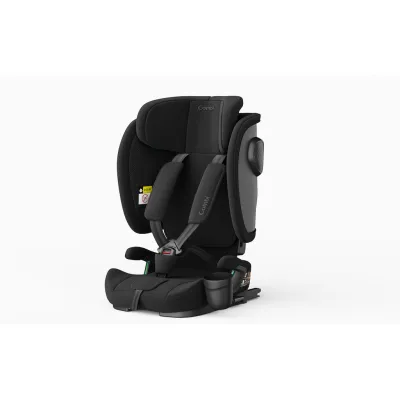
Prices are valid at publication and may change. Please refer to the product page for the latest price.
Understanding Singapore's Child Passenger Safety Laws
Singapore takes child passenger safety seriously, with strict regulations codified under the Road Traffic Act. The primary legal threshold dictates that any passenger in a motor vehicle who is under 1.35 metres in height must be properly secured using an approved child restraint system (CRS) or a booster seat appropriate for their height and weight. This law applies to all private passenger vehicles, making it a critical consideration for everyday commutes, school runs, and weekend family outings.
Unlike some countries that develop their own unique national testing standards, the Singapore Traffic Police and land transport authorities recognize several prominent international safety frameworks. Rather than looking for a specific Singaporean stamp of approval, local law enforcement requires that any child car seat used on public roads complies with one of these globally respected standards. This approach ensures that parents have access to high-quality, thoroughly crash-tested gear from around the world.
The widely accepted certification frameworks in Singapore include the United Nations Economic Commission for Europe (UN ECE) standards, specifically UN ECE R44/04 and the newer UN ECE R129 (commonly known as i-Size). Additionally, certifications from the Federal Motor Vehicle Safety Standards (FMVSS 213) in the United States, the Australian/New Zealand Standard (AS/NZS 1754), and the Japanese Industrial Standards (JIS) are recognized. If a car seat carries an official compliance mark from any of these bodies, it meets the baseline legal requirement for use in Singapore.
It is important for parents to understand that age and weight are secondary to the strict height requirement under local traffic regulations. Even if a child has reached a certain age or weight milestone, they must continue using an approved restraint system until they cross the 1.35-metre threshold. Once a child reaches 1.35 metres, they may legally transition to using the vehicle’s standard three-point seatbelt, though safety experts often recommend keeping children in booster seats until they can achieve a proper seatbelt fit naturally.
How to Check the Combi Safetrip for Approved Certification Labels
To confirm that your Combi Safetrip car seat is fully compliant with Singapore’s legal framework, you must perform a physical inspection of the unit. You should never assume compliance based solely on the brand name or the product packaging, as manufacturers often produce different versions of the same model for different global markets.

Start by locating the mandatory compliance label on your Combi Safetrip. This label is typically a high-durability sticker affixed directly to the plastic shell of the seat, often positioned on the back, the underside of the base, or along the side profile. On European-certified models, this is usually a highly visible orange sticker, while other regional variants may use white or silver labels with clear regulatory text.
When inspecting the label, look closely for the specific certification marks recognized in Singapore. For a UN ECE-approved seat, you will see a circle containing the letter “E” followed by a number (such as E1 for Germany, E4 for the Netherlands, or E11 for the United Kingdom), which indicates the country where the seat was officially tested and certified. Directly below or adjacent to this mark, the label must state the standard version, such as “ECE R44/04” or “ECE R129”. If your seat was sourced from a market utilizing US or Australian standards, look for explicit references to FMVSS 213 or AS/NZS 1754.
Once you have identified the safety mark, cross-reference the weight or height limits printed on that exact label with your child’s current physical measurements. A seat is only legally compliant and physically safe when used within the precise parameters specified by the manufacturer. For example, if the label states the seat is rated for children up to 18 kilograms, using it for a child who weighs 19 kilograms invalidates its legal compliance and compromises its structural integrity during a collision.
Because specifications can vary significantly by market, it is highly recommended to check the official Combi manufacturer documentation or contact the authorized local distributor in Singapore. They can help you verify the exact regional variant of your Safetrip model and confirm whether its specific batch meets local import and safety guidelines. This step is particularly important if you purchased the seat from a parallel importer or an online marketplace, as these channels may source inventory from regions with different regulatory standards.
Legal Penalties and Safety Risks of Non-Compliant Car Seats
Operating a vehicle in Singapore with a child under 1.35 metres who is not secured in an approved, compliant restraint system carries serious legal consequences. The Singapore Traffic Police actively enforce passenger safety regulations to reduce road casualties. Drivers found violating these laws face composition fines, potential court prosecution, and demerit points on their driving records. For repeat offenses, the penalties can escalate significantly, including higher fines and potential jail time, underscoring the government’s commitment to child safety.
Beyond the legal and financial repercussions, the physical safety risks of using a non-compliant or uncertified car seat are profound. Recognized certifications guarantee that a car seat model has undergone rigorous dynamic crash testing, simulating front, rear, and side-impact collisions. Seats that lack these verified markings may be constructed from substandard plastics, contain weak harness mechanisms, or lack the energy-absorbing foam necessary to protect a child’s fragile neck and spine. In a collision, an unverified seat can fail structurally, leading to catastrophic injuries.
Parents must also exercise extreme caution when considering second-hand Combi Safetrip seats. If the compliance label on a used seat is faded, torn, or entirely missing, the seat is legally non-compliant because its certification cannot be verified by authorities. Furthermore, car seats have a limited lifespan due to the natural degradation of plastic components over time, especially in Singapore’s hot and humid tropical climate. You must verify the manufacturer-stated expiration date—typically found stamped into the plastic shell or detailed in the user manual—and avoid any seat that has exceeded this limit or has been involved in a prior accident.
Finally, it is vital to remember that a fully approved, highly rated car seat becomes legally and physically non-compliant the moment your child outgrows its limits. If your child’s head exceeds the top of the seat shell, or if their weight surpasses the maximum limit printed on the compliance label, the seat can no longer perform as designed. Continuing to use the seat under these conditions exposes your child to severe crash forces and constitutes a violation of local traffic safety laws.
Critical Installation and Usage Boundaries for the Combi Safetrip
Securing a legally compliant Combi Safetrip is only the first step in protecting your child; the seat must be installed correctly to perform its life-saving function. Even the most advanced, certified car seat will fail to protect a child if it is loosely fitted or incorrectly configured. You must strictly follow the Combi Safetrip user manual for either ISOFIX anchorage or vehicle seatbelt installation, paying close attention to the specific routing paths required for rear-facing and forward-facing modes.
To ensure a secure installation, perform several essential physical checks before every journey. First, test the stability of the installed seat by grasping it at the belt path and shaking it firmly; it should not move more than one inch (2.5 centimetres) side-to-side or front-to-back. Second, verify that the seat is set to the correct recline angle appropriate for your child’s age and developmental stage, as an incorrect recline can cause an infant’s head to flop forward, potentially obstructing their airway. Third, always perform the “pinch test” on the harness straps: if you can pinch any excess webbing between your fingers at the child’s collarbone, the harness is too loose and must be tightened.
You must also be aware of the strict stopping conditions that dictate when a Combi Safetrip must be retired immediately. If the vehicle is involved in a moderate to severe collision, the car seat must be replaced, even if there is no visible damage, as internal micro-fractures in the plastic can compromise its strength. Additionally, if you observe any visible structural damage, deep cracks, frayed harness webbing, or broken buckles during routine cleaning, stop using the seat immediately.
Every vehicle has unique cabin geometry, seatbelt lengths, and seat cushion angles that can affect how a car seat fits. If you encounter any difficulty achieving a tight, stable installation, or if the vehicle’s seat design seems to conflict with the Safetrip’s installation requirements, do not attempt to modify the seat or use unauthorized accessories. Instead, consult a certified child passenger safety technician (CPST) in Singapore or contact Combi’s customer service department for professional guidance.
Frequently Asked Questions (FAQ)
Here are some of the most common questions parents ask when evaluating the Combi Safetrip for use on Singapore roads.
Can I legally use a Combi Safetrip purchased overseas in Singapore?
Yes, but only if the overseas model bears a physical certification label from a standard recognized by Singapore’s authorities, such as the UN ECE R44/04 or UN ECE R129 orange sticker. Many car seats sold in foreign markets are built to different regional specifications. For example, a model manufactured exclusively for a domestic market outside Singapore might lack the required international markings, making it illegal to use locally. Before importing or using a foreign-purchased Combi Safetrip, verify that the physical compliance label is present and matches Singapore’s recognized standards to avoid legal penalties and ensure your child’s safety.
What if my child is under 1.35m but exceeds the Combi Safetrip's weight limit?
If your child is under the legal height threshold of 1.35 metres but has exceeded the maximum weight limit printed on your Combi Safetrip’s certification label, you must transition them to a different, appropriately rated child restraint system or booster seat immediately. While Singapore law requires them to remain in a restraint due to their height, continuing to use a car seat once they have surpassed its weight capacity is highly dangerous. The seat’s structural components and harness are not engineered to withstand the forces of a collision at that weight, rendering the seat physically unsafe and legally non-compliant.
Community discussion
Share your experience or ask a question. Comments are reviewed before publication.