
When welcoming a newborn, protecting their delicate skin becomes a top priority. Many parents in Singapore turn to Cloversoft water wipes as a gentle, plant-based solution for daily diaper changes and quick cleanups. While these wipes are widely popular for their minimalist formulations, determining whether they are truly safe for your newborn requires looking closely at their specific ingredients.
In short, Cloversoft water wipes are generally safe for newborns because they rely primarily on highly purified water and avoid many harsh chemical irritants. However, because a newborn’s skin barrier is still developing, you must verify the exact ingredient list on the packaging, understand the role of the mild preservatives used, and monitor your baby’s skin for any individual sensitivities.
What Are the Typical Ingredients in Cloversoft Water Wipes?
To evaluate any baby wipe, you must first understand what goes into the pack. The term “water wipes” refers to wipes where the vast majority of the liquid formula is highly purified water. In high-quality wipes, this water undergoes rigorous purification processes, such as Reverse Osmosis (RO) or Electrodeionization (EDI), to remove impurities, minerals, and microorganisms. This purified water acts as the primary solvent, safely lifting dirt and organic matter from your baby’s skin without leaving a harsh chemical residue.
Products mentioned in this guide
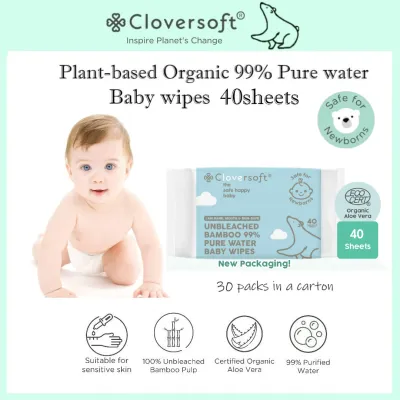
![[Cloversoft Official] Unbleached Bamboo Pure Water Baby Wipes [70sheets x 3]](https://img.lazcdn.com/g/p/26fba025b7721f77dbe8dd1eb8595381.png_400x400q80.png_.webp)
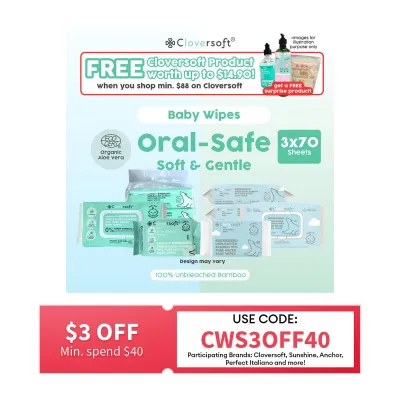
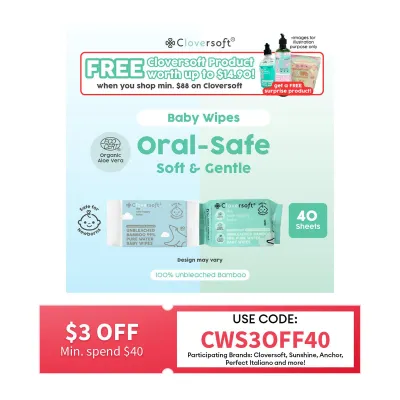
![[Single Product Bundle] Cloversoft Plant-Based Unbleached Bamboo 99.9% Antibacterial Organic Wet Wipes 8/15/40/100 Sheets](https://img.lazcdn.com/g/p/68fd9095f1ff95b7afb04b932eee0b46.png_400x400q80.png_.webp)
Prices are valid at publication and may change. Please refer to the product page for the latest price.
While marketing labels often highlight high water percentages, such as “99% water” or “99.9% water,” it is essential to look at the remaining fraction of the formula. A wipe that is purely water without any other ingredients would quickly become a breeding ground for mold, bacteria, and yeast once the package is opened and exposed to air. Therefore, even the most minimalist water wipes require a mild preservative system to ensure product safety and shelf life.
When examining a pack of Cloversoft water wipes, turn the packaging over to locate the International Nomenclature of Cosmetic Ingredients (INCI) list. Manufacturers periodically update their formulations to improve performance or comply with updated safety standards, so the physical label on your specific pack is always the most accurate source of truth. Typically, you will find a combination of purified water, a food-grade or mild preservative, and gentle skin-conditioning agents.
The secondary ingredients in these wipes often include plant-derived extracts designed to soothe the skin. For instance, formulations may incorporate organic aloe vera or chamomile extracts, which act as natural emollients to help maintain skin hydration. Additionally, mild humectants like glycerin may be included to draw moisture into the skin. By verifying these ingredients on the physical packaging, you can ensure that the remaining percentage of the formula consists of safe, skin-compatible components rather than hidden irritants.
Evaluating Ingredient Safety for Newborn Skin
A newborn’s skin is vastly different from adult skin, requiring a much higher standard of ingredient safety. At birth, the outer layer of the skin, known as the stratum corneum, is significantly thinner and more permeable than that of an adult. This means that topical substances are absorbed more easily into the baby’s bloodstream, and the skin is highly susceptible to transepidermal water loss and environmental irritants. Furthermore, a newborn’s acid mantle—the protective, slightly acidic film on the skin’s surface—is still developing, making it easy to disrupt with harsh alkaline substances.

To protect this fragile skin barrier, pediatricians and dermatologists generally recommend avoiding several high-risk ingredients in baby care products. When reviewing the ingredient list on your wipes, ensure they are free from the following substances:
- Alcohol (Ethanol or Isopropyl Alcohol): These can cause severe dryness, irritation, and cracking of the delicate skin barrier.
- Synthetic Fragrances: Fragrance is one of the leading causes of contact dermatitis and allergic reactions in infants.
- Parabens: Used as preservatives, these have raised concerns regarding potential endocrine disruption.
- Harsh Preservatives: Chemicals like Methylisothiazolinone (MIT) and Methylchloroisothiazolinone (CMIT) are known sensitizers that can trigger painful skin rashes.
When you cross-reference the Cloversoft water wipes packaging, look for explicit labels indicating the product is “fragrance-free” and “alcohol-free.” It is important to distinguish between “unscented” and “fragrance-free.” Unscented products may still contain masking fragrances to neutralize the smell of other ingredients, whereas fragrance-free products contain no added scent chemicals at all. For a newborn, fragrance-free is always the safer choice.
You will also frequently encounter marketing terms like “dermatologically tested” or “hypoallergenic” on baby wipe packaging. While these labels indicate that the manufacturer has conducted safety testing to minimize the risk of allergic reactions, they do not carry standardized medical definitions. A “hypoallergenic” label means the product is formulated to be less likely to cause allergic reactions, but it cannot guarantee zero risk for every individual baby. Always treat these terms as helpful indicators rather than absolute guarantees of safety.
Best Practices for Using Water Wipes on Newborns
Using even the gentlest water wipes requires proper technique to protect your newborn’s skin from physical friction and moisture-related irritation. During diaper changes, avoid rubbing or scrubbing the skin vigorously. Instead, use a gentle patting or sweeping motion. Aggressive wiping can cause micro-tears in the thin stratum corneum, creating entry points for bacteria and increasing the risk of painful diaper rash.
In Singapore’s warm and humid climate, managing skin moisture is a constant challenge. After wiping your baby’s diaper area clean, never rush to put on a new diaper immediately. Trapping residual moisture from the wipe inside a tight, non-breathable diaper creates a warm, damp environment where yeast and bacteria thrive. Always allow the skin to air-dry completely, or gently pat it dry with a clean, dry cotton cloth before applying a barrier cream and securing the new diaper.
Before introducing any new brand or variant of wipes to your newborn’s daily routine, it is highly recommended to perform a simple patch test. Follow these steps to ensure compatibility:
- Select a small, clean area of your baby's skin, such as the inner forearm or the upper thigh.
- Gently wipe the area with a single wipe from the new pack.
- Wait 24 to 48 hours and monitor the spot closely for any signs of reaction.
- If you notice localized redness, swelling, tiny bumps, or peeling, discontinue use immediately.
If your baby develops a persistent rash, extreme redness, or shows signs of discomfort and fussiness during wiping, stop using the wipes immediately. These symptoms suggest that the skin barrier is compromised or that your baby is experiencing an adverse reaction to an ingredient. Switch to plain water and consult a pediatrician for a proper diagnosis and treatment plan.
Another practical consideration is the temperature of the wipes. Pulling a cold wipe directly from the pack can startle a sleeping or calm newborn, leading to fussiness during diaper changes. To make the experience more comfortable, you can warm a wipe by rubbing it gently between your clean hands for a few seconds before use. If you choose to use a dedicated baby wipe warmer, ensure it is cleaned regularly according to the manufacturer’s instructions to prevent bacterial growth, and never microwave or apply external heat sources directly to the wipe packaging, as this can degrade the preservative system.
Water Wipes vs. Standard Baby Wipes: Which to Choose?
Choosing between water wipes and standard baby wipes depends largely on your baby’s skin sensitivity and the specific cleaning scenario. Standard baby wipes typically feature a more complex formulation. In addition to water and preservatives, they often contain mild surfactants (cleansing agents) to help break down oils, emollients to soften the skin, and sometimes synthetic fragrances. While these ingredients make standard wipes highly effective at cleaning up heavy messes, they also increase the likelihood of skin irritation for newborns with highly sensitive skin.
In contrast, minimalist water wipes contain fewer ingredients, significantly reducing the risk of chemical exposure. They are the ideal choice for routine diaper changes, wiping milk spills from the face, and cleaning delicate hands. However, because they lack strong surfactants, water wipes may require more physical wipes to clean up sticky, oily meconium during the first week of a newborn’s life. For these heavy messes, standard wipes or a direct wash with water may be more efficient, provided your baby’s skin tolerates them well.
It is also worth remembering that you do not always need to rely on commercial wipes when you are at home. Plain, lukewarm water paired with soft, reusable cotton cloths or large cotton balls represents the ultimate zero-ingredient alternative. This traditional method completely eliminates the risk of preservative or fragrance exposure, making it an excellent baseline option for newborns, especially during the first few weeks of life or when managing an active diaper rash flare-up.
Frequently Asked Questions (FAQ)
Can I use Cloversoft water wipes on a newborn's face and hands?
Yes, but you should always verify that the specific Cloversoft variant you have is explicitly labeled as safe for multi-use or facial application. When wiping your newborn’s face, avoid the immediate eye area and mouth. Ensure the wipes do not contain any botanical extracts or essential oils that could cause stinging or irritation if they accidentally migrate into the eyes.
Do water wipes prevent or treat diaper rash?
No, water wipes are designed solely for cleaning and do not contain active medical ingredients to treat or prevent diaper rash. In fact, leaving the skin wet after using a water wipe can worsen irritation. To prevent diaper rash, ensure the skin is completely dry before applying a zinc oxide-based barrier cream, and consult a pediatrician if a rash persists.
How should I store water wipes to prevent bacterial growth?
To maintain the integrity of the mild preservative system, always seal the adhesive tab or close the plastic lid tightly immediately after pulling out a wipe. Store the package in a cool, dry place away from direct sunlight and heat sources. Never add tap water to a dried-out pack of wipes, as this dilutes the preservatives and can introduce harmful bacteria.

Community discussion
Share your experience or ask a question. Comments are reviewed before publication.