
When preparing a nursery, selecting the right sleeping surface is one of the most critical decisions you will make for your infant’s health and safety. The clevamama mattress has gained popularity among parents seeking a balance between safety-first firmness and physical comfort. At the core of this discussion is ClevaFoam, a proprietary material specifically engineered to address common parental concerns such as flat head syndrome and spinal alignment. Understanding how this mattress performs in terms of firmness and how its unique material behaves is essential for determining if it is the right fit for your baby’s cot.
Evaluating Clevamama Mattress Firmness and Safety Standards
For newborns and infants, a mattress must feel significantly firmer than what an adult would find comfortable. This firmness is not a matter of preference; it is a vital safety requirement. A firm sleeping surface prevents the mattress from conforming too closely to your baby’s face, which dramatically reduces the risk of suffocation and rebreathing carbon dioxide if they happen to roll over onto their stomach. Furthermore, a supportive, non-yielding surface provides the necessary resistance to help your baby’s rapidly growing spine develop its natural alignment during those long hours of sleep.
To evaluate the firmness of a cot mattress, you can perform a simple physical check at home. Press your hand down firmly into the center of the mattress and then along the edges, then release the pressure. A safe infant mattress will resist deep contouring and spring back to its original flat shape almost instantly, leaving no lingering indentation of your hand. If the surface remains depressed or feels soft and plush, it does not meet the safety requirements necessary for unsupervised infant sleep.
Products mentioned in this guide
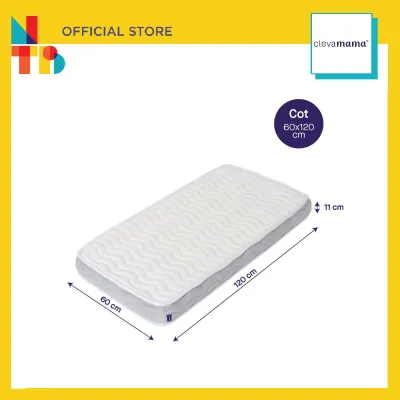


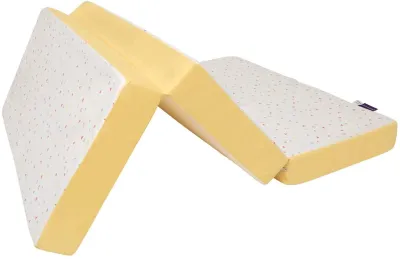
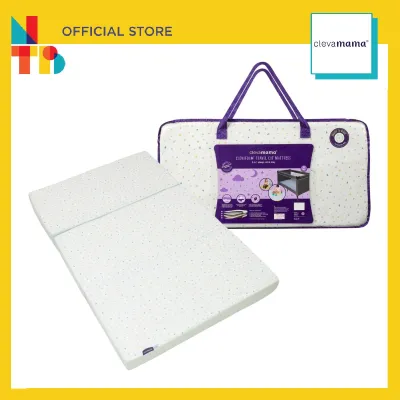
Prices are valid at publication and may change. Please refer to the product page for the latest price.
While hands-on testing is helpful, you should always verify the official specifications and safety compliance marks printed on the product packaging or label. Manufacturers of quality baby mattresses design their products to meet rigorous international safety standards, such as European safety standards (EN 16890 or equivalent). Because exact testing methods, regional standards, and firmness ratings can vary depending on the specific model and where it is sold, always check the product documentation to confirm that the mattress has been certified as safe for infant use.
How ClevaFoam Technology Balances Pressure Relief and Support
ClevaFoam is a specialized material developed to address a common challenge in infant sleep: providing a highly supportive, firm surface while minimizing the pressure exerted on a baby’s delicate body. Standard high-density foam or spring mattresses can sometimes create high-pressure zones, particularly on the back of an infant’s soft skull. ClevaFoam is engineered to distribute your baby’s body weight more evenly across the surface, which helps mitigate these localized pressure points without sacrificing the structural integrity of the mattress.

This material achieves a delicate balance between surface comfort and core support. While it feels slightly more accommodating than a standard solid foam block, it is structurally designed to prevent deep sinking. The underlying support layers ensure that even as the foam gently relieves pressure on the baby’s head and shoulders, the mattress body remains flat and firm. This combination ensures that your baby receives the physical comfort necessary for restful sleep while staying safely positioned on a stable, non-conforming surface.
In warm, humid climates like Singapore, temperature regulation is another critical factor for infant sleep comfort and safety. Standard memory foams are notorious for trapping body heat, which can lead to overheating—a known risk factor during sleep. ClevaFoam is formulated with an open-cell structure that promotes continuous airflow and breathability. By allowing heat and moisture to dissipate more rapidly, the mattress helps maintain a comfortable sleeping temperature, keeping your baby cool and dry throughout the night.
When researching ClevaFoam, it is important to review the manufacturer’s official material specifications and care guidelines. While the technology is designed to optimize comfort and support, you should avoid assuming it offers medical or therapeutic benefits. If your baby has specific physical conditions, developmental delays, or orthopedic concerns, always consult a qualified pediatrician or medical professional rather than relying solely on product marketing claims.
Checking Fit, Age Limits, and Safety for Your Baby
A high-quality mattress is only safe if it is used correctly within its intended parameters. Before purchasing or using any cot mattress, verify the manufacturer’s recommended age, weight, and developmental stage limits. Some mattresses are designed specifically for newborns, while others feature dual-sided designs meant to transition into toddlerhood. Using a mattress outside of its specified limits can compromise both its support capabilities and its safety features.
The physical fit of the mattress inside the cot is just as critical as its firmness. To prevent dangerous entrapment hazards, apply the “two-finger rule” once the mattress is placed inside the cot frame. There should be no more than a two-finger gap between the outer edge of the mattress and the inner wooden rails of the cot. If you can easily fit more than two fingers into this space, the mattress is too small for the cot, creating a severe risk where a baby’s limbs or head could become trapped.
Regularly inspect the condition of your baby’s mattress to ensure it remains safe over time. Look for any visible signs of wear, such as sagging in the center, permanent body indentations, or a softening of the edges. If the mattress fails to recover its flat shape or shows structural damage, it must be replaced immediately. Additionally, if your baby has unique medical needs, respiratory issues, or spinal concerns, seek professional guidance from a pediatrician to ensure their sleep environment is fully optimized for their health.
Frequently Asked Questions (FAQ)
Can ClevaFoam prevent flat head syndrome?
While ClevaFoam is designed to reduce pressure on the back of a baby’s head by distributing weight more evenly, it is not a medical device. It cannot guarantee the prevention or treatment of positional plagiocephaly (flat head syndrome). To effectively reduce the risk of flat head syndrome, parents should follow standard pediatric guidelines, which include plenty of supervised tummy time during waking hours, regularly changing the direction your baby lies in their cot, and minimizing the time spent in car seats or carriers. If you notice persistent flat spots on your baby’s head, consult your pediatrician for a professional assessment.
How should I clean and maintain a ClevaFoam mattress?
To preserve the structural integrity and hygiene of your mattress, always use a high-quality, fitted, and breathable waterproof mattress protector. This prevents diaper leaks, spit-up, and moisture from seeping into the foam core. If a spill does occur, spot-clean the removable outer cover using a mild detergent and cool water according to the instructions on the care label. Never submerge the inner ClevaFoam core in water, and avoid using harsh chemical cleaners, bleach, or heat dryers, as these can permanently break down the foam’s structure. Always refer to the manufacturer’s exact care instructions for cleaning the core material.
Community discussion
Share your experience or ask a question. Comments are reviewed before publication.