
Quick Answer: Evaluating Safety in Baby Utensils
When choosing a baby fork and spoon, there is no single “safest” material that outperforms all others across every stage of development. Instead, safety is a moving target that depends on material certifications, your baby’s current developmental milestones, and how well the utensils are maintained over time.
For newborns transitioning to solid foods, the primary safety concern is protecting delicate, developing gums from impact injuries. As your child grows and begins to master self-feeding, the focus shifts toward durability, hygiene, and preventing choking hazards from worn-out parts.
To ensure the highest level of safety, caregivers must verify that any chosen utensil is certified food-grade and free from known chemical hazards. Matching the material’s physical properties to your baby’s age and feeding style is the most effective way to prevent oral injuries and support healthy oral development.
Products mentioned in this guide
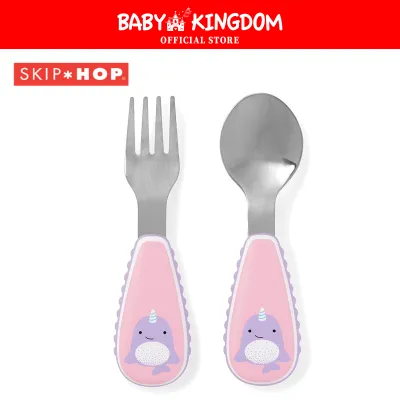
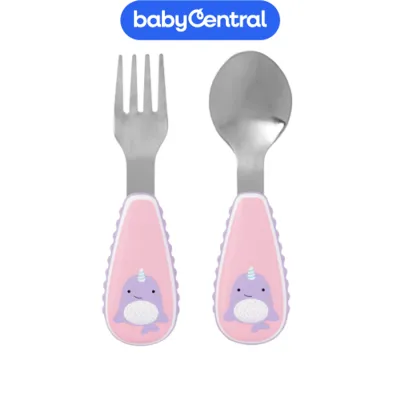
![[2 Pack] OXO TOT Fork & Spoon Set](https://img.lazcdn.com/g/p/f5d193fe969ad0eb89361c06831ea37c.png_400x400q80.png_.webp)
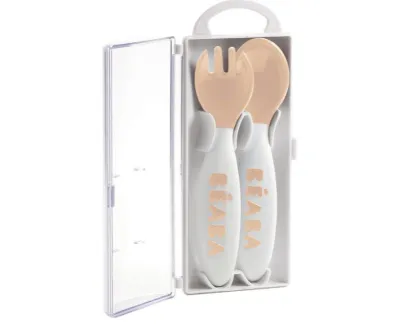
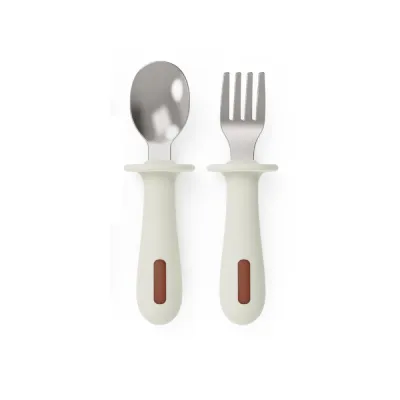
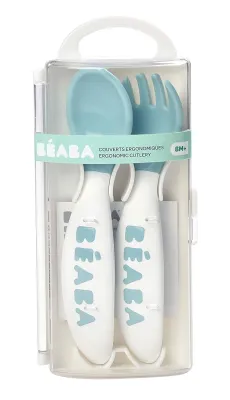
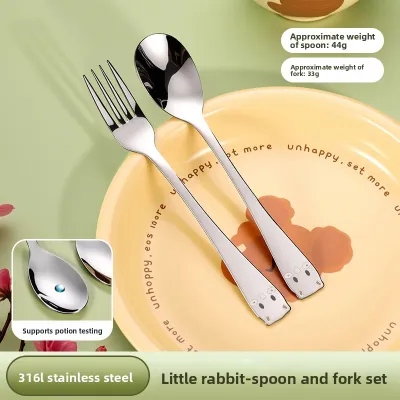
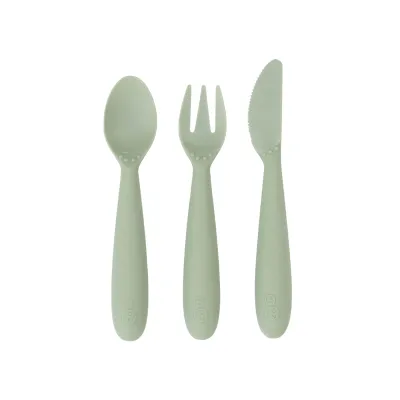
Prices are valid at publication and may change. Please refer to the product page for the latest price.
Comparing Common Materials for Baby Spoons and Forks
Navigating the feeding aisle can be overwhelming, with shelves filled with silicone, plastic, stainless steel, and wood options. Each of these materials presents distinct trade-offs regarding weight, flexibility, durability, and cleaning requirements.

Rather than assuming a material is safe based on its category alone, caregivers must inspect the specific product labels and manufacturer guidelines. Understanding how these materials behave under daily use, high-heat sterilization, and mechanical wear is essential for making an informed decision.
Silicone: Softness and Gum Protection
Silicone has become a staple in early weaning due to its rubber-like flexibility and soft texture. This material is highly forgiving when babies are still developing their hand-eye coordination, preventing painful bumps to the gums, lips, and emerging teeth.
When shopping for silicone utensils, look for products explicitly labeled as 100% food-grade or medical-grade silicone. High-quality silicone should not contain plastic fillers; a common way to check this is by pinching or twisting the material—if white shows through the bend, fillers may be present.
While silicone is generally highly heat-resistant, caregivers must verify the manufacturer’s specific temperature limits before using steam sterilizers or boiling water. Some silicone utensils feature internal plastic or metal stiffeners that may warp or degrade if exposed to temperatures beyond their rated capacity.
Plastic: Lightweight Convenience and Chemical Checks
Plastic utensils are widely available, lightweight, and easy for tiny hands to grasp, making them popular choices for families on the go. However, using plastic requires diligent label reading and regular inspection to maintain safety standards.
Caregivers must verify that any plastic baby fork and spoon is certified free from Bisphenol A (BPA), Bisphenol S (BPS), polyvinyl chloride (PVC), and phthalates. These chemical compounds are often scrutinized for their potential to migrate into food, especially when the plastic is heated.
Plastic is highly susceptible to environmental degradation from UV sterilizers, high-temperature dishwashers, and highly acidic foods like tomato-based purees. Over time, these factors can cause the plastic to become brittle, cloudy, or rough.
To prevent bacterial accumulation, inspect plastic utensils daily for deep scratches, teeth marks, or rough edges. If a plastic spoon shows signs of surface wear or discoloration, it should be retired immediately, as these micro-grooves can harbor harmful pathogens that standard washing cannot reach.
Stainless Steel: Durability and Hygiene
Stainless steel is the gold standard for durability and long-term hygiene, offering a non-porous surface that resists scratches and does not harbor bacteria. It is an excellent material for toddlers who are transitioning to family meals and firmer food textures.
When selecting metal utensils, check the packaging for food-grade designations such as 304 or 316 stainless steel. These grades offer high resistance to corrosion and rust, ensuring the utensils remain safe through hundreds of wash cycles.
Because metal is rigid, caregivers must carefully evaluate the design of the fork tines and spoon bowls. Look for rounded, blunt tines that can pierce food without posing a puncture risk to the child’s mouth, and ensure the handles are ergonomically designed for a secure grip.
Due to the weight and hardness of stainless steel, these utensils are best reserved for older babies who have fully developed their chewing, swallowing, and self-feeding coordination. Introducing metal too early can lead to accidental oral discomfort or injury if the baby strikes their gums too hard.
Bamboo and Wood: Natural Options and Care Limits
Bamboo and wooden utensils appeal to families seeking natural, plant-based alternatives to synthetic materials. These options are lightweight and naturally biodegradable, but they require the most intensive maintenance to remain safe for daily feeding.
Before purchasing, verify that the wood or bamboo is untreated or finished exclusively with certified food-safe, non-toxic oils or water-based coatings. Avoid products that use heavy chemical varnishes or glues, which can chip or leach into warm food over time.
Natural materials are highly porous and sensitive to moisture, making them prone to cracking and mold growth if not dried properly. In humid climates, such as Singapore, caregivers must practice strict daily maintenance: hand-wash the utensils immediately after use and allow them to air-dry completely in a well-ventilated area.
Furthermore, bamboo and wood have strict operational limits. They cannot be safely boiled, microwaved, or cleaned in a dishwasher, as extreme heat and prolonged water exposure will warp the fibers, cause splinters, and compromise the structural integrity of the utensil.
Essential Safety Checks and Daily Maintenance
Regardless of the material you choose, establishing a rigorous inspection and cleaning routine is the most effective way to protect your baby from feeding hazards. Safety does not end at the checkout counter; it requires ongoing vigilance.
Before using any new baby fork and spoon for the first time, always clean it according to the manufacturer’s explicit instructions. Some materials require gentle hand-washing with mild dish soap, while others can withstand high-heat sterilization cycles.
Perform a quick physical inspection before every single meal using the following checklist:
- Silicone: Bend the utensil tip to check for micro-tears, splits, or structural softening, especially around the transition zone between the handle and the bowl.
- Plastic: Run your finger along the edges to feel for rough spots, deep scratches, or sharp teeth marks that could scratch your baby's mouth.
- Stainless Steel: Check that the metal tines remain blunt and smooth, and ensure that any plastic or silicone handles are securely attached without gaps.
- Wood and Bamboo: Inspect the entire surface for splinters, rough grain lifting, cracks, or dark spots that indicate mold colonization.
If any utensil fails these checks, stop using it immediately. Choking hazards can arise quickly if a weakened silicone tip tears off or if a small piece of degraded plastic breaks loose during a meal.
Matching Utensil Materials to Weaning Stages
Aligning your choice of utensil material with your baby’s physical milestones ensures a smoother, safer transition to solid foods. As your baby’s oral motor skills evolve, their utensil needs will change accordingly.
During the early weaning stage (typically around six months), babies are learning to swallow purees and soothe teething gums. Soft, flexible silicone spoons are ideal during this phase, as they mimic the familiar texture of bottle nipples or pacifiers and prevent injury if the baby suddenly jerks their head.
As your baby enters the transitional self-feeding phase (around nine to twelve months), they will begin grasping the spoon themselves. Lightweight plastic or silicone utensils with short, textured, bulbous handles are excellent for helping them develop their pincer grasp and hand-to-mouth coordination.
Once your toddler has mastered biting, chewing, and handling firmer foods (usually past twelve to fifteen months), they can safely transition to stainless steel forks and spoons. These sturdier utensils allow them to pierce solid foods like cut fruits or vegetables, mirroring the dining habits of the rest of the family.
Frequently Asked Questions (FAQ)
Can I sterilize all baby spoons and forks in boiling water?
No, sterilization limits vary significantly by material and manufacturer design. While solid food-grade silicone and stainless steel can typically withstand boiling water, wood, bamboo, and many plastics will warp, crack, or release chemicals under extreme heat. Always check the product packaging for specific care instructions before exposing any utensil to boiling water, steam sterilizers, or dishwashers.
How often should I replace my baby's feeding utensils?
There is no fixed calendar timeline for replacing baby utensils; instead, replacement should be based entirely on physical wear and tear. Inspect utensils daily and discard them immediately if you notice silicone tearing, plastic developing deep grooves, wood splintering, or any multi-material handles becoming loose. Regularly replacing worn items prevents bacterial buildup and eliminates potential choking hazards.
Community discussion
Share your experience or ask a question. Comments are reviewed before publication.