
Singapore’s tropical climate brings sudden, heavy downpours that can catch school children unprepared during their daily commute. Standard school backpacks, even those marketed as water-resistant, often saturate quickly under torrential rain, leaving textbooks, homework worksheets, and school-issued tablets vulnerable to water damage. To protect these essential items, a dedicated waterproof pouch is a practical and necessary addition to your child’s school bag.
Choosing the right pouch is not about finding a single universal solution, but rather matching the specific physical demands of school supplies with a child’s ability to use the pouch correctly. A pouch that is too difficult for a primary school student to seal properly will fail to protect its contents, regardless of its material rating. By understanding the different styles, closure mechanisms, and material specifications available, you can select a durable option that keeps your child’s schoolwork dry throughout the wettest monsoon seasons.
Identifying the Right Pouch Style for Different School Items
School supplies vary widely in shape, weight, and vulnerability to moisture, meaning a single pouch style may not suit every item in your child’s backpack.
Products mentioned in this guide
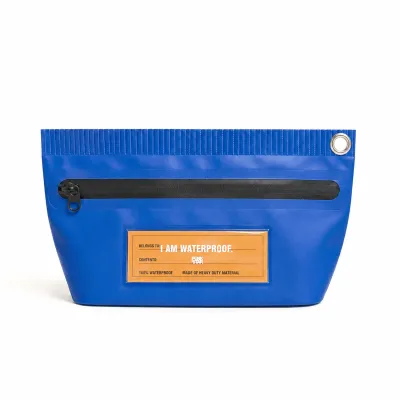
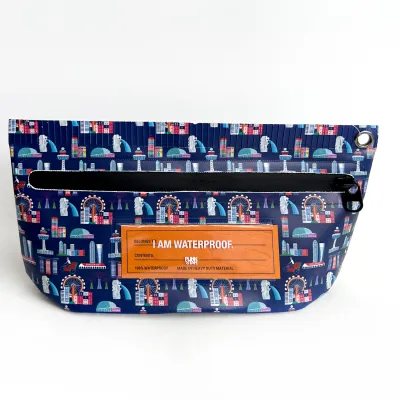
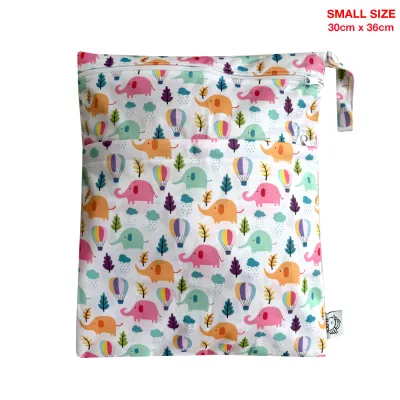
Prices are valid at publication and may change. Please refer to the product page for the latest price.
Roll-top dry bags offer a high level of protection against heavy water exposure because they seal by rolling the top opening down multiple times and securing it with a buckle. This design creates a highly reliable barrier, making it well-suited for protecting valuable electronics like tablets or personal learning devices. However, roll-top bags tend to form a rounded, bulky shape when sealed, which can take up significant space in a backpack and make it difficult to pack flat items like textbooks without bending the corners.
Zippered ethylene-vinyl acetate (EVA) pouches provide a semi-rigid structure that helps maintain the shape of the contents inside. These pouches are highly durable, resistant to tearing, and offer a moderate level of water resistance that easily handles minor leaks or damp environments. Because they open wide along the zipper line, children can quickly access their items during short transition times between classes. The trade-off is that standard zippers, even those with water-resistant coatings, are rarely completely submersible and can let water seep in during prolonged exposure to heavy rain.
Flat document sleeves, often made of polyvinyl chloride (PVC) or polyurethane (PU), are specifically designed to keep paper worksheets, notebooks, and drawing blocks flat and uncreased. These sleeves slide easily into the main compartment of a school bag alongside textbooks, maximizing space efficiency. While they are highly suitable for organizing daily homework, their flat profile limits their capacity, meaning they cannot accommodate bulky items like pencil cases, lunchboxes, or thick textbooks.
When organizing a school bag, parents must weigh the benefits of rigid protective cases against flexible pouches. Rigid cases offer impact protection for tablets but add significant weight and bulk to an already heavy school bag. Flexible waterproof pouches, on the other hand, add virtually no weight and can compress when empty, though they offer minimal protection against drops or heavy pressure. A balanced approach often involves using a flexible, flat sleeve for daily worksheets and a dedicated, padded waterproof pouch for electronic devices.
Essential Features to Evaluate for Daily School Commutes
A waterproof pouch is only as reliable as its weakest point, which is almost always the closure mechanism or the seams.

For school-aged children, the ease of operating a closure is just as important as its water-resistance rating. Roll-top clips are highly secure but require a child to perform multiple precise folds before clipping the buckle; younger children may rush this process, leaving the bag partially open. Press-seal closures, similar to those on household storage bags, are intuitive but require strong finger pressure along the entire length of the seal to close completely. If a child misses even a small section, water can easily enter. Waterproof zippers with large, easy-to-grip pulls are often the most user-friendly option for daily school use, though parents must ensure the zipper teeth are fully engaged to the end of the track.
The construction of the pouch’s seams determines how well it will withstand the physical stress of being stuffed into a crowded school bag. Stitched seams that are simply covered with waterproof tape are prone to peeling over time, especially when exposed to heat and humidity. Welded seams, which use high-frequency radio waves or heat to fuse the material layers together at a molecular level, are far more durable. Welded seams create a single, continuous barrier that will not unravel or separate under the weight of heavy textbooks.
Practical usability features can make a significant difference in a child’s daily routine. Transparent or semi-transparent panels allow children to quickly verify that they have packed the correct worksheets or books without needing to open the pouch and expose the contents to a damp environment. Additionally, look for pouches equipped with sturdy attachment points, such as D-rings or reinforced loops. These allow the pouch to be secured to the inside of the school bag with a lanyard or carabiner, preventing it from slipping to the bottom of the bag or falling out accidentally during a hectic commute.
Building Your Shortlist: What to Check on Product Labels and Listings
When shopping for a waterproof pouch on online marketplaces or in local retail stores, product descriptions can sometimes be misleading, using terms like “waterproof” and “water-resistant” interchangeably.
To make an informed decision, look for standardized water resistance ratings, such as the Ingress Protection (IP) code. An IPX rating indicates the level of protection against liquids; for example, a rating of IPX4 means the pouch can withstand splashing water from any direction, which is generally sufficient for light rain. For greater reassurance during heavy tropical downpours, look for pouches rated IPX6 (protection against powerful water jets) or IPX7 (protection against temporary submersion). If a product listing lacks an official IPX rating and only uses generic marketing terms, it is safer to assume the product is only splash-resistant and not suitable for protecting sensitive electronics.
Be alert to red flags in product descriptions that suggest a pouch may not be suitable for school use. Avoid listings that do not specify the material thickness or those that use very thin, single-layer plastics, as these are highly susceptible to puncturing by sharp pencil tips or ruler corners. Descriptions that mention “water-resistant zippers” without a protective storm flap or a secondary seal should also be approached with caution, as water can slowly seep through the zipper teeth during a long walk home in the rain.
User reviews can provide valuable insights into how a pouch performs in real-world conditions over time. Look specifically for feedback from other parents regarding seam durability and closure reliability after several months of daily use. Pay attention to complaints about the material becoming stiff or cracking in warm weather, or zippers splitting under pressure. A pattern of reviews mentioning broken buckles or torn attachment loops is a strong indicator that the pouch may not survive the rigors of a school term.
Caring for and Inspecting Waterproof Pouches
Even a high-quality waterproof pouch will degrade over time due to the friction, folding, and general wear of daily school life.
Establish a weekly routine to inspect your child’s pouch for signs of wear. Look closely at the corners and fold lines, as these areas experience the most stress and are prone to developing micro-tears or creases that can compromise the waterproof seal. Check the closure mechanism to ensure that press-seals are clean and free of debris, zipper teeth are intact, and plastic buckles are not cracked or weakened.
Proper cleaning and drying are essential to prevent the growth of mold, mildew, and unpleasant odors inside the pouch, especially in Singapore’s humid climate. If the pouch becomes dirty, wipe it down with a damp cloth and mild soap; avoid harsh chemical cleaners or abrasive sponges that can damage the waterproof coating. Always dry the pouch completely by opening it fully and hanging it upside down in a well-ventilated, shaded area. Never place a waterproof pouch in a clothes dryer or expose it to direct, intense sunlight, as excessive heat can warp the plastic and melt welded seams.
Knowing when to retire a pouch is crucial for protecting your child’s school items. If you discover any physical damage, such as peeling seam tape, a split zipper, or a puncture, stop using the pouch immediately. Attempting to repair a compromised pouch with household tape or glue is rarely effective and can lead to unexpected leaks that ruin expensive textbooks or electronic devices.
Frequently Asked Questions (FAQ)
Can I use a standard disposable plastic bag instead of a dedicated waterproof pouch?
While a standard disposable plastic bag or a household zip-top bag is a cheap and accessible temporary solution, it is not suitable for daily school use. These thin bags puncture easily when in contact with sharp objects like rulers, compasses, or the sharp corners of textbooks. Additionally, they degrade quickly under daily wear, leading to undetected leaks that can ruin school supplies. Investing in a dedicated waterproof pouch made of durable materials like EVA or TPU is a more reliable and environmentally friendly choice that will last throughout the school year.
How do I test if a new waterproof pouch is truly leakproof before putting electronics inside?
You can easily test the integrity of a new waterproof pouch at home using a simple dry paper towel test. Place a dry, folded paper towel inside the pouch, seal the closure completely according to the manufacturer’s instructions, and submerge the pouch in a basin of water for several minutes. After removing the pouch from the water, dry the exterior thoroughly with a towel before opening it. Inspect the paper towel inside; if it remains dry, the pouch’s seal is functioning correctly and is ready for school use.
Community discussion
Share your experience or ask a question. Comments are reviewed before publication.