
The best urinal for boys during potty training is not a single, one-size-fits-all product. Instead, the ideal choice depends entirely on your child’s physical development, height, and emotional readiness. For early training, a toilet seat reducer with an integrated, high splash guard is the safest and most natural starting point. As your boy shows interest in standing and develops the necessary coordination, a wall-mounted or floor-standing training urinal becomes a practical next step to teach aim and independence.
Introducing a standing urinal too early can lead to unnecessary frustration, mess, and resistance. By matching the urinal design to your child’s current developmental stage, you can create a low-stress learning environment. In compact bathroom layouts, such as those commonly found in Singapore apartments, selecting a design that balances space efficiency with easy cleaning is essential for maintaining household hygiene.
Quick Diagnostic: Matching Urinal Types to Training Stages
Every child progresses through potty training at his own pace. To help you determine where to begin, consider this diagnostic mapping of training phases to specific urinal designs:
Products mentioned in this guide
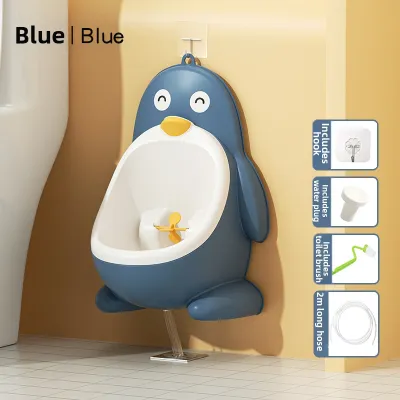
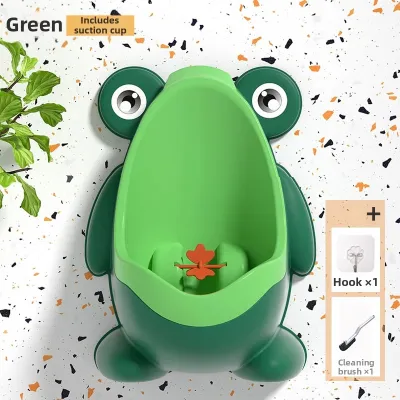

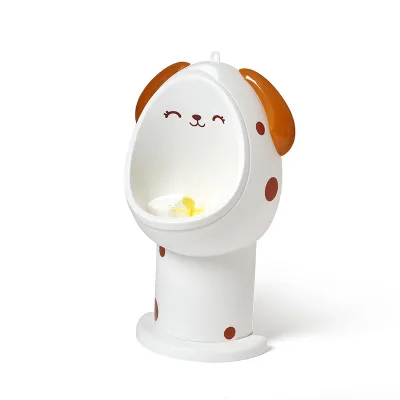
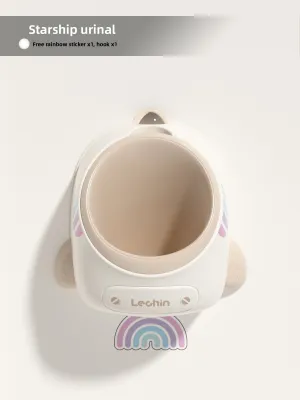

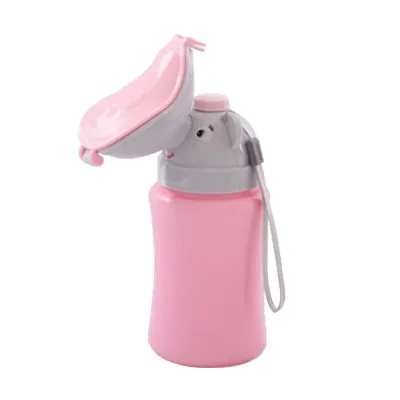
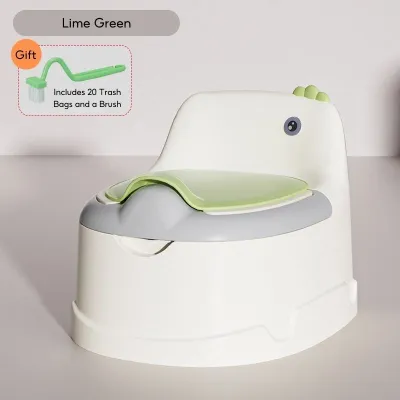
Prices are valid at publication and may change. Please refer to the product page for the latest price.
- Phase 1: Early Sitting (Ages 18 to 24 Months)
- Best Tool: Toilet seat reducer with a high, contoured splash guard.
- Why: Sitting is the safest, most physiologically natural position for toddlers to learn bowel and bladder control simultaneously. It establishes a secure foundation without requiring complex physical coordination.
- Phase 2: Transitioning to Standing (Ages 2 to 3 Years)
- Best Tool: Floor-standing portable urinal or a low wall-mounted trainer.
- Why: These tools allow your child to practice standing and aiming at his own height level. They remove the anxiety of climbing onto a large adult toilet while keeping the target easily accessible.
- Phase 3: Independent Standing (Ages 3 Years and Above)
- Best Tool: Adjustable wall-mounted urinal or standard adult toilet with a sturdy step stool.
- Why: As your child grows taller and gains consistent bladder control, he can transition to higher wall-mounted units or use the adult toilet independently, mimicking adult habits.
Observable Signs Your Boy Is Ready to Stand
Before purchasing a standing training urinal, observe your child’s daily habits and physical capabilities. Transitioning to a standing position requires specific motor skills and cognitive awareness that develop over time.

First, look for physical readiness. Your child must be tall enough to comfortably reach the rim or target of the urinal without standing on his tiptoes. Standing on tiptoes compromises balance, increases the risk of slips on wet bathroom floors, and makes aiming highly inaccurate. He should also be able to stand steadily on both feet for several minutes without holding onto nearby fixtures.
Second, observe his behavioral cues and interest levels. If your boy actively watches his father, older brother, or classmates stand to pee and expresses a desire to copy them, he is showing cognitive readiness. Conversely, if he expresses discomfort, fear, or resistance when asked to sit on a standard potty, a standing urinal may renew his interest in the training process.
Finally, ensure he possesses basic bladder control and the ability to follow simple instructions. He should be able to recognize the urge to urinate beforehand, stay dry for at least two hours at a time, and understand basic guidance on where to aim. If these physical and behavioral signs are absent, do not force the transition. Continuing with a seated potty or seat reducer is the recommended, low-stress path forward.
Evaluating Urinal Designs for Different Needs
Selecting the right design requires balancing your child’s physical needs with your bathroom’s layout and your personal cleaning preferences. The three primary categories of boys’ urinals each offer distinct advantages and trade-offs.
Wall-Mounted Standing Trainers
Wall-mounted trainers are popular options that often feature playful animal shapes, such as frogs or penguins, equipped with small spinning wind wheel targets to encourage aim. These units typically attach to the wall using suction cups, adhesive hooks, or screws.
- Pros: They are highly space-efficient, making them excellent for smaller bathrooms. Most designs feature an adjustable height mechanism, allowing you to raise the urinal as your child grows. They also include a removable inner bowl, which lets you empty and wash the container without detaching the entire mounting system.
- Cons: Installation stability is a common challenge. Suction cups require smooth, non-porous, and thoroughly clean tile surfaces to hold securely. In humid climates, bathroom condensation can cause suction cups to lose grip over time.
- Safety Warning: If suction cups are applied to textured tiles, matte finishes, or across grout lines, the unit is highly likely to fall, creating spills and safety hazards. Always verify wall compatibility and check the manufacturer's weight limits before installation.
Toilet Seat Reducers with Splash Guards
This design consists of a contoured ring that fits directly over your existing adult toilet seat, reducing the opening size so your child can sit securely without fear of falling in.
- Pros: It features an elevated splash guard at the front to contain upward spray while your child is seated. This is the most practical option for early training, night-time bathroom visits, and households with limited wall space. It also teaches your child to use the standard toilet from day one, simplifying the eventual transition.
- Cons: To use this safely, you must pair it with a stable, wide-base step stool so your child can climb up independently and rest his feet flat. Foot support is crucial for pelvic floor relaxation and proper bowel movements.
- Positioning: This remains the safest and most hygienic transition tool for boys who are still learning to control their aim or who prefer the security of sitting.
Floor-Standing Portable Urinals
Floor-standing urinals are freestanding potty chairs designed specifically for standing use, requiring no wall mounting or attachment to the adult toilet.
- Pros: They require zero installation, eliminating the risk of falling suction cups or damaged tiles. Their portability makes them easy to move between bathrooms, take on family trips, or place in temporary training areas.
- Cons: They occupy dedicated floor space, which can crowd compact bathrooms. Because they sit on the floor, you must manually empty and clean the entire unit after every use.
- Safety Warning: Before buying, check the base of the unit for robust, non-slip rubber grips. A lightweight plastic urinal without a secure base can easily tip over if bumped by an active toddler, leading to unsanitary spills.
Safety and Hygiene Checklist Before You Buy
When shopping for a training urinal, prioritize structural safety and ease of maintenance over decorative appeal. Use this checklist to verify product specifications before making a purchase:
- Splash Guard Design: Examine the height and curvature of the splash guard. For seat reducers, ensure the guard is high enough and angled slightly inward to catch upward splashes. Avoid soft, collapsing silicone guards that can be easily pushed down, as they are less effective at containing messes.
- Cleaning Mechanism: Look for a completely detachable inner bowl with a smooth, seamless interior. Avoid designs with deep crevices, tight corners, or exposed screws on the inside, as these areas quickly accumulate urine residue, mold, and bacteria. A simple lift-out bowl allows you to empty, rinse, and sanitize the unit with minimal contact.
- Material Verification: Always check the product label or manufacturer documentation to verify that the plastic is certified BPA-free, phthalate-free, and non-toxic. Since these items come into direct contact with sensitive skin, high-quality, durable plastics are essential.
- Mounting Security: For wall-mounted units, review the manufacturer's instructions regarding maximum weight capacity and required surface types. If you choose a suction-cup model, clean the target tile thoroughly with rubbing alcohol and dry it completely before applying the cups. If the suction cups fail to hold securely or show signs of wear, stop using the wall-mount option immediately and consult the manufacturer for replacement parts or alternative mounting hardware.
Recognizing When to Transition to the Standard Toilet
Training urinals are temporary stepping stones. Recognizing when your child is ready to transition to the standard adult toilet helps prevent him from becoming overly dependent on a toddler-sized fixture.
Your child is likely ready to make the switch when he consistently demonstrates accurate aiming and can control his stream without creating spills. Physical growth is another clear indicator; if he has outgrown the maximum height limit of his wall-mounted urinal, continuing to use it will force him to bend or stand uncomfortably, leading to poor posture and bad aiming habits. Additionally, if he shows confidence using standard toilets at preschool, childcare, or in public restrooms, he is ready to phase out the home training urinal.
To make the final transition smooth, place a sturdy, non-slip step stool at the adult toilet so he can reach the proper height comfortably. You can also introduce a foldable travel seat reducer for public toilets to maintain his sense of security when away from home. Once he successfully and consistently uses the adult toilet for two to three weeks, remove the training urinal from the bathroom entirely to establish the adult toilet as his permanent routine.
Frequently Asked Questions (FAQ)
At what age should a boy start using a standing urinal?
Most boys are physically and developmentally ready to try a standing urinal between the ages of 2 and 4. However, readiness depends on individual height, balance, motor skills, and personal interest rather than a strict age guideline. Always follow your child’s physical cues and the manufacturer’s height recommendations rather than forcing a transition based solely on his age.
How do I prevent splashes when my boy uses a wall-mounted urinal?
To minimize splashes, install the wall-mounted urinal so the rim is level with your child’s lower abdomen, preventing him from having to aim too high or low. Teach him to stand close to the unit without leaning against it, and encourage him to focus his stream directly on the center target or spinning wheel, which is designed to direct liquid downward smoothly. Regularly re-evaluate and raise the mounting height as your child grows.
Community discussion
Share your experience or ask a question. Comments are reviewed before publication.