
The ideal plug protector for your home depends on how often you use the socket, your child’s current developmental stage, and the physical layout of your rooms. While simple insert caps work well for hidden outlets, frequently used UK-style 3-pin (Type G) sockets require more robust solutions like sliding plate covers or outlet box covers. A comprehensive baby-proofing strategy balances child resistance with daily adult convenience.
Assessing Your Outlet Usage and Safety Needs
To choose the right protection, start by categorizing every outlet in your home based on how often it is accessed. Outlets hidden behind heavy wardrobes or television consoles require a different approach than those used daily for vacuuming or phone charging.
Singapore homes primarily use the standard UK-style 3-pin (Type G) socket. These sockets are larger than those found in many other regions and often feature individual built-in on/off switches. Any protector you choose must accommodate these specific dimensions and switch placements without interfering with the socket’s operation.
Products mentioned in this guide
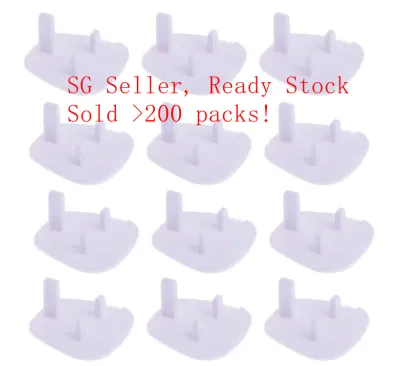
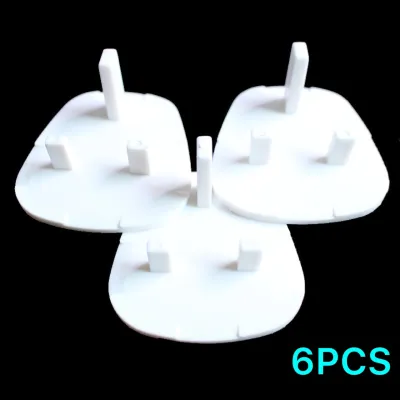
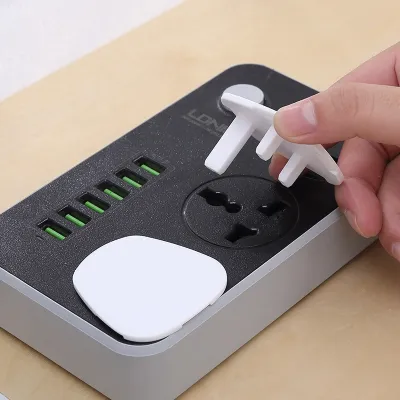
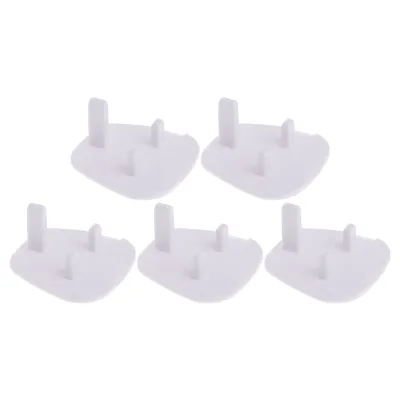
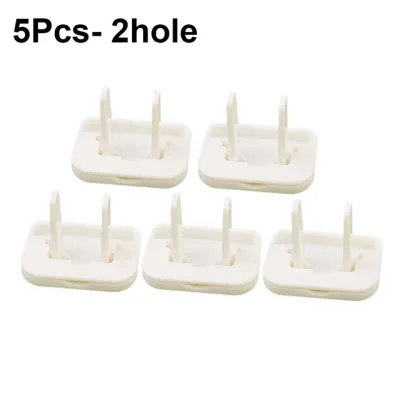
Prices are valid at publication and may change. Please refer to the product page for the latest price.
Consider the physical accessibility of each outlet. Low-lying sockets near the floor are within easy reach of crawling infants, while those positioned above kitchen countertops may only require protection if appliances are permanently plugged in. Note whether furniture sits flush against the wall, as bulky protectors can prevent cabinets or sofas from pushing back completely.
Comparing Plug Protector Types for Type G Sockets
Different areas of your home demand different protective mechanisms. The table below summarizes the three primary types of plug protectors available for Type G sockets, highlighting their ideal applications and practical trade-offs.

| Protector Type | Mechanism | Ideal Use Case | Key Trade-Off |
|---|---|---|---|
| Socket Caps | Plastic pins inserted directly into socket holes | Outlets hidden behind heavy furniture | Can become a loose choking hazard if removed |
| Sliding Plate Covers | Spring-loaded sliding doors that close automatically | Frequently accessed living area outlets | Requires faceplate replacement or adhesive installation |
| Outlet Box Covers | Bulky plastic enclosure covering the plug and cord | Continuously plugged-in appliances | Visually obtrusive and limits access to switches |
Socket Caps (Insert Plugs)
Socket caps consist of individual plastic covers with three pins that insert directly into the open holes of a Type G socket. They are designed to sit flush against the faceplate, making it difficult for tiny fingers to grip and pull them out.
These caps are highly economical, easy to install instantly, and visually discreet. Because they do not add bulk, they allow furniture to remain flush against the wall.
However, they present a notable drawback: once an adult removes the cap to use the outlet, the loose plastic piece can easily be misplaced or left within a child’s reach, creating a potential choking hazard. They are best reserved for outlets that are completely hidden behind heavy furniture or rarely accessed.
Sliding Plate Covers
Sliding plate covers feature a spring-loaded mechanism that automatically slides shut to cover the socket holes the moment a plug is pulled out. To insert a plug, an adult must align the plug pins with the cover slots, slide the mechanism open, and push the plug in.
This design eliminates loose parts entirely, ensuring constant protection without the risk of misplacing a cap. It offers excellent adult convenience for outlets that are used daily.
Installation typically requires either replacing the existing faceplate or attaching an adhesive overlay. Before purchasing, you must verify that the screw distances on the protector match the standard dimensions of your local Type G faceplates.
Outlet Box Covers
Outlet box covers are plastic enclosures that snap shut over both the socket and the inserted plug. The power cord exits through a small slot at the bottom of the box, keeping the connection completely enclosed.
This mechanism prevents toddlers from pulling out active plugs or attempting to chew on live cords. It secures the entire electrical connection rather than just the empty socket.
The primary trade-off is their bulky, visually obtrusive design. They also make it difficult to access the socket’s built-in manual switch, meaning they are best suited for appliances that must remain plugged in continuously, such as refrigerators, air purifiers, or baby monitors.
Matching the Protector to Your Child's Developmental Stage
As children grow, their physical capabilities and problem-solving skills change, requiring parents to adapt their baby-proofing strategy accordingly.
For crawling infants aged 6 to 12 months, the primary goal is preventing accidental contact and curiosity-driven exploration of low-level outlets. At this stage, basic socket caps or box covers on accessible outlets are generally sufficient, as infants lack the finger strength or coordination to remove them.
Curious toddlers aged 1 to 3 years present a much higher risk. They quickly learn by watching adults and may attempt to pry out simple insert caps using toys or their fingernails. For this age group, sliding plate covers or secure outlet box covers are highly recommended, as they require dual-action movements or strength beyond a toddler’s capability.
As children transition into older preschoolers, they begin to understand verbal safety rules and the dangers of electricity. While you can gradually phase out protectors on highly visible, occasionally used outlets, it remains wise to keep high-risk or high-voltage connections secured behind box covers.
Installation, Daily Use, and Ongoing Safety Checks
Proper installation and regular maintenance are essential to ensure your chosen plug protectors remain effective over time.
When choosing between adhesive and screw-mounted protectors, consider your living situation. Screw-mounted options offer the most secure fit but require turning off the main power before replacing a faceplate. If using heavy-duty adhesive overlays, ensure the surface is clean before application, and use a hair dryer to gently warm the adhesive for damage-free removal later.
Perform regular safety checks on all installed protectors. Inspect plastic components for hairline cracks, check that spring-loaded sliding mechanisms snap back quickly, and verify that adhesive backings have not become loose or brittle over time.
Pay close attention to the built-in switches common on Singapore Type G sockets. Ensure that any installed box cover does not accidentally flip the switch to the “on” position while unattended, and verify that you can still safely cut power in an emergency. If a socket faceplate becomes loose or damaged during installation, stop use immediately and consult a qualified electrician.
Decision Framework: Choosing the Right Protector
To finalize your baby-proofing plan, match each outlet in your home to the most appropriate protector type based on these conditions:
- Choose Socket Caps if: The outlet is completely hidden behind heavy furniture, rarely used, and entirely out of your child's direct line of sight.
- Choose Sliding Plate Covers if: You require daily access to the socket for vacuuming, charging, or appliances, and you want a seamless, loss-proof solution.
- Choose Outlet Box Covers if: You need to secure a permanently plugged-in appliance, such as a refrigerator or baby monitor, and want to prevent your child from pulling the plug.
Before purchasing any protector, verify the physical specifications of your home’s outlets. Specialized smart sockets, USB-integrated faceplates, or non-standard decorative designs may not be compatible with standard sliding covers or box enclosures, requiring custom safety solutions.
Frequently Asked Questions (FAQ)
Are socket caps a choking hazard?
Yes, socket caps can become a choking hazard if a child manages to pry them out or if an adult leaves them lying around after unplugging an appliance. To minimize this risk, only use socket caps on outlets that are completely blocked by heavy furniture, and opt for sliding plate covers on easily accessible outlets.
Can I use adhesive outlet covers on rented HDB or condo walls?
Yes, but you must take precautions to avoid peeling the paint or damaging the faceplate when it is time to move out. Test a small, inconspicuous area first, and always use a gentle heat source like a hair dryer to soften the adhesive before attempting to peel it off. Alternatively, look for friction-fit box covers that do not require adhesive or permanent modifications.
Community discussion
Share your experience or ask a question. Comments are reviewed before publication.