
Finding a drool pad that fits your stroller perfectly requires looking beyond the product name and checking the physical layout of your specific stroller model. Because strollers feature diverse harness configurations, seat shapes, and folding mechanisms, a pad that fits one model might bunch up, slide down, or block safety straps on another. To secure a safe and comfortable fit, you must verify the alignment of your stroller’s harness slots, measure the seat dimensions, and evaluate how the pad attaches to the frame.
In Singapore’s warm and humid climate, a well-fitting drool pad—often referred to as a stroller liner or seat pad—is essential for absorbing sweat and drool, keeping your stroller clean, and protecting your baby’s sensitive skin. However, choosing between a brand-specific accessory and a universal-fit alternative involves weighing compatibility against cost and material options. By taking precise measurements and understanding your stroller’s design, you can select a pad that keeps your child comfortable without compromising their safety.
Brand-Specific vs. Universal-Fit Drool Pads
When shopping for a drool pad, the first decision is whether to buy an original equipment manufacturer (OEM) accessory designed specifically for your stroller brand or a universal third-party option. Brand-specific pads are engineered to match the exact contours, harness slot positions, and attachment points of your specific stroller model. This tailored fit ensures that the pad lies completely flat, does not slide during use, and maintains a neat, integrated aesthetic that complements your stroller’s design.
Products mentioned in this guide
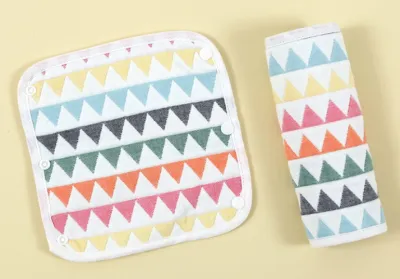
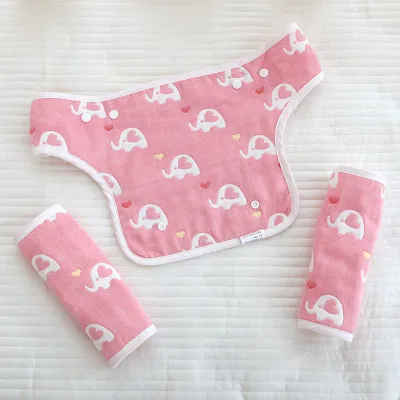
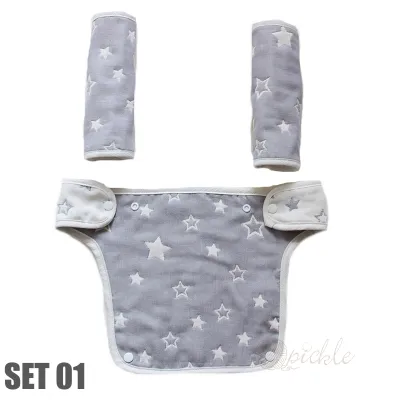
![LennyLamb Drool Pads & Reach Straps Set [multiple designs]](https://img.lazcdn.com/g/p/dbb1ff938472968d614cb6c1ba1d6776.jpg_400x400q80.jpg_.webp)
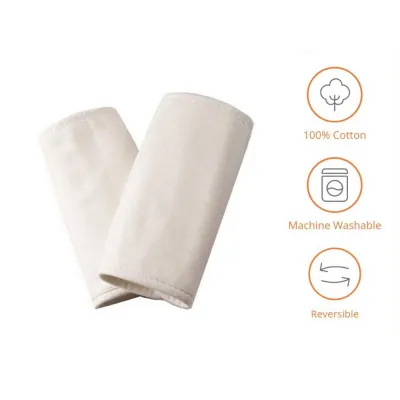
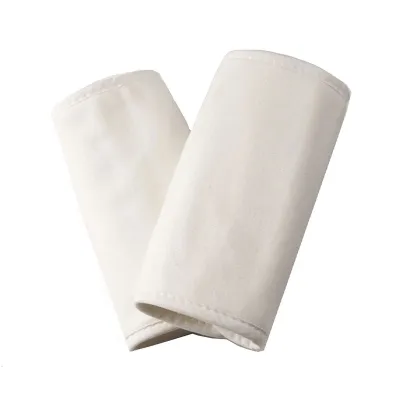
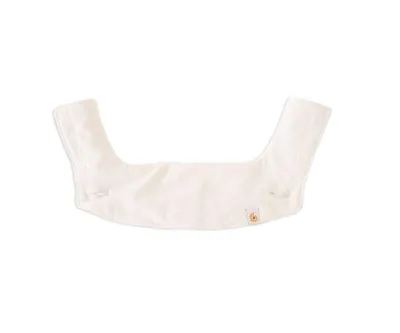
Prices are valid at publication and may change. Please refer to the product page for the latest price.
However, brand-specific accessories often come with a premium price tag, sometimes costing upwards of S$50 to S$100 depending on the brand. They may also limit your choices regarding fabric patterns, textures, and organic material options. If you prefer a specific material, such as organic bamboo or breathable 3D mesh to combat tropical humidity, you might find a wider variety of options among third-party universal pads.
Universal-fit drool pads are designed to accommodate a broad range of stroller models by utilizing elongated harness slots or multiple opening positions. While they are highly cost-effective and widely available on online marketplaces, they are not a guaranteed fit for every stroller. Universal pads frequently encounter compatibility issues with strollers that feature proprietary harness shapes, highly contoured or deeply recessed seats, or integrated bumper bars that require specific cut-outs.
Using a non-OEM accessory can also have subtle trade-offs. If a universal pad does not fit snugly, it can slide around, causing friction that might prematurely wear down the stroller’s original fabric. Additionally, while simply using a third-party liner rarely voids a stroller warranty outright, any physical damage or safety incidents directly caused by an ill-fitting accessory—such as a strap getting caught or fabric tearing due to improper tension—may not be covered by the manufacturer’s warranty.
Verifying Harness Slot Alignment and Seat Dimensions
The most critical safety consideration when choosing a drool pad is ensuring it does not interfere with the stroller’s harness system. A five-point safety harness must be able to route smoothly through the pad without being redirected, twisted, or restricted. To verify compatibility, start by measuring the vertical and horizontal distance between the harness slots on your stroller seat, particularly the shoulder strap exits and the crotch buckle position.

Compare these measurements directly with the specifications of the drool pad you are considering. Many universal pads feature vertical slits secured by hook-and-loop fasteners to accommodate different shoulder strap heights, but you must ensure the openings align with your stroller’s lowest and highest harness settings. If the slots do not align, the harness straps may be forced into an awkward angle, which can compromise the harness’s ability to restrain your child securely in an impact or sudden stop.
Next, measure the physical dimensions of your stroller seat, including the backrest height, seat depth, and seat width. A pad that is too wide will bunch up at the sides, creating uncomfortable ridges that can irritate your baby’s skin and prevent them from sitting flush against the seat back. Conversely, a pad that is too narrow or too short will constantly slide down, leaving areas of the original stroller fabric exposed to drool, sweat, and spills, which defeats the purpose of using a protective liner.
Under no circumstances should you attempt to modify, cut, or alter a universal drool pad to make it fit your stroller’s harness slots. Cutting into the fabric destroys its structural integrity, causing the edges to fray rapidly during use and washing. Loose threads can wrap around a baby’s fingers or toes, posing a serious tourniquet hazard. Furthermore, modified slots can tear further under tension, potentially allowing the harness straps to slip out of position when you need them most. If a pad does not fit your stroller’s harness layout out of the box, return it and look for a compatible alternative.
Evaluating Attachment Methods for Safety and Stability
How a drool pad attaches to the stroller frame determines how well it stays in place during daily use. Common securing mechanisms include hook-and-loop straps, elastic loops, and tie-down strings. Hook-and-loop straps offer quick installation and a highly adjustable fit, but they can catch on delicate clothing or scratch your baby’s skin if the rough side is left exposed. Elastic loops are excellent for wrapping around specific frame joints or canopy pegs, though they can lose their elasticity over time when exposed to heat and frequent washing.
Tie-down strings provide a highly customizable fit, allowing you to secure the pad to various points on the stroller frame. However, long strings present a significant safety hazard. If they are not tied securely or are left dangling, they can pose an entanglement risk for your child or get caught in the stroller’s moving parts. Always ensure that any ties are kept short, knotted tightly, and tucked completely out of your baby’s reach.
To prevent the pad from sliding down when your child climbs in or moves around, look for pads that incorporate non-slip backing materials. High-quality liners often feature textured silicone dots or a rubberized backing on the reverse side. This friction-based grip is particularly important for strollers with smooth, water-resistant nylon fabrics, which are naturally slippery. Ensure the backing material is breathable and heat-resistant, so it does not degrade or stick to your stroller seat during hot afternoons.
Before finalizing your choice, evaluate how the pad’s attachment points interact with your stroller’s folding mechanism and recline functions. Some pads require you to detach certain straps before you can fold the stroller completely. If the pad blocks the folding hinges or prevents the seat from reclining fully, it will quickly become a daily inconvenience. Choose a design that allows the stroller to fold compactly without needing to remove the pad every time.
Your Step-by-Step Compatibility Checklist
To make a confident purchase and avoid the hassle of returns, follow this systematic verification sequence before buying a drool pad:
- Locate Your Stroller Specifications: Find your stroller's exact brand, model, and year of manufacture. Check the user manual or the manufacturer's website to see if they offer dedicated accessories or list specific seat dimensions.
- Measure the Harness Layout: Measure the distance from the seat bottom to the shoulder slots, and the width between the two shoulder straps. Note whether your stroller's harness straps can be easily unthreaded or if they are permanently sewn into the frame, as some universal pads require you to unthread the straps to install them.
- Check the Seat Shape: Identify if your stroller has a flat, standard seat or a highly contoured, ergonomic bucket seat. Contoured seats generally require highly flexible, thin liners or brand-specific pads to prevent severe bunching.
- Cross-Reference Reviews: Search online marketplaces and parenting forums for reviews from other parents who own the exact same stroller model. Look for specific feedback regarding how well third-party pads fit that model.
Use these conditional rules to guide your final decision:
- Choose a brand-specific pad if: Your stroller features a proprietary harness system (such as a one-pull harness that cannot be unthreaded), an unusually shaped or highly contoured seat, or an integrated headrest that cannot be bypassed.
- Choose a universal pad if: Your stroller uses standard, widely spaced harness slots, has a relatively flat seat back, and you want a wider selection of breathable fabrics, organic materials, or budget-friendly options.
Verify first if your stroller has an adjustable headrest, a reversible seat, or is part of a travel system. An adjustable headrest may require a pad that can slide up and down with the harness, while travel systems require a pad that does not interfere with the attachment points of an infant car seat.
Frequently Asked Questions (FAQ)
Can I use a drool pad in a stroller with a reversible seat?
Yes, you can use a drool pad with a reversible seat, but you must pay close attention to how the seat transitions between parent-facing and forward-facing modes. Reversible seats often have unique folding mechanisms or pivot points that can pinch or pull on a tightly secured pad. When installing the pad, ensure it does not block the release levers or buttons used to reverse the seat. Look for symmetrical pad designs or those with dual-sided attachment points that allow the pad to remain secure regardless of which direction the seat is facing. Always consult your stroller’s manual to ensure that adding a liner does not interfere with the safe locking of the reversible seat frame.
Will adding a drool pad affect my stroller's warranty?
Generally, using a third-party drool pad or seat liner will not automatically void your stroller’s warranty. However, stroller manufacturers typically design their warranties to cover defects in materials and workmanship under normal use. If an ill-fitting third-party pad causes cosmetic damage—such as color bleeding from a cheap dye onto the stroller fabric, or friction wear from a rough backing—the manufacturer will likely classify this as normal wear and tear or user-induced damage, which is not covered. To protect your investment, check the stroller manufacturer’s official guidelines regarding accessories, and always opt for high-quality, colorfast liners that fit securely without excessive friction.
How do I clean a drool pad without damaging the harness slots?
To preserve the structural integrity of your drool pad and prevent the harness slots from fraying, always check the manufacturer’s care label for specific washing instructions. Most pads should be washed in cold or lukewarm water using a gentle, baby-safe detergent. To protect the delicate stitching around the harness cut-outs and prevent any non-slip backing from rubbing against the washing machine drum, place the pad inside a mesh laundry bag before washing. Avoid using bleach or fabric softeners, which can degrade the fibers and reduce the pad’s absorbency. Always air dry the pad flat or hang it up; high-heat tumble drying can warp the fabric, melt non-slip silicone backings, and cause the harness slots to shrink or fray, rendering the pad unusable.
Community discussion
Share your experience or ask a question. Comments are reviewed before publication.