
Selecting the correct mattress firmness for your baby is one of the most critical decisions you will make when setting up their nursery. The ideal Beblum mattress firmness level depends directly on your baby’s age and developmental stage: newborns and infants under twelve months require an extra-firm, unyielding surface to support their rapidly growing bones and minimize safety risks, while toddlers over one year old can transition to a slightly softer, more pressure-relieving surface once they have achieved key mobility milestones.
Many new parents naturally worry that a firm mattress will feel uncomfortable for their little one, applying adult sleep preferences to an infant’s environment. However, babies have vastly different physiological needs than adults. Understanding how to match mattress firmness to your child’s growth stages ensures both a safe sleep environment and a supportive foundation for their physical development.
Why Mattress Firmness Matters for Baby Sleep Safety
An infant’s sleep environment must prioritize structural support over plush comfort to ensure basic safety. During the first year of life, a baby’s skeletal system is highly malleable, consisting largely of soft cartilage that gradually ossifies into bone. A firm mattress provides the necessary resistance to keep the spine in a neutral alignment, preventing unnatural curvature during long sleep hours.
Products mentioned in this guide
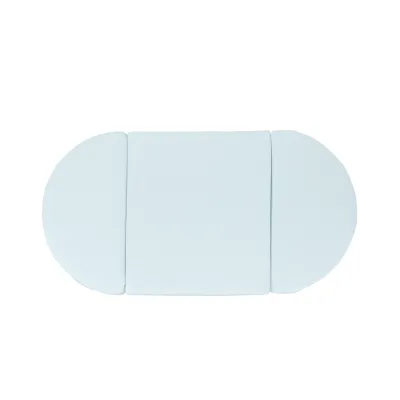
Prices are valid at publication and may change. Please refer to the product page for the latest price.
Beyond physical development, surface firmness plays a pivotal role in reducing critical sleep hazards, such as Sudden Infant Death Syndrome (SIDS) and accidental suffocation. Newborns lack the neck strength and motor skills required to lift or turn their heads if they accidentally roll face-down. A soft, plush surface can easily contour around a baby’s nose and mouth, creating a pocket of trapped carbon dioxide or completely blocking their airway.
When a baby sleeps on an extra-firm surface, their face remains clear of obstructions even if they manage to turn slightly. The surface does not indent or conform to the shape of their head, ensuring that their breathing passages remain completely unobstructed. This is why pediatric health organizations worldwide consistently recommend a flat, firm sleep surface for all infants.
Applying adult comfort standards to a baby’s crib is a common mistake that can lead to dangerous setups. Adults look for pressure relief, contouring memory foam, and cushioning layers to soothe aching joints. Infants do not have these pressure points; their lightweight bodies do not sink into a mattress the way adult bodies do. Introducing soft bedding, thick mattress toppers, or plush surfaces into a crib compromises the structural integrity of the sleep space and introduces unnecessary risks.
How to Identify Your Beblum Mattress Firmness Levels
Beblum mattresses are frequently designed with dual-sided functionality to adapt to your child’s changing needs as they grow from infancy into toddlerhood. This flippable design typically features an extra-firm side engineered specifically for newborns and a slightly softer, more resilient side tailored for toddlers. Identifying which side is which is essential before placing your baby down to sleep.

To determine the firmness levels of your specific Beblum mattress model, start by thoroughly reviewing the manufacturer’s documentation, packaging, and sewn-in labels. Most dual-sided mattresses feature clear, color-coded tags or embroidered labels along the border indicating the “Infant” and “Toddler” sides. These labels are designed to remain intact throughout the lifespan of the mattress, serving as a permanent reference point for parents.
If the labels on your mattress are missing, faded, or unclear, you can identify the sides using tactile and visual indicators. The infant side is constructed with high-density foam or specialized structural fibers designed to offer maximum resistance with virtually no sinkage. When you press your hand onto this side, it should feel highly unyielding and flat. The toddler side, while still highly supportive, often incorporates a thin, integrated comfort layer or a quilted cover that provides a slightly softer initial touch to accommodate a heavier, more active toddler.
Always consult the official specification sheet or user manual for your exact Beblum model to verify its internal construction. Different models may utilize varying materials, such as natural latex, coconut fiber, or high-density polyurethane foam, to achieve their target firmness levels. Knowing the exact composition of your mattress helps you understand how it should feel and behave under pressure.
Matching Firmness to Your Baby's Age and Mobility
Newborns and Infants (0–12 Months)
During the first twelve months of life, your baby must sleep on the firmest available surface. This stage is characterized by rapid spinal growth and the gradual development of head control, neck strength, and rolling capabilities. An extra-firm mattress surface ensures that as your baby learns to push up, roll, and wiggle, they always have a stable, non-slip foundation beneath them.
If an infant is placed on a surface that is too soft, their developmental progress can actually be hindered. A soft surface makes it much more difficult for a baby to practice rolling over or pushing up on their arms, as their hands and knees sink into the material rather than finding firm leverage. Keeping the mattress on the designated infant side for the entire first year provides the optimal balance of safety and developmental support.
Toddlers (1–3 Years)
Once your child reaches twelve months of age and transitions into toddlerhood, their sleep needs begin to shift. At this stage, most toddlers have developed strong motor skills, including the ability to roll over confidently in both directions, sit up independently, pull themselves to a standing position, and potentially take their first steps. Their increased weight and muscle mass mean they can benefit from a surface that offers slightly more pressure relief.
Transitioning to the toddler side of a dual-sided Beblum mattress is appropriate once these milestones are consistently met. The toddler side provides a touch more cushioning to support their larger frame and active sleeping positions, while still maintaining the core structural support necessary for their growing bones. This transition helps prevent sleep disruptions as your child becomes more active during the night.
Before flipping the mattress, observe your child’s daily physical milestones rather than relying solely on their age. If your one-year-old is still working on head control or struggles to roll over independently, it is safest to keep them on the extra-firm infant side a little longer. Only make the switch when you are confident in their ability to easily reposition themselves throughout the night.
Practical Tests to Verify Mattress Firmness at Home
To ensure your Beblum mattress is providing the correct level of support and has not degraded over time, you can perform several simple, observable tests at home. These checks help verify that the sleep surface remains safe and structurally sound for your baby.
- The Hand Press Test: Place the mattress on a flat surface and press your hand firmly down into the center, then repeat the test along the edges. When you release the pressure, the mattress should instantly rebound to its original flat shape, leaving no visible indentation or handprint. If the surface takes several seconds to recover, or if you can feel the underlying bed base through the mattress, the core may have lost its structural integrity and may no longer be safe for an infant.
- The Sleep Posture Observation: Observe your baby's posture while they are asleep on the mattress. Their spine should appear straight and horizontally aligned, whether they are lying on their back or, if they are older, on their side. If you notice their body sagging into a curved, hammock-like position, or if their face sinks slightly into the fabric when they turn, the surface is too soft and requires immediate adjustment or replacement.
- The Two-Finger Fit Check: A safe sleep environment requires a snug fit between the mattress and the crib frame. Insert your index and middle fingers between the edge of the mattress and the inner wooden rails of the crib. If you can easily fit more than two fingers into this gap, the mattress is too small for the crib, creating a dangerous space where a baby's limbs or head could become trapped. The mattress must fit tightly against all four sides of the crib frame.
Maintaining Firmness and Knowing When to Replace
Proper maintenance is essential to preserve the structural integrity and firmness of your baby’s mattress over years of use. Because baby mattresses are subjected to frequent spills, diaper leaks, and moisture, taking proactive steps to protect the core materials will extend the product’s safe lifespan.
If recommended by your specific Beblum model’s user manual, establish a regular rotation schedule to prevent uneven wear and localized sagging. Rotating the mattress 180 degrees horizontally every few months ensures that your baby’s weight is distributed evenly across the surface over time. Note that you should only flip the mattress vertically (from the infant side to the toddler side) when your child has reached the appropriate developmental milestones.
Always use a high-quality, waterproof, and breathable mattress protector to shield the inner core from moisture. Excess moisture from spills or humid climates can cause foam cores to break down prematurely, leading to a loss of firmness and support. Ensure the protector fits tightly over the mattress and does not add a thick, quilted, or plush layer that could soften the engineered firmness of the sleep surface.
Regularly inspect the mattress for clear stop-use conditions that indicate it is no longer safe for your child. If you observe visible sagging, permanent body impressions, structural tearing, or a noticeable loss of rebound during your hand press tests, it is time to replace the mattress. Additionally, always transition your child to a toddler bed or a larger sleep surface once they exceed the manufacturer’s specified weight and height limits for their crib mattress.
Frequently Asked Questions (FAQ)
Can I Add a Soft Topper to Make the Mattress More Comfortable?
No, you should never add an aftermarket soft topper, memory foam pad, or thick quilted mattress cover to a baby’s crib mattress. Doing so alters the engineered firmness of the sleep surface, creating a serious suffocation hazard for infants who lack the motor skills to lift their heads. If you want to improve comfort safely, use a tightly fitted, breathable cotton sheet designed specifically for crib mattresses, which will not compromise the underlying support.
How Do I Identify the Infant Side on a Dual-Sided Mattress?
To identify the infant side, start by looking for physical markers such as embroidered tags, color-coded borders, or printed labels on the mattress cover. If these are not present, perform a comparative hand press test on both sides; the infant side will feel significantly harder and offer much higher resistance than the toddler side. If you are still unsure, locate the model number and batch code on the mattress tag and contact Beblum customer support to retrieve the original specification sheet.
Will a Firm Mattress Feel Uncomfortable for My Baby?
No, a firm mattress is not uncomfortable for a baby. Unlike adults, who have developed pressure points in their shoulders and hips, infants have lightweight, flexible bodies that do not require plush cushioning. A flat, firm surface supports their developing bones and allows them to move, roll, and breathe easily. Providing a firm mattress actually promotes safer, more restful sleep by ensuring your baby feels stable and secure throughout the night.
Community discussion
Share your experience or ask a question. Comments are reviewed before publication.