
Choosing the right baby utensils is not just about buying a smaller version of what adults use; it is about matching the tool to your baby’s rapidly evolving physical capabilities. Between 6 and 12 months, your child transitions from a passive recipient of purees to an active, independent diner who wants to scoop, stab, and feed themselves. Selecting utensils based on their specific developmental stage—such as the transition from the palmar grasp to the refined pincer grasp—ensures a smoother weaning journey, reduces mealtime frustration, and supports oral motor development.
In local households, where meals often feature a diverse mix of textures from soft rice congee to steamed fish and finger foods, having the right tools is essential. The ideal approach is to build a small, versatile collection of utensils that adapt to your baby’s changing grip and mouth capacity. By focusing on ergonomic handles, safe materials, and age-appropriate designs, you can help your baby build confidence at the dining table while keeping safety at the forefront.
Understanding Your Baby's Motor Skills and Utensil Needs
A baby’s physical development during the first year of life is incredibly rapid, and their feeding tools must keep pace with these changes. Around six months of age, babies typically use a palmar grasp, wrapping their entire fist around an object to hold it. As they approach nine months, they begin to develop the pincer grasp, using their thumb and index finger to pick up smaller items. Finally, by twelve months, their wrist rotation improves, allowing them to bring a loaded spoon to their mouth without spilling all of its contents.
Products mentioned in this guide
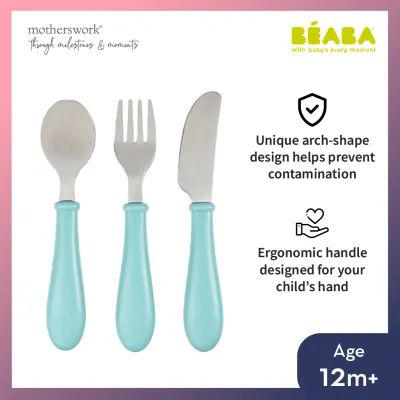
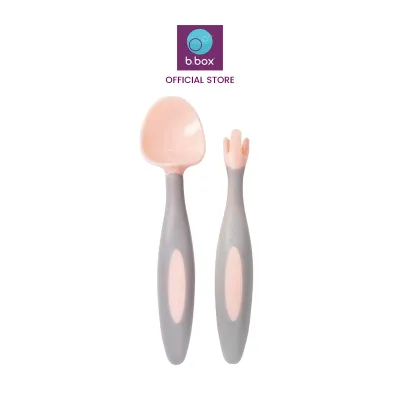
![[Free Travel Case] PPSU Fork & Spoon Set For Baby 6 months Toddler 12 months up School Lunchbox Utensil by 8miles](https://img.lazcdn.com/g/p/bd4d45e41096b53736e4f53982e29878.jpg_400x400q80.jpg_.webp)
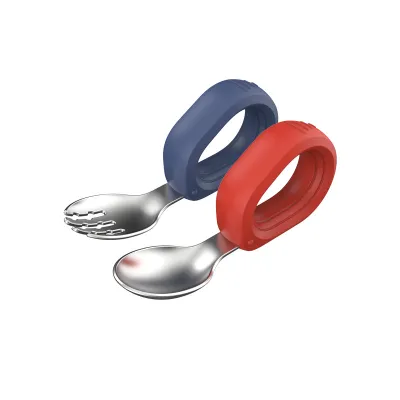
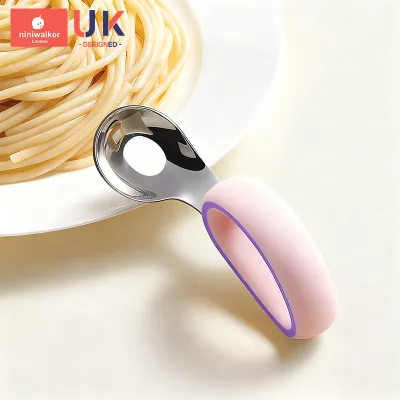
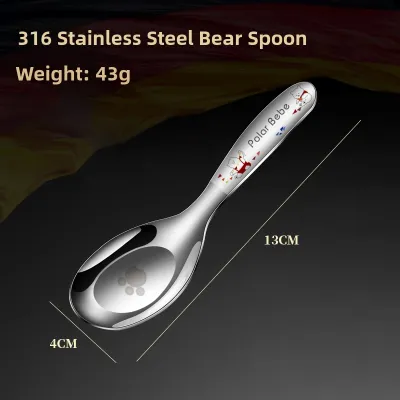
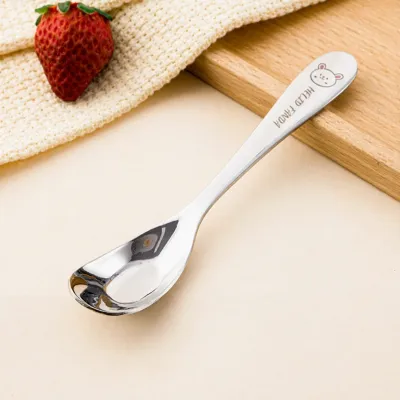
Prices are valid at publication and may change. Please refer to the product page for the latest price.
Using adult-sized or poorly proportioned utensils during these stages can hinder your baby’s progress. Standard adult spoons are too deep and wide for a baby’s small mouth, which often triggers the gag reflex or causes food to accumulate in the corners of their lips. Furthermore, long, thin handles are difficult for tiny hands to coordinate, leading to dropped utensils, spilled food, and a highly frustrated child who may lose interest in self-feeding altogether.
Properly sized baby utensils do more than just deliver food to the mouth; they play an active role in developmental milestones. When a baby holds a chunky, lightweight spoon, they are practicing hand-eye coordination and spatial awareness. Mouthing a soft spoon also stimulates the tongue and gums, helping to desensitize the gag reflex and prepare the oral muscles for speech development. Investing in the right tools turns mealtime into an active learning session rather than a stressful chore.
Essential Design Features to Check Before Buying
When browsing online marketplaces or local baby boutiques, the sheer variety of weaning products can be overwhelming. To make an informed decision, parents should focus on a few key design elements that directly impact usability and safety. Evaluating these features beforehand ensures that the utensils you bring home will actually support your baby’s current developmental stage.

The handle is the first point of contact for your baby, making its design critical. For early self-feeding, look for short, chunky handles that fit comfortably inside a closed fist. Some designs feature textured ridges or non-slip silicone sleeves, which prevent the utensil from slipping out of soapy, food-covered hands. Angled or curved handles can also be highly beneficial, as they align with the natural path from hand to mouth before a baby has mastered wrist rotation.
Next, examine the dimensions and shape of the spoon bowl or fork head. A baby’s spoon should have an ultra-shallow bowl, allowing them to easily clear the food with their upper lip. If the bowl is too deep, the food remains trapped inside, leading to frustration. For beginner forks, the tines must be blunt, rounded, and relatively short. This design allows the baby to press down on soft foods without the risk of poking or scratching their sensitive gums and cheeks.
Material safety is another non-negotiable factor that requires careful verification of manufacturer labels. Look for food-grade silicone, which is soft, flexible, and gentle on teething gums. If choosing plastic, ensure the packaging explicitly states it is free from bisphenol A (BPA) and other harmful chemical additives. High-quality stainless steel is excellent for older babies, but you must verify that the edges are completely smooth and free from sharp burrs.
Finally, consider the utility of sensory and functional extras. Some utensils come with built-in choke guards—wide collars near the neck of the spoon that prevent the baby from shoving the tool too far down their throat. Heat-sensing tips that change color when food is too hot can be a helpful visual cue, though they should never replace manual temperature checks. Textured handles can double as teethers, providing relief for sore gums during mealtime.
Stage 1: Early Weaning (Around 6 Months)
At around six months, the primary goal of weaning is introducing your baby to new flavors and the sensation of swallowing solid food. At this early stage, your baby’s hand control is highly limited, and the caregiver will perform almost all of the actual feeding. The utensils you choose should reflect this caregiver-led dynamic while keeping the baby’s comfort and safety in mind.
For this stage, long-handled spoons are highly recommended for caregivers. The extended handle allows you to easily reach into deep puree jars or the corners of storage containers without getting food on your fingers. The spoon bowl itself should be extremely narrow and shallow, designed to fit comfortably inside a tiny mouth that is still adjusting to the swallowing motion. Soft-tipped silicone is a highly suitable material here, as it will not hurt the baby’s delicate gums if they suddenly move their head.
It is equally important to let your baby hold and mouth their own utensils during these early meals, even if they are not yet feeding themselves. For the baby’s personal use, look for short, lightweight, double-ended dipping spoons. These tools do not require scooping; instead, they feature textured channels that hold purees when dipped into a bowl. This allows the baby to practice bringing the spoon to their mouth and experiencing different textures independently.
During this initial phase, there are several design pitfalls to avoid. Do not use deep spoon bowls, as your baby does not yet have the lip strength to clear food from them. Avoid hard metal spoons, which can cause discomfort if banged against emerging baby teeth or sensitive gums. Lastly, never leave a baby unattended with a long-handled caregiver spoon, as the long shaft poses a serious choking or eye-poking hazard if the baby grabs it and flails.
Stage 2: Developing Self-Feeding Skills (7 to 9 Months)
As your baby reaches seven to nine months, you will notice a significant shift in their behavior at the dining table. They will likely start grabbing for the spoon, showing a strong desire to feed themselves. This stage is characterized by the emergence of the palmar grasp, where the baby uses their entire hand to hold objects, and the introduction of thicker, lumpier food textures.
To support this transition, look for utensils with short, bulbous handles. These chunky grips are designed to fill the palm of a baby’s hand, making it much easier for them to maintain control. Spoons with curved or angled necks are particularly useful during this phase. Because babies at this age have not yet developed the wrist flexibility to rotate a spoon horizontally, an angled design helps the food reach their mouth even when their wrist remains rigid.
This is also a suitable time to introduce a beginner fork. Look for forks made of soft silicone or smooth, BPA-free plastic with thick, blunt tines. These forks are not meant for stabbing tough meats; rather, they are designed to help your baby practice picking up soft, easily mashable foods like steamed sweet potato cubes, banana slices, or soft pasta. The friction of the tines helps keep the food in place, which can be highly encouraging for a baby struggling with spoon-scooping.
When introducing self-feeding tools, expect a significant amount of mess. This is a natural and necessary part of the learning process. To minimize cleanup in your home, pair these utensils with high-sided bowls and silicone bibs with deep food catchers. Ensure that any self-feeding session is closely supervised by a caregiver to prevent the baby from inserting the utensils too deeply into their mouth.
Stage 3: Independent Eating (10 to 12 Months)
By ten to twelve months, your baby’s motor skills have become much more refined. They are likely mastering the pincer grasp, allowing them to pick up small pieces of food with precision. Their wrist rotation has also improved, enabling them to scoop food from a bowl and bring it to their mouth with minimal spilling. At this stage, they are ready for utensils that mimic adult tools but are still scaled to their physical size.
For older babies, you can transition to utensils with slightly longer, slimmer handles that encourage a mature finger grip rather than a full-fist grasp. Spoons can have slightly deeper bowls to accommodate larger portions of family foods, such as rice, stews, and thicker porridges. This is also the stage where high-quality stainless steel utensils with plastic or silicone handles become highly practical, as they provide the rigidity needed to scoop denser foods.
Forks for this stage can feature slightly more defined tines, though they must still remain blunt and safe. These tools allow your child to actively stab soft fruits, vegetables, and meatballs, further refining their hand-eye coordination. If culturally relevant in your household, you can also introduce training chopsticks that are joined at the top with a flexible connector, provided they are approved by the manufacturer for this age group.
To maximize the effectiveness of these advanced utensils, pair them with toddler-sized plates and bowls that feature strong suction bases. In many local homes with smooth wooden or plastic highchair trays, a suction base is essential to prevent the entire meal from being swiped onto the floor. High, vertical inner walls on the plates also provide a surface for your baby to push food against, making it much easier to load their spoon or fork independently.
Safety, Cleaning, and When to Replace Utensils
Maintaining the hygiene and structural integrity of your baby’s utensils is vital for their health and safety. Because these items are constantly subjected to moisture, heat, and biting, they will inevitably wear out over time. Establishing a regular inspection and cleaning routine is a practical way to help ensure your child’s feeding tools remain safe to use.
Before every meal, take a few seconds to inspect each utensil for signs of wear and tear. Check silicone spoons for deep bite marks, tears, or peeling, which can create small crevices where bacteria can multiply, or even pose a choking hazard if a piece breaks off. For plastic utensils, look for rough edges, cracks, or discoloration. If you notice any structural damage, discard the item immediately and replace it.
When it comes to cleaning, always prioritize the manufacturer’s specific instructions. While many modern silicone and stainless steel utensils are dishwasher-safe, placing them in a high-heat drying cycle can accelerate the degradation of certain plastics or loosen the adhesive holding multi-material utensils together. If hand washing, use a mild, fragrance-free dish soap and a soft sponge to avoid scratching the surfaces, as scratches can harbor food residue and bacteria.
Sterilization requires extra caution, as excessive heat can damage many baby utensils. Boiling or steam-sterilizing is generally safe for high-quality silicone and stainless steel, but it can warp, melt, or degrade plastics, wood, and bamboo. Never boil utensils unless the packaging explicitly states they are heat-resistant to high temperatures. For materials that cannot tolerate extreme heat, thorough washing with warm, soapy water and air-drying in a well-ventilated space is highly effective.
Frequently Asked Questions (FAQ)
When should I introduce a fork to my baby?
You can typically introduce a beginner fork around 8 to 10 months, or when your baby shows clear signs of readiness. These signs include the ability to pick up small finger foods easily, improved hand-eye coordination, and a strong interest in mimicking how you use utensils. A safe beginner fork should feature short, chunky handles for an easy grip, and blunt, rounded tines made of soft silicone or plastic to protect their gums.
Are silicone or stainless steel utensils better for weaning?
Both materials serve different purposes depending on your baby’s age and developmental stage. Silicone is excellent for early weaning (6 to 8 months) because it is soft, flexible, gentle on sensitive gums, and doubles as a soothing teething toy. Stainless steel is better suited for older babies (10 months and up) who are eating a wider variety of solid family foods; it provides the rigidity needed to scoop and stab denser textures, is highly durable, and does not retain food odors or stains.
Community discussion
Share your experience or ask a question. Comments are reviewed before publication.