
Selecting the right baby plug cover for your home depends on matching your child’s current motor skills with the specific electrical outlets in your living space. In Singapore, where standard wall outlets are UK-style 3-pin Type G sockets, choosing a cover that is specifically designed for this configuration is essential for both electrical safety and a secure fit. While basic plastic inserts were once the standard choice, modern childproofing offers more sophisticated options like sliding, rotating, and box-type covers. Understanding how each type interacts with your child’s developmental stage and your daily household routine will help you create a secure environment.
Assessing Your Home Outlets and Baby's Motor Skills
Before purchasing any childproofing gear, it is important to understand the unique anatomy of your home’s electrical fittings. The standard wall socket configuration in Singapore is the UK-style 3-pin Type G socket. These sockets operate at a nominal voltage of 230V and feature a built-in safety shutter mechanism designed to block access to the live and neutral ports unless the longer earth pin is inserted first. While this design offers more inherent safety than some international outlet styles, it is not childproof. Curious toddlers can still attempt to force objects into the top earth slot, which can release the bottom shutters and expose them to live currents.
Furthermore, wall sockets behave differently from extension cords, multi-plug adapters, or trailing sockets. Extension cords often lie flat on the floor or rest on low-lying surfaces, making them highly accessible to crawling infants. Unlike wall-mounted sockets, extension blocks may lack robust internal shutters, increasing the risk of accidental contact. When planning your childproofing strategy, you must treat wall outlets and portable power strips as distinct hazards requiring different protective solutions.
Products mentioned in this guide
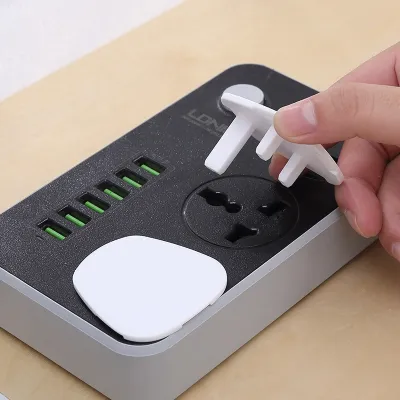

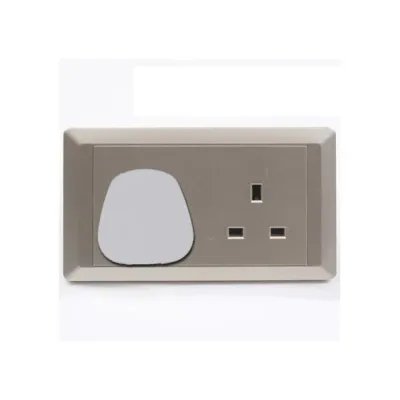
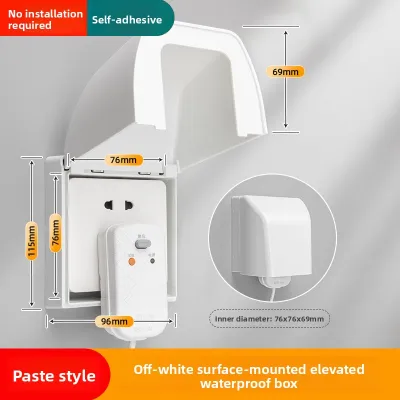
![Steve & Leif Baby Safety Door Cushion / Safety Plug Cover / Latch / Universal Flexi Lock [Bundle Pick Any 2]](https://img.lazcdn.com/g/p/80fb3d2418ecdb6c3cfafbb7d67e4d10.jpg_400x400q80.jpg_.webp)
Prices are valid at publication and may change. Please refer to the product page for the latest price.
Your child’s physical development directly dictates the level of protection your outlets require. Childproofing is a dynamic process that evolves across several key milestones:
- Sitting and observing (4 to 7 months): At this stage, babies begin to notice their surroundings from an upright perspective. Low-lying wall sockets, especially those highlighted by glowing switch indicators or plugged-in cords, become highly attractive visual targets.
- Crawling and reaching (7 to 10 months): Once mobility begins, infants can actively approach outlets. They will touch, pat, and attempt to explore the physical recesses of the socket faceplate.
- Developing the pincer grasp (9 to 12 months): The ability to coordinate the index finger and thumb changes the safety dynamic entirely. Babies can now grip, pinch, and pull small objects, meaning loose-fitting plug inserts can easily be extracted and become choking hazards.
- Pulling up to stand (10 to 18+ months): Toddlers gain the height and leverage to reach higher countertops, bedside tables, and desks. They can also pull down on hanging appliance cords, risking both electrical contact and physical impact from falling objects.
A critical safety boundary to establish early on is that no baby plug cover can ever serve as a substitute for active adult supervision. Childproofing products are secondary layers of defense designed to buy you precious seconds of reaction time, not to leave a child unattended in a room. Before buying any covers, take a walk through your home to map out high-risk zones. Focus heavily on areas where your child spends the most time, such as living room entertainment centers, bedside areas, playrooms, and low kitchen island sockets.
Sliding Plug Covers: Convenient but Best for Early Sitters
Sliding plug covers offer a highly practical mechanical solution for outlets that require frequent daily access. These covers typically feature a spring-loaded panel or manual sliding shutters that sit directly over the face of the socket. When you need to plug in an appliance, you insert the plug prongs into the cover’s slots, slide the mechanism to align with the underlying socket holes, and push the plug home. When you remove the plug, the internal spring automatically snaps the shutter back into the closed position, instantly blocking access to the open terminals.

The primary advantage of sliding covers is their sheer convenience for adults. They allow you to use vacuum cleaners, phone chargers, or iron plugs without having to physically remove, store, and reinstall a plastic cap every single time. Because they remain attached to the outlet faceplate, there is zero risk of losing the cover or leaving a socket accidentally exposed after unplugging an appliance. They also provide a clean, flush finish that does not protrude significantly from the wall, making them visually unobtrusive.
However, sliding covers have distinct limitations when it comes to older, more active toddlers. The mechanical simplicity that makes them easy for adults also makes them vulnerable to observational learning. Older babies and toddlers possess highly developed imitation skills; after watching you slide the mechanism open a few times, they may attempt to replicate the motion. Furthermore, sliding covers only protect the individual socket openings. They do not cover the entire faceplate, meaning the physical socket switches remain fully accessible for toddlers to flip on and off.
This type of cover is best suited for the early stages of baby mobility, particularly when your child is sitting and observing but has not yet mastered complex lateral hand movements. They are also ideal for high-traffic sockets where appliances are frequently plugged and unplugged throughout the day, provided the outlet is located in an area where you can maintain close visual supervision.
Rotating Plug Covers: Better Tamper Resistance for Crawlers
Rotating plug covers provide an elevated level of security by utilizing a rotational mechanism that is significantly harder for young children to bypass. These covers consist of a flat disc that adheres or screws onto the face of the socket. To insert a plug, you must align the plug’s pins with the slots on the disc, press down firmly, and rotate the disc clockwise or counterclockwise (usually a 90-degree turn) until the pins align with the socket’s internal terminals, allowing the plug to slide fully in. When the plug is pulled out, the disc rotates back to its original safety position, sealing the entry points.
The main benefit of a rotating cover is its superior tamper resistance. The physical action required to open the socket—applying downward pressure while simultaneously twisting—demands a level of bilateral hand coordination and finger strength that crawling infants and early toddlers simply do not possess. This makes rotating covers exceptionally secure against curious fingers trying to poke keys, hairpins, or toys into the socket holes. Because they fit flush against the outlet, they do not attract as much physical attention as bulkier box-type enclosures.
Despite their safety benefits, rotating covers do present some practical drawbacks for adult users. Achieving the precise alignment required to insert a plug can be challenging, especially in dimly lit corners or behind heavy furniture. Some models require a two-handed operation to rotate the disc while pushing the plug, which can be frustrating if you are holding a baby or carrying household items. Additionally, cheap or poorly manufactured rotating covers can sometimes jam, making it difficult to insert or remove plugs smoothly.
For active crawlers and early toddlers who have developed a strong pincer grasp and a keen interest in exploring floor-level objects, rotating covers are highly recommended. They offer a robust compromise between safety and accessibility, making them excellent choices for bedroom wall sockets, hallway outlets, and play areas where appliances are occasionally but not constantly plugged in.
Box-Type Outlet Covers: Maximum Security for Active Babies and In-Use Plugs
When it comes to securing outlets that must remain constantly in use, box-type outlet covers offer the highest level of physical protection. Unlike sliding or rotating options that only shield the socket face, box covers are complete plastic enclosures that fit over the entire wall outlet plate, including any inserted plugs. These boxes feature a clear or opaque protective dome with a secure latching or locking mechanism. The appliance cords exit safely through small, designated channels at the bottom or sides of the box, keeping the entire electrical connection completely sealed away from curious hands.
The primary advantage of a box-type cover is its ability to protect active, plugged-in appliances. When a baby begins pulling themselves up to a standing position, they will often grab onto whatever is nearby for support. A loose appliance cord is an incredibly tempting target. Without a box cover, a toddler can easily pull a live plug out of the wall, exposing live metal prongs or causing electrical arcing. Box covers completely eliminate this risk by locking the plug inside a physical barrier. Furthermore, they cover the entire faceplate, preventing toddlers from flipping the individual socket switches.
However, these maximum-security covers come with several physical constraints. They are undeniably bulky and protrude several centimeters from the wall, which can prevent you from pushing furniture completely flat against the socket. They can also be challenging to open, requiring a specific sequence of button presses or a key, which makes swapping plugs a slow and deliberate process. Depending on the design, some box covers require you to replace your existing outlet faceplate screws with longer ones to mount the box securely, while others rely on heavy-duty adhesive backings.
Box-type covers are absolutely essential for high-risk zones where appliances must remain permanently connected, such as behind television consoles, near computer desks, or next to refrigerators and air conditioning units. They are also the premier choice for securing extension blocks and power strips that sit on the floor.
Before installing a box cover, always perform a safety check: ensure the internal cavity of the box is large enough to accommodate your specific plug heads without bending the cords at sharp, restrictive angles. Bending electrical cords tightly can damage the internal copper wiring over time, creating a serious fire hazard. Always consult the appliance’s manufacturer instructions for proper cord care and safety clearances.
Quick Comparison: Matching the Cover Type to Your Needs
To help you visualize the best childproofing setup for your home, consider how these three primary cover types compare across key performance dimensions.
| Cover Type | Best Developmental Stage | Tamper Resistance Level | Ideal Socket Scenario | Adult Ease of Use |
|---|---|---|---|---|
| Sliding Covers | Sitting & observing (4-7 months) | Moderate (can be figured out by older toddlers) | Frequently used wall sockets (e.g., vacuuming outlets) | High (automatic slide and plug) |
| Rotating Covers | Crawling & reaching (7-12 months) | High (requires dual-action push and twist) | Occasionally used wall sockets (e.g., bedrooms, hallways) | Moderate (requires alignment) |
| Box-Type Covers | Pulling to stand & walking (10+ months) | Maximum (complete physical enclosure) | Permanently in-use sockets (e.g., TVs, extension blocks) | Low (requires unlocking latches) |
A successful home safety strategy rarely relies on just one type of cover. Instead, most parents find success by mixing and matching cover styles based on the specific function of each room. For instance, you might install heavy-duty box covers in your living room to protect the complex web of cords behind your TV console, while utilizing rotating covers on the exposed wall sockets in your child’s bedroom. For the kitchen counter where you plug in small appliances daily, sliding covers offer the perfect balance of quick adult access and basic protection.
When sourcing your childproofing gear, always verify that the covers are explicitly rated for UK-style 3-pin Type G sockets. Many universal or 2-pin covers sold on international online marketplaces will not fit Singaporean outlets correctly. Attempting to force an incompatible cover onto a Type G socket can damage the internal safety shutters of the outlet, render the cover ineffective, or create an electrical hazard. Always check the product packaging and manufacturer specifications to confirm compatibility before purchase.
Safe Installation and Ongoing Maintenance Checks
Proper installation is just as critical as choosing the right cover style. When mounting childproofing covers, you will generally choose between adhesive backings and screw-in mounts. Adhesive covers are quick to install and require no tools, making them ideal for renters. However, you must test your wall surface compatibility before application. Applying strong adhesives to painted drywall or delicate wallpaper can cause significant surface damage upon removal. For a more permanent and secure fit, screw-in covers utilize the existing screw holes on your outlet faceplate. If you choose a screw-in model, always turn off the mains power at your home’s main distribution board (DB box) before loosening any faceplate screws, and consult a qualified electrician if you feel unsure about handling electrical fittings.
Singapore’s tropical climate introduces unique challenges for home safety devices. The high relative humidity can degrade adhesive pads over time, causing them to lose their grip and slip out of place. To combat this, perform a routine maintenance check on all your plug covers at least once a month. Gently tug on adhesive-mounted covers to ensure they remain firmly bonded to the wall, and inspect plastic components for any signs of wear.
During your monthly inspection, pay close attention to potential choking hazards. Plastic covers exposed to direct sunlight or physical impact can become brittle over time. If you notice any cracks, loose parts, or weakened spring mechanisms, remove the cover immediately and replace it. A cracked plastic cover or a loose insert can easily be pried off by a determined toddler, transforming a safety device into a dangerous choking hazard.
Finally, remember that securing the outlet plug is only half of the childproofing equation. Managing the appliance cords themselves is equally vital. Loose, dangling cords present severe strangulation hazards and allow children to pull heavy, dangerous appliances down from countertops. Use plastic cord trunking, cable ties, or cord shorteners to route all active cables flat against the wall or completely out of your child’s reach. By combining robust plug covers with meticulous cord management and attentive supervision, you can create a safe, secure environment for your growing child.
Community discussion
Share your experience or ask a question. Comments are reviewed before publication.