
When your baby transitions from crawling to taking their first steps, your home suddenly presents a new landscape of potential hazards. In Singapore, where modern apartments often feature extensive built-in cabinetry in kitchens and bathrooms, securing these spaces becomes a top priority for parents. Cabinet doors and drawers at toddler height frequently house household cleaners, sharp utensils, heavy cookware, and fragile items. To prevent curious hands from accessing these areas, choosing the right childproofing hardware is essential. Magnetic cabinet locks have emerged as one of the most reliable and aesthetically pleasing solutions available to parents today.
Unlike traditional external latches that alter the look of your furniture, magnetic locking systems are installed entirely on the inside of your cabinets. They remain completely invisible from the outside, preserving the clean lines of your home decor while keeping dangerous items securely out of reach. However, navigating the wide array of brands and products available on online marketplaces and in local baby specialty stores can be overwhelming. To make an informed decision, you need to understand how these locks function, what criteria determine their reliability, and how to match them to your specific home setup. This guide provides a comprehensive framework to help you evaluate magnetic cabinet lock brands, ensuring you select a high-quality system that keeps your child safe while standing up to the demands of daily use.
Why Magnetic Locks Are a Preferred Childproofing Choice
Traditional child safety latches often require you to press down on a plastic tab through a slightly opened drawer or door. While functional, these older designs have several drawbacks that magnetic systems elegantly solve. The most immediate benefit of a magnetic cabinet lock is its completely invisible design. Because the entire mechanism is mounted on the interior surface of the cabinet door and frame, there are no unsightly plastic straps, slides, or buttons visible on your furniture. This is particularly advantageous in modern Singaporean homes, where minimalist aesthetics and sleek laminates are highly valued. Beyond aesthetics, this invisibility serves a critical safety function: if a toddler cannot see a lock, they are far less likely to target it, pull on it, or attempt to figure out how it opens.
Products mentioned in this guide
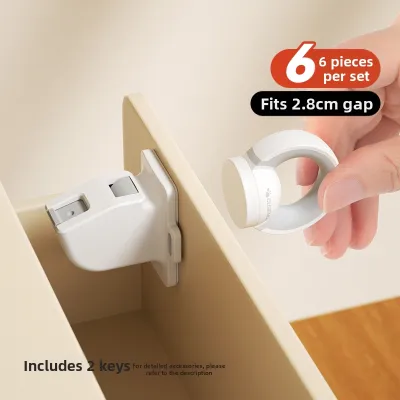
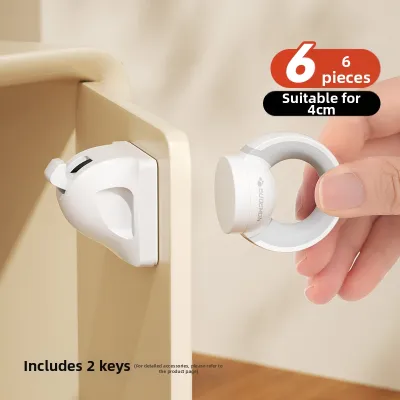
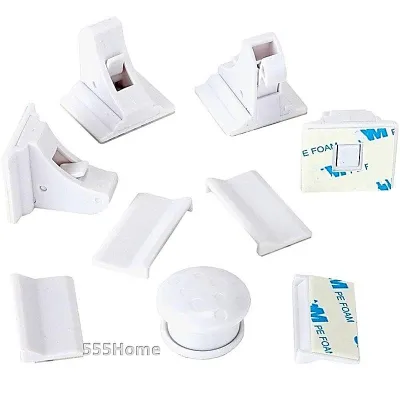
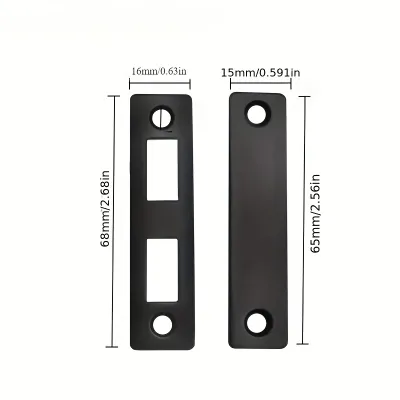
Prices are valid at publication and may change. Please refer to the product page for the latest price.
Another significant advantage is the superior holding force that magnetic locks offer compared to standard plastic latches. Traditional latches often allow a cabinet door to open slightly—typically a few centimeters—before the catch engages. This small gap can be highly problematic, as it allows curious toddlers to pinch their fingers or gain enough leverage to yank the door repeatedly. Over time, this persistent pulling can weaken plastic components or strip the small screws holding them in place. Magnetic locks, by contrast, keep the cabinet door completely flush and tightly closed. There is no gap for tiny fingers to get caught, and the solid latching mechanism distributes force more evenly, resisting the leverage attempts of older, stronger babies who might otherwise force a traditional latch open.
Finally, magnetic locks offer unmatched convenience and ease of use for adults, which significantly reduces daily friction in high-traffic areas like the kitchen. To open a secured cabinet, you simply place the magnetic key against the outside of the door opposite the internal lock. The magnet instantly retracts the internal latch, allowing you to open the door smoothly with one hand. When you close the door, the latch automatically re-engages. Many high-quality magnetic lock brands also feature a convenient disengagement switch. This allows you to temporarily deactivate the locking mechanism when your child is asleep or away, giving you unrestricted access to your cabinets during meal preparation or cleaning, and then reactivate it with a simple click when childproofing is needed again.
Core Criteria for Evaluating Cabinet Lock Brands
When browsing different brands of magnetic cabinet locks, it is easy to assume that all systems are virtually identical. However, subtle differences in materials, engineering, and package contents can greatly impact how well the locks perform over time. The first and most critical criterion to evaluate is the magnet strength and latch durability specified by the manufacturer. The magnet inside the key must be powerful enough to penetrate the thickness of your cabinet doors—which typically ranges from 15mm to over 25mm in standard residential furniture. If a brand uses low-grade magnets, the key may fail to trigger the latch through thicker wood or laminate panels. Look for brands that explicitly state the maximum door thickness their magnets can penetrate, and opt for those utilizing high-quality neodymium magnets, which retain their magnetic strength indefinitely.

Adhesive quality is another vital factor, especially given the warm and humid climate in Singapore. Most magnetic locks are installed using double-sided adhesive tape to avoid drilling into expensive cabinetry. However, high humidity can cause low-quality adhesives to soften, degrade, and eventually fail under pressure. When evaluating brands, check what type of adhesive tape is pre-applied to the locks. Industry-standard adhesives, such as genuine 3M tape, are generally preferred for their reliable bonding properties. Additionally, verify the manufacturer’s guidelines regarding surface compatibility. Reliable brands will clearly state which surfaces their adhesives bond to effectively—such as smooth wood, laminates, metal, and glass—and warn you about surfaces that may not support a strong bond, such as unfinished wood, textured surfaces, or wallpaper.
You should also carefully assess the completeness of the package and the availability of replacement parts. A standard starter kit should include not only the locks and latches but also an installation template or alignment tool. This tool is incredibly helpful, as it ensures the internal lock and catch align perfectly without tedious measuring or trial-and-error positioning. Furthermore, consider how many keys are included in the set. Having only one key can be highly inconvenient if it is misplaced or left in another room. Look for brands that include at least two keys in their multi-packs, or those that offer the option to purchase extra keys separately. Finally, review the manufacturer’s documentation. A reliable brand will provide clear, step-by-step instructions, detailed safety warnings, and clear age recommendations to ensure the product is used correctly and safely.
Matching Lock Designs to Your Cabinet and Drawer Types
Before purchasing any magnetic cabinet lock system, you must analyze the physical construction of your furniture. Not all cabinets and drawers are built the same way, and understanding these structural differences will help you choose a lock design that fits perfectly. The most common cabinet style in modern Singaporean homes is the frameless cabinet, where the doors attach directly to the side walls of the cabinet box. Magnetic locks are generally very easy to install on frameless cabinets because the latch can be mounted directly to the top or side panel of the cabinet interior. However, if your home features traditional framed cabinets—where a wooden face frame surrounds the cabinet opening—you must ensure the lock’s catch mechanism can be positioned correctly behind the frame without obstructing the door’s closure.
Drawers present a different set of challenges, particularly regarding depth and internal clearance. To install a magnetic lock inside a drawer, there must be sufficient vertical clearance between the top of the drawer box and the underside of the cabinet frame or countertop. If this space is too tight, the catch mechanism may rub against the drawer or prevent it from closing entirely. You will need to measure this internal clearance carefully and compare it to the dimensions provided by the lock manufacturer. Additionally, consider the depth of the drawer. For very deep drawers, you may need to mount the lock lower on the side panel rather than at the very top, which requires a lock design that supports versatile mounting angles.
Door thickness and hinge types are also critical variables to consider. Standard cabinet doors are usually around 18mm thick, which is well within the operating range of almost all magnetic locks. However, if you have heavy solid wood doors or custom cabinetry with extra-thick panels, you must verify that the brand’s magnetic key is rated to work through that specific thickness. Furthermore, the type of hinges on your cabinets can affect how the door swings open and closed. Soft-close hinges, which are highly popular in modern kitchens, slow the door down as it closes. This gentle closing action is excellent for preventing slammed fingers, but you must ensure that the magnetic latch engages fully and automatically even when the door closes slowly.
Building a Conditional Shortlist of Reliable Brands
Because you cannot rely on unverified online rankings or generic “best brand” lists, you must develop a systematic approach to filtering options on online marketplaces and in local retail stores. Start by analyzing verified buyer reviews, focusing specifically on feedback from users in Singapore or regions with similar climates. Look for recurring complaints regarding adhesive failure, weak magnets, or brittle plastic components. If multiple reviews mention that the locks fell off after a few weeks of use in a humid kitchen, or that the plastic latch snapped under moderate pressure, it is a strong indication that the brand’s materials may not be suitable for your environment. Conversely, consistent praise for strong adhesion and smooth magnetic operation is a positive indicator of quality.
Next, verify the details of the product listings and check the pricing in S$ to ensure you are getting genuine value. Be cautious of listings that seem unusually cheap, as they may contain fewer locks than expected, omit essential installation templates, or use generic, low-grade adhesives that will require replacement later. A complete, high-quality starter kit typically ranges from S$20 to S$50 depending on the number of locks included. When comparing prices, calculate the cost per lock and factor in whether the set includes extra keys or mounting hardware. Additionally, check the shipping origin and seller profile. Purchasing from established local distributors or official brand stores on major ecommerce platforms often ensures faster shipping, easier returns, and better customer support if you encounter any issues.
You should also compare the warranty terms and return policies offered by different brands. A manufacturer that stands behind its product will often offer a satisfaction guarantee or a limited warranty against defects. This is particularly important for adhesive-mounted products, as it gives you recourse if the adhesive fails prematurely despite proper installation. Finally, learn to identify red flags that should prompt you to remove a brand from your shortlist. These include vague material descriptions (such as simply listing “plastic” without specifying if it is durable, non-toxic ABS plastic), a complete lack of age guidelines or safety warnings, and missing contact information for customer support. A reputable brand will always provide clear channels for communication and comprehensive product safety information.
Installation Boundaries, Safety Checks, and Maintenance
Proper installation is just as important as choosing a high-quality brand. Even the best magnetic lock will fail if it is not mounted correctly. If you are using the adhesive method, thorough surface preparation is absolutely essential. Start by cleaning the interior mounting surfaces of your cabinets with isopropyl alcohol to remove any grease, dust, or cooking residue. Allow the surface to dry completely before applying the adhesive. Once you position the lock and catch using the installation template, press and hold each component firmly for at least 30 seconds to activate the pressure-sensitive adhesive. Crucially, you must allow the adhesive to cure for a full 24 hours before testing the lock or allowing your child to pull on the cabinet doors. Testing the lock too early can permanently weaken the bond, leading to premature failure.
While adhesive installation is highly convenient and damage-free, there are certain conditions where screw installation is highly recommended. For heavy cabinet doors, drawers containing heavy or dangerous items, or cabinets that are opened and closed dozens of times a day, the mechanical security of screws is far superior to adhesive. Most high-quality magnetic lock kits include small wood screws for this purpose. If your cabinet material allows for drilling without splitting, using screws on high-risk cabinets—such as those housing cleaning chemicals under the kitchen sink—provides an extra layer of security and peace of mind. If you are renting your home, however, you must stick to adhesive mounting and ensure you follow proper removal techniques later to avoid damaging the cabinet finish.
To ensure the ongoing effectiveness of your childproofing system, you must establish a routine maintenance schedule. Once a month, perform a quick check of every magnetic lock in your home. Test the alignment of the latch and catch to ensure they meet smoothly without rubbing or sticking. Inspect the adhesive tape for any signs of peeling, lifting, or degradation, especially in humid areas like the bathroom. You should also check your magnetic keys to ensure they have not become demagnetized or damaged. Keep the keys stored safely out of your child’s reach, preferably on a high magnetic hook or a designated shelf. If a lock fails to engage, if the adhesive begins to fail, or if you notice any cracks in the plastic components, stop using the lock immediately and consult the manufacturer for replacement parts or advice.
Frequently Asked Questions (FAQ)
Can magnetic cabinet locks be used on appliances like refrigerators or ovens?
Generally, magnetic cabinet locks are not recommended for use on major household appliances like refrigerators, freezers, or ovens. Most manufacturers explicitly advise against installing these locks on appliances due to several safety and functional limitations. First, the exterior surfaces of ovens and dishwashers can reach high temperatures during operation, which can quickly degrade the adhesive backing of the lock, causing it to fail. Second, the thick insulation and metal construction of refrigerator doors can interfere with the magnetic field of the key, making it difficult or impossible to operate the lock. For securing appliances, it is highly recommended to use alternative childproofing methods, such as heavy-duty, heat-resistant strap locks or latch locks designed specifically for appliance safety.
What should I do if the magnetic key stops working or gets lost?
If your magnetic key stops working, the first step is to check for physical obstructions or misalignment between the lock and the catch inside the cabinet. Sometimes, items stored inside the cabinet can shift and press against the lock mechanism, preventing it from retracting fully. If the key itself has lost its magnetic strength or is lost, you should contact the original manufacturer or brand to purchase a replacement key. Many reputable brands sell individual keys or key multi-packs separately for this exact reason. In an emergency where you need immediate access to a locked cabinet and do not have a spare key, you can try using a strong household magnet, but be careful not to scratch the cabinet surface. If the lock remains stuck, do not force the door open, as this can damage your cabinetry; instead, consult a professional or the manufacturer for guidance.
Are magnetic locks safe for rental properties where drilling is not allowed?
Yes, magnetic cabinet locks are an excellent choice for rental properties because they can be installed entirely using high-quality adhesive tape, eliminating the need to drill holes into the landlord’s cabinetry. To ensure they are safe for your rental, always test the adhesive on a small, hidden area of the cabinet finish before proceeding with full installation to ensure it does not cause discoloration or peeling. When it is time to move out, you can safely remove the locks without leaving permanent damage. To do this, use a hairdryer on a low heat setting to gently warm and soften the adhesive backing. Once softened, use a piece of dental floss or a plastic scraper to slide behind the lock and slice through the adhesive. Any remaining sticky residue can be easily cleaned off using a mild adhesive remover or rubbing alcohol.
Community discussion
Share your experience or ask a question. Comments are reviewed before publication.