
Finding a trusted diaper change table in Singapore involves balancing safety, structural stability, and space efficiency. Because local homes, such as HDB flats and condominiums, often require smart spatial planning, parents look for brands that offer compact footprints, multi-functional designs, and robust materials that withstand the tropical humidity. Rather than relying solely on brand names, evaluating specific safety certifications, material integrity, and local retailer support is the most reliable way to secure a safe setup for your nursery.
Setting up a dedicated diapering station helps streamline daily routines while protecting your posture. With a newborn requiring up to ten to twelve diaper changes a day, a waist-height surface reduces the constant bending that leads to lower back strain. By understanding what makes a changing table reliable, you can make an informed investment that keeps your baby secure and fits seamlessly into your home layout.
Key Criteria for Evaluating Diaper Change Table Brands
When researching diaper change table brands, safety certifications should be your primary filter. Trusted brands clearly state compliance with recognized international safety standards on their product labels or user manuals. Look for certifications such as the European standard EN 12221 or the American ASTM F2388, which dictate strict requirements for structural strength, barrier heights, and the use of non-toxic, lead-free finishes. If a brand does not explicitly list these standards, treat it as a signal to verify their testing processes directly with the manufacturer.
Products mentioned in this guide
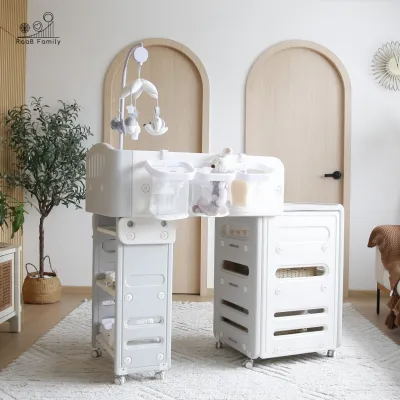
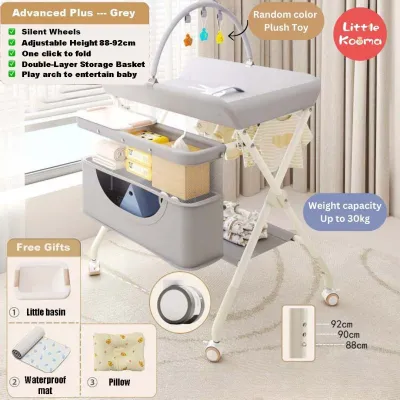
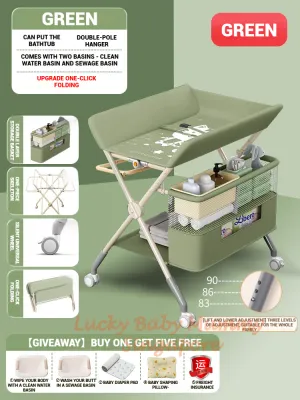
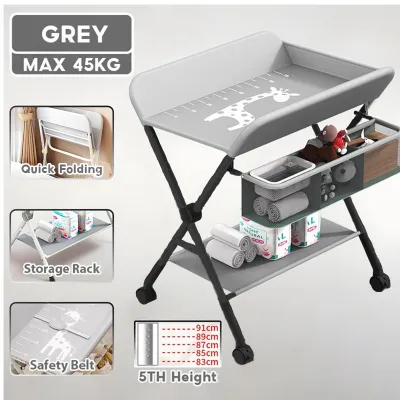
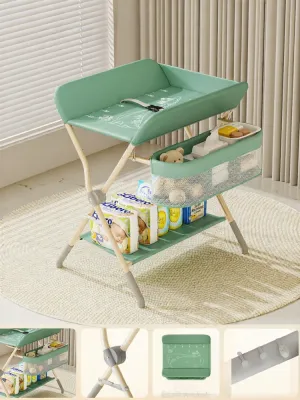
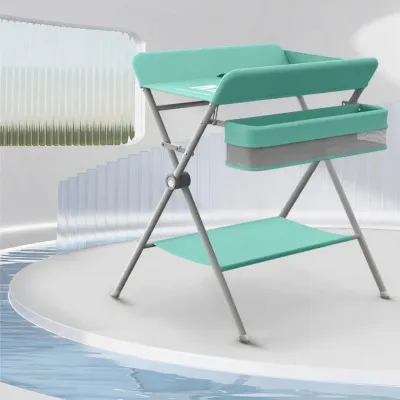
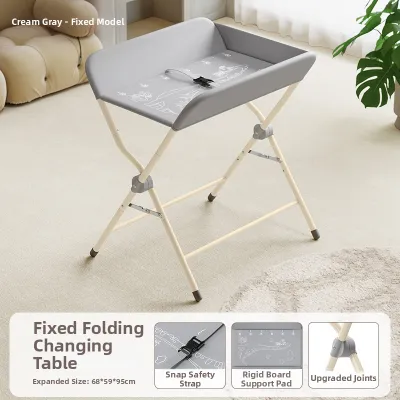
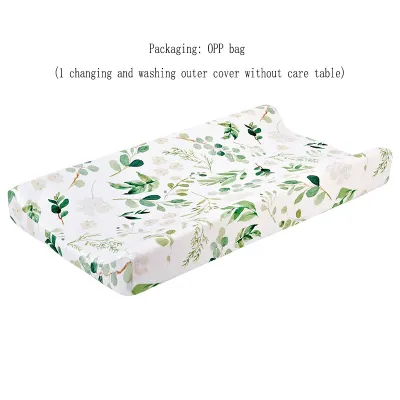
Prices are valid at publication and may change. Please refer to the product page for the latest price.
Warranty terms and after-sales support are strong indicators of a brand’s confidence in its product quality. In Singapore, reputable brands typically offer a warranty of at least one year covering manufacturing defects and structural failures. Purchasing through authorized local distributors ensures you have access to prompt customer service, replacement parts, and assembly assistance. Avoid buying unbranded units from parallel importers or overseas sellers where securing a replacement screw, strap, or joint mechanism can prove difficult or impossible.
Parent feedback provides invaluable insight into how a changing table performs under real-world conditions over several months. Look for reviews that specifically mention hardware integrity, such as whether screws loosen over time or if the wood begins to creak. Pay close attention to feedback regarding the durability of the changing pad surface and the ease of cleaning. Brands that consistently receive praise for sturdy joints, smooth drawer glides, and resilient finishes are far more likely to survive the daily wear and tear of early parenthood.
Essential Safety and Stability Checks
Before placing your baby on any changing surface, you must perform a thorough physical inspection of its safety features. A reliable changing table must feature raised guardrails on all sides, or at least along the two longer sides, to prevent your baby from rolling off. These guardrails should stand at a height recommended by safety standards, typically at least 5 centimeters above the top of the changing pad. Additionally, ensure the safety strap is securely anchored to the wooden frame of the table rather than just the fabric pad, featuring a buckle that cannot be easily undone by a curious infant.

Stability is heavily influenced by the table’s base footprint and weight distribution. A wider base generally offers better resistance against tipping, especially when your baby grows heavier and more active. If you plan to place the changing table on smooth flooring like vinyl, laminate, or ceramic tiles, verify that the legs are equipped with non-slip rubber pads or lockable caster wheels. For taller units or dresser-style changing tables, look for brands that include wall-anchoring kits, which are essential for preventing tip-over accidents as your child grows and begins to pull themselves up.
Every changing table comes with a manufacturer-specified maximum weight limit, which typically ranges between 11 and 15 kilograms. It is crucial to locate this specification in the product manual and monitor your baby’s growth accordingly. Beyond the weight limit, you must also observe your baby’s physical development. Once your baby can roll over actively, sit up independently, or attempt to climb the guardrails, it is time to stop using the elevated changing table and transition to changing them on a secure mat on the floor.
Comparing Popular Design Types and Materials
Choosing between a dedicated wooden changing table and a multi-purpose dresser depends on your long-term storage needs and available space. Dedicated wooden tables are lightweight, easy to move, and feature open shelving that keeps diapers, wipes, and change clothes within arm’s reach. Multi-purpose dressers with removable changing toppers require a larger initial investment and more floor space, but they offer excellent longevity. Once your child outgrows diapers, you can simply remove the topper and use the unit as a standard chest of drawers for years to come.
For families navigating tight nursery layouts or looking for a secondary changing station, foldable or portable changing tables offer a highly practical alternative. These units typically feature a lightweight metal frame with a waterproof fabric changing surface and integrated storage pockets. While they excel at saving space because they can be folded and stored behind a door or in a closet, they generally have lower weight capacities and a narrower footprint than solid wood furniture. Always verify that the folding joints lock securely into place before placing any weight on them.
Material selection is particularly important in Singapore’s humid tropical climate, which can cause low-quality wood composites to warp, swell, or develop mold. Solid hardwoods like beech, birch, or pine offer the best durability and structural integrity, provided they are treated with non-toxic, moisture-resistant sealants. High-density fiberboard (HDF) or medium-density fiberboard (MDF) with quality laminate finishes can also perform well, but you must inspect the edges to ensure there are no exposed seams where moisture from wet wipes or humid air can seep in and compromise the material.
Building Your Shortlist: Features to Match Your Nursery
To build a practical shortlist, map out your daily diapering workflow and match it to the table’s storage configuration. If you prefer keeping everything organized in neat bins, open shelving units allow you to slide baskets in and out effortlessly. If you want to keep baby toiletries, medications, and grooming kits out of reach of older siblings, a combination of open shelves and lockable drawers is ideal. Ensure that the storage design allows you to reach essential items with one hand, as safety guidelines dictate you must always keep one hand on your baby during a change.
Consider how the changing table will fit into your home’s aesthetic and functional future. Investing in modular furniture that adapts to your child’s changing needs is both cost-effective and environmentally friendly. Some innovative brands design changing tables that can later be converted into toy storage shelves, a child-sized study desk, or a stylish bookcase. Evaluating these conversion options early on helps justify a higher upfront cost for a premium brand, turning a short-term nursery item into a decade-long household fixture.
Finally, coordinate your purchase with authorized local retailers to understand delivery, assembly, and return policies. Many premium furniture brands in Singapore offer professional home assembly services, which are highly recommended to ensure the unit is put together exactly as the manufacturer intended. A professional installer will ensure all safety brackets, dowels, and locking mechanisms are perfectly aligned, giving you peace of mind that the structure is completely stable before your baby’s arrival.
Frequently Asked Questions (FAQ)
Do I need a dedicated diaper change table or can I use a regular dresser?
You do not strictly need a dedicated changing table, as a regular dresser can serve the same purpose if adapted correctly. To use a standard dresser safely, you must install a contoured changing pad that is firmly secured to the dresser top using safety straps or a non-slip backing. The primary advantages of a dedicated changing table are its ergonomic height, which is specifically designed to prevent back strain, and open shelving that allows for quick, one-handed access to diapering essentials without having to open drawers while supervising your baby.
How long will my baby use a diaper change table?
Most babies use a diaper changing table from birth until they are approximately 12 to 18 months old, though the exact duration depends on your child’s weight and physical milestones. You must stop using the table immediately once your baby reaches the manufacturer’s maximum weight limit, which is commonly around 11 to 15 kilograms. Additionally, if your baby becomes highly active, rolls vigorously, or attempts to pull themselves up to a standing position, transitioning to changing them on a floor mat is the safest choice to eliminate any risk of falls.
Are foldable changing tables safe for everyday use?
Foldable changing tables are safe for everyday use provided they are manufactured by a reputable brand that complies with international safety standards and are used strictly according to instructions. Before every use, you must double-check that the frame’s safety locks are fully engaged to prevent accidental folding. Because they are lighter and have a smaller footprint than solid wood furniture, they can feel less stable on uneven floors. They are highly practical for small spaces or as secondary changing stations, but they require diligent maintenance to ensure the folding joints and fabric seams remain intact.
Community discussion
Share your experience or ask a question. Comments are reviewed before publication.