
Transitioning your toddler from a crib to a regular bed is a major developmental milestone, but it often brings concerns about nighttime falls. In Singapore, where families navigate various bed setups—from low floor mattresses to high platform beds with built-in storage—finding the right bed rail is essential for peace of mind. While many options are available on local e-commerce platforms and in baby specialty stores, not all brands offer the same level of structural integrity, safety engineering, or compatibility with your specific mattress. Selecting a reliable bed rail requires looking beyond aesthetic appeal or price tags to evaluate structural safety, material quality, and installation security.
To make an informed decision, parents must understand how to assess different brands based on objective safety standards, physical build quality, and real-world performance. This guide provides a comprehensive framework to help you evaluate bed rail options, verify safety certifications, and choose a model that integrates seamlessly with your home setup while keeping your child secure throughout the night.
Key Safety Standards to Verify in Bed Rail Brands
When evaluating any bed rail brand, safety certifications should be your first point of scrutiny. Because bed rails are active safety barriers, reputable manufacturers subject their products to rigorous third-party testing to ensure they can withstand pressure without bending, breaking, or dislodging. Look for brands that explicitly state compliance with recognized international safety standards, such as the British Standard (BS EN 1930 or BS 7972) or the American ASTM F2085 standard. These certifications verify that the product has undergone testing for structural strength, impact resistance, and material safety, ensuring that the plastics, metals, and fabrics used are non-toxic and durable.
Products mentioned in this guide
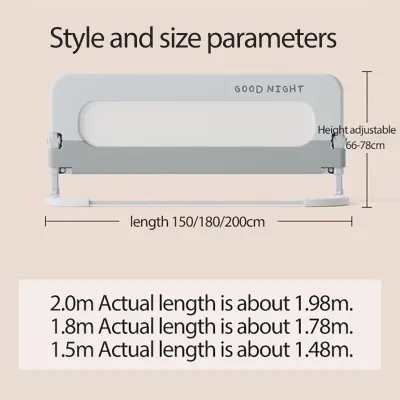
Prices are valid at publication and may change. Please refer to the product page for the latest price.
One of the most critical safety hazards associated with bed rails is entrapment. This occurs when a gap forms between the mattress and the rail, allowing a child’s limb or head to become wedged. To prevent this, high-quality brands design anti-entrapment systems. These often include adjustable tensioning straps that anchor the rail firmly to the opposite side of the bed frame, or specialized base plates that utilize the weight of the mattress to eliminate any outward movement. When researching brands, check the product specifications for a tight, flush fit against the mattress side, and avoid designs that rely solely on friction to stay in place.
The materials used in the barrier panel itself also play a vital role in safety. A reliable bed rail should feature a combination of a rigid, non-collapsible metal frame and a highly breathable mesh panel. The mesh must be strong enough to resist tearing or stretching when a child leans against it, yet porous enough to allow continuous airflow. This breathability is crucial in Singapore’s warm, humid climate, especially if your child sleeps without air conditioning or tends to roll close to the edge. Avoid solid fabric panels that could restrict breathing if a child presses their face against them during sleep.
Finally, evaluate the locking mechanisms that control the lowering or folding of the rail. For daily convenience, many parents prefer rails that can slide down or fold outward to allow easy bed-making and storytime access. However, these mechanisms must feature robust, child-proof double-lock systems. A secure design typically requires a two-step physical action—such as pressing two separate buttons simultaneously or lifting before sliding—to prevent a curious toddler from accidentally releasing the barrier from the inside.
Evaluating Build Quality and Mattress Compatibility
A bed rail is only as safe as its compatibility with your specific mattress and bed frame. Before purchasing, you must measure your mattress thickness and compare it against the rail’s height specifications. To provide an effective barrier, the top of the rail must extend a minimum height above the top of the mattress, typically at least 16 to 20 centimeters, even when the mattress is fully compressed. If you use a thick, premium pocket-spring mattress, a standard-height rail may not leave enough exposed barrier to prevent a rolling child from tumbling over. Conversely, using an excessively tall rail on a thin mattress can create leverage issues that strain the mounting brackets.

The method used to secure the rail’s base to the bed frame varies significantly across brands and must match your bed type. For slatted bed frames, look for brands that include anchor straps or screw-down brackets that attach directly to the wooden slats. For divan beds or solid platform bases, the rail typically relies on heavy-duty under-mattress weight plates or Y-shaped anchor straps that wrap around the opposite side of the frame. If your home features a storage bed with a hydraulic lift mechanism, you must verify that the rail’s base frame does not interfere with the lifting brackets or damage the internal storage lining.
The physical operation of the lowering mechanism is another indicator of overall build quality. High-quality brands utilize smooth, silent gliding tracks or hinges that allow parents to lower the rail quietly without waking a sleeping child. Examine the joints and folding hinges for anti-pinch designs; there should be no exposed gaps where small fingers or skin can get pinched during operation. Metal frames should be constructed from lightweight yet sturdy materials, such as aircraft-grade aluminum or powder-coated steel, which resist rust in humid environments and do not warp under repeated pressure.
How to Research Brand Reputation and Parent Feedback
With numerous generic and OEM brands flooding online retail marketplaces, distinguishing genuine quality from clever marketing can be challenging. When browsing local e-commerce platforms, look past the initial star rating and dive deep into the written reviews. Be skeptical of overly enthusiastic, generic feedback that lacks specific details about installation or daily use. Instead, search for reviews from parents who describe their specific bed setups, such as “fits perfectly on our king-size platform bed” or “works well with a 30cm thick mattress.” These detailed accounts provide practical insights into how the product performs in real-world Singaporean homes.
Pay close attention to long-term durability reports rather than unboxing impressions. Look for feedback from parents who have used the bed rail for six months or longer. These reviews often highlight potential failure points, such as hinges that become stiff over time, mesh fabric that begins to sag, or plastic locking buttons that crack under daily use. A brand that maintains positive feedback regarding structural integrity over extended periods is far more reliable than one with thousands of five-star reviews written on the day of delivery.
Additionally, investigate the brand’s official presence and after-sales support. Reputable brands usually maintain an official website or authorized store on local platforms, offering clear warranty terms and access to replacement parts. If a connector piece breaks or a strap becomes worn, being able to purchase a genuine replacement part directly from the manufacturer is much safer and more cost-effective than replacing the entire rail system or attempting a DIY repair with non-standard hardware.
Creating Your Bed Rail Brand Shortlist
When you are ready to build your shortlist of potential bed rail brands, establish your non-negotiable safety baselines first. Do not let price be the sole deciding factor; while budget-friendly options exist, saving a few dollars is not worth compromising on structural stability. In Singapore, quality bed rails generally range from S$30 to over S$100 per side, depending on the height, materials, and mechanism complexity. Set a realistic budget that allows you to prioritize certified safety features, robust anchoring systems, and breathable materials over unnecessary cosmetic add-ons.
Next, filter your candidates based on your specific bedroom layout and bed frame design. If you have a platform bed where the mattress sits recessed inside a wooden frame, you will need a rail with a specialized flat-bottom bracket that can slide between the mattress and the inner frame without pushing the mattress out of alignment. For floor mattresses, which are increasingly popular among parents practicing Montessori-style sleeping arrangements, look for low-profile rails that do not require a deep frame to remain stable, or consider soft foam bumper guards as an alternative.
Finally, weigh your daily lifestyle needs against the core functional features of each brand. If you travel frequently or visit grandparents’ homes for weekend stays, a lightweight, collapsible travel bed rail that fits into a compact carrying bag may be your top priority. For permanent home use, a heavy-duty, vertical-slide rail that allows you to lower the barrier completely flat against the side of the bed is often the most practical choice for daily bed-making and comfortable bedtime reading sessions.
Installation and Daily Use Safety Checks
Once you have purchased and received your chosen bed rail, proper installation is paramount to ensuring your child’s safety. Always follow the manufacturer’s instruction manual step-by-step, ensuring every screw, strap, and bracket is securely fastened. Immediately after installation, perform a rigorous push-and-pull stability test. Grab the top of the rail and shake it firmly in all directions; there should be minimal wobble, and the base must remain locked flat against the bed frame. If the rail shifts or creates a gap wider than a few millimeters when pushed, disassemble the unit and re-adjust the anchoring straps.
Safety maintenance does not end with the initial setup. Establish a routine to inspect the bed rail every few weeks. Check for loose screws, worn hinges, or signs of wear on the mesh fabric. In Singapore’s humid climate, inspect metal parts periodically for any signs of corrosion or rust, especially near joints where moisture can accumulate. Ensure that the locking mechanisms continue to operate smoothly and that the child-proof double-locks remain fully functional and cannot be easily bypassed by an active toddler.
It is equally important to know when to stop using a bed rail. These safety barriers are designed for a specific developmental window and are not intended to support the weight of older, heavier children. Stop using the rail immediately if you notice any structural damage, such as a bent frame or a torn mesh panel that cannot be safely repaired with original manufacturer parts. Additionally, once your child reaches the manufacturer’s maximum weight or height limit, or demonstrates the physical ability to climb over the rail, the barrier itself becomes a climbing hazard and must be removed to prevent serious falls.
Frequently Asked Questions (FAQ)
At what age or weight should I stop using a bed rail?
You should always refer strictly to the manufacturer’s specified maximum weight and height limits printed on the product packaging or safety label, as these limits vary significantly between brands. Generally, bed rails are designed for toddlers who can already get in and out of a standard bed unassisted, typically starting around two years of age. You should stop using the bed rail immediately if your child reaches the maximum weight limit (often around 15 to 22 kilograms, depending on the model) or if they show the physical strength and coordination to climb over the rail. At that stage, the rail ceases to be a protective barrier and instead becomes a dangerous obstacle that could lead to a high-altitude fall.
Can I use a bed rail on a bunk bed or a bed with a box spring?
Standard portable bed rails are generally unsafe and not recommended for use on bunk beds, loft beds, or any highly elevated sleeping surfaces. The risk of a fall from a bunk bed is significantly higher, and standard rails are not engineered to withstand the unique forces or prevent the specific entrapment hazards associated with elevated frames. For beds with a box spring, you must check the manufacturer’s guidelines carefully. Many standard rails rely on the direct counter-pressure of a solid bed frame or slats to remain stable; using them on a flexible box spring can cause the rail to tilt outward, creating a dangerous gap. If your setup includes a box spring, look for brands specifically certified for box spring installation, which typically feature specialized anchor straps that wrap completely around the box spring unit to lock the rail securely in place.
Community discussion
Share your experience or ask a question. Comments are reviewed before publication.