
With space at a premium in contemporary Singaporean apartments, parents must optimize every square meter of nursery space. Investing in a high-quality baby changing table wall mounted is an excellent, space-saving solution that keeps floor space clear when not in use. However, because this furniture hangs directly on the wall and holds your baby, reliability is not something you can compromise on.
Finding a dependable brand in Singapore requires evaluating international safety standards, material resilience against tropical humidity, and local structural installation realities. This guide provides a detailed framework to help you assess brand reliability, verify structural safety, and make an informed decision for your nursery.
Evaluating Brand Reliability for a Baby Changing Table Wall Mounted
To identify a truly reliable brand, you must look past polished marketing photography and focus on verifiable engineering standards. The most critical indicator of a brand’s commitment to safety is its adherence to recognized international safety standards. When researching options, look for brands that explicitly state compliance with standards such as EN 12221 (the European safety standard specifically governing changing units for domestic use) or ASTM F2285 (the American standard for consumer safety specifications for diaper changing tables). These standards govern everything from the height of the protective side barriers to the prevention of finger-entrapment hazards. Parents should physically check for these certification labels on the product chassis, packaging, or request the official compliance documentation from the manufacturer before purchasing.
Products mentioned in this guide
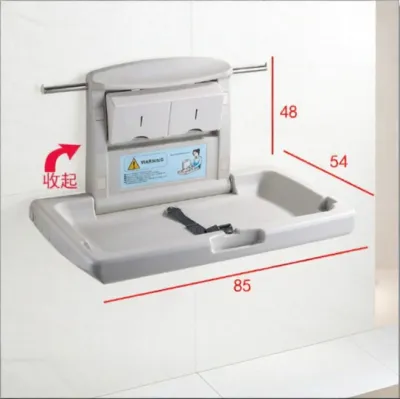
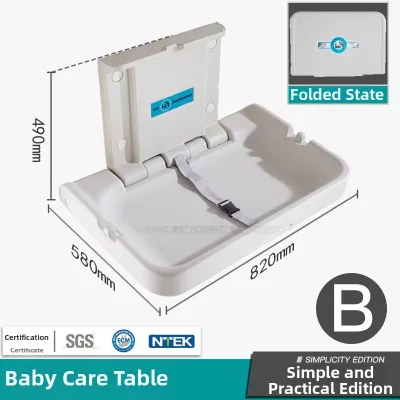
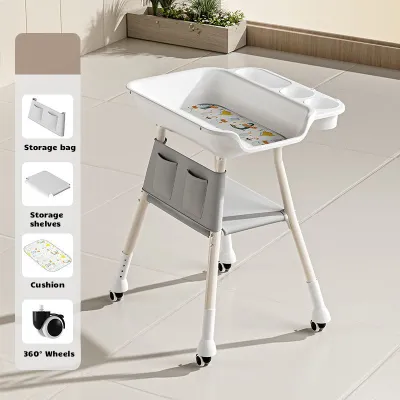
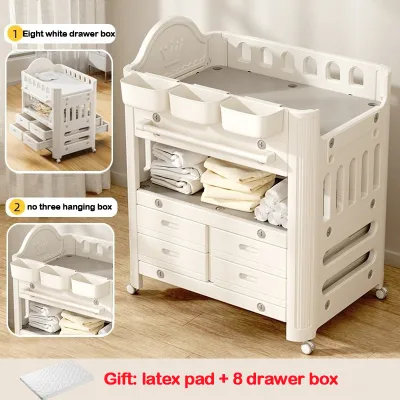
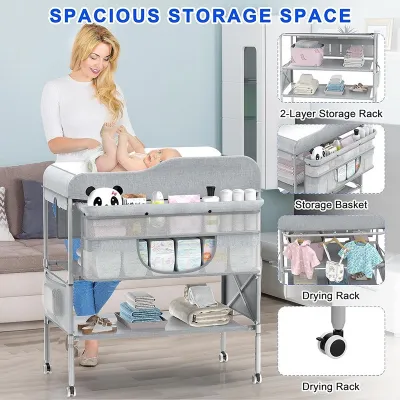
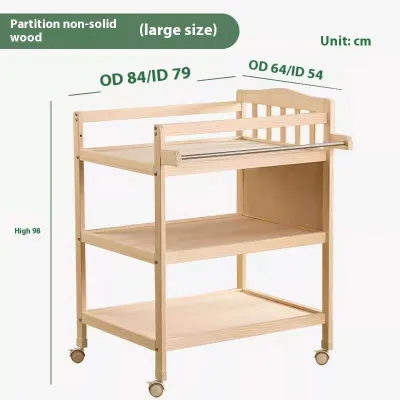
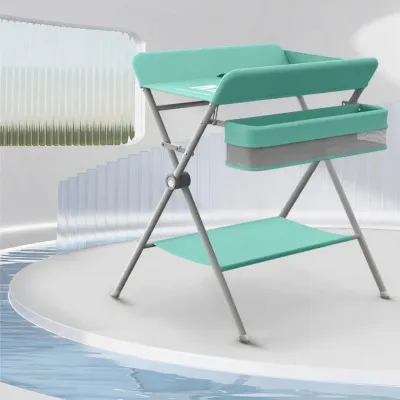
Prices are valid at publication and may change. Please refer to the product page for the latest price.
Beyond certifications, the structural integrity of the folding mechanism is paramount. A reliable wall-mounted changing table relies on heavy-duty hinges and robust gas-strut dampeners. These components ensure that the table opens smoothly without dropping suddenly and folds back up securely with minimal effort. Look for brands that incorporate reinforced steel mounting brackets and a positive locking mechanism—such as a heavy-duty latch or magnetic lock—that prevents the table from accidentally swinging open if bumped.
Reliable manufacturers are transparent. They do not hide behind vague buzzwords like “baby-safe” or “heavy-duty.” Instead, they provide clear, downloadable specification sheets detailing the exact materials used, the maximum weight capacity, and the specific wall types required for safe mounting. If a brand cannot provide a detailed product manual or testing documentation upon request, it is best to look elsewhere.
Assessing Material Durability for Tropical Climates
Singapore’s tropical climate presents unique challenges for nursery furniture. With average relative humidity levels often hovering around 80% or higher year-round, materials that perform well in dry climates can quickly deteriorate here. Standard fiberboard or low-grade medium-density fiberboard (MDF) can absorb airborne moisture, leading to swelling, warping, and structural weakening over time. Furthermore, high humidity creates an ideal breeding ground for mold and mildew, which can pose respiratory risks to infants.

When evaluating brands, check the manufacturer’s specifications for moisture-resistant treatments on wood or composite materials. High-density polyethylene (HDPE) is an exceptionally durable, non-porous alternative often used in commercial-grade wall-mounted changing tables, as it is entirely impervious to moisture and easy to sanitize. If you prefer the aesthetic of natural wood, ensure the brand uses solid hardwoods or marine-grade plywood treated with non-toxic, water-resistant finishes.
Hardware durability is equally critical in humid environments. Standard steel screws and hinges can rust rapidly, compromising the smooth operation of the folding mechanism and weakening the structural connection to the wall. Reliable brands use corrosion-resistant hardware, such as high-grade stainless steel or powder-coated metals, specifically designed to withstand moisture.
Lastly, verify that all surface coatings, paints, and padding materials are certified non-toxic and free from harmful chemicals. Look for explicit product labels indicating that the materials are free from phthalates, lead, formaldehyde, and volatile organic compounds (VOCs). Certifications like GREENGUARD Gold or Oeko-Tex Standard 100 provide independent verification that the product will not off-gas harmful chemicals into your baby’s nursery. Always rely on these official labels rather than general brand reputation.
Installation and Wall Compatibility in Singapore Homes
A wall-mounted changing table is only as secure as the wall it is attached to and the hardware used to anchor it. In Singapore, residential construction varies significantly between HDB flats, private condominiums, and landed properties. Most local residential buildings utilize solid concrete or structural brick walls for internal partitions, which are highly stable and ideal for supporting heavy, dynamic loads. However, modern condominiums and renovated flats frequently incorporate drywall or hollow partition walls to divide bedrooms or create utility spaces.
Understanding this distinction is vital. A baby changing table wall mounted must support the static weight of the unit itself, the weight of the baby, and the dynamic downward force applied by a caregiver leaning on the table during a diaper change. Solid concrete walls can easily handle these forces when paired with the correct hardware. Conversely, standard drywall or hollow partitions cannot safely support these dynamic loads on their own and will fail, posing a severe safety hazard.
Before purchasing, verify if the brand includes the appropriate heavy-duty masonry anchors and screws suitable for concrete walls. Many international brands package their products with hardware designed for timber studs or drywall, which may not be appropriate for Singapore’s concrete walls. If the included hardware is unsuitable, you must source specialized masonry expansion bolts or sleeve anchors.
Because of the high safety risks associated with improper mounting, we strongly recommend utilizing professional installation services offered by authorized local retailers or hiring a licensed handyman experienced in heavy wall installations. If you are uncertain about your wall’s composition, suspect structural damage, or notice dampness, stop immediately and consult a qualified structural contractor or the manufacturer before proceeding with the installation.
Verifying Local Warranties and After-Sales Support
When purchasing a high-use item like a wall-mounted changing table, securing robust after-sales support is essential. While online marketplaces and global e-commerce platforms may offer tempting discounts on parallel imports or generic brands, these purchases carry significant risks. Parallel imports typically do not come with a valid local warranty. If a critical component—such as a gas strut or a locking latch—fails after a few months of use, you may find yourself unable to source replacement parts or contact customer service for assistance.
Buying from official brand stores or authorized nursery retailers in Singapore ensures that your purchase is backed by a genuine local warranty. A comprehensive warranty should cover structural frame failures, manufacturing defects in the folding mechanism, and faulty hardware for at least one to three years. Be sure to read the warranty terms carefully; standard exclusions usually include normal wear and tear on the changing pad, cosmetic scratches, or damage resulting from improper self-installation.
Additionally, consider the long-term availability of replacement parts. Over years of daily use, components like safety straps, mounting screws, or foam changing pads may require replacement. Authorized local distributors are much more likely to stock these spare parts, allowing you to extend the lifespan of your changing table safely without having to replace the entire unit. Before buying, contact the local distributor to verify how easily you can purchase replacement accessories.
Essential Safety Rules and Routine Maintenance
Ensuring the ongoing safety of a wall-mounted changing table requires strict adherence to usage guidelines and regular maintenance. First and foremost, always respect the manufacturer’s stated maximum weight and age limits. These limits are calculated based on rigorous structural testing, and exceeding them risks mechanical failure or wall detachment. Furthermore, never leave your baby unattended on the changing table, even for a single second. Keep one hand on your baby at all times, and ensure all diapers, wipes, and clothing are organized within arm’s reach before placing your child on the table.
To maintain structural integrity over time, establish a monthly routine maintenance checklist:
- Check and Tighten Fasteners: Inspect the mounting screws and wall anchors to ensure they remain tightly seated in the wall. If you notice any wobbling or loosening, stop using the table immediately and tighten the hardware.
- Inspect Hinges and Struts: Look for signs of wear, rust, or metal fatigue on the hinges. Test the gas struts to ensure they provide smooth, controlled resistance and do not squeak or stick.
- Verify the Locking Mechanism: Confirm that the safety latch or lock engages fully and securely every time the table is closed, preventing it from falling open unexpectedly.
- Examine the Wall Surface: Check the wall surrounding the mounting bracket for any hairline cracks, plaster flaking, or signs of moisture that could compromise the anchor's grip.
Keep the changing surfaces clean by wiping them down according to the manufacturer’s care instructions. Use mild, baby-safe detergents and avoid harsh chemical solvents or abrasive pads, which can strip away protective moisture-resistant coatings and leave harmful chemical residues that could irritate your baby’s sensitive skin.
Frequently Asked Questions (FAQ)
Can I install a wall-mounted changing table on a drywall partition?
No, standard drywall or hollow partition walls cannot safely support the heavy dynamic load of a wall-mounted changing table and a moving baby. Attempting to mount the unit directly onto drywall without proper structural support can lead to the table tearing out of the wall, causing severe injury. If you must install the table on a partition wall, you must locate the underlying timber or metal wall studs using a stud finder and secure the mounting brackets directly into these structural supports. Alternatively, you may need to have a professional contractor install internal wooden blocking behind the drywall to distribute the weight. If these structural modifications are not possible, it is highly recommended to choose a freestanding changing table instead.
What is the typical weight limit for wall-mounted changing tables?
The weight limit for wall-mounted changing tables varies significantly depending on the brand, model, and the quality of the installation. Most domestic models are engineered to support maximum weights ranging from 11 kg to 15 kg, which typically accommodates babies up to approximately 12 months of age. Commercial-grade units, often constructed from heavy-duty HDPE or stainless steel, can support much higher loads, sometimes exceeding 100 kg when anchored to a solid concrete wall. However, parents must strictly follow the specific manufacturer’s label on their individual unit. Remember that the stated weight limit must account not only for the baby’s weight but also for any diapering supplies, heavy clothing, and the downward pressure applied by the caregiver during use.

Community discussion
Share your experience or ask a question. Comments are reviewed before publication.