
Finding the right portable baby playmat in Singapore requires balancing your child’s safety and comfort with the practical realities of urban mobility. Whether you are navigating compact apartments, taking the MRT to visit grandparents, or planning a weekend picnic at the Singapore Botanic Gardens, a heavy or cumbersome playmat quickly becomes a chore to carry. The ideal portable playmat must be lightweight, effortless to fold, simple to clean, and sufficiently cushioned to protect your baby from hard tile or parquet floors. By focusing on key design elements, material safety, and your family’s specific lifestyle patterns, you can select a versatile mat that simplifies your daily routine both at home and on the go.
A high-quality portable playmat serves as a clean, familiar micro-environment for your baby, no matter where you are. It provides a dedicated space for tummy time, rolling, and crawling, which are crucial milestones in your child’s early physical development. When traveling or visiting relatives, having a consistent and hygienic surface helps your baby feel secure and comfortable in unfamiliar surroundings. To make an informed decision, you need to understand the physical characteristics, safety standards, and practical features that distinguish a truly excellent portable playmat from a standard household rug.
What Makes a Playmat Truly Portable?
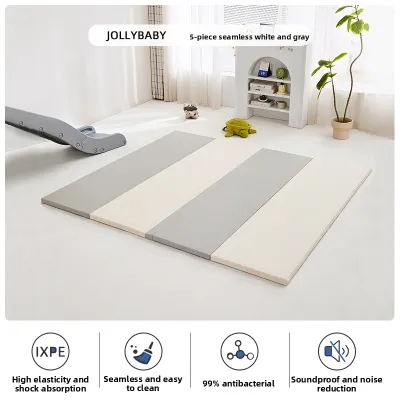
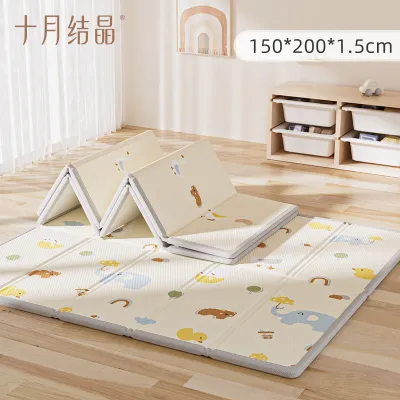
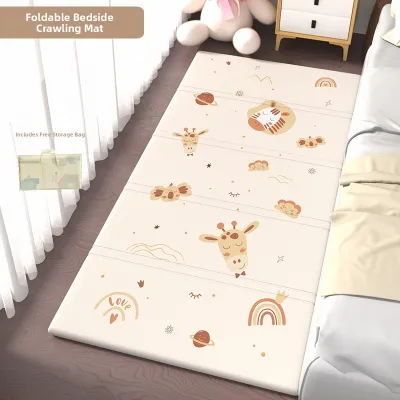
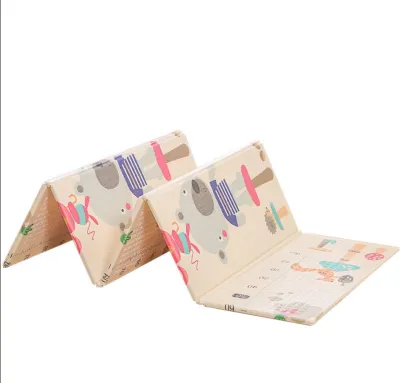
The primary feature of any portable playmat is its ability to fold or compress into a manageable size for transport and storage. Different folding styles offer distinct advantages depending on how you plan to use and transport the mat. Accordion-style folding mats, which typically feature pre-creased panels that fold back and forth, are highly popular for their space-efficient design. These mats collapse into a neat, flat rectangular block that can easily slide behind a sofa, fit into a closet, or lay flat in the boot of a car.
Products mentioned in this guide
Prices are valid at publication and may change. Please refer to the product page for the latest price.
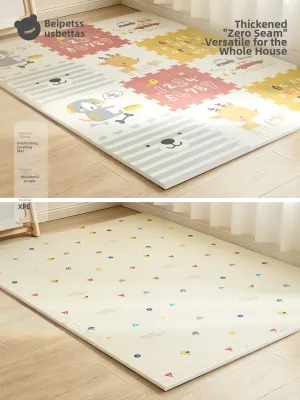
In contrast, roll-up mats are often preferred for permanent setups because they lack seams or hinges where dirt and liquids can accumulate. However, for families on the move, roll-up designs are generally less practical. When rolled, they remain quite long and awkward to carry, often requiring a dedicated strap or bag, and they can take up a significant amount of space across the backseat of a vehicle. Additionally, some roll-up mats tend to retain a curved edge when first unrolled, which can create a tripping hazard for toddlers.
Puzzle mats, consisting of interlocking foam tiles, offer excellent customizability for odd-shaped spaces but are rarely suitable for true portability. Assembling and disassembling dozens of interlocking teeth while managing an active infant is highly inconvenient. Furthermore, the individual tiles are easy to lose during transport, and the numerous seams allow liquids to seep through directly to the floor underneath, defeating one of the primary purposes of a protective play surface.
Weight is another critical factor when evaluating portability. A mat designed for travel should ideally weigh under three kilograms so that you can easily carry it with one hand while holding your baby or managing a stroller with the other. Look for mats that feature integrated fabric handles or those that come with a durable, dedicated travel bag. A shoulder strap is particularly beneficial, as it keeps your hands free to navigate busy transit hubs, lift strollers over curbs, or carry diaper bags.
Finally, consider the setup and pack-away speed. When you are out in public or visiting friends, you want a mat that can be deployed in seconds. Accordion-folding mats excel in this area, as they can often be unfolded with a single, smooth motion and packed away just as quickly. Avoid mats that require complex straps, buckles, or multiple steps to secure, as these can become highly frustrating when you are trying to manage a tired or fussy baby.
Material, Safety, and Comfort Checks
Because you cannot rely solely on marketing claims, it is essential to know how to inspect product labels and packaging to verify safety and material quality. When shopping for a portable playmat, look for recognized international safety certifications printed directly on the packaging or the product’s care tag. Standards such as the European EN71, American ASTM, or Korean KC certification indicate that the product has undergone rigorous testing for physical safety, mechanical properties, and chemical composition.

Chemical safety is paramount, as babies spend a significant amount of time in close contact with the mat’s surface, often placing their mouths directly on it. Ensure the manufacturer’s label explicitly states that the mat is non-toxic and free from harmful substances such as bisphenol A (BPA), phthalates, lead, latex, and formamide. High-quality materials like cross-linked polyethylene (XPE) and thermoplastic polyurethane (TPU) are widely regarded as safe, durable, and chemical-free options for baby gear.
The thickness of the mat directly influences both its protective cushioning and its overall portability. For a portable mat, a thickness of 1cm to 1.5cm generally strikes the ideal balance. This thickness provides sufficient shock absorption to protect your baby’s head, knees, and elbows during inevitable tumbles on hard floors, while still allowing the mat to fold into a compact size. Mats thinner than 1cm may not offer enough protection on hard surfaces, while mats thicker than 2cm are often too bulky to carry comfortably.
Foam density is just as important as thickness. High-density foam provides firm, resilient support that prevents your baby’s joints from sinking straight through to the hard floor. When testing a mat, press your hand firmly into the surface; a high-quality mat should quickly bounce back to its original shape rather than leaving a deep, lasting indentation. This resilience ensures the mat maintains its protective qualities over hours of active play.
Water resistance and ease of cleaning are crucial for maintaining a hygienic play environment. Check the care instructions to ensure the outer surface is fully waterproof and can be easily wiped clean. A non-porous surface prevents spit-up, spilled milk, and outdoor dirt from soaking into the foam, allowing you to sanitize the mat quickly with a damp cloth or baby-safe wipe. Avoid mats with fabric covers that require frequent machine washing, as these take a long time to dry and are highly inconvenient when you are away from home.
Matching the Mat to Your Lifestyle and Space
To find the perfect playmat, you must align its physical dimensions and features with your family’s daily routines and living spaces. Begin by measuring the clear floor area in your home where the mat will be used most frequently. You should also measure the boot space of your car or the storage basket of your stroller to ensure the folded mat can be transported without hassle. If you frequently visit grandparents or relatives, consider their floor layouts as well.
Balancing the size of the play area with the physical limits of carrying the mat is a key trade-off. While a large playmat (such as 200cm by 140cm) offers a wonderful, unrestricted space for a crawling baby, it can be incredibly cumbersome to transport. For families who are constantly on the move, a medium-sized mat (around 140cm by 100cm) often provides the best compromise. It offers ample space for tummy time and rolling while remaining compact and lightweight enough for easy transport.
Surface compatibility is another important consideration. If you plan to use the mat primarily on polished marble, laminate, or parquet floors, look for a design with a textured, non-slip backing. This prevents the mat from sliding across the floor when your baby attempts to push up, crawl, or stand, reducing the risk of slips and falls. A stable mat also provides a more secure foundation for babies who are just learning to balance.
If your lifestyle includes outdoor activities, such as family picnics at East Coast Park or afternoons in the garden, ensure the mat’s bottom layer is rugged enough to withstand slightly rougher surfaces. A durable, puncture-resistant outer skin is essential to prevent small twigs, pebbles, or rough concrete from tearing the mat. Some mats feature a reinforced, extra-durable bottom layer specifically designed for outdoor versatility, protecting the softer inner foam from damage.
Building Your Shortlist: Features to Compare
When you are ready to shop, creating a structured comparison matrix can help you evaluate different options objectively. List the models you are considering and compare them across key criteria: total weight, folded dimensions, primary materials, and specific cleaning requirements. This systematic approach allows you to compare the practical features of each mat side-by-side, making it easier to identify the option that best fits your needs.
Setting a realistic budget in S$ is an important step in narrowing down your choices. Basic folding foam mats can start as low as S$30 to S$50, offering a budget-friendly solution for occasional use. However, if you plan to use the mat daily and travel frequently, investing in a premium model priced between S$100 and S$250 is often worthwhile. Higher-end mats typically feature more durable materials, superior shock absorption, and better resistance to wear and tear over time.
When purchasing a playmat in Singapore, always buy from authorized local retailers or reputable baby specialty stores rather than unverified third-party sellers on online marketplaces. Purchasing from authorized sources ensures you receive a genuine product that complies with local safety standards. It also provides you with access to reliable customer service, clear return policies, and manufacturer warranties that protect against defects in materials or workmanship.
Finally, take the time to read verified customer reviews, paying close attention to feedback regarding long-term durability. Look for reviews that specifically mention how the mat holds up after months of constant folding and unfolding. The seams and hinges are the most common failure points on foldable mats, so look for comments about peeling, cracking, or tearing along the fold lines. Real-world feedback from other parents can provide invaluable insights into the actual lifespan and performance of the mat.
Frequently Asked Questions (FAQ)
Can I use a portable playmat directly on outdoor grass?
Yes, many portable playmats can be used on grass, but you must verify the manufacturer’s guidelines first to ensure the materials are suitable for outdoor use. Before laying the mat down, thoroughly inspect the grass and clear away any sharp twigs, stones, dry leaves, or insects that could puncture the mat or make the surface uncomfortable for your baby.
If the grass is damp, ensure your mat has a fully waterproof bottom layer to block moisture from seeping through to the play surface. After your outdoor session, wipe down both sides of the mat to remove grass stains, dirt, and moisture. Allow the mat to dry completely in a shaded, well-ventilated area before folding and storing it, as trapping moisture inside the folds can lead to mold, mildew, and unpleasant odors.
How do I clean and store a foldable playmat to prevent crease damage?
Always follow the specific cleaning instructions provided in the product manual. For most water-resistant mats, a simple wipe-down with a soft cloth, warm water, and a mild, baby-safe detergent is sufficient. Avoid using harsh chemical cleaners, bleach, or abrasive scrubbing pads, as these can degrade the protective outer coating and weaken the material over time.
To prevent crease damage, always fold the mat along its pre-engineered hinge lines. Forcing the mat to fold against its natural design puts immense stress on the seams, which can cause the outer film to split or peel. Store the folded mat in a cool, dry place away from direct sunlight. Singapore’s high heat and humidity can accelerate the degradation of certain plastics and foams, so keeping the mat in a temperature-controlled indoor environment when not in use will significantly extend its lifespan.
Community discussion
Share your experience or ask a question. Comments are reviewed before publication.