
Establishing a comfortable breastfeeding routine while recovering from childbirth requires a careful balance of physical support and ergonomic positioning. For mothers healing from a Caesarean section or managing postpartum back pain, a standard pillow rarely provides the precise elevation or stability needed to protect sensitive tissues and align the spine. The most comfortable breastfeeding cushion is not a one-size-fits-all solution; rather, it is one that matches your specific recovery path by keeping the baby’s weight entirely off your lower abdomen or preventing you from slouching during long feeding sessions. By focusing on structural designs—such as secure wrap-around buckle styles, firm C-shaped cushions, or modular wedge systems—you can find a supportive setup that facilitates healing while ensuring a comfortable latch.
Understanding Your Postpartum Support Needs
Recovering from a Caesarean delivery introduces specific physical constraints that directly impact how you feed your baby. A C-section incision requires weeks to heal, during which any direct pressure, friction, or sudden impact from a baby’s kicking can cause intense discomfort and disrupt the healing process. Consequently, a primary goal of a nursing cushion during C-section recovery is to create a protective bridge over the lower abdomen, transferring the infant’s weight to the thighs or hips rather than the healing scar.
Postpartum back pain, on the other hand, is often exacerbated by the repetitive, forward-leaning posture that many mothers adopt while feeding. During pregnancy, hormonal changes relax the ligaments, and the shift in your center of gravity weakens the abdominal muscles, leaving the lower back highly vulnerable to strain. Without proper support, you may find yourself hunching your shoulders and bending your neck downward to bring your breast to the baby, which quickly leads to severe muscle fatigue and spinal misalignment.
Products mentioned in this guide

![[RototoBebe] Anti-Regurgitation Baby Lounger (Optional Bag) ● Anti-reflux Infant Cushion with Removable Cover ● Rototo Cushion ● Nursing Pillow ● Prevent Milk Acid Reflux ● Tummy Time ● Soft Big Cushion for Baby Toddler ● Rototo Bebe Baby Mat Bed](https://img.lazcdn.com/g/p/18efaa36620b7abb0f83dc4c43fd9348.png_400x400q80.png_.webp)
Prices are valid at publication and may change. Please refer to the product page for the latest price.
Standard household pillows or flat cushions generally fail to address these recovery challenges because they lack structural integrity. Under the weight of a newborn, soft fiberfill compresses rapidly, forcing you to lean forward to maintain the feed or use your arm muscles to hold the baby in place. Furthermore, loose pillows easily slide apart, leaving gaps that can cause the baby to roll inward toward your abdomen, potentially pressing directly against a tender incision.
If you experience severe or persistent pain, notice that your posture remains compromised despite adjusting your setup, or observe any signs of incision complications such as redness or discharge, it is essential to consult your healthcare provider or a certified lactation consultant. These professionals can offer personalized guidance to ensure your feeding positions support both your physical recovery and your baby’s feeding development.
Key Features to Look for in a Breastfeeding Cushion
When evaluating different nursing cushions, the firmness and density of the filling material should be your first consideration. Medium-firm to firm foam cores are highly recommended because they maintain a consistent height and support the baby’s weight without sagging. This structural stability ensures that the baby remains at breast height, allowing you to relax your shoulders and sit upright, which directly alleviates tension in the upper and lower back.

Waist clearance and the overall fit of the cushion are equally critical, especially when protecting a healing incision. You should evaluate how closely the inner curve of the cushion hugs your torso and whether it leaves a safe gap over your lower abdomen. A cushion that fits too tightly may press directly against your scar, while one that is too loose can create a gap where the baby might slip down, causing sudden pressure on the sensitive area.
Adjustable straps, buckles, or ties play a vital role in securing the cushion at the correct height and preventing it from shifting during a feed. By fastening the cushion securely around your waist, you eliminate the need to constantly readjust the pillow or use your arms to pull the baby closer. This hands-free stability is particularly beneficial for C-section recovery, as it prevents the cushion from sliding downward onto your lower abdomen.
Given the warm and humid climate in Singapore, the cover material and overall hygiene of the cushion are major comfort factors. Look for removable, machine-washable covers made from breathable, moisture-wicking fabrics such as organic cotton, bamboo, or lightweight performance blends. These materials help regulate temperature during long feeding sessions, preventing sweat buildup and reducing the risk of skin irritation for both you and your baby.
Evaluating Popular Breastfeeding Cushion Styles and Brands
To find the right support, it is helpful to understand the common structural categories of nursing pillows available on the market and how their designs align with postpartum recovery. Rather than looking for a single universal winner, you should focus on how each style’s physical properties address your specific physical challenges. Before making a purchase, always verify the current dimensions, materials, and safety guidelines on the manufacturer’s official website or through authorized retailers.
Wrap-Around and Buckle-Style Cushions
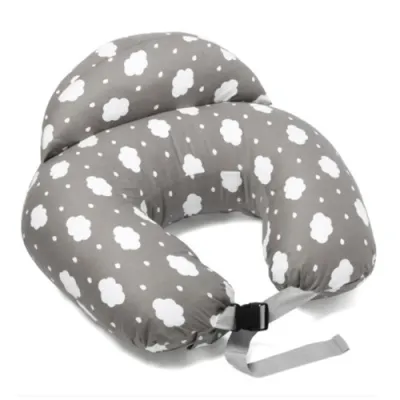
Wrap-around cushions feature a firm foam core that completely encircles your waist, secured by an adjustable strap and buckle. This design is highly favored by specialized nursing brands because it provides a flat, stable platform for the baby while offering integrated back support. The secure buckle system ensures the cushion stays locked at the desired height, preventing it from shifting or sliding down during use.
For mothers managing back pain, the built-in backrest helps maintain proper lumbar alignment by discouraging slouching and reducing the temptation to lean forward. During C-section recovery, this style is exceptionally effective at keeping the baby’s weight elevated and securely positioned away from the lower abdomen. The firm platform acts as a protective shield, ensuring that any sudden movements or kicks from the baby do not impact your incision.
However, these cushions tend to be bulkier than other styles, making them less portable and more challenging to store in smaller living spaces. It is also crucial to adjust the securing strap carefully to ensure that the buckle or the strap itself does not sit directly on or rub against your healing scar. Testing the strap placement while sitting in your preferred feeding chair can help you identify a comfortable, friction-free position.
C-Shaped and Crescent Cushions
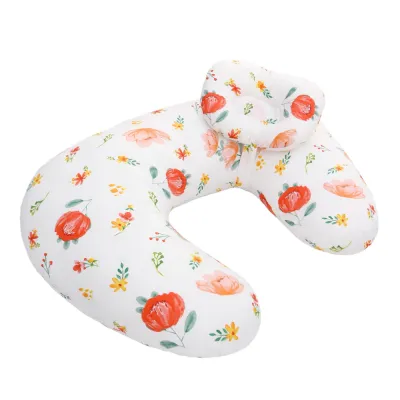
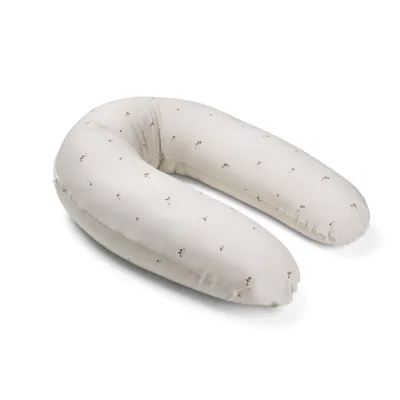
C-shaped or crescent cushions are open-ended designs that slide easily around the front or side of your waist. These versatile pillows are widely available across many mainstream baby brands and are popular for their simplicity and ease of use. Because they do not require straps or buckles, they can be quickly positioned or moved aside with one hand, making them highly convenient for quick feeds.
These cushions can be wrapped around your waist to support the baby, or placed behind your back as a supportive lumbar prop when sitting on a deep sofa. However, because they lack a securing strap, they may gradually drift away from your body during a feeding session. This shifting can require you to use your arm strength to hold the cushion in place, which can fatigue your shoulders and worsen upper back pain over time.
Additionally, the open-ended design presents a risk of the baby sliding into the gap between your body and the cushion. If the pillow shifts, the baby’s weight can press directly against a C-section incision, causing sudden discomfort. To mitigate this risk, you must carefully monitor the cushion’s position and use a small rolled towel or your hand to fill any gaps if the fit is not completely snug.
Wedge and Adjustable Lounger Styles
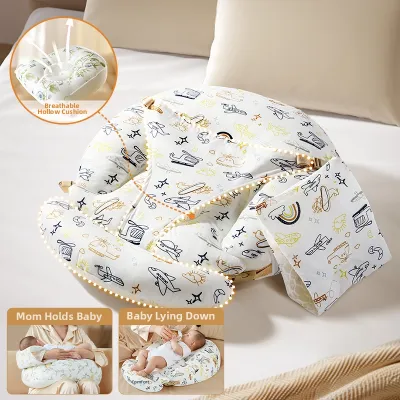
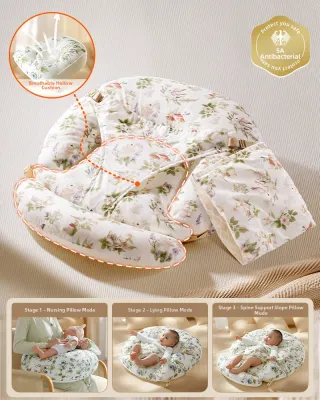
Wedge pillows and modular, multi-piece loungers are designed to provide an inclined surface rather than a flat platform. These styles often feature adjustable layers or stackable pillows that allow you to customize the angle of elevation. By raising the baby’s head slightly higher than their feet, these cushions can help manage infant reflux while reducing the need for you to hunch forward.
The adjustable incline is highly beneficial for back pain relief, as it allows you to find the exact height that aligns the baby’s mouth with your breast without straining your neck or shoulders. This modular design also makes it easier to adapt the cushion as your baby grows and their positioning needs change. Some systems allow you to remove layers entirely, transitioning the cushion into a simple lumbar support as your recovery progresses.
When using a wedge or lounger style, it is essential to check the stability of the base and the presence of secure side bolsters. Without adequate lateral support, the baby may roll downward or slide toward your abdomen, which can place unexpected pressure on a healing C-section scar. Ensuring the cushion is placed on a wide, flat surface like a bed or a spacious armchair will help maintain its structural stability.
How to Test and Adjust Your Cushion for Safe Positioning
To ensure your chosen breastfeeding cushion provides effective relief, you should perform a systematic posture check before starting a feed. Sit in a supportive chair with your back fully resting against the backrest, ensuring your ears, shoulders, and hips are vertically aligned. Keep your feet flat on the floor or use a low footstool to relieve tension in your lower back and prevent your pelvis from tilting backward.
Next, perform an incision clearance test to verify that the cushion is not resting directly on your C-section scar. Position the cushion slightly higher on your waist, bridging it over your lower abdomen so that the weight of the pillow and the baby is supported by your hips and thighs. There should be a clear, consistent gap between the bottom edge of the cushion and your incision line, ensuring zero friction or pressure during the feed.
Once your posture and incision clearance are secure, place your baby on the cushion and evaluate the latch height. The baby’s mouth should align naturally with your nipple without requiring you to lean down, slouch, or lift your shoulders toward your ears. If the baby is too low, do not bend forward; instead, place a folded blanket or a small towel underneath the cushion to raise it to the correct height.
Pay close attention to your body’s signals and be prepared to stop and adjust the setup immediately if you experience discomfort. Signs that your current positioning is failing include sudden back spasms, a pulling sensation near your incision, or the baby sliding out of alignment. If these issues occur, gently break the baby’s latch, reposition the cushion or your seating angle, and verify the support features before resuming the feed.
Care, Maintenance, and When to Replace
Maintaining the hygiene and structural integrity of your breastfeeding cushion is essential for long-term comfort and safety. Because nursing pillows are subject to frequent spills, spit-up, and sweat, you should wash the removable cover regularly according to the manufacturer’s specific instructions. For the inner foam or fiberfill core, spot cleaning with a mild, baby-safe detergent is usually recommended, followed by thorough air-drying to prevent the growth of mold or mildew.
Regularly inspect the cushion’s filling for signs of permanent compression, lumps, or a loss of firmness. Over time, the areas that support the baby’s heaviest parts can develop deep indentations, which silently alter your feeding angles and force you to slouch. If you notice that the cushion no longer returns to its original shape or feels significantly softer than when purchased, it may be failing to provide the necessary ergonomic support.
You should replace your breastfeeding cushion immediately if you detect structural failures such as broken buckles, torn straps, or persistent odors that do not disappear after washing. Additionally, as your baby grows and gains weight, a cushion that worked well during the newborn stage may no longer offer adequate elevation or surface area. Upgrading to a firmer or larger support style ensures that your back and healing abdomen remain protected throughout your entire nursing journey.
Frequently Asked Questions (FAQ)
Can I use a regular bed pillow instead of a specialized breastfeeding cushion?
While a regular bed pillow can be used in an emergency, it is generally not recommended for mothers recovering from a C-section or managing back pain. Standard bed pillows are filled with soft materials that compress easily under a baby’s weight, failing to provide the consistent elevation needed to prevent you from slouching. This lack of structural support forces you to lean forward, which strains your back muscles and increases the risk of the baby sliding down and pressing directly against a sensitive C-section incision.
Is it safe to use a breastfeeding cushion if my C-section incision is still tender?
Yes, but you must take specific precautions and obtain clearance from your healthcare provider or surgeon before use. When using a cushion with a tender incision, position the pillow slightly higher on your torso so that it bridges over your lower abdomen rather than resting directly on the scar. Ensure that the baby’s weight is distributed across your thighs or the sides of your hips, and stop using the cushion immediately if you feel any pulling, pain, or increased tenderness near the incision site.
Community discussion
Share your experience or ask a question. Comments are reviewed before publication.