
Selecting the right changing table for your nursery in Singapore involves balancing space constraints, safety features, and long-term utility. While the brand Cho has gained attention among local parents, declaring any single brand as the absolute best is impractical. The ideal choice depends entirely on your specific nursery layout, budget, and daily caregiving workflow. Rather than relying on marketing claims, comparing Cho against other popular brands requires a structured approach focused on physical verification, label checks, and spatial planning. This guide provides a comprehensive decision framework and checklist to help you evaluate these options and select the safest, most functional setup for your home.
Core Dimensions for Comparing Changing Tables
When evaluating changing tables, establishing objective criteria is essential to cut through promotional language. The first and most critical dimension is structural stability. A reliable changing table must feature a robust base that resists wobbling or tipping when a baby moves. Because Singapore homes often feature tiled or vinyl flooring, checking for non-slip feet or secure floor contact is vital. Additionally, anti-tip hardware is a non-negotiable safety baseline for any tall or heavy furniture piece, ensuring the unit can be securely anchored to the wall.
Space and footprint considerations form the second major dimension. In many Singapore apartments, such as HDB flats or compact condominiums, nursery space is at a premium. Caregivers must contrast standard, fixed wooden changing tables with compact, foldable, or multi-functional alternatives. A fixed table offers dedicated stability and integrated storage but occupies a permanent block of floor space. Conversely, foldable models can be tucked away when not in use, though they may offer less storage and require careful verification of their locking mechanisms.
Products mentioned in this guide
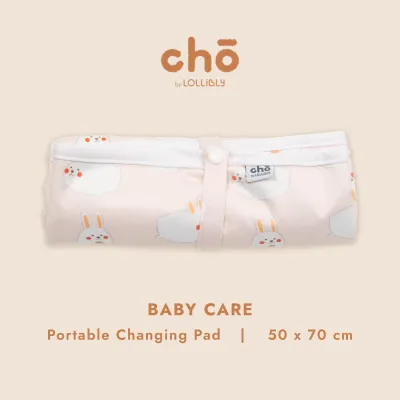
Prices are valid at publication and may change. Please refer to the product page for the latest price.
Material and maintenance factors represent the third dimension. The nursery environment is prone to frequent spills, diaper leaks, and moisture. Therefore, the changing table’s surfaces must be highly wipeable and resistant to water damage. Parents should look for non-porous finishes, water-resistant sealants on wooden components, or easily removable fabric elements that can be laundered. In Singapore’s humid climate, materials that resist mold and are easy to sanitize with mild, baby-safe cleaners are highly advantageous for maintaining a hygienic environment.
Evaluating Cho: What to Check on the Product Label
To assess whether a Cho changing table is the right fit, caregivers should look beyond online product descriptions and directly inspect the physical product label or official user manual. The product label provides critical, legally binding specifications that dictate safe usage. First, verify the maximum weight limit and age restrictions specified by the manufacturer. Some changing tables are designed only for infants up to 9 or 11 kilograms, while others can support toddlers up to 15 kilograms or more. Operating within these verified limits is crucial for preventing structural failure.

Next, physically inspect the safety features detailed on the label and the unit itself. Look for raised protective edges—often referred to as guardrails—on all four sides of the changing surface. These barriers should be of sufficient height to prevent an active infant from rolling off. Additionally, check if the unit includes an integrated safety strap with a secure buckle. The hardware security must also be evaluated; inspect the joints, screws, and brackets to ensure they are tightly fitted and do not present sharp edges or snag hazards for clothing and skin.
Finally, review the storage layout and drawer mechanisms to ensure they align with your daily diapering workflow. A safe diapering routine requires the caregiver to keep one hand on the baby at all times. Therefore, drawers or shelves must be easily accessible with a single hand. Check if the drawers feature smooth, silent glides and safety stops that prevent them from being pulled completely out of the frame. If the Cho model utilizes open shelving, verify that the shelves are sturdy enough to hold heavy packs of wipes and diapers without sagging.
Comparing Features and Nursery Integration
Integrating a changing table into your nursery requires a careful analysis of design trade-offs and spatial layouts. One of the primary decisions parents face is choosing between a dedicated changing table and a multi-functional dresser equipped with a removable changing topper. A dedicated table is often lighter, more compact, and specifically optimized for diapering height, reducing strain on the caregiver’s back. However, its utility declines once the child outgrows diapers. A multi-functional dresser with a topper represents a larger initial footprint but transitions seamlessly into standard bedroom furniture as your child grows, offering better long-term spatial efficiency.
Storage configurations also vary significantly across brands. Some designs feature open shelving, which allows for quick, visible access to diapers, creams, and clothing. Others utilize closed drawers, which keep clutter out of sight and protect baby items from dust, though they require more physical clearance to open. Side-hanging organizers or accessory baskets are another popular feature, allowing caregivers to keep frequently used items within arm’s reach without cluttering the main changing surface. When comparing Cho to other brands, evaluate which storage style matches your organizational habits.
Before finalizing any purchase, it is imperative to measure the physical footprint of the changing table and map it against your nursery’s actual layout. Ensure there is adequate clearance around the unit for you to stand comfortably and move freely without bumping into other furniture. In tight spaces, a door swing or a nearby crib rail can restrict access or create safety hazards. Marking the dimensions on your floor using masking tape can help visualize the real-world clearance and ensure the unit does not block pathways or ventilation.
Assessing Value and Long-Term Usability
Evaluating the true value of a changing table involves looking past the initial retail price in S$ and calculating the total cost of ownership. Some brands may appear budget-friendly initially but do not include essential accessories. Check whether the changing table comes bundled with a contoured changing pad, waterproof covers, or safety straps, or if these items must be purchased separately. Buying these accessories individually can quickly inflate your total expenditure, making an all-inclusive model more cost-effective in the long run.
Warranty terms and customer support are also critical indicators of value. Review the manufacturer’s warranty period and what specific defects it covers, such as structural warping or hardware failure. Reliable brands typically offer clear channels for sourcing replacement parts, such as extra screws, drawer glides, or replacement straps. Verify whether these parts can be easily ordered through official brand channels or authorized online retailers in Singapore, as shipping parts from overseas can lead to long delays when you need them most.
Long-term usability is heavily tied to structural durability. Inspect the quality of the materials used; solid wood or high-density fiberboard with robust joint construction (such as dowels or metal-on-metal connections) generally offers greater longevity than thin particle board. A durable changing table not only survives the daily wear and tear of one child but can also be safely repurposed for future siblings or sold on local secondhand marketplaces. Assessing these structural indicators ensures your investment retains its utility and value over time.
Decision Framework: Which Brand Fits Your Setup?
To help streamline your decision, use this conditional framework to determine which changing table setup aligns with your household’s specific needs:
- Choose Cho if: Your nursery layout comfortably accommodates the unit's verified physical footprint, and its specific storage configuration—whether open shelves or closed drawers—perfectly matches your daily diapering workflow. If you prefer a dedicated station where all essentials are visible and easily reachable with one hand, and the verified weight limits align with your child's growth trajectory, Cho presents a practical option.
- Choose alternatives if: Your nursery requires specialized features such as compact folding mechanisms for tight spaces, multi-stage furniture conversion kits that transform the table into a study desk or toy chest, or heavy-duty lockable caster wheels for frequent mobility between rooms. If you prioritize a seamless aesthetic match with an existing crib or wardrobe brand, alternative manufacturers may offer better integration.
- Neither may fit if: Your available floor space is highly restricted, making it impossible to maintain safe clearance zones around a standard changing table. In such scenarios, a wall-mounted changing station or a portable, contoured changing pad used on a secure, flat surface (like a bed or a secured chest of drawers) may offer a safer, more space-efficient alternative.
- Verify first if: You are purchasing from a third-party e-commerce platform or online marketplace. Always cross-reference the listed product specifications, dimensions, and safety certifications against the official manufacturer guidelines to ensure you are receiving an authentic, up-to-date model that meets all safety standards.
Frequently Asked Questions (FAQ)
Do changing tables require specific safety certifications in Singapore?
While Singapore does not always mandate a single local safety certification specifically for changing tables, caregivers should look for internationally recognized safety standards on the product packaging or manual. Standards such as EN 12221 (European standard for changing units) or ASTM F2388 (American standard for home changing tables) indicate that the product has undergone rigorous testing for stability, structural integrity, and chemical safety. Always consult the manufacturer’s official documentation or contact their customer service department to verify these compliance claims before purchasing.
Can a regular dresser be safely converted into a changing station?
Yes, a regular dresser can be converted into a changing station, provided you follow strict safety guidelines. You must use a secure changing topper or pad equipped with safety straps that attach directly to the back of the dresser to prevent sliding. The dresser itself must be of a comfortable working height to prevent caregiver back strain. Most importantly, regardless of the brand or design, the dresser must be securely anchored to the wall using anti-tip hardware to prevent accidental tipping when drawers are opened or when weight is applied to the top.
Community discussion
Share your experience or ask a question. Comments are reviewed before publication.