
In Singapore, road safety regulations mandate that any passenger under the height of 1.35 metres must be secured with an approved child restraint system, booster seat, or adjustable seatbelt appropriate for their height and weight when traveling in a motor vehicle. This legal requirement applies to all private cars, private hire vehicles, and other passenger transport, with very specific exemptions. Failing to comply not only risks heavy fines and demerit points but, more importantly, compromises your child’s safety in the event of a sudden stop or collision. Understanding these rules is essential for every parent, caregiver, and driver navigating Singapore’s roads.
Navigating these laws requires a clear understanding of physical thresholds, vehicle types, and safety standards. While the regulations are strict, they are designed to align with international best practices in passenger safety. By familiarising yourself with the specific height limits, installation guidelines, and certification requirements, you can ensure your family remains both legally compliant and fully protected on every journey.
Does Your Child Legally Require a Car Seat?
The primary legal determinant for child restraint usage in Singapore is height, rather than age. Under the Road Traffic Act, any passenger who is under 1.35 metres (135 centimetres) in height must be secured with an approved child restraint system or booster seat appropriate for their build. Once a child reaches or exceeds 1.35 metres, they are legally permitted to use a standard adult seatbelt. This threshold is based on the physical design of vehicle safety systems, as standard three-point seatbelts are engineered to protect adult bodies and can cause severe injuries to smaller children if positioned incorrectly.
Products mentioned in this guide
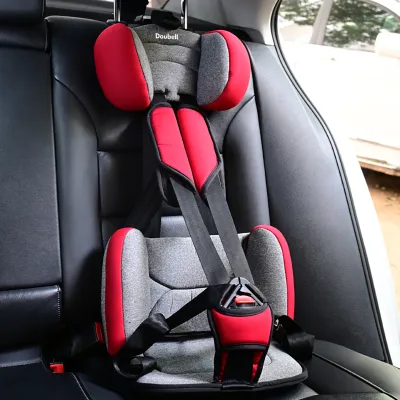
![[SG] Foldable Child Safety Car Booster Seat Compact Travel Portable Baby Seat Blue Pink For 3-13 yrs](https://img.lazcdn.com/g/p/64b57362b4b2ceb65045c329016802cd.jpg_400x400q80.jpg_.webp)
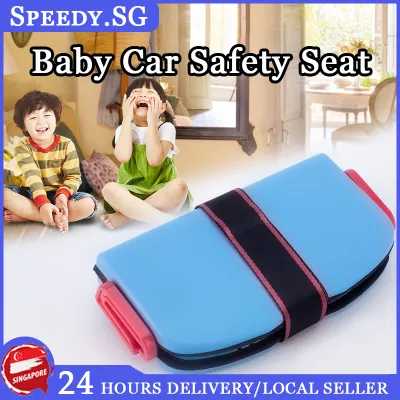
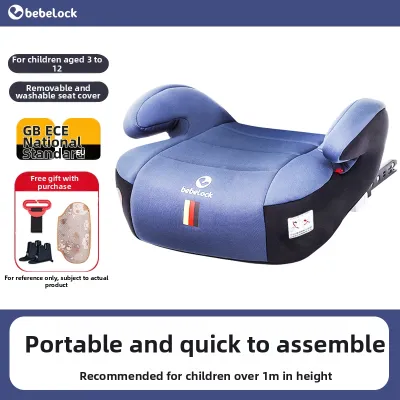
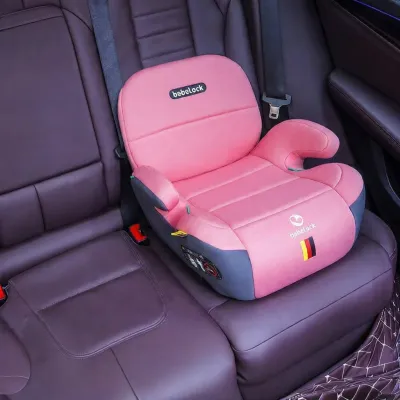
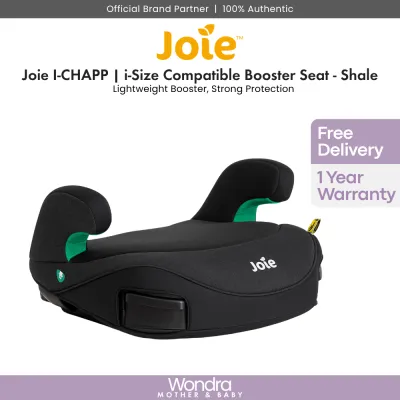
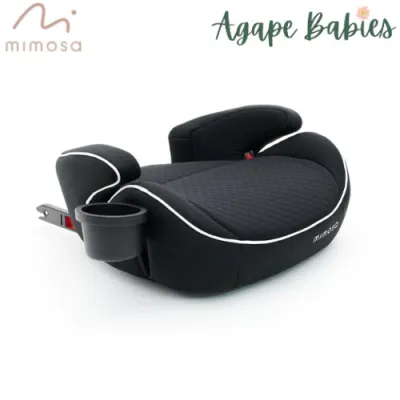
Prices are valid at publication and may change. Please refer to the product page for the latest price.
While height is the absolute legal boundary, age serves as a practical guide for transitioning between different types of restraints. For instance, infants and toddlers require specialized rear-facing or forward-facing seats with integrated harnesses, whereas older children who have outgrown these seats but remain under 1.35 metres must use booster seats. It is a common misconception that reaching a certain age automatically exempts a child from these rules; even an older child must legally use a booster seat if they have not yet reached the 1.35-metre mark.
To ensure accurate compliance, parents should measure their child’s height regularly. Have your child stand flat against a straight wall without shoes, keeping their heels, buttocks, and shoulders in contact with the surface. Use a flat, hard object like a book held parallel to the floor to mark their exact height on the wall, then measure from the floor to the mark. Relying on outdated measurements or guessing can lead to non-compliance and, more importantly, inadequate protection in a crash.
The law distinguishes between a full child restraint system and a booster cushion. A full child restraint features an integrated five-point harness that secures the child’s shoulders, hips, and crotch, distributing crash forces across the strongest parts of their skeletal frame. A booster cushion or high-back booster seat, on the other hand, does not have its own harness; instead, it elevates the child so that the vehicle’s standard adult seatbelt sits correctly across their collarbone and pelvis rather than their neck and stomach.
Where to Safely Install the Child Seat in Your Vehicle
Choosing the correct location for your child’s car seat is just as important as selecting the seat itself. Legally, child restraints can be installed in either the front or rear seats, but the front passenger seat comes with strict safety conditions. If you must install a rear-facing child seat in the front passenger seat, you are legally required to deactivate the front passenger airbag. An inflating airbag strikes the back of a rear-facing seat with immense force, which can cause catastrophic head and neck injuries to an infant. Even for forward-facing seats in the front, it is highly recommended to slide the vehicle seat as far back as possible to maximize the distance between the child and the dashboard.

Despite the legal allowance for front-seat installation under specific conditions, safety experts universally agree that the rear seats are the safest place for children. The rear middle seat is statistically the safest position in the vehicle, as it is furthest from potential side-impact collisions. However, this position is only viable if it features a proper three-point seatbelt or compatible ISOFIX anchors. If the middle seat only has a lap belt or lacks anchor points, the rear passenger side (the left side in Singapore’s right-hand drive vehicles) is the next best option, as it allows you to load and unload your child safely from the kerb rather than the active traffic side.
When installing the seat, you must choose between using the vehicle’s seatbelt or the integrated ISOFIX system. ISOFIX consists of metal anchor points welded directly into the car’s chassis, allowing compatible child seats to click securely into place without using the seatbelt. This system is highly favored because it significantly reduces the risk of installation errors. Seatbelt installation, while equally safe when executed perfectly, requires careful routing through designated paths and ensuring the belt is locked tightly. Always consult both your vehicle’s manual and the car seat’s instruction guide to verify compatibility and weight limits for ISOFIX anchors.
Common installation mistakes can completely compromise the effectiveness of an approved seat. These include leaving too much slack in the installation—the seat should not move more than 2.5 centimetres in any direction when pulled at the belt path—and failing to tighten the harness sufficiently. To check the harness tightness, perform the “pinch test”: if you can pinch any excess webbing of the shoulder straps between your fingers at the collarbone, the harness is too loose and must be tightened.
Understanding Exemptions for Taxis and Special Conditions
Singapore’s road traffic laws recognize certain practical challenges in daily transport, leading to specific exemptions for public taxis. Under the law, public taxis (including street-hailed cabs and those booked via traditional taxi applications) are exempt from the mandatory child restraint requirement. This exemption is a concession to the reality that passengers hailing a taxi on the street may not have a bulky car seat with them. In these situations, children under 1.35 metres are legally allowed to travel in the rear seat of a taxi using the standard seatbelt, though they are strictly prohibited from riding in the front passenger seat.
It is critical to understand that this exemption does not apply to private hire cars (such as standard Grab, Gojek, Ryde, or Tada rides). Private hire vehicles are classified as private passenger cars under the law, meaning they must fully comply with the 1.35-metre child restraint rule. If you book a standard private hire car and attempt to board with a child under 1.35 metres without an appropriate restraint, the driver is legally obligated to refuse the ride. To accommodate families, most ride-hailing platforms offer specialized “family” booking tiers that equip the vehicle with a booster seat or child restraint for an additional fee.
For children with specific physical or medical conditions that make the use of standard child restraints impossible or unsafe, a medical exemption may be granted. Parents must obtain a formal medical exemption certificate from a registered medical practitioner in Singapore. This certificate must clearly state the medical grounds for the exemption and must be carried in the vehicle at all times to be presented to law enforcement officers if requested.
While legal exemptions exist for public taxis, physics does not change based on the vehicle’s license plate. In a collision, an unrestrained child in a taxi faces the exact same physical risks as one in a private car. Parents are strongly encouraged to minimize reliance on exemptions by using highly portable travel solutions. These include lightweight, folding booster seats, ride-share-approved safety vests, or compact infant carriers that can be easily installed using a taxi’s three-point seatbelt.
Checking Your Car Seat for Approved Safety Certifications
To be legally compliant in Singapore, a child restraint must meet recognized international safety standards. The Land Transport Authority (LTA) and the Traffic Police recognize several prominent global certifications. When purchasing or borrowing a seat, you must verify that it carries a certification label from one of these approved standards:
- UN ECE R44/04 or R129 (i-Size) (European Union standards)
- FMVSS 213 (United States Federal Motor Vehicle Safety Standard)
- AS/NZS 1754 (Australian and New Zealand standard)
- Technical standards approved by the Japanese Industrial Standards (JIS) or the British Standards Institution (BSI).
These certifications are typically displayed on a highly visible sticker or label affixed directly to the plastic shell of the car seat. For European-certified seats, look for an orange label featuring an “E” mark (with a number indicating the country of certification) along with the specific regulation code (such as R44/04 or R129). US-certified seats will feature a white or silver label referencing compliance with FMVSS 213. If a seat lacks these verifiable certification labels, it cannot be legally used as an approved child restraint on Singapore’s roads.
Using second-hand, expired, or recalled car seats poses significant safety and legal risks. Car seats have a limited lifespan—typically between 6 to 10 years from the date of manufacture—because the plastic shell and energy-absorbing foam degrade over time, especially when exposed to Singapore’s intense heat and humidity. Furthermore, you should never use a second-hand seat unless you are absolutely certain of its history. A car seat that has been involved in even a minor collision must be replaced immediately, as invisible structural fractures can prevent it from protecting a child in a subsequent accident.
To safeguard your purchase, always register your new car seat with the manufacturer immediately after buying it. This ensures you will be contacted directly in the event of a safety recall. Additionally, you should periodically check online safety databases and manufacturer websites to verify that your specific model has not been subject to any active safety recalls or manufacturing defects.
Fines, Penalties, and How to Stay Compliant
Failing to secure a child under 1.35 metres in an approved restraint is a serious traffic offense in Singapore. The Traffic Police enforce these laws strictly to protect young passengers. If caught, the driver of the vehicle faces a composition fine of S$120 and will be issued 3 demerit points. If the case is prosecuted in court, the penalties can escalate significantly. For a first-time conviction, a driver can face a fine of up to S$1,000, imprisonment for up to three months, or both. For subsequent convictions, the maximum fine increases to S$2,000, and the potential prison term rises to six months.
These penalties can also escalate if non-compliance is discovered during the investigation of a traffic accident. In such cases, drivers may face additional charges of negligent or reckless driving, particularly if a child suffers injuries that could have been prevented or mitigated by a proper restraint system. Insurance companies may also review compliance with local laws when assessing claims, and non-compliance could complicate the payout process for medical or vehicle damages.
To ensure you remain compliant and keep your child safe on every trip, establish a quick pre-drive checklist before moving the vehicle:
- Check the fit: Ensure the harness straps are snug against the child's body and cannot be pinched.
- Verify the anchor: Give the car seat a firm shake at the base to ensure it moves less than 2.5 centimetres.
- Confirm the path: Double-check that the seatbelt or ISOFIX connectors are locked securely into their designated slots.
- Position the belt: If using a booster seat, verify that the lap belt rests low across the hips and the shoulder belt crosses the center of the chest.
If you are stopped by law enforcement officers for a routine check, remain calm and cooperate fully. If your child is under the height limit but is riding in a public taxi, politely remind the officer of the legal exemption for taxis. If you have a medical exemption, present the official medical certificate immediately. Keeping your documentation organized and maintaining a consistent safety routine ensures a stress-free and compliant driving experience.
Frequently Asked Questions (FAQ)
Can I use a booster seat instead of a full child seat for my toddler?
No, a toddler should not be placed in a booster seat. Booster seats are designed for older children who have outgrown their five-point harness seats, typically when they reach a weight of at least 15 to 18 kilograms and possess the developmental maturity to sit upright without slouching. A toddler’s skeletal structure is still developing, and their hips are not yet prominent enough to keep a standard vehicle lap belt safely positioned. Placing a toddler in a booster seat risks severe abdominal or spinal injuries in a crash, as the vehicle seatbelt can easily ride up over their soft stomach.
Are child seats required for private hire cars?
Yes, child seats are legally required for all private hire cars in Singapore. Unlike public taxis, private hire vehicles do not have a legal exemption under the Road Traffic Act. If your child is under 1.35 metres, you must secure them in an approved child restraint or booster seat during the ride. To comply with this law, you can bring your own portable travel seat, use a ride-share-approved safety vest, or book a specialized family service tier through your ride-hailing app that includes an appropriate child seat.
What happens if my child outgrows the seat but is still under the legal height limit?
If your child exceeds the manufacturer’s maximum weight or height limit for their current car seat but is still under the legal height limit of 1.35 metres, you must transition them to the next stage of restraint. You should never continue using a seat once your child has outgrown its specified limits, as this compromises its structural integrity and safety. Transition your child to a high-back booster seat, which uses the vehicle’s three-point seatbelt while providing side-impact protection and proper belt positioning, ensuring they remain both safe and legally compliant.
Community discussion
Share your experience or ask a question. Comments are reviewed before publication.