
The Verdict: Are Ceramic Scissors Safe for Preparing Baby Food?
Ceramic scissors are generally safe, hygienic, and highly practical for preparing weaning foods, provided they are used correctly and inspected regularly. For parents navigating the milestone of introducing solids—typically around six months of age—these tools offer a convenient way to portion bite-sized meals directly at the dining table.
The primary safety and functional advantage of ceramic blades is their complete chemical inertness. Unlike traditional metal blades, high-quality ceramic does not rust, corrode, or leach metallic ions into food. This makes them exceptionally hygienic for preparing fresh infant meals.
However, the main caveat is their physical fragility. While ceramic is incredibly hard, it is also brittle. Dropping the scissors on a hard surface or using them on improper food items can cause the blades to chip or snap. Because micro-chips entering a baby’s food pose a serious physical ingestion hazard, managing this brittleness through careful handling and routine inspection is absolutely essential for safety.
Products mentioned in this guide
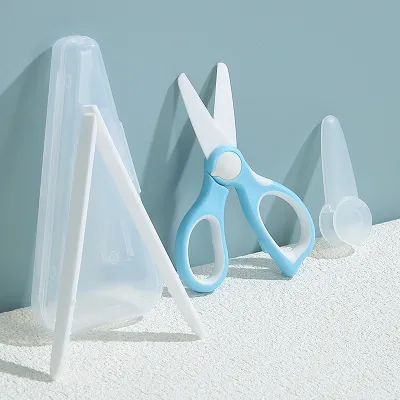
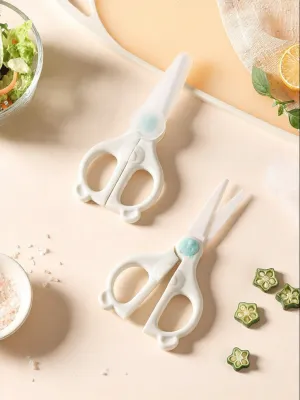
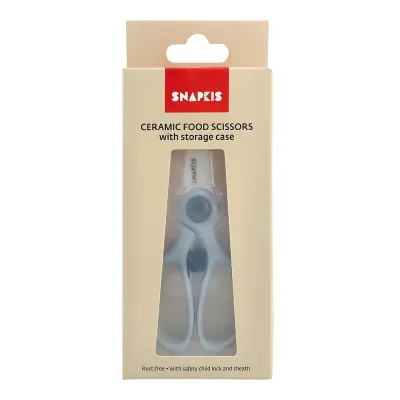
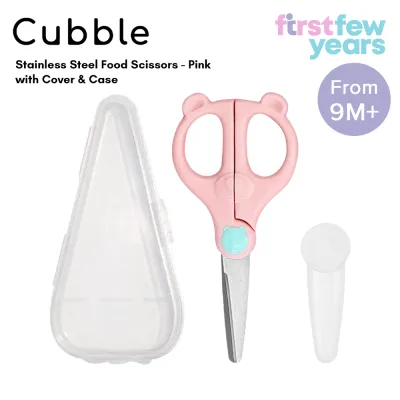
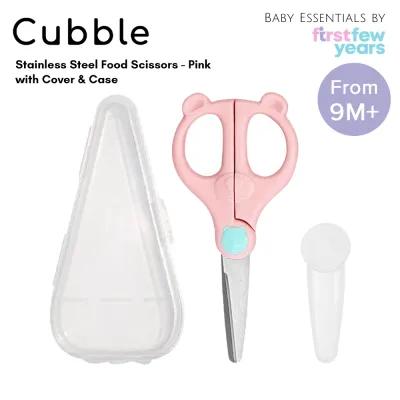
![[SG Local Seller] Ceramic/Stainless Steel Food Scissors with Storage Case](https://img.lazcdn.com/g/p/037cc88cb84f1ee943cc79afdac6a690.jpg_400x400q80.jpg_.webp)
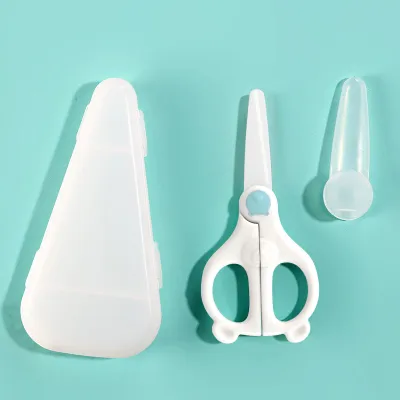
![[CHEAPEST] Baby Little Bear Ceramic Food Scissors / Stainless Steel Food Scissors High Quality with Travel Case Cover Safety Lock [Baebear.sg]](https://img.lazcdn.com/g/p/4b8b926562243d8539977af6f76205f8.jpg_400x400q80.jpg_.webp)
Prices are valid at publication and may change. Please refer to the product page for the latest price.
Material Safety: Ceramic vs. Stainless Steel Blades
Understanding the material science behind ceramic blades helps explain why they are increasingly recommended for baby food preparation. Most high-quality ceramic scissors are crafted from zirconium dioxide (zirconia), a powder that is compressed under immense pressure and fired at high temperatures. This process results in an extremely dense, non-reactive material.

Chemical Stability and Acid Resistance
From a chemical safety standpoint, ceramic is vastly superior to standard stainless steel. When you cut acidic foods—such as tomatoes, berries, apples, or citrus fruits—low-grade stainless steel can react with the acids. This reaction can lead to minor metallic leaching or accelerate the corrosion of the metal. Ceramic blades are completely unaffected by food acids, ensuring that no metallic impurities or rust particles ever contaminate your baby’s meals.
Prevention of Taste and Odor Transfer
Because ceramic is chemically inert and non-porous, it does not absorb food juices, oils, or odors. When preparing baby food, you might use the same tool to cut steamed fish and then portion sweet potato or fruit. With stainless steel, microscopic residues can sometimes cling to the metal, transferring odors or metallic tastes between foods. Ceramic blades ensure that your baby’s food tastes exactly as intended, which is crucial when helping an infant develop a clean palate during the weaning phase.
What to Verify on the Product Label
While the blades themselves are ceramic, parents must remember that the entire tool is rarely made of a single material. The handles are typically molded from plastic, and the pivot pin holding the blades together is almost always metal. Before purchasing, verify the manufacturer’s specifications to ensure that:
- The plastic handles are food-grade and certified free from Bisphenol A (BPA), phthalates, and other harmful plasticizers.
- The pivot pin is made of high-grade, rust-resistant stainless steel.
- The product is explicitly labeled as food-safe by recognized testing bodies.
Never assume a pair of scissors is safe for baby food preparation based solely on the word “ceramic” in the product title; always verify the safety standards of the secondary components.
Hygiene and Cleaning: Keeping Baby Food Scissors Germ-Free
Maintaining strict hygiene is a cornerstone of preparing food for an infant, whose immune system is still developing. Ceramic scissors offer distinct hygienic advantages, but they also require specific cleaning protocols to protect the material from damage.
Smooth, Non-Porous Surface Properties
On a microscopic level, ceramic blades are significantly smoother than metal ones. Stainless steel blades naturally develop microscopic scratches over time from cleaning and daily use, creating tiny crevices where food proteins and bacteria can hide. The ultra-smooth surface of zirconia ceramic resists these micro-scratches, making it much harder for biofilms and bacteria to colonize the blades. This inherent resistance makes daily sanitization highly effective.
Daily Washing Routines
To keep the scissors clean, wash them with mild, baby-safe dish soap and warm water immediately after each use. Do not let food residues dry and harden on the blades or around the hinge. Use a soft sponge rather than an abrasive scrubbing pad or steel wool, which can scratch the plastic handles and wear down the pivot pin. Pay close attention to the joint area where the two blades meet, as trapped food particles in this tight space can quickly become a breeding ground for bacteria.
Sterilization Limits and the Risk of Thermal Shock
While it is tempting to throw all baby items into a sterilizer, ceramic requires caution. Ceramic is highly sensitive to rapid temperature changes, a phenomenon known as thermal shock. Plunging cold ceramic scissors directly into boiling water, or subjecting them to high-heat steam or UV sterilizers, can cause the material to crack, warp, or shatter.
Always check the manufacturer’s instructions regarding sterilization. If the packaging does not explicitly state that the scissors are heat-safe up to a specific temperature (such as 100°C or 120°C), do not boil or steam-sterilize them. Instead, rely on thorough hand washing with hot, soapy water and food-grade sanitizing wipes.
Drying and Hinge Care in Humid Climates
In highly humid environments, such as Singapore, moisture retention is a constant challenge. If you wash the scissors and immediately cap them with their protective sheath while still damp, trapped moisture can lead to mold growth inside the cap. Furthermore, while the blades will not rust, the internal metal pivot pin can corrode if left wet. Always dry the scissors thoroughly with a clean, lint-free cloth immediately after washing. Leave the scissors open in a well-ventilated drying rack to air-dry completely before placing them back in their protective cover.
Physical Risks: Managing Brittleness and Safe Handling
While ceramic scissors excel in chemical safety and hygiene, their mechanical limitations introduce physical risks that parents must actively manage. Understanding how to handle these scissors safely prevents accidents and protects your child.
Understanding Brittleness and the Drop Hazard
The extreme hardness of ceramic comes at the cost of flexibility. Unlike metal, which bends under stress, ceramic shatters. If you drop ceramic scissors onto a hard kitchen floor—such as homogeneous tiles, ceramic tiles, or marble—the blades are highly likely to chip, crack, or snap in half. Always handle the scissors with a secure grip, and avoid placing them near the edge of countertops where they could easily be knocked off.
The Hidden Danger of Micro-Chips
The greatest safety concern with ceramic scissors is micro-chipping. If a blade suffers a minor impact, a microscopic fragment of ceramic can break off. Because these chips are incredibly small, they can easily go unnoticed and end up mixed directly into your baby’s food. Consuming a sharp ceramic fragment poses a severe risk of internal cuts or irritation to an infant’s delicate digestive tract. This risk makes regular, close inspection of the blade edge a mandatory safety habit.
Strict Cutting Boundaries
Ceramic scissors are designed exclusively for soft, cooked weaning foods. To protect the blade edge from chipping, adhere to strict cutting boundaries:
- What to cut: Soft-cooked noodles (like mee sua or udon), steamed vegetables (like pumpkin, carrots, and broccoli), soft fruits (like bananas and ripe pears), tofu, pancakes, and tender, well-cooked meats (like minced chicken or fish fillets without bones).
- What never to cut: Raw meats, bones, cartilage, frozen foods, hard seeds, nuts, corn kernels, or thick, hard bread crusts. Attempting to cut these items will immediately ruin the blade edge.
Safe Usage Habits for Caregivers
Never use the scissors to cut food directly over your baby’s high chair or mouth while they are present. A sudden movement from the infant could cause an accidental cut, or a chipped fragment could fall directly into their mouth. Always prepare and cut the food over a clean plate or cutting board on a stable kitchen counter, away from the child’s reach.
When you are finished cutting, immediately slide the protective safety lock or cap on, and store the scissors in a high cabinet. Never leave them unattended on a table or countertop where a curious toddler could reach them.
When to Replace: Signs Your Ceramic Scissors Are No Longer Safe
Because a damaged ceramic blade poses a direct ingestion hazard, you must know exactly when to retire the tool. Regular monitoring ensures you never use a compromised pair of scissors.
Visual and Tactile Inspections
Before every food preparation session, take a few seconds to inspect the scissors under bright, direct light. Run your eyes slowly along the entire length of both cutting edges. Look for any visible nicks, tiny gaps, or hairline cracks.
To perform a tactile check safely, run a clean cotton swab gently along the flat side of the blade near the edge (never run your bare finger directly along the sharp cutting edge). If the cotton fibers catch or snag on the blade, it indicates a micro-chip is present, even if it is too small to see clearly with the naked eye.
Assessing Hinge and Handle Integrity
Inspect the physical structure of the scissors beyond the blades. Open and close them to check the tension. If the pivot screw has become loose and the blades wobble, the scissors will not cut cleanly, which increases the risk of the blades binding and chipping each other. Check the plastic handles for any stress fractures, hairline cracks, or loose components. Additionally, inspect the joint area for any deep-seated mold or food debris that cannot be removed; if the hinge cannot be cleaned thoroughly, the tool is no longer hygienic.
The Actionable Replacement Rule
If you discover any chip, crack, blade wobble, or permanent grime during your inspection, stop using the scissors for baby food immediately. Do not attempt to “wear down” a minor chip or hope it will not get worse. The potential risk of a ceramic fragment breaking off into your child’s meal is not worth taking.
Warning Against Home Sharpening
When ceramic scissors eventually lose their edge, do not attempt to sharpen them at home using standard metal knife sharpeners, pull-through sharpeners, or traditional whetstones. Because ceramic is incredibly hard and brittle, standard sharpening tools will cause severe micro-chipping along the edge, instantly ruining the blades. Ceramic tools require specialized diamond-dust sharpening wheels. Given the affordable price range of baby food scissors—typically between S$10 and S$30—full replacement is almost always the safest, most practical, and most hygienic option for parents.
Frequently Asked Questions (FAQ)
Can I bring baby food ceramic scissors on an airplane in Singapore?
Under the security guidelines of the Civil Aviation Authority of Singapore (CAAS) and Changi Airport, small scissors with blades under six centimeters from the pivot point are sometimes permitted in carry-on luggage. However, airport security officers always retain final discretion at the checkpoint. To avoid the risk of having your baby food scissors confiscated during security screening, it is highly recommended to pack them securely in your checked luggage. If you need to feed your baby during a flight, consider packing a blunt, plastic-bladed travel food cutter in your diaper bag as a temporary, travel-safe alternative.
Do ceramic scissors stay sharp longer than steel?
Yes, ceramic scissors maintain their sharpness significantly longer than traditional stainless steel scissors. Because zirconia ceramic is extremely hard—ranking just below diamond on the hardness scale—it resists the daily wear and tear of cutting soft materials exceptionally well. Under normal, correct usage (cutting only soft, cooked baby foods and avoiding hard objects), a quality pair of ceramic scissors can remain sharp for several years without requiring any maintenance. However, once the blades eventually dull, they cannot be serviced with standard home tools and must be professionally sharpened or replaced.
Community discussion
Share your experience or ask a question. Comments are reviewed before publication.