
Deciding whether to purchase a BZU BZU detergent refill or a new bottle in Singapore often comes down to a balance of immediate cost, long-term value, and daily convenience. While refill pouches are widely marketed as the more economical and environmentally friendly choice, smart shoppers know that retail pricing strategies can sometimes flip this assumption. To determine which option truly benefits your household budget, you need to look closely at the cost per milliliter, your storage setup, and the condition of your current dispensing hardware.
Evaluating these factors systematically ensures you do not pay a premium under the assumption that refills are always cheaper. By analyzing the unit price, physical handling, and promotional patterns in local retail spaces, you can make an informed decision that keeps your baby’s clothes clean without overspending.
Calculating the Real Cost: Unit Price and Hidden Expenses
To find the true cost-effectiveness of any laundry product, you must look beyond the shelf price and calculate the unit price. The simplest way to do this is by dividing the total retail price of the product by its total volume in milliliters. For example, if a bottle costs S$15 for 1000 ml, the unit price is S$0.015 per milliliter. Comparing this figure directly against the unit price of a refill pouch reveals the actual liquid-for-liquid value, allowing you to bypass misleading marketing claims.
Products mentioned in this guide
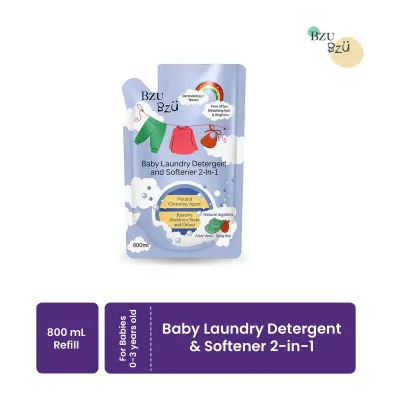
Prices are valid at publication and may change. Please refer to the product page for the latest price.
While refill pouches often boast a lower unit price on paper, hidden expenses can quickly narrow the gap. If you do not already own a clean, functional bottle with a working pump, you may need to purchase a dedicated dispenser separately. Over time, plastic pumps can wear out, clog, or break, meaning you will eventually have to buy a new complete bottle set just to replace the hardware. These small, unexpected purchases can quietly erode the savings you expected to gain from buying refills.
Standard volume sizes also play a significant role in your calculations. Bottles and refill pouches are frequently sold in different volumes, with refills sometimes containing slightly less liquid than their bottled counterparts to allow room for pouring. When comparing options on e-commerce platforms or supermarket shelves, always verify the exact volume printed on the packaging rather than assuming they are identical in size. Keeping a quick log of these volumes on your phone can help you spot which packaging option offers the best value during your weekly shopping trips.
Practical Differences: Handling, Storage, and Formula Consistency
Using a flexible refill pouch presents different physical challenges compared to handling a rigid plastic bottle. Pouring liquid from a soft, pliable pouch into a narrow bottle neck requires a steady hand and, ideally, a clean funnel to prevent messy spills. Some refill packs feature built-in plastic spouts or screw caps to make this process easier, but basic cut-and-pour pouches remain common and require extra care during transfer to avoid wasting detergent on your countertops.

Before mixing liquids or switching entirely to refills, it is essential to check the product label to verify that the refill formula is identical to the bottled version. While most brands maintain consistency across packaging types, manufacturers occasionally update their formulations or offer concentrated versions in refill formats. Mixing a concentrated refill with leftover standard-strength detergent, or using the wrong dosage because of an unverified formula change, can affect how well the detergent rinses out of baby garments, potentially leaving residues that could irritate sensitive skin.
Storage is another practical consideration, especially in Singapore apartments where laundry space is often limited. Flat, flexible refill pouches can be tucked into narrow cabinets or stored flat on shelves, making them highly space-efficient before they are opened. However, once opened, a partially used pouch lacks the structural stability of a rigid bottle and can easily tip over or leak if it is not sealed properly or stored upright in a secure container. Additionally, pouches are more vulnerable to accidental punctures from sharp objects in your utility closet.
Pre-Checkout Verification: Ensuring Genuine Savings
Before finalizing your purchase, a quick pre-checkout verification can save you from spending more than necessary. Retailers frequently run promotions, bundle deals, or clearance sales on bottled detergents that temporarily lower their unit price below that of standard refill packs. During major shopping events or monthly double-day sales on online marketplaces, it is not uncommon to find a “buy two, get one free” deal on bottles that makes them the more economical choice per milliliter.
If you prefer shopping online, you must also factor in delivery fees and minimum spend thresholds. Liquid detergents are heavy, and ordering multiple bottles or heavy refill pouches can sometimes trigger higher shipping costs unless you meet the platform’s free delivery requirements. To maximize savings, calculate the total cost of your cart, including any shipping surcharges, before deciding which packaging type to buy. Sometimes, adding one more bottle to hit a free-shipping threshold is cheaper than paying for delivery on a single refill pouch.
Additionally, pay close attention to the manufacturing date and estimated shelf life when buying detergent in bulk. While laundry detergents generally have a long shelf life, storing excessive quantities of refill pouches in Singapore’s warm, humid climate can sometimes lead to packaging degradation or formula separation over extended periods. Buying only what your household can realistically use within a reasonable timeframe prevents waste and preserves the quality of the detergent, ensuring it remains safe and effective for your baby’s clothes.
When Buying the Bottled Version Makes More Sense
There are several scenarios where purchasing the bottled version of BZU BZU detergent is the more logical and economical choice. For first-time parents or those transitioning to a new baby-safe laundry routine, starting with a complete bottle is necessary to establish a clean, calibrated dispensing system. Attempting to use a refill pouch directly without a proper bottle often leads to over-pouring, waste, and accidental spills during busy laundry times.
You should also opt for a new bottle if your existing pump mechanism is broken, clogged with dried soap, or showing signs of wear. A malfunctioning pump makes it difficult to measure the correct dosage, which can lead to either under-washed clothes or excess soap residue remaining on your baby’s sensitive skin. Replacing the entire bottle ensures you have a clean, hygienic container and a fully functional pump for precise dosing, which is crucial for maintaining fabric softness and skin safety.
Finally, keep an eye out for exclusive store promotions, loyalty program discounts, or credit card tie-ups that apply only to specific product lines. If a supermarket chain offers a steep discount on the bottled version as part of a weekly special, the unit price may drop significantly. In these instances, purchasing the bottle not only saves you money but also provides you with a fresh spare container, allowing you to rotate bottles and let them dry completely between refills to maintain hygiene.
Frequently Asked Questions (FAQ)
Can I pour the BZU BZU refill into any empty detergent bottle?
While you can technically pour the refill into other containers, it is highly recommended to use a thoroughly cleaned and completely dried bottle. Reusing an old bottle without washing it first can introduce moisture and bacteria, which may degrade the fresh detergent formula or cause mold growth over time. Additionally, ensure the pump mechanism of the target bottle is compatible with the viscosity of the baby detergent to prevent clogging or leaking during daily use.
Do refill packs contain the exact same formula as the bottled version?
In most cases, refill packs are designed to match the bottled version exactly, but you should always verify this by comparing the ingredient lists and usage instructions on both labels. Manufacturers sometimes update their formulations, adjust concentrations, or introduce subtle changes to scent or ingredients between production batches. Checking the labels ensures you continue to use the correct dosage for your baby’s laundry and avoid any unexpected skin sensitivities.
Community discussion
Share your experience or ask a question. Comments are reviewed before publication.