
When shopping for a baby walker in Singapore, navigating the balance between your child’s entertainment and their physical safety is a paramount concern. While these mobile devices are widely available across local retail stores and online marketplaces, pediatric experts globally and locally advise a highly cautious approach. To protect your child, you must know how to verify international safety certifications, identify crucial structural design features, and establish strict usage boundaries within your home.
Selecting a safe baby walker in Singapore requires looking beyond attractive toy trays and bright colors. It demands a close inspection of the underlying engineering—specifically, mechanisms that prevent falls, tip-overs, and structural failures on smooth local flooring like marble or vinyl. Before making a purchase, parents should understand the inherent risks of these devices, how to spot genuine safety labels, and when to transition their child to safer developmental alternatives.
The Safety Debate: Why Experts Caution Against Baby Walkers
Before introducing a mobile walker into your home, it is vital to understand why major pediatric associations worldwide discourage their use. The primary concern is the rapid, uncontrolled mobility these devices grant to infants who are not yet developmentally ready to navigate their environment. Within a walker, a baby can move at speeds exceeding one meter per second, far faster than a caregiver’s reaction time. This sudden acceleration drastically increases the risk of severe physical accidents.
Products mentioned in this guide
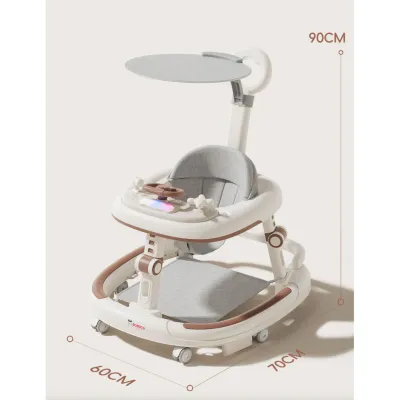
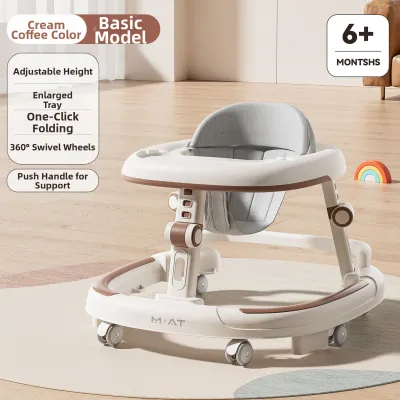
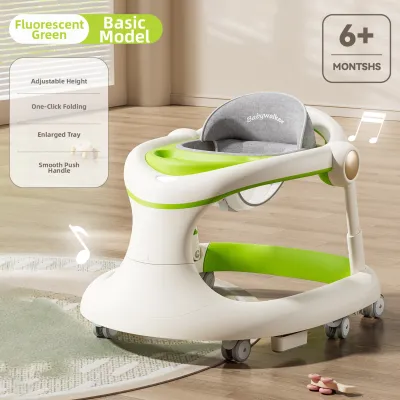
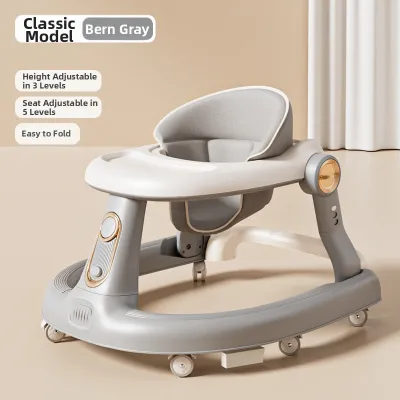
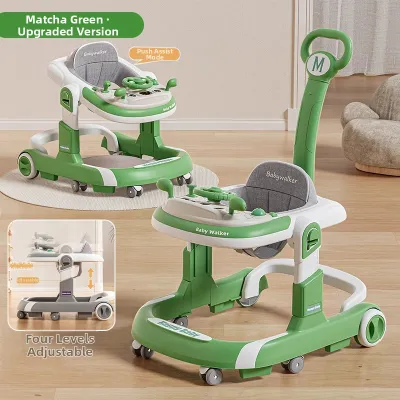
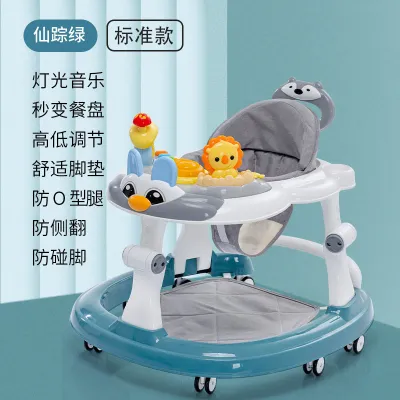
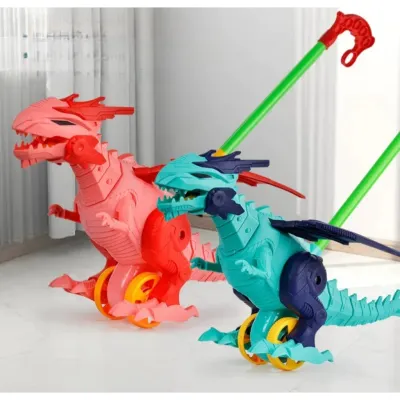
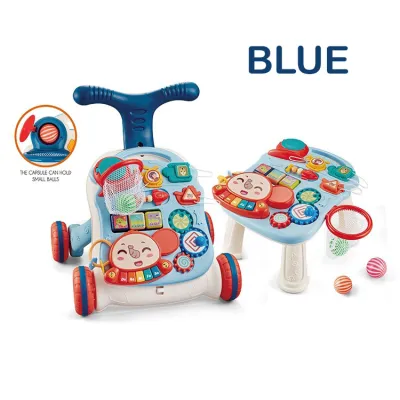
Prices are valid at publication and may change. Please refer to the product page for the latest price.
Among the most common physical risks are stair falls and tipping over on uneven surfaces. Even in Singapore, where many families reside in single-level HDB flats or condominiums, raised thresholds, bathroom step-downs, and balcony tracks pose significant tripping hazards. Furthermore, the elevated height allows babies to reach objects that would otherwise be far out of their grasp. This includes hot liquids on dining tables, electrical cords, heavy appliances, or household cleaning products stored on low shelves.
From a developmental standpoint, child health professionals point out that walkers do not help babies learn to walk any faster. In fact, they can actively delay independent walking and motor skill milestones. When suspended in a walker seat, infants tend to push forward on their tiptoes, which strengthens the wrong leg muscles and tightens the heel cords. This bypasses the natural, essential stages of floor play—such as crawling, pulling up, and cruising—which are critical for building core strength, balance, and spatial awareness.
For parents seeking the entertainment value of a walker without the associated mobility risks, several safer alternatives exist. Stationary activity centers (often called exersaucers) allow babies to bounce, spin, and play with interactive toys from a fixed, secure position. Sturdy push-along toys or busy boards also provide excellent support for older infants who are already pulling themselves up naturally, encouraging genuine balance and muscle development. If you choose to use a mobile walker, it must be treated strictly as a highly supervised, short-duration activity rather than a safety seat or babysitter.
How to Verify Safety Certifications and Standards
Because baby walkers carry inherent physical risks, you should never buy a model that lacks verified compliance with international safety standards. These rigorous manufacturing standards ensure the product has undergone extensive testing for structural integrity, stability, and child-safe materials. The two most prominent standards to look for on product packaging or manufacturer documentation are:

- European Standard EN 1273: This standard specifically outlines safety requirements and test methods for baby walkers, focusing on stability, folding mechanisms, and stair-fall prevention.
- US Standard ASTM F977: This specification covers performance requirements, test methods, and labeling instructions designed to minimize hazards to children using walkers.
In Singapore, consumer goods are overseen by the Consumer Product Safety Office (CPSO), which administers the Consumer Protection (Consumer Goods Safety Requirements) Regulations (CGSR). While baby walkers do not fall under the mandatory “Controlled Goods” category that requires a Safety Mark (like household electrical appliances), they must still comply with recognized international safety standards. Before purchasing, verify that the retailer can provide documentation proving the walker meets either the EN 1273 or ASTM F977 standards.
Be exceptionally cautious when browsing second-hand baby walkers on local online classifieds or peer-to-peer marketplaces. Older or pre-loved models may have suffered unseen structural fatigue, or their rubber friction pads may have degraded over time. Additionally, older models might lack modern safety mechanisms required by updated standards, or they could have been subject to overseas manufacturer recalls that went unnoticed by the local seller. Purchasing a new, certified model from an authorized retailer is always the safest option.
To ensure you are buying a genuine, certified product, locate the physical certification labels. These are typically printed on a permanent tracking label stitched into the seat fabric, molded directly into the plastic underside of the frame, or clearly stamped on the original retail packaging. If a seller or product listing cannot explicitly name the safety standard the walker complies with, avoid purchasing that model.
Must-Have Design Features to Prevent Falls and Tip-Overs
If you decide to purchase a baby walker, you must carefully inspect its physical construction. A safe walker relies on specific mechanical designs to counteract the common hazards of tipping, falling, and pinching. When evaluating different models, look for these essential safety features:
- Stair-Fall Prevention Mechanisms: The underside of the walker's base must be equipped with heavy-duty friction strips or rubber gripping pads. These pads are designed to immediately grab the floor and halt the walker's momentum if one of the wheels slips over a step, threshold, or edge.
- Wide and Weighted Base: The bottom frame of the walker should be significantly wider than the top tray and the child's reaching zone. A broad, stable wheelbase lowers the center of gravity, preventing the walker from tipping over when your baby leans sideways. Additionally, a wide base physically blocks the child from squeezing through narrow doorways or getting too close to kitchen counters.
- Speed Restrictors and Locking Wheels: Look for models that feature adjustable wheel resistance or rear-wheel locks. On the smooth ceramic, marble, or polished vinyl floors common in Singapore homes, these features allow you to control how fast the walker can move or lock it completely into a stationary play station.
- Adjustable Seat and Frame Height: The walker must feature multiple height adjustments to accommodate your baby's growth. When seated, your baby's feet must be able to rest flat on the floor with a slight bend at the knees. If only their toes touch the ground, the walker is too high, which promotes harmful toe-walking and poor posture.
- Finger and Toe Clearance: Carefully examine the folding joints, height-adjustment latches, and toy tray attachments. Ensure there are no open hinges or gaps measuring between 5mm and 12mm. Gaps within this range can easily trap and pinch a baby's delicate fingers or toes when the frame flexes during movement.
Setting Safe Usage Boundaries and Knowing When to Stop
Even the most highly certified baby walker cannot protect your child if used incorrectly. Establishing strict household safety protocols is essential to minimizing the risk of injury. The absolute baseline rule of walker use is 100% continuous, active adult supervision. You must remain in the same room, with your eyes on your baby, at all times; a walker should never be used to keep a child occupied while you attend to household chores in another room.
To prevent physical fatigue and developmental strain, limit your baby’s time in the walker to short intervals. Pediatric experts generally recommend no more than 10 to 20 minutes of walker use per day. Prolonged sessions can overwork undeveloped calf muscles and discourage the floor-based movements that are vital for natural motor progression.
Before placing your child in the walker, you must thoroughly prepare the surrounding environment. Block off all high-risk zones—such as kitchens, bathrooms, balconies, and stairways—using sturdy, hardware-mounted safety gates. Ensure all floor surfaces are completely clear of loose rugs, door mats, electrical cords, and toys that could catch the walker’s wheels and cause a sudden tip-over. Keep all hot beverages, fragile items, and household chemicals far above the height of the walker’s tray.
Finally, you must know exactly when to retire the walker. Cease use immediately if any of the following conditions are met:
- Your baby can sit up, crawl, or stand independently.
- Your baby's weight or height reaches the maximum limits specified by the manufacturer.
- The baby's feet can no longer rest flat on the floor even at the walker's highest setting.
- You observe any signs of structural damage, such as frayed seat seams, cracked plastic frames, or worn-out friction pads.
Frequently Asked Questions (FAQ)
Are baby walkers legally banned in Singapore?
No, baby walkers are not legally banned from sale in Singapore, unlike in countries such as Canada. However, they are subject to local consumer safety regulations. Any baby walker sold in the local market must comply with the safety requirements monitored by the Consumer Product Safety Office (CPSO). Parents should actively verify that the specific model they choose meets recognized international safety standards.
What is the recommended age and weight limit for using a walker?
Generally, baby walkers are designed for infants between the ages of 6 and 12 months. Developmentally, a child must be able to hold their head up steadily and sit upright completely unassisted before using a walker. You must always check the manufacturer’s packaging for the exact weight and height limits, as exceeding these specifications can compromise the walker’s structural stability.
Can baby walkers negatively affect my child's walking development?
Yes, prolonged or improper use of a baby walker can delay natural walking development. Walkers support a baby’s weight artificially, which prevents them from learning how to balance on their own. They also encourage infants to walk on their tiptoes, which can lead to tight calf muscles and altered gait patterns. To support healthy motor milestones, prioritize floor play, tummy time, and sturdy push-along toys instead.
Community discussion
Share your experience or ask a question. Comments are reviewed before publication.