
Baby proofing your home becomes an urgent priority the moment your little one starts crawling, pulling themselves up, or taking their first tentative steps. Sharp furniture edges and corners pose a significant hazard to an active, top-heavy toddler whose coordination is still developing. To protect your child from painful bumps and serious injuries, installing high-quality edge guards is one of the most effective preventive measures you can take.
The best type of edge guard for your home depends on the specific furniture you own, your child’s developmental stage, and your aesthetic preferences. High-density NBR (Nitrile Butadiene Rubber) foam guards offer the maximum shock absorption for heavy, hard surfaces like solid wood or marble, while clear silicone and PVC guards provide a discreet, bite-resistant solution for glass and modern minimalist pieces. For isolated sharp corners, spherical or custom-shaped corner protectors offer targeted, multi-directional cushioning.
While these safety accessories are invaluable for reducing the severity of impact injuries, they are designed to supplement, rather than replace, active adult supervision. No safety product can guarantee absolute protection, so parents must regularly inspect these guards to ensure they remain securely attached and intact.
Products mentioned in this guide
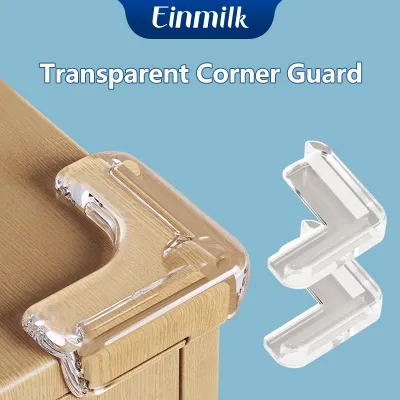
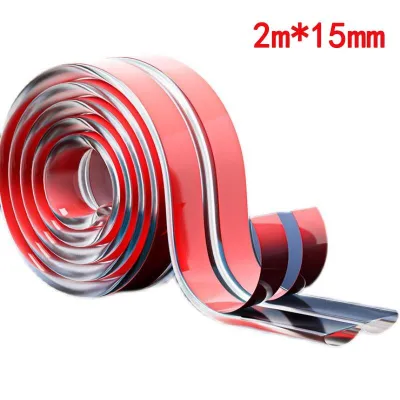
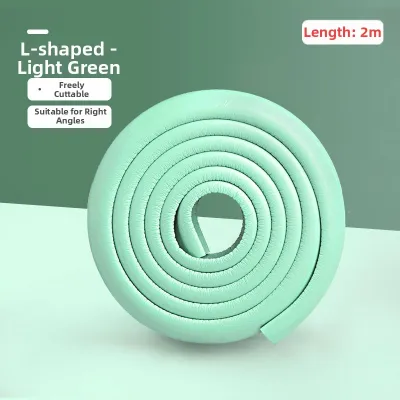
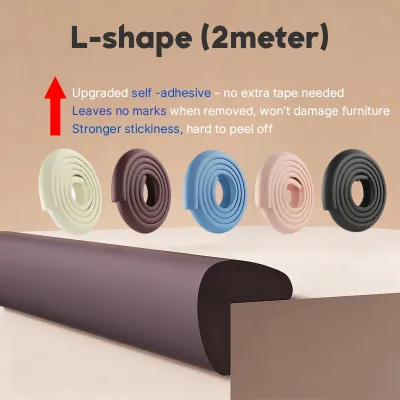
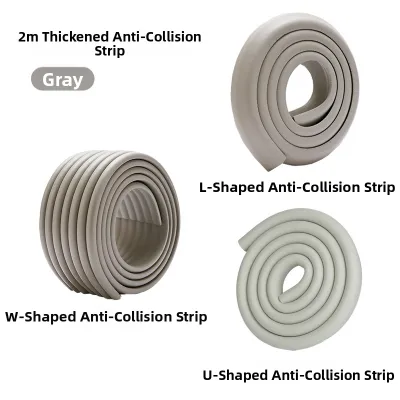
Prices are valid at publication and may change. Please refer to the product page for the latest price.
Key Selection Criteria for Baby Edge Guards
Choosing the right edge guards requires looking beyond basic product labels and understanding how different materials perform under real-world conditions. Evaluating your home’s specific layout, furniture materials, and your child’s behavior will help you select guards that stay securely in place and provide genuine protection.
Thickness and Density When evaluating shock absorption, do not rely solely on the visual bulk of an edge guard. True protection depends on the density of the material, which determines its ability to cushion a sudden impact and distribute force away from a child’s head. Thicker, high-density guards are essential for low-lying, unforgiving surfaces like marble coffee tables, low TV consoles, or solid wood dining tables, where a falling child might strike with considerable momentum. Thinner guards may bottom out during a hard fall, offering little actual protection against the underlying sharp edge.
Adhesive Compatibility The effectiveness of any edge guard is entirely dependent on the strength and durability of its adhesive bond. Different adhesive formulations perform best on specific surfaces, such as porous wood, painted metal, laminated particle board, or smooth glass. In humid climates, such as Singapore’s year-round tropical environment, moisture in the air can gradually degrade standard double-sided tapes, causing them to peel or slide off over time. It is crucial to verify the manufacturer’s adhesive specifications and choose high-quality, moisture-resistant acrylic tapes that can withstand both humidity and the persistent pulling of a curious toddler.
Aesthetics vs. Protection Parents often face a direct trade-off between visual appeal and safety performance when selecting baby-proofing gear. Thick, opaque foam guards provide the highest level of cushioning and impact protection, but they are highly visible and can significantly alter the look of your carefully curated furniture. Conversely, transparent silicone or PVC guards are highly discreet and preserve the natural beauty of your home, but they are typically thinner and offer moderate shock absorption. Balancing these priorities involves assessing the risk level of each piece of furniture; high-traffic areas with sharp, low-lying edges warrant maximum protection, while higher, less-exposed surfaces may suit a more aesthetic, low-profile option.
Developmental Stage Your baby’s physical milestones should dictate where and how you install edge guards throughout your home. Crawling infants spend their time close to the floor, making low-lying edges, baseboards, and the bottom corners of cabinets the primary hazards that require comprehensive, continuous coverage. Once your child transitions to pulling up, cruising, and walking, their center of gravity shifts, and their head level aligns with coffee tables, desk edges, and dining table corners. At this stage, focused protection on sharp 90-degree corners and eye-level protrusions becomes critical to preventing severe facial and cranial bumps.
Best Edge Guard Types and Materials by Furniture Style
Different furniture materials and designs require tailored safety solutions. Understanding the strengths and limitations of each edge guard category allows you to match the right material to the specific hazards in your home.

High-Density NBR Foam Guards
High-density Nitrile Butadiene Rubber (NBR) foam is the industry standard for heavy-duty baby proofing, valued for its exceptional cushioning and versatility.
Best For NBR foam guards are highly recommended for heavy, solid furniture with sharp, unforgiving edges. They are the ideal choice for solid wood dining tables, marble or granite countertops, low-lying TV consoles, and brick or stone fireplace hearths. Because these materials do not flex or give upon impact, they require the maximum thickness and shock-absorbing properties that only high-density foam can provide.
Benefits The primary benefit of NBR foam is its superior impact absorption, which significantly minimizes the risk of bruising or lacerations during a fall. These guards are typically sold in long, flexible rolls, allowing parents to measure, cut, and customize the length to fit curved or irregular furniture edges seamlessly. Many high-quality foam guards come with pre-applied adhesive backing, simplifying the installation process across long stretches of furniture.
Limitations The most notable drawback of NBR foam is its bulky, utilitarian appearance. Because the foam is opaque and available in limited neutral colors, it is difficult to blend with high-end or modern furniture designs. Additionally, the soft, porous nature of the foam makes it susceptible to the accumulation of dirt and household dust, requiring regular cleaning with a damp cloth to maintain hygiene.
Safety Check Before purchasing NBR foam guards, parents must verify that the material is specifically labeled as ‘anti-tear’ or ‘bite-resistant.’ Teething babies and toddlers are naturally inclined to chew on soft, squishy surfaces, and standard foam can easily be bitten off in small chunks. This creates a severe choking hazard. Always inspect the foam regularly for any signs of bite marks, tears, or degradation, and replace damaged sections immediately.
Clear Silicone and PVC Guards
For parents who want to maintain the visual integrity of their living spaces without sacrificing safety, clear silicone and PVC (Polyvinyl Chloride) guards offer a modern, low-profile alternative.
Best For These transparent protectors are best suited for modern minimalist furniture, glass-topped coffee tables, acrylic shelving, and delicate metal frames. Because glass and acrylic are highly visible, opaque foam guards would look highly disruptive; clear guards allow the natural material and structure of the furniture to show through while still covering the hazardous sharp edges.
Benefits The standout advantage of clear silicone and PVC is their near-invisible appearance, which blends seamlessly with any decor style. These materials are highly flexible, allowing them to conform easily to rounded edges, tight corners, and irregular profiles. Furthermore, silicone and PVC are significantly denser and tougher than NBR foam, making them highly resistant to biting, tearing, and general wear and tear from active toddlers.
Limitations Because clear guards are designed to be low-profile, they are generally much thinner than their foam counterparts. Consequently, they offer moderate rather than maximum shock absorption, which may not be sufficient for very heavy, sharp, or low-lying stone surfaces. The adhesive used for transparent guards must also be completely clear, which can sometimes make the application process more meticulous to avoid trapping unsightly air bubbles.
Safety Check When opting for clear plastics or silicones, parents should verify the material’s Shore hardness rating if provided by the manufacturer, or physically test the product to ensure it possesses sufficient elasticity. If the material is too rigid, it will fail to cushion a fall effectively, behaving more like a hard plastic extension of the furniture edge rather than a protective barrier. Always ensure the material is certified non-toxic and free from harmful phthalates, BPA, and heavy metals.
Spherical Corner Guards and Custom Shapes
While long edge rolls are excellent for continuous borders, isolated 90-degree corners present a concentrated point of impact that requires specialized, targeted protection.
Best For Spherical and custom-shaped corner guards are designed specifically for the sharp, pointed corners of bedside tables, writing desks, kitchen countertops, and protruding bedposts. These areas represent high-stress impact points where a child is most likely to suffer a direct blow to the forehead or temple during a stumble.
Benefits These specialized guards provide concentrated, multi-directional cushioning directly over the sharpest point of a corner. By wrapping around all three intersecting planes of a 90-degree corner, they eliminate the sharp point entirely. They are incredibly easy to install, requiring no cutting or measuring, and are available in both soft foam and clear silicone designs to match your existing edge guards.
Limitations The primary limitation of corner-specific guards is their localized coverage. They protect only the immediate corner, leaving the long, straight edges of the furniture completely exposed. If a child trips and falls along the side of a long table, a corner guard alone will not prevent them from striking the sharp edge. Therefore, they must often be paired with matching edge strips for comprehensive safety.
Safety Check Spherical corner guards can pose a unique safety risk if they become detached. Because of their compact, rounded shape, a loose corner guard can easily become a choking hazard if a toddler puts it in their mouth. Parents must choose corner guards that are large enough to pass standard choke-tube tests and ensure they are installed with high-strength, child-resistant adhesive. Regularly tug on these guards to verify that the adhesive bond remains strong and unbroken.
Quick Comparison: Edge Guard Materials and Styles
To help you decide which protection style fits your home, the table below outlines the core trade-offs between the primary edge guard materials and designs.
| Material/Type | Shock Absorption Level | Aesthetics/Visibility | Best Furniture Match | Potential Drawbacks |
|---|---|---|---|---|
| NBR Foam | High | High (Bulky, Opaque) | Solid wood dining tables, marble countertops, stone hearths | Vulnerable to biting; visually obtrusive; accumulates dust |
| Clear Silicone | Moderate | Low (Transparent) | Glass coffee tables, modern acrylic shelving, metal frames | Thinner than foam; requires precise bubble-free installation |
| Clear PVC | Moderate | Low (Transparent) | Modern minimalist desks, laminated wood cabinets | Can be rigid if cheap; requires verification of non-toxic certifications |
| Spherical Corner Balls | High (Targeted) | Moderate to Low | Bedside tables, desk corners, cabinet edges | Only covers the corner; potential choking hazard if detached |
Installation Tips and Furniture Surface Protection
Proper installation is just as important as choosing the right material. A poorly installed edge guard will peel off easily under a toddler’s persistent pulling, while an overly aggressive adhesive can ruin expensive furniture finishes when it is eventually removed.
Surface Preparation To ensure a long-lasting adhesive bond, you must prepare the furniture surface thoroughly before application. Dust, household oils, fingerprints, and wax polish will prevent the adhesive tape from sticking properly, leading to premature peeling. Begin by wiping down the edge with rubbing alcohol (isopropyl alcohol) and a clean, lint-free microfiber cloth. Allow the surface to dry completely for several minutes. Avoid using multi-purpose household cleaners or glass cleaners, as these often leave behind a thin chemical residue that can interfere with the adhesive’s chemical bond.
Adhesive Testing Before committing to full installation, it is highly recommended to perform an adhesive test on an inconspicuous, hidden area of the furniture. This is particularly crucial for antique wood, delicate wood veneers, lacquered finishes, or freshly painted surfaces. Apply a small piece of the double-sided tape to the hidden area, leave it for 24 to 48 hours, and then gently peel it off. Observe whether the tape lifts any paint, varnish, or wood fibers. If damage occurs, you should seek alternative mounting options or use a milder adhesive tape to protect your valuable furniture.
Alternative Mounting If the pre-applied adhesive tape provided by the manufacturer feels too aggressive or has failed the initial surface test, consider using high-quality, damage-free removable mounting tapes designed specifically for delicate surfaces. These alternative tapes are engineered to hold firmly under shear stress (such as a child bumping into the guard) but release cleanly when pulled in a specific direction. Ensure that any alternative tape you select is thin enough to maintain a flush fit between the edge guard and the furniture, preventing gaps where small fingers can pry the guard loose.
Safety Boundary While edge guards are an essential component of a baby-proofed home, parents must remember that they are supplementary safety measures. They do not make furniture completely safe, nor do they replace the necessity of active adult supervision. A determined toddler can still find ways to peel off guards, trip over furniture legs, or pull lightweight items down onto themselves. Regularly check the condition of all installed guards, and if you notice any peeling adhesive, tears, or missing pieces, stop using the affected furniture or replace the safety guards immediately to maintain a secure environment.
Frequently Asked Questions (FAQ)
Do edge guards leave sticky residue on wood furniture?
Yes, many high-strength adhesives can leave a sticky, unsightly residue on wood furniture upon removal, especially if they have been in place for several months or years. To minimize this risk and protect your furniture’s finish, never pull or rip the edge guard off forcefully, as this can tear the wood veneer or lift the lacquer. Instead, use a hairdryer set to a low, warm heat setting to gently warm the adhesive along the edge. The heat will soften the glue, allowing you to slowly and carefully peel the guard away from the wood. For any stubborn residue left behind, apply a small amount of a gentle, wood-safe adhesive remover or a mild vegetable oil to a soft cloth, rub the area gently, and wipe it clean. Always test any residue remover on an inconspicuous area first to ensure it does not discolor or damage the wood finish.
How do I know if an edge guard is a choking hazard?
An edge guard becomes a choking hazard if it can be easily torn, bitten into small pieces, or detached entirely by a child. To evaluate the safety of your installed guards, perform a simple ‘pull and pinch’ test. Firmly pinch the material and pull on it; if the foam tears easily or small pieces begin to separate, it is not safe for a teething child who might chew on it. Additionally, check the size of any individual corner protectors; they must be large enough that they cannot fit entirely inside a standard choke-testing tube (approximately 3.17 centimeters in diameter). Ensure you choose edge guards that are certified non-toxic, lead-free, and phthalate-free, and perform weekly visual inspections to check for any loose edges, bite marks, or peeling adhesive that could allow a child to pull a piece free.
Can I use edge guards on glass tables?
Yes, glass tables can and should be protected, as their sharp, rigid edges pose a significant hazard to young children. However, because glass is completely smooth and non-porous, you must select edge guards and adhesives specifically formulated for these surfaces. Clear silicone or PVC guards are highly recommended for glass tables, as they provide a clean, transparent look that does not ruin the table’s aesthetic while offering durable protection. When installing, use a high-strength, clear acrylic double-sided adhesive to ensure a secure, bubble-free bond. Before applying the adhesive, ensure the glass edge is thoroughly cleaned with rubbing alcohol and completely dry, as any remaining glass cleaner residue or moisture will severely weaken the adhesive bond and cause the guard to slide off.

Community discussion
Share your experience or ask a question. Comments are reviewed before publication.