
Choosing the right toddler step stool is a critical step in making potty training a success, directly impacting your child’s physical comfort and confidence. In Singapore, where bathroom layouts are often compact and humidity levels are consistently high, the ideal stool must balance slip-resistant safety with space-saving efficiency. A proper stool does more than just help your child reach the toilet; it supports their feet to facilitate a natural, healthy squatting posture that makes bowel movements significantly easier.
When selecting a toddler step stool, parents must evaluate their specific bathroom measurements, the height of their toilet and sink fixtures, and the stability of the stool’s design. Whether you opt for a classic single-step model, a taller two-tier stool, or a specialized U-shaped wrap-around design, verifying safety features like rubberized non-slip bases and textured treads is paramount. By matching the stool to your child’s developmental stage and your home’s layout, you can foster independent bathroom habits safely and smoothly.
Why a Dedicated Step Stool is Essential for Potty Training
Transitioning from diapers to using an adult toilet is a major developmental milestone that requires both physical coordination and emotional confidence. For a young child, an adult-sized bathroom can feel intimidating and physically challenging. A dedicated toddler step stool serves as the bridge, providing the necessary height and stability to make the toilet and sink accessible. Without this support, toddlers are forced to dangle their legs or balance precariously on the edge of the toilet seat, which can create anxiety and hinder their progress.
Products mentioned in this guide
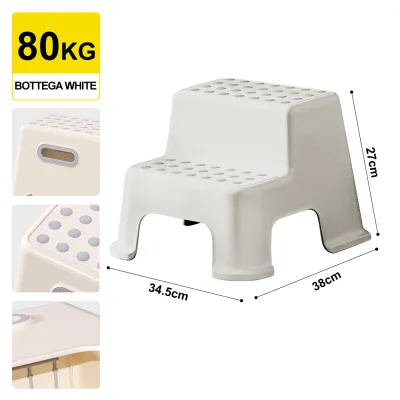
![[MUMof2boys] Kids 2-Step Anti-Slip Stool for Bathroom & Toilet Training – Toddler Safety Step Stool](https://img.lazcdn.com/g/p/0d6a554073a6670e74e3dea27b2520f7.png_400x400q80.png_.webp)
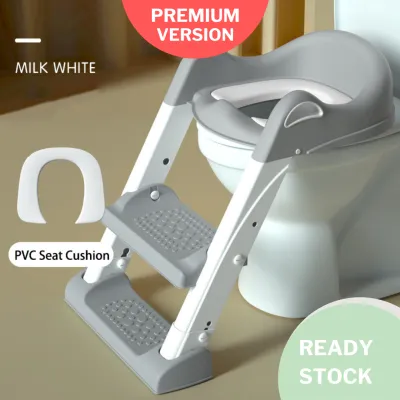
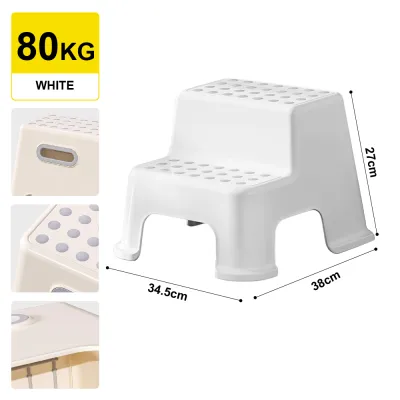
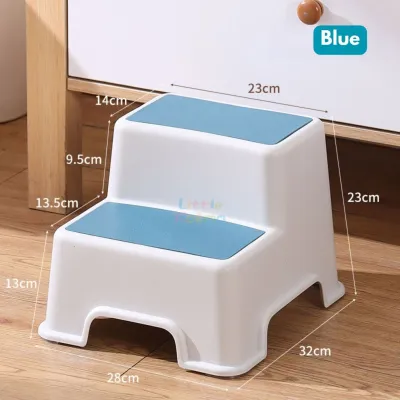
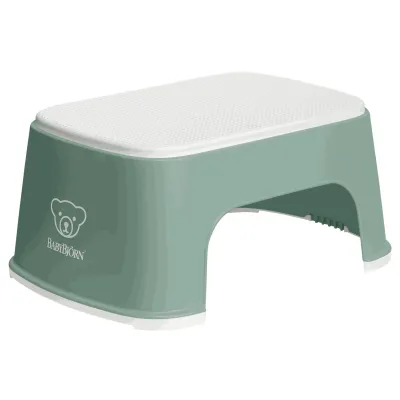
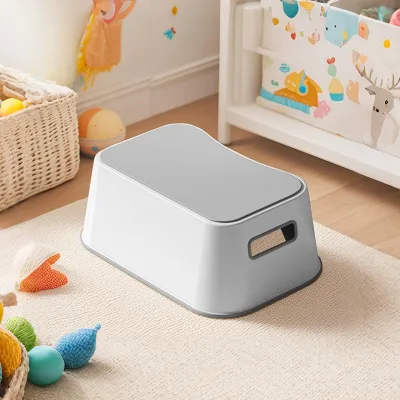
Prices are valid at publication and may change. Please refer to the product page for the latest price.
From an anatomical standpoint, proper foot support is essential for comfortable and complete bowel movements. When a child sits on a standard adult toilet with their legs dangling, their pelvic floor muscles remain tense, and the puborectalis muscle stays partially wrapped around the rectum. This physical angle makes it difficult to eliminate waste efficiently, often leading to straining or constipation. Elevating the feet on a step stool allows the toddler to bend at the hips, bringing their knees slightly higher than their pelvis. This mimics a natural squatting position, which relaxes the puborectalis muscle, straightens the rectal path, and allows your child to bear down safely and comfortably. If your child experiences chronic discomfort or persistent constipation during training, always consult a qualified healthcare professional or pediatrician for personalized guidance.
Beyond the physical benefits, a step stool plays an invaluable role in building a toddler’s sense of autonomy. Potty training is as much about psychological readiness as it is about physical control. When children can independently climb up to the toilet seat, turn around, and sit down without waiting for an adult to lift them, they develop a strong sense of ownership over the process. This independence extends directly to the sink, where the same stool allows them to wash their hands autonomously. This self-reliance reinforces positive hygiene habits and reduces the power struggles that often arise during the training journey.
Attempting to substitute a dedicated toddler step stool with makeshift household items poses significant safety risks, particularly in wet bathroom environments. Items like standard dining chairs, plastic storage crates, or upturned buckets lack the specialized safety features required for young children. They are highly prone to tipping over when a child shifts their weight or steps near the edge. Furthermore, these makeshift items rarely feature slip-resistant rubber bases, meaning they can easily slide across smooth, wet bathroom tiles when a toddler attempts to climb them. Investing in a purpose-built stool ensures that your child has a stable, slip-free platform designed specifically for their weight and balance capabilities.
Crucial Safety and Design Features to Look For
When shopping for a toddler step stool, safety must be your absolute priority. Children who are potty training are still developing their gross motor skills and balance, making them susceptible to slips and falls. A well-designed stool should withstand daily wear while providing a completely secure platform. To ensure you choose a safe product, verify that the stool incorporates several non-negotiable design elements before making a purchase.

Non-Slip Surfaces and Treads The bathroom floor is one of the most slip-prone areas in any home, especially in Singapore’s humid climate where condensation can build up on tiled surfaces. A safe step stool must feature robust non-slip elements on both the top and the bottom. Look for stools with rubberized, textured treads across the entire stepping surface to provide traction for bare feet or socks. Equally important are the rubber feet or non-skid pads on the base of the stool. These pads must grip the floor firmly, preventing the stool from sliding backward or sideways when your toddler steps onto it or shifts their weight.
Sturdy Base and Weight Capacity A stable step stool requires a wide, low-profile base. Stools that taper significantly toward the top are more prone to tipping if a child stands near the edge. Look for a design with a wide footprint that distributes weight evenly across the floor. Additionally, always check the manufacturer’s specified weight limit on the packaging or product documentation. While your toddler may only weigh 12 to 15 kilograms now, a higher weight capacity (such as 30 to 50 kilograms) indicates a more robust construction that can support your child as they grow and prevent the plastic from flexing under pressure.
Material and Durability The materials used in the stool’s construction must be durable, non-toxic, and easy to sanitize. High-quality, BPA-free plastics are the most popular choice because they are lightweight, water-resistant, and simple to wipe clean. In Singapore’s humid environment, wooden stools can be susceptible to mold, mildew, or warping if they are not treated with a high-quality, water-resistant sealant. If you choose a wooden stool, verify that the finish is child-safe and completely sealed against moisture. Plastic stools should be solid and free from thin, brittle areas that could crack over time.
Ergonomic Handles or Grips Many step stools feature built-in handles or side grips molded directly into the frame. These handles serve two critical purposes. First, they provide a secure place for your toddler to hold onto while climbing up or down, offering extra stability as they find their balance. Second, they make it easy for both parents and toddlers to carry the stool around the bathroom. Lightweight stools with comfortable grip cut-outs encourage toddlers to move the stool from the toilet to the sink independently, reinforcing their self-reliance.
Rounded Edges Bathrooms can be tight, confined spaces with many hard surfaces. A step stool with sharp corners or rough plastic seams poses a constant hazard for stubbed toes and bruised shins. Examine the stool closely to ensure all edges, corners, and joints are smoothly rounded. This design detail minimizes the risk of minor injuries if your child accidentally bumps against the stool while navigating the bathroom in a hurry.
Types of Step Stools for Bathroom Use
Not all step stools are created equal, and the right style for your home depends heavily on your child’s physical development and your bathroom’s layout. In Singapore, residential bathrooms—particularly those in HDB flats and executive condominiums—often have limited floor space. Selecting a stool that fits comfortably alongside your fixtures without obstructing the doorway or creating a tripping hazard is essential. Understanding the structural differences between the main types of stools will help you choose the most practical option for your space.
Single-Step vs. Multi-Step Stools
Single-step stools are the simplest and most compact option available. These stools typically feature a single platform raised between 10 to 15 centimeters off the ground. They are highly lightweight, making them incredibly easy for toddlers to pick up and move between the toilet and the sink. Single-step models are generally best suited for older toddlers who have already achieved good height and balance, or for homes with lower-profile toilets and sinks. However, because they are relatively low, younger or shorter toddlers may still struggle to reach standard-height fixtures comfortably using a single-step design.
Multi-step or two-tier stools feature two platforms of escalating heights, usually raising the child between 20 to 30 centimeters off the floor. This design is ideal for younger toddlers who need a significant boost to reach adult toilets and high sink basins safely. The lower step acts as a transitional platform, allowing the child to climb up with ease. Because they are taller, multi-step stools require a wider, deeper base to maintain stability and prevent tipping. While they provide excellent height, they do occupy a larger footprint on the bathroom floor, which is an important consideration if your space is tight.
Before deciding between a single-step and a multi-step stool, it is crucial to measure your bathroom fixtures. Measure the height of your toilet bowl (including the seat) and the rim of your bathroom sink. Compare these measurements against your child’s current height and reach to determine exactly how many centimeters of elevation they require to stand safely and comfortably.
Folding and Space-Saving Designs for Compact Bathrooms
For families navigating compact bathroom layouts, space-saving stools offer an elegant solution to clutter. Folding step stools are designed to collapse flat when not in use, allowing you to tuck them away in a narrow gap beside the vanity, behind the door, or even hang them on a wall hook. This feature is incredibly convenient for keeping the bathroom floor clear for adult users. When choosing a folding model, you must carefully inspect the locking mechanism. Ensure that the stool locks securely into place when opened and cannot be accidentally collapsed by a toddler shifting their weight or playing with the joints.
U-shaped or toilet wrap-around stools are another highly efficient design for tight spaces. These stools feature a curved cutout in the center, allowing them to slide snugly around the pedestal of your toilet bowl when not in use. This integration keeps the stool out of the main walkway while ensuring it is always positioned and ready for your child. Because they hug the toilet, they provide a very stable, wide platform for potty training. The primary drawback of a U-shaped stool is its lack of versatility; because of its specialized shape, it cannot easily be moved to the sink for handwashing, meaning you may need a separate solution for the vanity area.
Matching the Stool to Your Toilet and Sink Height
Finding a step stool that is the correct height is not just about helping your child reach the fixtures; it is about ensuring they can use them safely and ergonomically. A stool that is too low will leave your child straining, while a stool that is too high can cause them to lose their balance or sit uncomfortably. To find the perfect fit, you should follow a systematic measurement process before purchasing.
The primary goal of a potty training stool is to help your child achieve the ideal physiological posture for bowel movements. This posture consists of having both feet planted flat on a stable surface, with the knees bent and raised slightly above hip level. This position creates a natural squatting angle of approximately 35 degrees, which relaxes the pelvic floor muscles. If your child’s feet are dangling or only their toes can touch the stool, they will not be able to leverage their abdominal muscles effectively, making elimination much harder and increasing the risk of constipation.
To measure for the toilet, start by measuring the distance from the bathroom floor to the top of the toilet seat. Next, measure your toddler’s lower leg length, which is the distance from the sole of their foot to the back of their knee when they are sitting down. Subtract your child’s lower leg length from the toilet seat height. The resulting number is the approximate height your step stool needs to be. For example, if your toilet seat is 40 centimeters high and your child’s lower leg is 15 centimeters long, you will need a stool that is roughly 25 centimeters tall to allow their feet to rest flat while seated.
When measuring for the sink, the priority shifts to safety and reach. Your child should be able to stand on the stool with their feet flat and comfortably reach the water stream and the soap dispenser without having to lean their chest against the edge of the wet sink basin. Leaning too far forward shifts their center of gravity, increasing the risk of the stool sliding backward or the child slipping off the front edge. If your sink is exceptionally high, a two-tier stool or an adjustable model is almost always necessary to provide the required elevation safely.
If you want a single stool that can handle both fixtures, look for adjustable or convertible designs. Some stools feature removable tiers or adjustable legs that allow you to customize the height as your child grows or as you move the stool between the toilet and the sink. This adaptability extends the lifespan of the product, ensuring it remains useful from the early days of potty training through to independent handwashing as a preschooler.
Setting Up and Maintaining a Safe Bathroom Environment
Introducing a step stool is an excellent way to encourage independence, but it also introduces new elements into your bathroom that require careful management. To prevent accidents and maintain a hygienic space, parents must establish clear guidelines for placement, supervision, and ongoing maintenance.
Strategic Placement Store the step stool in a consistent, designated spot where your toddler can easily access it without assistance. Avoid placing the stool on top of thick, plush bath mats, as these can compromise the stability of the non-slip rubber feet and cause the stool to wobble. Ensure that the path leading to the toilet and sink is completely clear of toys, laundry baskets, or loose towels that could cause your child to trip as they rush to use the bathroom. If you are using a folding stool, teach your child that an adult should assist them with unfolding it until they are old enough to operate the locking mechanism safely.
Supervision and Boundaries While a step stool is designed to foster independence, active adult supervision remains essential, especially during the early stages of potty training. Toddlers can easily lose their balance if they turn around too quickly or attempt to lean over the side of the stool. Establish clear rules with your child: they must only use the stool for its intended purpose of reaching the toilet or sink, and it should never be used as a toy, a seat for playing, or a climbing frame to reach high cabinets. Always remain within arm’s reach when your child is using the stool near water sources to prevent accidental falls or slips.
Cleaning and Hygiene Routine Because potty training involves inevitable spills and splashes, keeping the step stool clean is vital for maintaining a hygienic bathroom. Establish a simple routine of wiping down the stool daily with a damp cloth and a mild, child-safe detergent. Pay close attention to the textured non-slip treads on the top surface, as dirt and moisture can easily accumulate in the grooves. After cleaning, ensure the stool is completely dry before your child uses it again; a wet plastic surface can become incredibly slippery, defeating the purpose of the non-slip design.
Regular Safety Inspections Over time, daily wear and tear can affect the structural integrity of your step stool. Periodically inspect the stool for any signs of damage, such as hairline cracks in the plastic, loose screws on wooden models, or worn-down rubber pads on the base. If the rubber feet become smooth or start to peel off, the stool will lose its grip on the floor, making it unsafe for use. If you notice any structural compromises or if the non-slip features are no longer effective, replace the stool immediately to prevent accidents. Always check the manufacturer’s documentation for specific weight limits and age recommendations to ensure the stool remains suitable for your growing child.
Frequently Asked Questions (FAQ)
Choosing and using a potty training step stool often brings up practical questions for parents. This quick-reference section addresses common concerns to help you navigate the process with confidence.
At what age should I introduce a step stool for potty training?
There is no single calendar age that dictates when to introduce a step stool, as children develop at different rates. Instead, look for physical and behavioral readiness signs. Your toddler is likely ready if they can climb stairs steadily with minimal assistance, balance on one foot briefly, and show an active interest in using the adult toilet. This developmental window typically opens between 18 months and 3 years of age. Focus on your child’s motor skills, core stability, and confidence rather than a specific age milestone to ensure they can navigate the step stool safely.
Can I use a regular adult step stool for my toddler?
It is highly recommended to avoid using standard adult step stools for toddlers. Adult stools are engineered for different weight distributions, often lack child-friendly safety features like high-traction rubberized treads, and are typically too high, which increases the risk of serious falls. Furthermore, adult stools do not provide the specific ergonomic support needed to lift a toddler’s knees into a natural squatting posture. Investing in a dedicated toddler step stool ensures the product has a wide, tip-resistant base, child-safe materials, and the correct height to support safe potty training.
How do I clean and sanitize the step stool?
To clean your toddler’s step stool safely, use warm water and a mild, child-safe dish soap or gentle surface cleaner. Avoid using harsh chemical disinfectants like concentrated bleach or highly abrasive scrubbing pads, as these can degrade the plastic over time, strip away the non-slip rubberized coatings, and leave chemical residues that could irritate your toddler’s sensitive skin. After washing, wipe the stool down and place it in a well-ventilated area to air-dry completely. Ensuring the stool is thoroughly dry prevents the growth of mold and bacteria, which thrive in Singapore’s humid bathrooms.
Community discussion
Share your experience or ask a question. Comments are reviewed before publication.