
Selecting the right toddler spoon is one of the most impactful decisions you can make to support your child’s journey toward independent eating. Rather than relying solely on age recommendations, the most successful approach matches the physical design of the utensil to your child’s current motor skills and grasp patterns. Introducing a spoon that aligns with their physical capabilities reduces mealtime frustration, minimizes spills, and encourages self-confidence.
At the start of the weaning journey, babies use a simple fist-like grip to bring objects to their mouths, requiring short, thick, and highly flexible utensils. As their wrist mobility and finger coordination improve, they transition to scooping motions that benefit from curved or angled necks. Finally, as they master the refined tripod grasp used by adults, they require durable, scaled-down versions of family cutlery. By understanding these developmental shifts, you can choose utensils that actively facilitate coordination rather than hindering it.
How to Match Spoon Features to Your Child's Motor Skills
To choose the ideal toddler spoon, you must first understand how a child’s physical coordination develops during mealtime. Self-feeding is not a single milestone but a sequence of complex motor tasks. It begins with basic hand-to-mouth coordination, progresses to the challenging task of scooping food, and culminates in the precise transport of liquids and solids to the mouth without tipping. Each of these stages requires a fundamentally different utensil design to accommodate the child’s changing skeletal and muscular control.
Products mentioned in this guide
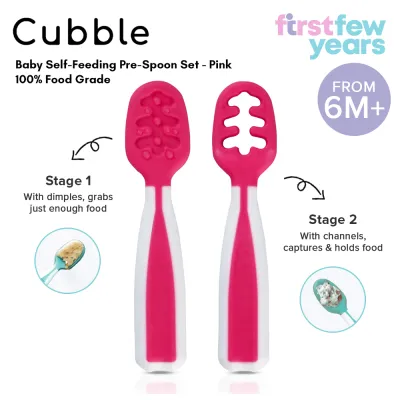
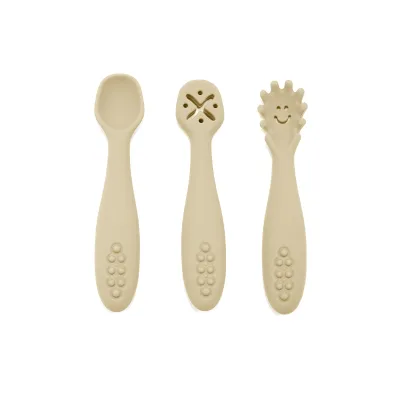
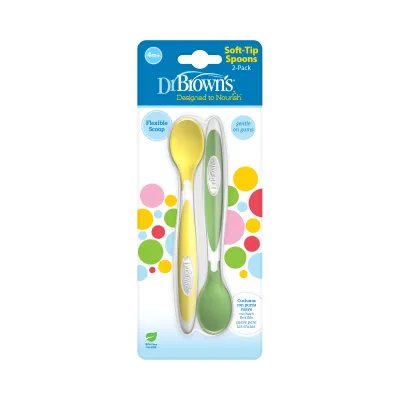
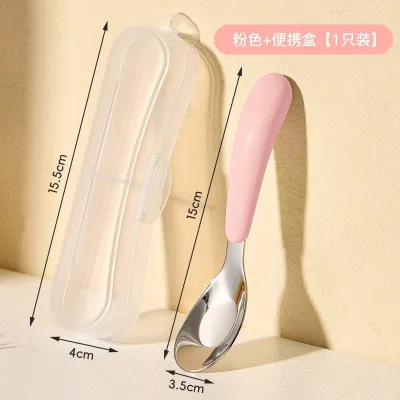
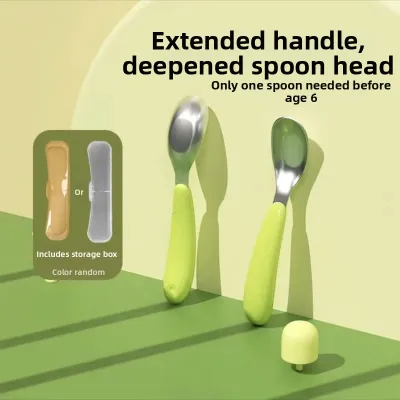
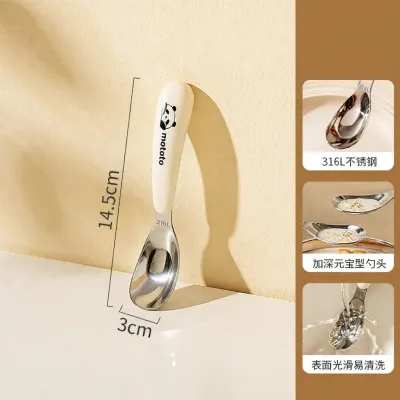
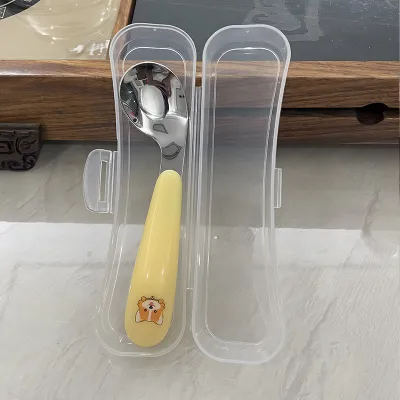
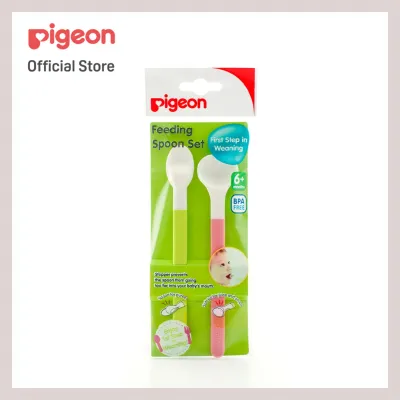
Prices are valid at publication and may change. Please refer to the product page for the latest price.
During the early exploration stage, typically occurring around six to nine months, babies rely on a palmar grasp, wrapping their entire fist around an object. Because their shoulder and elbow movements are still uncoordinated, they struggle to guide long objects accurately. A short handle is essential here; it shortens the lever, making it much easier for the baby to target their mouth. Furthermore, early self-feeding is highly sensory, with babies using the spoon as a teething toy to map the inside of their mouths, which requires soft, forgiving materials.
As toddlers enter the active scooping phase, usually between nine and fifteen months, they begin to experiment with moving food from a plate or bowl. However, they do not yet possess the wrist supination—the ability to rotate the wrist smoothly—needed to keep a traditional spoon level. When they lift a straight spoon, they often tilt it sideways, spilling the contents. Spoons designed for this stage feature ergonomic, textured grips and often incorporate angled or flexible necks that compensate for this lack of wrist rotation, keeping the food level as it travels upward.
By fifteen months and beyond, most toddlers are developing a digital grasp or a refined tripod grasp, using their fingers rather than their entire palm to hold the utensil. This shift allows for much greater precision and control. At this point, the child can handle longer, slimmer handles and deeper bowls that hold larger portions of family meals. The spoon no longer needs to compensate for limited wrist movement, allowing the child to transition to durable materials that mimic adult cutlery.
Safety remains a paramount boundary throughout this developmental progression. Introducing a long, rigid, or metal spoon too early poses significant risks, including severe gagging, throat injury, or painful eye pokes if the child loses balance. Conversely, keeping a child on soft, flat starter spoons for too long can frustrate them as they attempt to eat denser foods like rice or stews. Observing your child’s grasp pattern, wrist movement, and mouth clearance during meals will tell you exactly when it is time to upgrade their utensils.
Best Toddler Spoon Designs for Each Feeding Stage
Choosing the right design requires looking closely at the physical features of the spoon. By categorizing utensils by their design features and developmental suitability, you can easily identify which model will support your child’s current abilities.

Early Self-Feeding (6–9 Months): Short, Chunky, and Soft
For infants taking their first steps into self-feeding, the ideal spoon acts as a bridge between a teething toy and a functional utensil. These spoons feature very short, thick handles that fit comfortably inside a baby’s closed fist. The handle is often bulbous or textured, providing rich sensory feedback that helps the baby’s brain register where the hand is in relation to the mouth. This design accommodates the natural palmar grasp perfectly, allowing the baby to practice the hand-to-mouth motion with minimal frustration.
The bowl of an early starter spoon must be incredibly shallow and made from soft, food-grade silicone. At this stage, babies do not yet know how to use their upper lip to scrape food out of a deep spoon bowl; instead, they lick or suck food off the surface. A flat or textured starter spoon allows purees, mashed sweet potato, or soft congee to sit on the surface, making it easily accessible. The soft silicone construction ensures that as the baby inevitably chomps down on the spoon, their sensitive, teething gums and emerging incisors are protected from bruising.
Another critical safety feature of these early spoons is a built-in shield or a naturally wide handle base. Because infants lack precise depth perception and motor control, they can easily push a spoon too far into their oral cavity. A wide collar or integrated shield acts as a physical barrier, preventing the spoon from reaching the back of the throat and triggering a distressing gag reflex. While these spoons are outstanding for early exploration, their flat profiles mean they cannot scoop liquids or hold larger portions, making them unsuitable once your child begins eating chunkier, textured foods.
Developing Scooping Skills (9–15 Months): Angled and Easy-Grip
As your child transitions from simply licking purees to actively trying to scoop up foods like mashed banana, tofu, or thick porridge, their physical requirements change. At this stage, they need a handle that is slightly longer than a starter spoon but still thick enough to support an easy grip. The handle should feature textured rubber or silicone ridges to prevent slipping, especially when hands get covered in food. The defining feature of this stage is often an angled or curved neck.
An angled neck is specifically engineered to assist toddlers who cannot yet rotate their wrists. When a toddler scoops food with a straight spoon, they typically lift their elbow high and tilt the spoon, causing the food to slide off before reaching their mouth. An angled spoon curves toward the child’s face, allowing them to bring the food directly to their mouth using a simple, straight-arm lifting motion. Some modern designs feature a flexible, bendable neck, allowing parents to customize the angle for either left-handed or right-handed use, which is highly beneficial during this period of hand-dominance exploration.
The bowl of a developing-stage spoon should feature moderate depth. It needs to be deep enough to hold semi-solid foods and small grains, yet shallow enough that the toddler can still easily clear the food with their lips. While these angled spoons are incredibly helpful for building confidence, they are a transitional tool. Once your child masters wrist rotation, the angle actually becomes an obstacle, and they will begin to outgrow these specialized designs quickly.
Proficient Toddler Eating (15+ Months): Transitional and Durable
Once your toddler reaches approximately fifteen months, you will likely notice them holding their spoon with their fingers rather than their palm, demonstrating a developing tripod grasp. They are now ready for transitional spoons that closely resemble adult cutlery but are scaled down to fit a toddler’s mouth and hand. These spoons feature longer, slimmer handles that encourage precise finger placement, helping to refine their fine motor skills in preparation for preschool and family dining.
The materials for this stage shift toward durability and performance. Food-grade stainless steel bowls paired with easy-grip silicone or plastic handles are the standard. A stainless steel bowl features a thin, defined edge that allows the child to cut through soft foods, such as steamed vegetables or soft-cooked meats, and easily scoop up grains of rice. The bowl is significantly deeper, allowing the child to manage liquids like soups and broths without spilling.
While stainless steel is highly durable and hygienic, it does require careful supervision. If your toddler still has a strong habit of biting down hard on utensils when frustrated or teething, metal bowls can cause painful gum bruising or chip delicate primary teeth. Before transitioning to metal, ensure your child has moved past the heavy oral-sensory chewing phase. If they are still biting their utensils, stick to hard, BPA-free plastic or rigid silicone-coated spoons that offer structural strength without the hardness of metal.
Quick Comparison: Spoon Features by Developmental Stage
To help you quickly identify the right physical features for your child’s current stage, the table below summarizes the key design differences, benefits, and transition indicators.
| Developmental Stage | Handle Design | Bowl Material & Depth | Key Benefit | When to Transition |
|---|---|---|---|---|
| Early Self-Feeding<br>(6–9 Months) | Short, chunky, bulbous; often features a safety shield or wide collar. | Soft, food-grade silicone; extremely shallow or textured flat surface. | Protects sensitive gums; prevents gagging; fits early palmar (fist) grasp. | Transition when the child starts trying to scoop food rather than just licking it. |
| Developing Scooping<br>(9–15 Months) | Medium length; textured grip; angled, curved, or bendable neck. | Soft-touch plastic or silicone; moderate depth to hold semi-solids. | Compensates for limited wrist rotation; keeps food level during transport. | Transition when the child demonstrates smooth wrist rotation and a finger-based grasp. |
| Proficient Eating<br>(15+ Months) | Longer, slimmer; designed to encourage a refined tripod grasp. | Food-grade stainless steel or rigid BPA-free plastic; deep bowl. | Mimics adult cutlery; allows cutting of soft foods; holds larger portions. | Standard toddler design; remains in use until ready for full-sized child cutlery. |
Safety Checks and Care for Toddler Spoons
Maintaining the hygiene and structural integrity of your toddler’s spoons is essential for their health and safety. Because these utensils are placed directly into your child’s mouth multiple times a day, they undergo significant wear and tear. Establishing a routine cleaning and inspection process prevents exposure to harmful bacteria and choking hazards.
Cleaning methods must align with the specific materials of the spoon. Solid silicone and high-quality stainless steel spoons are typically dishwasher-safe and can withstand high-temperature sanitizing cycles. However, spoons made of certain plastics, those with glued joints, or those featuring wooden handles must be hand-washed in warm, soapy water. Always refer to the manufacturer’s care label on the original packaging to prevent warping, melting, or chemical degradation. In Singapore’s hot and humid tropical climate, it is vital to dry all utensils thoroughly after washing; moisture trapped in hollow handles or micro-crevices can quickly encourage the growth of black mold.
Regular physical inspections are a crucial safety practice. Silicone spoons, while gentle, are highly susceptible to damage from sharp baby teeth. Inspect silicone bowls and handles weekly by gently pulling and flexing them under a bright light, looking for micro-tears, punctures, or peeling pieces. If a child bites through a portion of a silicone spoon, that piece can easily tear off during a meal and become a silent choking hazard. For plastic spoons, inspect the edges for deep scratches or rough patches; these scratches can harbor bacteria that standard washing cannot reach. For metal spoons, check the connection point where the metal bowl meets the plastic or silicone handle to ensure it remains tight and free of trapped food debris.
Your immediate response to any identified damage must be to discard the utensil. Never attempt to glue a broken spoon back together, as household adhesives are rarely food-safe or heat-resistant. When purchasing new spoons, always verify the material certifications on the packaging. Look for clear labels indicating the product is food-grade, BPA-free, phthalate-free, and compliant with international safety standards. Taking these precautions ensures that your child’s self-feeding journey remains safe, hygienic, and highly supportive of their developing skills.
Frequently Asked Questions (FAQ)
When should I switch from a baby spoon to a toddler spoon?
You should transition your child to a toddler spoon when you observe specific shifts in their motor skills, rather than relying strictly on their age. Look for signs such as the child actively trying to scoop food from their plate, showing frustration when a short starter spoon cannot reach the bottom of a deeper bowl, or shifting their hold from a full-fist palmar grasp to a more controlled finger-based grasp. If your child is successfully bringing a straight baby spoon to their mouth but constantly spilling the contents due to limited wrist rotation, upgrading to an angled or curved toddler spoon will provide the physical support they need.
Are silicone or stainless steel spoons better for toddlers?
Neither material is universally superior; the ideal choice depends entirely on your child’s current feeding stage and oral habits. Silicone is highly flexible, gentle on sensitive gums, and completely safe for babies who are still teething and prone to biting down hard on their utensils, making it the perfect choice for the early self-feeding and early scooping stages. Stainless steel, on the other hand, is exceptionally durable, hygienic, and easy to clean, with a defined edge that helps older, proficient toddlers cut and scoop complex food textures. If your child has stopped chewing on objects and has developed a refined finger grip, stainless steel is the better long-term option.
Community discussion
Share your experience or ask a question. Comments are reviewed before publication.