
When infants transition from crawling to pulling themselves up, the sharp edges of household furniture present immediate hazards. In Singapore’s compact living spaces, where multi-functional furniture and low-profile TV consoles are common, installing high-quality rubber edge protectors is a critical step in baby-proofing. Selecting the best option requires evaluating material density, adhesive safety, and how well the protector suits specific furniture surfaces under local environmental conditions. By understanding the key differences between customizable foam rolls, pre-cut corner guards, and clear aesthetic protectors, parents can create a secure environment without compromising the integrity of their home decor.
What to Look for in Baby-Safe Rubber Edge Protectors
Material Safety Labels Parents often assume that any product labeled ‘rubber’ or ‘foam’ is inherently safe for children. However, material names alone do not guarantee chemical safety. It is essential to look for explicit packaging labels indicating that the product is non-toxic, BPA-free, and phthalate-free. Since infants and toddlers frequently touch, lean on, or even try to bite these guards, verifying compliance with international safety standards—such as EN71 or REACH—on the product documentation is a necessary precaution. Never rely on generic product titles; always verify the physical certification marks or manufacturer documentation before making a purchase.
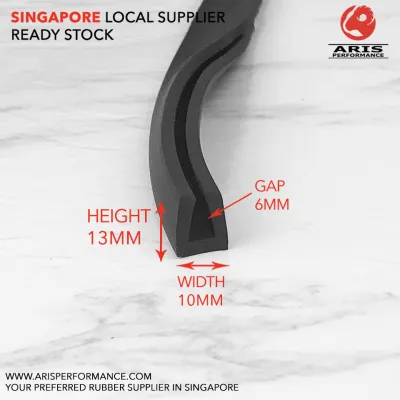
Density and Thickness The protective capacity of a rubber guard depends heavily on its physical structure. Thicker, high-density Nitrile Butadiene Rubber (NBR) foam provides superior shock absorption, making it ideal for active toddlers who are running or walking and prone to high-impact falls. Conversely, softer, thinner rubber or silicone options may be sufficient for younger, crawling infants who move at lower speeds and require light cushioning rather than heavy impact resistance. Selecting the right density ensures that the protector can effectively absorb and disperse the force of a collision, preventing serious injury.
Products mentioned in this guide
![[SG 🚚] 4 Pieces Child Safety Silicone Protector Rubber Corner Protector Table Corner Edge Protection Cover Anti Collision](https://img.lazcdn.com/g/p/751a6de167b923488b8e4de9fb036869.jpg_400x400q80.jpg_.webp)
Prices are valid at publication and may change. Please refer to the product page for the latest price.
Closed-Cell vs. Open-Cell Structure When evaluating foam density, pay close attention to whether the material is open-cell or closed-cell. Closed-cell NBR foam is highly recommended for baby-proofing because its dense, sealed structure prevents the absorption of liquids, drool, or ambient moisture. In Singapore’s humid climate, open-cell foams can easily trap moisture and dust, leading to mold growth and material degradation over time. Closed-cell foam remains hygienic, easy to wipe clean, and structurally resilient against repeated compressions.
Adhesive Strength and Surface Compatibility An edge protector is only as reliable as the adhesive holding it in place. However, high-strength adhesives can react chemically with certain furniture finishes. Before application, parents must verify whether the included adhesive is compatible with their specific furniture material—whether it is solid teak wood, tempered glass, laminated MDF, or veneered plywood. Failing to match the adhesive to the surface can result in peeled varnish, stained wood, or guards that fall off under minimal pressure.
Adhesive Curing and Humidity Challenges Singapore’s high relative humidity, which often exceeds 80 percent, can severely impact how adhesive polymers bond with furniture surfaces. Low-grade adhesives may fail to cure properly, sliding off or peeling under the slight tension of a curved rubber guard. To combat this, look for protectors supplied with high-performance acrylic-based double-sided tapes, which are designed to cure effectively in humid environments and offer superior shear strength against pulling forces.
Developmental Guidelines Edge protection should align with your child’s current mobility and height. A crawling baby requires protection on low-lying surfaces such as baseboards and the bottom shelves of bookcases. A toddler who is learning to stand or walk needs protection on higher surfaces like dining table edges and kitchen countertops. Always cross-reference the manufacturer’s recommended age, weight, and developmental guidelines with your child’s physical reach to ensure no hazards are overlooked.
Market Availability and Pricing When shopping in Singapore, parents will find a wide variety of options on e-commerce platforms. Because brand availability and prices in SGD fluctuate frequently, it is more practical to focus on verifying raw product specifications, material certifications, and verified seller ratings rather than relying solely on brand names. Investing time in reading user feedback regarding long-term durability and adhesive performance in tropical climates yields much better results than purchasing based on brand recognition alone.
Top Rubber Edge Protector Types for Different Furniture Needs
To simplify the selection process, it helps to categorize edge protectors into distinct structural types. Each type serves a specific purpose, balancing safety, aesthetics, and ease of installation.

| Protector Type | Best Use Case | Shock Absorption Level | Aesthetic Impact | Installation Effort |
|---|---|---|---|---|
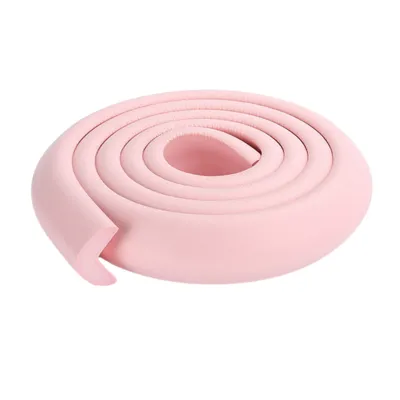
| High-Density Foam Rolls | Long edges, TV consoles, low shelving | High | High (Bulky appearance) | Moderate (Requires cutting) |
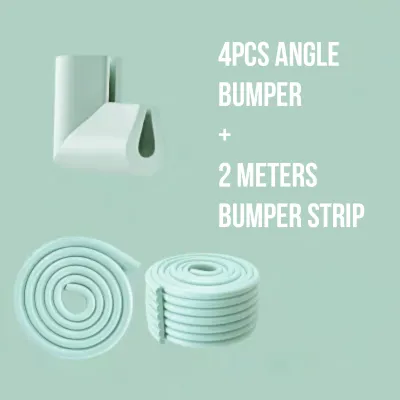
| Pre-Cut Corner Guards | Sharp corners of tables, desks, cabinets | High to Moderate | Moderate | Low (Ready to stick) |
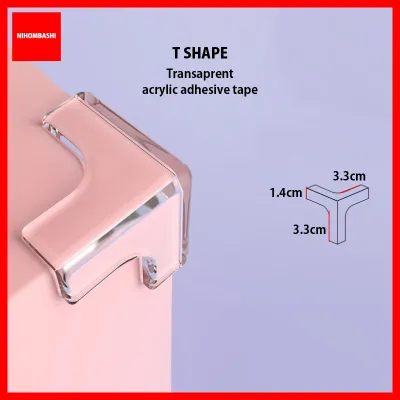
| Clear Transparent Guards | Glass tables, premium wood, modern decor | Moderate to Low | Low (Nearly invisible) | Low to Moderate |
Please note that these recommendations are based on structural features and product types. Specific brand stock and exact pricing on online marketplaces change regularly, so verifying the physical characteristics of the product remains the most reliable approach.
High-Density Rubber Foam Rolls for Long Edges
Ideal Use Cases Long, continuous edges of coffee tables, low-profile TV consoles, dining tables, and long run shelving units represent the primary areas where foam rolls excel. These are typically the high-traffic zones in Singaporean living rooms where children are most active.
Key Advantages These rolls offer maximum customizability, allowing parents to measure and cut the exact length needed for continuous coverage. Made from thick NBR foam, they provide exceptional impact cushioning due to their closed-cell structure, which traps air to absorb sudden forces. They are also highly cost-effective for covering large surface areas, ensuring that no gaps are left exposed along extended furniture runs.
Limitations The primary drawback is their bulky, opaque appearance, which can significantly alter the visual profile of delicate or minimalist furniture. They also require precise measurement and careful cutting with shears to ensure clean joints, which increases preparation time and requires a steady hand during installation.
Miter Cutting Techniques To achieve a clean and secure fit at 90-degree corners using a continuous foam roll, parents should employ a miter cut. Instead of overlapping two separate pieces of foam—which creates a bulky, uneven seam that toddlers can easily peel off—cut the ends of the meeting foam pieces at precise 45-degree angles. This creates a flush, professional joint that distributes impact evenly and minimizes the edges your child can grip.
Buying Advice Look for rolls that come packaged with high-quality, double-sided acrylic tape. Ensure the packaging explicitly states that the NBR foam is non-toxic and free from harmful plasticizers or flame retardants. Verifying these details protects your child from chemical exposure during daily contact.
Pre-Cut Rubber Corner Guards for Sharp Points
Ideal Use Cases Isolated, high-risk sharp corners on bedside tables, dining chairs, desks, and low cabinet corners are the perfect match for pre-cut guards. These points represent concentrated impact hazards that require immediate mitigation.
Key Advantages These pre-molded pieces offer rapid installation with zero cutting required. They provide a neat, uniform fit over standard 90-degree corners, making them highly effective for targeting the most dangerous impact zones without altering the entire length of the furniture. Their compact size makes them less visually intrusive than long foam rolls.
Limitations Pre-cut guards are rigid and cannot adapt to curved, irregular, or non-standard angles. Additionally, if the pre-cut pieces are too thin or small, they may not offer sufficient cushioning for a direct, high-velocity head impact, meaning parents must carefully inspect the physical thickness before installation.
Spherical vs. L-Shaped Designs Pre-cut corner guards generally come in two shapes: spherical (ball-shaped) and L-shaped. Spherical designs are highly recommended for sharp, three-sided corners (like the corners of a dining table) because they distribute impact forces across a wider, rounded surface area. L-shaped guards are better suited for two-sided edges where the top surface is flat but the edge profile is sharp, such as low cabinet lips.
Buying Advice Opt for multi-packs to ensure consistent protection across all matching furniture corners in your home. Check user reviews specifically regarding adhesive residue and longevity, and verify that the physical dimensions of the corner guard provide adequate depth to fully cover the sharp point.
Clear Transparent Protectors for Aesthetic Preservation
Ideal Use Cases Glass coffee tables, acrylic furniture, and high-end, premium wood finishes where an opaque foam guard would destroy the room’s design aesthetic are the ideal candidates for clear protectors. They allow the natural beauty of the furniture to remain fully visible.
Key Advantages These guards offer excellent visual discretion, blending seamlessly into the furniture. They feature strong adhesion to smooth, non-porous surfaces like glass and metal, making them very difficult for curious toddlers to peel off once properly cured.
Limitations Clear protectors are typically manufactured from PVC or silicone, which are inherently denser and harder than soft NBR foam. Consequently, they may offer slightly less shock absorption during a heavy impact, acting more as a barrier to prevent lacerations rather than a soft cushion.
Silicone vs. PVC Materials When choosing clear protectors, understand the material differences. Silicone is highly elastic, hypoallergenic, and naturally resistant to yellowing, but it can be more challenging to adhere securely. PVC is highly transparent and cost-effective, but because raw PVC is rigid, manufacturers add plasticizers to make it flexible. It is critical to verify that any clear PVC protector is certified as phthalate-free to ensure it does not leach harmful chemicals.
Buying Advice Ensure the transparent material is specifically formulated to be soft and pliable rather than rigid plastic. Verify that the included adhesive is rated safe for glass surfaces to prevent the risk of glass damage or shattering during future removal. Lastly, check for UV-resistant properties to prevent the material from turning yellow or brittle under Singapore’s strong, bright indoor lighting.
How to Install and Remove Edge Protectors Safely
Proper installation ensures the edge protectors remain securely attached when your baby pulls on them, while safe removal methods prevent permanent damage to your furniture’s finish.
Surface Preparation Start by cleaning the furniture edge thoroughly to remove dust, grease, and fingerprint oils. Use a mild, non-oily cleaner or a simple water-and-soap solution. Avoid using heavy household detergents or oil-based polishes, as they leave a microscopic residue that prevents the adhesive from bonding. Ensure the surface is completely dry before applying any adhesive, as residual moisture will severely compromise the bond. In Singapore’s humid climate, allowing extra drying time is highly recommended to ensure no moisture is trapped beneath the adhesive tape.
Adhesive Application Apply the double-sided tape to the protector first, then align it carefully with the furniture edge. Press firmly along the entire length of the guard for at least 30 seconds to activate the pressure-sensitive adhesive. Allow the adhesive to cure undisturbed for the full duration specified on the manufacturer’s label—typically 24 hours—before allowing your child near the treated furniture. Preventing early contact ensures the bond reaches its maximum rated strength.
Safe Removal Methods When it is time to remove the guards, avoid pulling them off forcefully, which can tear wood veneer or lift paint. Instead, use a hairdryer on a low-heat setting to gently warm and soften the adhesive backing. Once warmed, slowly peel the protector back at a shallow angle, applying steady pressure to minimize stress on the furniture surface. Any remaining sticky residue can be gently rolled off with your fingers or wiped away with a damp cloth.
Safety Boundaries Always perform a test on a small, hidden area of the furniture before applying adhesive to visible sections. If your furniture has a delicate, antique, or unknown finish, stop immediately and consult the furniture manufacturer or a professional restoration specialist. Never use harsh chemical solvents or abrasive scrubbers to remove adhesive residue, as these can release toxic fumes into your child’s environment and ruin the underlying material.
Frequently Asked Questions (FAQ)
Are rubber edge protectors safe if my baby chews on them?
While many high-quality rubber edge protectors are manufactured from non-toxic, food-grade materials, they are not designed or certified as chew toys. Parents must strictly verify food-grade, non-toxic, and chemical-free certifications on the product packaging before purchasing. No edge guard is entirely bite-proof; active adult supervision is always required. If you observe teeth marks, peeling, or tearing on any protector, replace it immediately to eliminate choking hazards and prevent ingestion of small pieces.
How often should I replace baby edge guards?
Baby edge guards should be inspected regularly and replaced at the first sign of wear. Look for observable indicators such as peeling edges, a loss of adhesive strength, visible tears, or compression damage where the foam no longer bounces back after pressure. In Singapore’s hot and highly humid climate, adhesive polymers can degrade more rapidly than in dry environments, making frequent physical checks essential. Any lifted edge or loose corner poses an immediate choking or scratching risk and must be replaced right away.

Community discussion
Share your experience or ask a question. Comments are reviewed before publication.