
Introducing solid foods is a pivotal milestone in your baby’s first year of life, marking a transition from an exclusively liquid diet to a world of diverse textures and flavors. Around the age of six months, an infant’s natural iron stores, which were accumulated during gestation, begin to deplete. Breast milk and standard infant formula alone can no longer fully satisfy their rapidly growing nutritional demands, particularly for iron and zinc. This physiological shift is why pediatricians and nutritional experts widely recommend introducing high-quality, nutrient-dense solid foods as a priority during the weaning process.
Pure chicken serves as an exceptional foundational protein during this critical developmental window. It is highly digestible and provides a complete profile of essential amino acids, which are the building blocks required for rapid muscle development, tissue repair, and overall physical growth. Unlike plant-based protein sources, poultry contains heme iron, a highly bioavailable form of iron that the infant’s developing gastrointestinal tract can absorb far more efficiently. This helps prevent iron-deficiency anemia, a condition that can negatively impact a child’s cognitive and motor skill development if left unaddressed.
Beyond protein and iron, chicken is rich in zinc and essential B vitamins, including niacin (vitamin B3), pyridoxine (vitamin B6), and cobalamin (vitamin B12). Zinc is a vital trace mineral that supports cellular growth, DNA synthesis, and a robust immune system, helping your baby ward off common childhood illnesses. The B-complex vitamins play a fundamental role in energy metabolism, ensuring that the carbohydrates, fats, and proteins your baby consumes are efficiently converted into usable energy to fuel their daily milestones, from rolling over to crawling.
Products mentioned in this guide
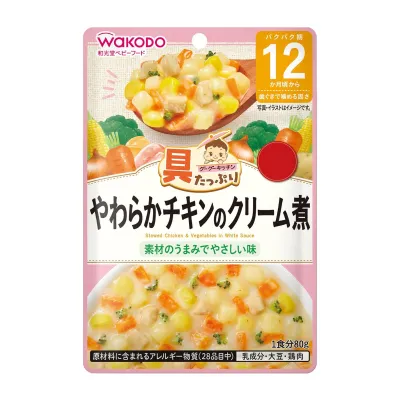
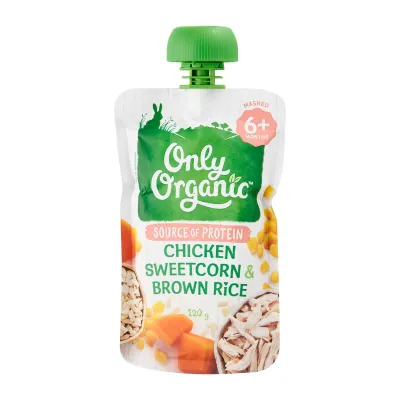
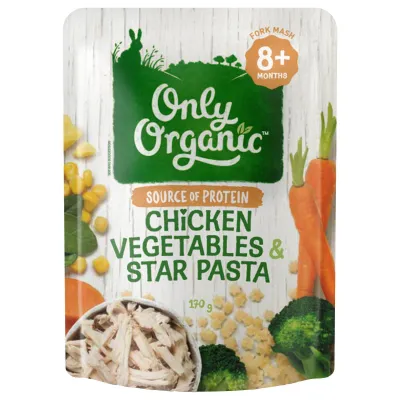
Prices are valid at publication and may change. Please refer to the product page for the latest price.
Starting with a single-ingredient protein like pure chicken is also highly beneficial for allergen management and palate development. Introducing one new food at a time over a span of several days allows parents to monitor their baby closely for any adverse reactions, such as skin rashes, digestive upset, or respiratory changes. Furthermore, offering pure, unseasoned chicken helps your baby develop an appreciation for natural, savory flavors. This early exposure to whole-food tastes helps establish healthy eating habits and reduces the likelihood of a strong preference for heavily sweetened or artificially flavored foods later in childhood.
Key Criteria for Choosing a Trusted Chicken Baby Food Brand
Navigating the baby food aisle in Singapore can be overwhelming, with dozens of local and imported brands competing for your attention. To ensure you are selecting a safe, nutritious, and genuinely pure product, it is essential to establish a rigorous evaluation framework. The first and most critical criterion is absolute ingredient transparency. A premium baby food brand should clearly list all ingredients on the packaging, with no ambiguous terms like “natural flavorings” or “spices” that could mask hidden additives. For a product labeled as pure chicken, the ingredient list should ideally contain only chicken and water or organic chicken broth used to achieve the correct processing consistency.
Sodium and sugar levels require meticulous inspection on the Nutrition Information Panel (NIP). Commercial food processing often relies on salt and sugar to enhance palatability and extend shelf life, but these have no place in infant nutrition. An infant’s kidneys are still developing and cannot process high levels of sodium without strain. When examining the NIP on products sold in Singapore, verify that there is no added salt or sugar. The sodium content should reflect only the naturally occurring sodium found in the poultry itself, which is typically extremely low—ideally well under 50 milligrams per 100 grams of food.
Texture is another vital factor that must align precisely with your baby’s current developmental stage. For infants aged six to eight months who are just beginning their weaning journey, a completely smooth, silk-like puree is necessary to prevent gagging and choking. As your baby approaches nine to twelve months and develops better tongue coordination and jaw strength, you can gradually transition them to thicker, lumpy purees, finely minced chicken, or small, tender pieces. Always verify the manufacturer’s recommended age stage on the packaging, but remember that these are general guidelines; you must observe your baby’s individual chewing and swallowing capabilities.
Sourcing and safety standards are paramount when dealing with poultry, which is inherently susceptible to bacterial pathogens like Salmonella and Campylobacter. Parents should prioritize brands that adhere to internationally recognized food safety certifications and are approved by the Singapore Food Agency (SFA) for import. Look for claims such as “antibiotic-free,” “no added hormones,” or “free-range,” which indicate higher standards of animal welfare and lower risks of chemical residues. For families adhering to dietary restrictions, verifying the presence of a reputable halal certification mark on the packaging is also an essential step to ensure compliance with strict preparation standards.
Recommended Pure Chicken Baby Food Formats and What to Look For
Single-Ingredient Chicken Purees and Pouches
For parents starting the weaning process, commercially prepared chicken purees and pouches offer unmatched convenience, especially when dining out or traveling around Singapore. A high-quality chicken puree should have a perfectly uniform consistency, free from any grittiness, lumps, or watery separation. Because pure chicken breast can dry out easily during cooking, manufacturers typically blend it with water, organic chicken broth, or mild vegetable purees to maintain a smooth, palatable texture.

When choosing pouches or jars, the integrity of the packaging is your first line of defense against foodborne illness. Look for BPA-free plastic pouches with wide, child-safe caps that prevent accidental swallowing, or opt for recyclable glass jars that allow you to visually inspect the food’s color and consistency before purchase. Ensure that the safety button on the lid of a glass jar is fully depressed and does not pop up before opening, which confirms that the vacuum seal has not been compromised during transit or handling.
While completely pure, single-ingredient chicken pouches are relatively rare in mainstream Singapore supermarkets due to taste preferences, some specialized baby retailers and online marketplaces stock brands like Gerber, which offers Gerber 2nd Foods Chicken & Chicken Gravy in glass jars. This product is formulated specifically for infants and contains only chicken, water, and cornstarch for thickness, with no added salt or artificial flavorings. For widely available options at major retailers like NTUC FairPrice, Cold Storage, and Sheng Siong, brands such as Only Organic and Bellamy’s Organic offer organic chicken-and-vegetable blends. While these are not 100% pure chicken alone, they are highly regarded for their clean-label formulations, organic certification, and strict absence of added sodium, preservatives, or artificial thickeners.
Low-Sodium Chicken Floss and Meat Powders
In many Singaporean households, dry meat products like chicken floss and dehydrated meat powders are kitchen staples, valued for their ability to instantly boost the nutritional profile of homemade rice porridge (congee), oatmeals, or vegetable purees. These concentrated powders and fine-textured flosses dissolve easily in warm food, making them an excellent option for babies who are hesitant to chew textured meat but still require a reliable source of iron and protein.
However, parents must exercise extreme caution, as standard adult chicken floss (known locally as bak hu) is highly processed and loaded with refined sugar, soy sauce, palm oil, and monosodium glutamate (MSG) to create a savory, sweet flavor profile. This makes adult floss entirely unsuitable for infants and toddlers. When shopping for baby-friendly chicken floss or powder, verify that the label explicitly states “no added salt,” “no added sugar,” and “no MSG.” The processing method should involve slow-baking or dehydrating lean chicken breast without deep-frying or using hydrogenated oils.
A highly popular and widely trusted brand in Singapore is MommyJ, which offers MommyJ Premium Chicken Powder. This product is widely distributed across local baby specialty stores, department stores, and online marketplaces. Made from 100% pure chicken breast that has been dehydrated and finely ground, it contains no added sodium, preservatives, or artificial ingredients, making it suitable for babies aged seven months and older. Another option is Lilo, a well-known local brand specializing in natural food powders, or other boutique baby food brands that produce small-batch, preservative-free meat powders. Because Singapore’s tropical climate is highly humid, always store these dry products in an airtight container in a cool, dry pantry, or keep them refrigerated after opening to prevent moisture absorption, clumping, and premature spoilage.
Additive-Free Chicken Sausages and Bites for Toddlers
As your baby transitions into toddlerhood—typically around ten to twelve months—and begins practicing self-feeding or baby-led weaning (BLW), their food preferences and physical capabilities change. This stage is ideal for introducing soft finger foods like chicken bites, meatballs, or clean-label sausages, which help develop their fine motor skills, pincer grasp, and jaw strength.
However, commercial sausages and nuggets designed for adults are highly processed, containing excessive sodium, chemical binders, starches, and synthetic casings. A toddler-safe chicken sausage must feature a very high percentage of actual chicken meat (ideally 90% or higher) and use only natural binders like egg white, potato starch, or tapioca starch instead of chemical emulsifiers. It must be completely free from artificial preservatives, artificial colorings, and added nitrates or nitrites, which are commonly used in processed meats but are linked to health risks.
To source these clean-label options in Singapore, parents can visit premium grocers and specialty butcheries such as Ryan’s Grocery or Little Farms. These retailers stock organic, pasture-raised, or free-range chicken sausages made with minimal ingredients and significantly lower sodium levels than conventional supermarket brands. When serving these products, parents must always follow the manufacturer’s cooking instructions thoroughly to ensure the meat is fully cooked. To mitigate choking hazards, never serve sausages in round, coin-shaped slices; instead, cut them lengthwise into thin, finger-width strips, and always maintain direct adult supervision during meal times.
Label Reading: Hidden Ingredients to Avoid in Chicken Baby Food
Becoming an expert at reading ingredient labels is one of the most empowering skills you can develop as a parent. Manufacturers often use clever marketing terms on the front of packaging, such as “all-natural” or “wholesome,” which are not legally regulated and can be highly misleading. To uncover the true composition of a baby food product, you must turn the package over and scrutinize the ingredient list and nutrition panel.
Common fillers and binders are frequently added to commercial meat products to bulk up the volume and lower production costs. Look out for ingredients like modified cornstarch, tapioca starch, wheat flour, soy protein isolate, and maltodextrin. While these ingredients are safe for consumption, they dilute the nutritional density of the food. If a product is filled with starches, your baby is consuming fewer essential nutrients like iron and protein per spoonful, defeating the purpose of introducing a nutrient-dense meat source.
Hidden sodium is another major concern. Sodium can be disguised under various chemical and technical names on an ingredient list. Parents should watch for terms such as sodium phosphate, yeast extract, hydrolyzed vegetable protein (HVP), disodium inosinate, and concentrated chicken broth or bouillon. These additives are often used to mimic a rich, savory flavor in products that have low actual meat content, but they can easily push the sodium levels far beyond what is safe for an infant’s delicate kidneys.
Sweeteners and artificial flavor enhancers should also be strictly avoided. Some commercial brands add cane sugar, dextrose, fructose, or fruit juice concentrates to make savory meat dishes more appealing to infants who have a natural preference for sweet tastes. Additionally, honey must be absolutely avoided in any food intended for infants under twelve months of age. Honey can contain spores of the bacterium Clostridium botulinum, which can germinate in an infant’s immature digestive system and cause infant botulism, a rare but life-threatening neurological illness.
To verify if a product is truly centered on high-quality meat, always check the order of the ingredient list. In Singapore, regulations dictate that ingredients must be listed in descending order of weight. This means that the ingredient present in the largest quantity is listed first. In a high-quality pure chicken baby food, chicken should always be the very first ingredient. If water, broth, or a vegetable starch is listed before the meat, the product is primarily composed of those liquids or fillers rather than the nutrient-dense poultry itself.
Safe Storage and Serving Practices for Packaged Baby Food
Proper food handling and storage are critical when preparing chicken baby food, as poultry is highly perishable and provides an ideal breeding ground for harmful bacteria if stored or served incorrectly. Unopened commercial baby food pouches, jars, and dehydrated powders should be kept in a cool, dark, and dry pantry away from direct sunlight and heat sources, such as the stove or oven. In Singapore’s warm, humid climate, ensuring your pantry is well-ventilated is essential to prevent premature degradation of the packaging materials and the food inside. Always inspect the packaging carefully before purchase or use; never feed your baby from a pouch that is leaking, punctured, or abnormally bloated, or a jar with a loose or popped lid.
Once a jar or pouch of chicken puree is opened, it must be refrigerated immediately and consumed within 24 to 48 hours, depending on the manufacturer’s specific instructions. To prevent bacterial contamination, never feed your baby directly from the jar or pouch if you plan to save the remainder for a later meal. Saliva from your baby’s mouth contains bacteria and digestive enzymes that, when introduced to the food via a used spoon, will quickly multiply and break down the food, causing it to spoil rapidly even in the refrigerator. Instead, spoon the desired portion into a clean feeding bowl and immediately seal and refrigerate the remaining portion in its original container.
When reheating chicken baby food, ensure it is heated thoroughly until it is steaming hot throughout to destroy any potential pathogens. If you are using a microwave, stir the food thoroughly after heating to distribute the heat evenly and eliminate “hot spots” that could easily burn your baby’s sensitive mouth. Always test the temperature of the food on the inside of your wrist before serving; it should feel comfortably warm or lukewarm, never hot. Never reheat meat products more than once, and discard any heated leftovers that your baby does not finish, as bacteria will have already begun to grow.
For dry products like baby chicken powder or floss, maintaining a moisture-free environment is key to preventing spoilage. Always use a clean, completely dry spoon to scoop out the product, and seal the container tightly immediately after use. If you notice any clumping, unusual odors, color changes, or signs of mold growth, discard the product immediately. For frozen homemade or commercial chicken purees, thaw them safely in the refrigerator overnight or use the defrost setting on your microwave, and never leave frozen meat to thaw on the kitchen counter at room temperature, as this allows bacteria to multiply rapidly on the outer layers of the food.
Frequently Asked Questions (FAQ)
Can I give my baby regular adult chicken sausage or floss?
No, regular adult chicken sausages and floss are highly unsuitable for infants and young toddlers. These products are formulated for adult taste preferences and contain high levels of sodium, refined sugars, chemical preservatives (such as sodium nitrite), and artificial flavor enhancers like MSG. An infant’s immature kidneys cannot efficiently process high sodium loads, and introducing heavily seasoned foods early on can distort their developing palate, leading to a rejection of natural, unseasoned whole foods. Always choose baby-specific, low-sodium, and additive-free formulations.
Is organic chicken baby food significantly better than conventional?
Organic chicken baby food offers peace of mind for parents wishing to minimize their baby’s exposure to synthetic pesticides, routine antibiotics, and growth hormones, which are strictly regulated in organic farming. However, from a macronutrient perspective, conventional chicken provides a highly similar amount of high-quality protein, iron, and zinc. Both organic and conventional options are safe and nutritious, provided the ingredient list is clean, pure, and free from harmful additives. The most critical factor is verifying that the product is age-appropriate and free from added salt, sugar, and preservatives.
How much pure chicken should my baby eat in a day?
For infants starting solids around six months, a very small amount—about one to two teaspoons of pureed chicken per day—is sufficient to introduce the flavor and nutrients. As your baby grows to eight to twelve months, this can gradually increase to one to two tablespoons of minced or finely chopped chicken per meal, served alongside a variety of vegetables, grains, and fruits. Because every baby’s growth curve and nutritional needs differ, parents should consult their pediatrician or a registered dietitian to tailor protein portions to their child’s specific developmental requirements.
Community discussion
Share your experience or ask a question. Comments are reviewed before publication.