
Selecting the right portable play mat for outdoor excursions in Singapore requires balancing your baby’s developmental needs with the unique demands of a tropical climate. Whether you are planning a family picnic at the Singapore Botanic Gardens, a beach day at Sentosa, or a quick play session at a local HDB void deck, the surface you choose serves as your child’s primary barrier against heat, moisture, and rough ground. While many popular brands like Parklon, Dwinguler, and Alzipmat are household names for indoor play spaces, taking your baby outdoors introduces a completely different set of environmental challenges. The ideal outdoor play mat must be lightweight enough to carry alongside a stroller and diaper bag, sufficiently cushioned to protect against tumbles on hard surfaces, and highly resistant to the intense humidity and sudden downpours typical of Singapore’s weather.
To make an informed decision, parents must look beyond attractive patterns and brand names. You need to evaluate material safety, ease of cleaning, moisture resistance, and how easily the mat integrates into your daily transit routine. This guide breaks down the critical environmental factors in Singapore, details the essential features to look for in any portable play mat brand, and compares the most common mat designs to help you select the perfect option for your family’s outdoor lifestyle.
Why Singapore's Climate and Terrain Matter for Outdoor Play Mats
Singapore’s tropical climate, with temperatures often exceeding 30 degrees Celsius and relative humidity levels frequently surpassing 80 percent, presents immediate challenges for outdoor play mats. Dark-colored mats or dense, heavy foams can absorb solar radiation rapidly in direct or partial sunlight, raising surface temperatures to levels that are uncomfortable or unsafe for a baby’s delicate skin. Furthermore, high humidity means that any moisture trapped beneath or within the mat—whether from damp soil, spilled milk, or baby sweat—can quickly become a breeding ground for mold, mildew, and bacteria. Parents must prioritize mats made from non-porous, quick-drying materials that do not trap heat or moisture, ensuring a safe and hygienic play environment even during sticky afternoon outings.
Products mentioned in this guide
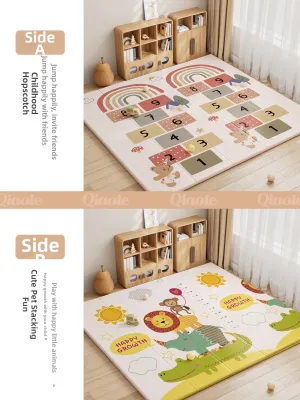
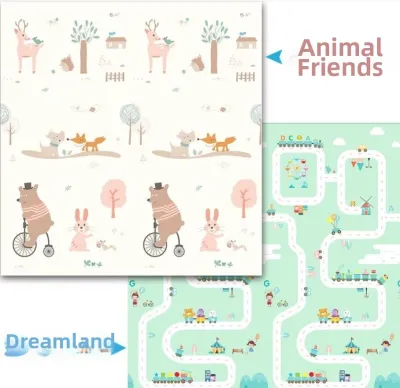
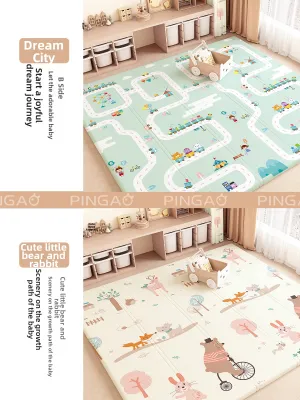
![[Buy 10 Free 2] 2.5cm Thick Interlocking Foam Floor Tiles 30x30cm EVA Foam Play Mats for Babies and Toddles Puzzle PlayMat](https://img.lazcdn.com/g/p/e22147171aa6ad99cf8021ba34aafde1.jpg_400x400q80.jpg_.webp)
Prices are valid at publication and may change. Please refer to the product page for the latest price.
The terrain your baby will encounter during outdoor play in Singapore varies widely, demanding different characteristics from a play mat. For instance, the sandy beaches of East Coast Park or Sentosa require a mat with a smooth, tightly sealed surface that allows sand to be brushed off easily without getting trapped in deep textures or fabric weaves. Conversely, the grassy lawns of the Singapore Botanic Gardens, while soft, frequently hold ground moisture and dew, even hours after sunrise. For these environments, a mat must feature a reliable, waterproof backing to prevent dampness from seeping through to your baby’s clothes. Additionally, urban play areas like smooth concrete or tiled HDB void decks and shopping mall atriums present hard, unforgiving surfaces. Here, the primary requirement shifts to shock absorption and slip resistance, protecting your baby from bumps during crawls and ensuring the mat remains securely anchored on polished floors.
Navigating Singapore’s crowded public transport network adds another layer of complexity. If you travel by MRT or bus, carrying a bulky, heavy play mat alongside a stroller, a diaper bag, and your baby is highly impractical. Even for parents traveling by car or taxi, boot space is often limited when strollers and other gear are loaded. Therefore, the physical dimensions and weight of the mat when folded or rolled are critical. The best portable brands design their mats to fold down into compact, manageable packages, often including dedicated carry bags, integrated handles, or shoulder straps. This allows you to sling the mat over your shoulder or tuck it neatly into the under-stroller storage basket, leaving your hands free to manage your baby safely.
Key Features to Evaluate in Portable Play Mat Brands
When evaluating any play mat brand, material safety is the primary concern. Babies spend significant time in direct contact with the mat, placing their faces, hands, and toys directly on the surface. Common materials include Cross-linked Polyethylene (XPE) foam, Ethylene-Vinyl Acetate (EVA) foam, and padded fabrics or polyester blends. Rather than relying on generic marketing terms like “eco-friendly,” parents should verify safety claims on the product label. Look for non-toxic certifications, such as compliance with European EN71 safety standards, American ASTM standards, or BPA-free and formamide-free declarations. This is especially critical for EVA foam, where trace residues can remain from lower-quality manufacturing. Verifying these certifications ensures the mat is safe for your baby to lie on, crawl over, and chew.

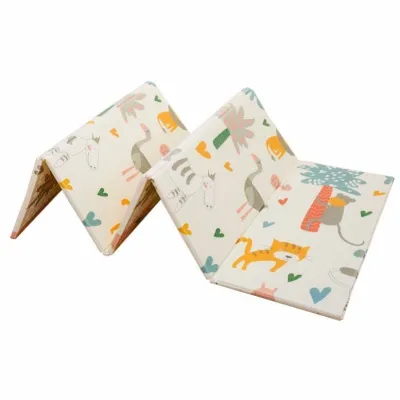
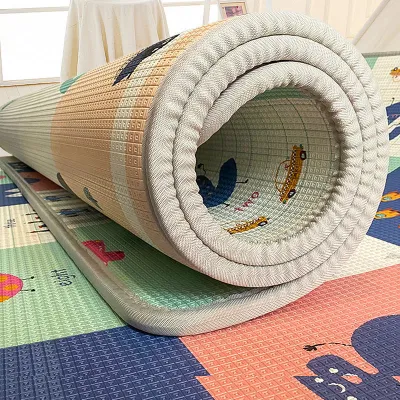
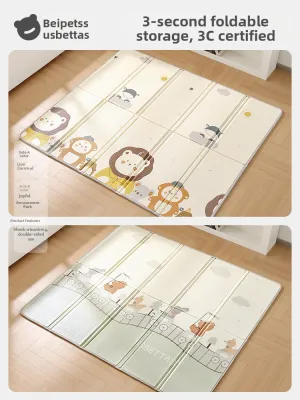
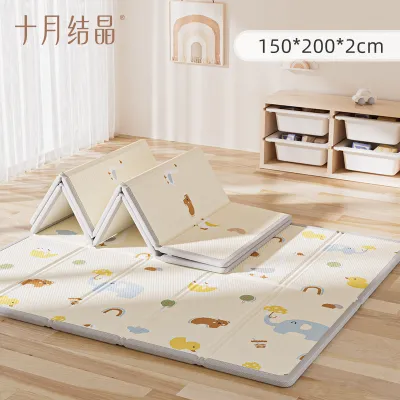
How a play mat transitions from deployed to portable impacts its daily usability. Foldable mats feature pre-creased accordion-style lines, allowing them to fold flat in seconds into a neat, rectangular shape that fits easily in a car boot. However, these creases can collect sand, dirt, and crumbs, requiring meticulous cleaning after a beach or park visit. Roll-up mats provide a completely smooth, crease-free surface that is gentle on a crawling baby’s knees. The trade-off is that rolled mats are often more awkward to carry, tend to unroll if not secured with straps, and may not lay perfectly flat immediately after unrolling, leaving curled edges that can trip a toddler.
A sliding play mat poses a safety risk as your baby begins to roll, sit, or crawl. When transitioning between outdoor lawns and smooth surfaces—such as the polished tiles of a community pavilion, an HDB void deck, or a shopping mall baby room—the mat’s backing is crucial. Reliable portable brands incorporate a textured, high-traction backing, utilizing silicone dot patterns, cross-hatch embossing, or specialized rubberized materials. This non-slip layer grips the surface beneath, preventing the mat from bunching up or sliding when your baby pushes off to crawl. Before purchasing, examine the underside to ensure it offers sufficient friction on smooth surfaces.
Balancing cushioning and portability is a key trade-off when selecting an outdoor play mat. Thicker mats, ranging from 1cm to 2cm, offer excellent shock absorption, which is highly beneficial for babies learning to sit or crawl, protecting them from hard ground. However, this extra thickness increases bulk and weight, making transit more difficult. Thinner mats, measuring between 2mm and 5mm, are incredibly lightweight and compact but provide minimal protection against hard surfaces. Consider your primary use cases: if you mostly visit soft, grassy parks, a thinner, highly portable mat may suffice; if you frequently play on hard tiled or concrete surfaces, prioritize a slightly thicker foam mat with good shock absorption.
Outdoor environments are inherently messy. Between grass stains, damp soil, spilled milk, baby food, and applied sunscreen, your play mat will require frequent cleaning. A practical portable play mat must feature a waterproof, non-porous top layer that can be wiped clean instantly. Look for brands using high-quality TPU (Thermoplastic Polyurethane) coatings or specialized water-resistant films. These surfaces prevent liquids from soaking into the inner foam or fabric layers, allowing you to sanitize the mat quickly with a baby-safe disinfectant wipe or a damp cloth while on the go. Avoid mats with deep grooves or unprotected fabric tops, which can absorb spills, trap dirt, and lead to stubborn stains, unpleasant odors, and bacterial growth.
Comparing Play Mat Types for Different Outdoor Scenarios
Foldable XPE Foam Mats
Foldable XPE (Cross-linked Polyethylene) foam mats are among the most popular choices for parents seeking a versatile, lightweight outdoor solution. XPE is a high-density, closed-cell foam that provides excellent cushioning while remaining remarkably light, making it easy to carry for extended periods.
- Pros: The primary advantage of foldable XPE mats is their superior balance of weight and shock absorption. They are completely waterproof, meaning spills and damp grass moisture cannot penetrate the surface. The built-in folding lines allow the mat to be collapsed in seconds, and many models feature integrated carry handles or come with a dedicated travel bag. The closed-cell structure also ensures that the mat does not absorb odors or liquids, making it highly hygienic.
- Cons: Because these mats rely on accordion-style folding, the creases can act as channels that trap sand, dirt, and small pebbles. Cleaning these creases requires extra attention during your post-outing wipe-down. Additionally, while they are lightweight, their folded dimensions can still be somewhat bulky, making them less suitable for carrying inside standard diaper bags.
- Best for: Family picnics on damp grass, gatherings at HDB void decks, and quick park visits where you need a fast setup on potentially damp ground.
- What to check: When selecting a foldable XPE mat, carefully inspect the durability of the folding joints or hinges. Repeated folding can cause lower-quality mats to split along these seams. Additionally, lay the mat out fully to ensure that the folds flatten completely under their own weight, as stiff creases that stick up can easily trip a toddler who is learning to walk.
Roll-Up Padded Fabric or Quilted Mats
Roll-up padded fabric or quilted mats offer a softer, more textile-focused alternative to foam mats. These are often designed with stylish patterns and are engineered for maximum compactness, appealing to parents who prioritize aesthetics and ease of transport.
- Pros: Fabric travel mats are exceptionally compact and can often be rolled or folded down to the size of a small blanket, fitting easily inside a diaper bag or strapping directly to a stroller frame. Many models feature integrated shoulder straps or tie-closures. Crucially, most high-quality fabric mats are machine washable, allowing you to toss them into the washing machine after a dusty day at the park to ensure a deep clean.
- Cons: Fabric mats naturally offer significantly less shock absorption compared to foam options, making them less suitable for hard concrete or tiled surfaces. If the mat does not feature a specialized water-resistant backing, it can absorb ground moisture, leaving your baby sitting on a damp surface. Additionally, lightweight fabric mats tend to bunch up or slide easily when a baby crawls or rolls.
- Best for: Dry grassy areas, indoor playdates at a friend's home, travel, and younger, stationary babies who are primarily practicing tummy time or sitting with close support.
- What to check: Always verify that the underside of the fabric mat features a dedicated water-resistant or waterproof barrier (such as a polyester or polyurethane backing). Additionally, consult the manufacturer's care label to ensure that the mat can withstand frequent machine washing without the internal quilted batting clumping together, shifting, or losing its shape.
Interlocking EVA Foam Tiles
Interlocking EVA (Ethylene-Vinyl Acetate) foam tiles are a modular option that allows parents to customize the play area’s size and shape. While more commonly used indoors, they can be adapted for specific outdoor scenarios where a semi-permanent or highly customized setup is required.
- Pros: The modular nature of interlocking tiles means you can configure them to fit any space, whether it is a narrow balcony or a specific corner of a park pavilion. They provide excellent, dense cushioning that protects well against hard surfaces. If a single tile becomes heavily stained or damaged, you only need to clean or replace that specific piece rather than the entire mat system, which can be highly cost-effective.
- Cons: EVA tiles are highly impractical for quick outings. Assembling and disassembling multiple pieces on grass or sand is time-consuming, and the numerous interlocking seams easily trap dirt, sand, and spilled liquids. This dirt can migrate underneath the tiles, requiring you to clean both the tiles and the ground beneath. Furthermore, carrying a loose stack of tiles is bulky and awkward without a specialized storage strap or box.
- Best for: Extended outdoor stays, family camping trips, or setting up a semi-permanent, sheltered play area in a park pavilion, private garden, or spacious patio.
- What to check: Ensure the interlocking teeth fit together tightly and securely; loose joints can create tripping hazards and allow babies to pull the tiles apart and chew on the edges. Always check the manufacturer's documentation to verify that the tiles are certified non-toxic, formamide-free, and recommended for your child's specific age and weight range.
Safety, Setup, and Maintenance for Outdoor Use
Before laying your portable play mat on the ground, a thorough visual inspection of the area is essential to protect your baby. Look carefully for sharp objects such as twigs, small stones, broken glass, metal pop-tabs, and dry leaves that could puncture the mat or cause discomfort. In Singapore’s tropical parks, pay close attention to the presence of insects, particularly biting ants or wasps, and avoid setting up near visible nests or high-traffic insect paths. Additionally, temperature management is critical. Avoid placing foam play mats in direct, intense midday sunlight. The dense foam can absorb heat rapidly, making the surface hot enough to cause discomfort or even minor burns on a baby’s sensitive skin. Direct sunlight also accelerates the UV degradation of foam materials, causing them to fade, become brittle, or lose their cushioning properties over time. Always seek out natural shade under trees or pavilions, or use a UV-blocking beach tent to shelter the play area.
Once you have selected a safe, shaded spot, deploy the mat and perform a quick physical check. Ensure the mat is fully unrolled or unfolded and lies as flat as possible. On uneven grassy ground, some corners or edges of the mat may lift or curl, creating a tripping hazard for toddlers or caregivers. You can secure the corners by placing your diaper bag, shoes, or specialized mat pegs on them if the mat features built-in grommets. Smooth out any large air pockets or bunching, especially with fabric mats, to provide a stable, predictable surface for your baby’s movements. Always supervise your baby actively while they are on the mat, as outdoor environments present unpredictable variables that a mat alone cannot mitigate.
To maintain hygiene and prolong the lifespan of your play mat, establish a consistent post-outing cleaning routine. Before folding or rolling the mat to head home, use a baby-safe disinfectant wipe or a clean, damp cloth to wipe down the top surface, removing sweat, sunscreen, dirt, and food residue. If you have been at the beach, shake the mat vigorously to dislodge sand, and use a soft brush to clear out any dirt trapped in the folding creases or textured surfaces. Do not forget to wipe the underside of the mat as well, as it will have accumulated grass clippings, soil, or moisture from the ground. Cleaning the mat immediately prevents dirt from being transferred to the clean top surface when the mat is folded or rolled up for transport.
The high humidity of Singapore’s climate makes proper drying and storage absolutely vital. Packing away a damp or sweaty play mat into a closed carry bag, car boot, or storage closet creates an ideal environment for the rapid growth of mold, mildew, and unpleasant odors. Once you return home, unpack the mat immediately and lay it out to air-dry completely in a well-ventilated, shaded indoor area or balcony. Avoid hanging foam mats in direct sunlight to dry, as this can warp the material. Once the mat is thoroughly dry to the touch on both sides, fold or roll it according to the manufacturer’s instructions and store it in a cool, dry place away from direct heat sources. Proper storage ensures the materials remain intact, hygienic, and ready for your next outdoor adventure.
Frequently Asked Questions (FAQ)
Can I use a standard indoor play mat outdoors?
While it may be tempting to bring your thick, comfortable indoor play mat to the park, doing so is generally not recommended. Standard indoor mats are typically designed for static, climate-controlled environments and often lack the necessary durability, UV protection, and water resistance required for outdoor use. The rough terrain of parks or beaches can easily puncture or scratch the soft outer protective film of an indoor mat, leading to permanent damage. Furthermore, indoor mats are often heavy, bulky, and lack folding creases or carry straps, making them highly inconvenient to transport. Exposure to direct sunlight can cause the materials to degrade, discolor, or warp, and absorbing moisture from damp grass can lead to internal mold growth that is nearly impossible to clean. Using an indoor mat outdoors may also void the manufacturer’s warranty. It is always safer and more practical to invest in a dedicated, outdoor-rated portable play mat.
How thick should an outdoor play mat be for a baby learning to sit?
For a baby who is learning to sit independently, a play mat thickness of approximately 1cm to 1.5cm of high-density foam (such as XPE) is generally recommended. This thickness provides sufficient shock absorption to cushion the unavoidable backward or sideways tumbles that occur during this developmental stage, protecting your baby’s head and limbs from hard ground. However, because thicker mats are inherently bulkier and heavier to transport, you must balance this protection with your portability needs. If you choose a thinner fabric or foam mat (under 1cm) for easier travel, consider setting it up exclusively on soft, even grass rather than hard concrete or tiled void decks. Regardless of the mat’s thickness, always check the manufacturer’s product label for specific age, developmental stage, and weight recommendations, and ensure that a caregiver provides constant, close supervision to assist the baby during play.
Community discussion
Share your experience or ask a question. Comments are reviewed before publication.