
Finding a reliable crawling mat baby product that balances safety, comfort, and portability is a common challenge for parents who travel frequently. When you are away from home, whether navigating hotel rooms, visiting relatives, or spending an afternoon at Singapore’s outdoor parks, providing a clean and cushioned space for your baby to practice tummy time and crawling is essential. A high-quality portable crawling mat serves as a mobile hygiene barrier and impact protector, shielding your child from unfamiliar floor surfaces and potential allergens.
To make travel manageable, a portable mat must be lightweight, easy to pack, and quick to deploy. Many standard play mats are too bulky or heavy for transit, forcing parents to choose between carrying excessive luggage or letting their babies crawl on questionable hotel carpets. By understanding the key design structures, material compositions, and verification steps, you can select a travel-friendly mat that fits your specific itinerary and lifestyle.
Core Criteria for Evaluating Travel-Friendly Mat Brands
When evaluating brands that claim to offer “travel-friendly” or “portable” crawling mats, it is important to look past generic marketing labels and focus on measurable performance metrics. A truly portable mat must withstand the rigors of transit while remaining highly functional upon arrival.
Products mentioned in this guide
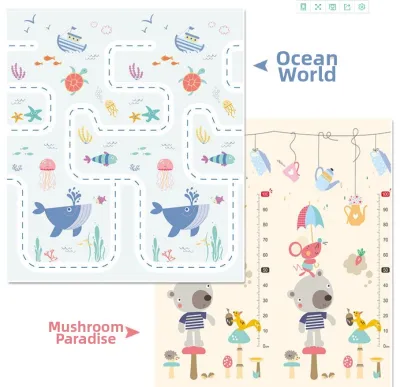
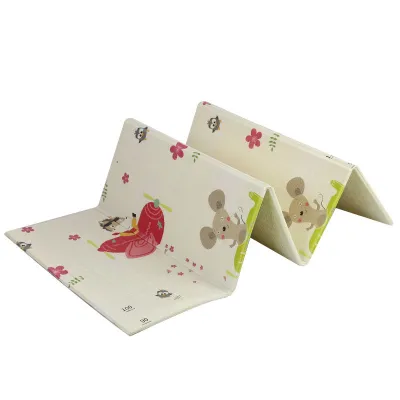
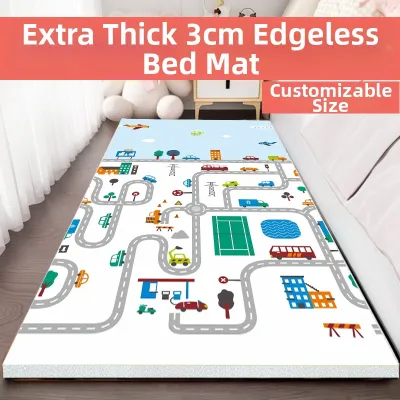
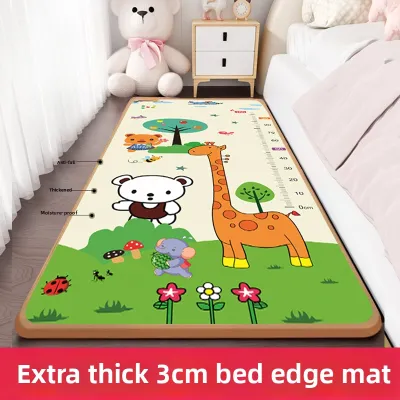
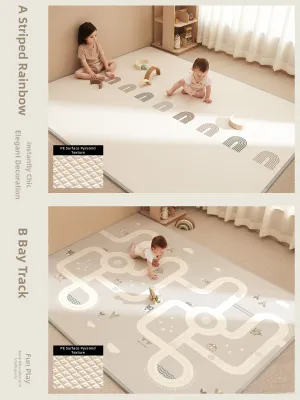
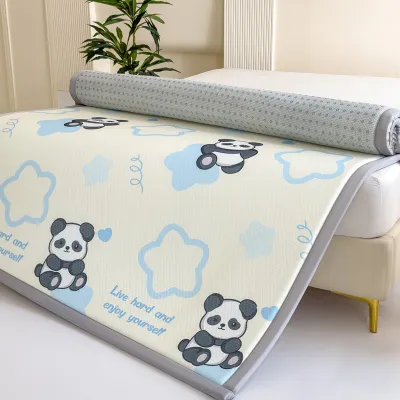
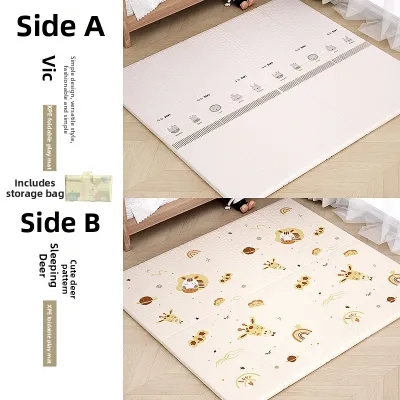
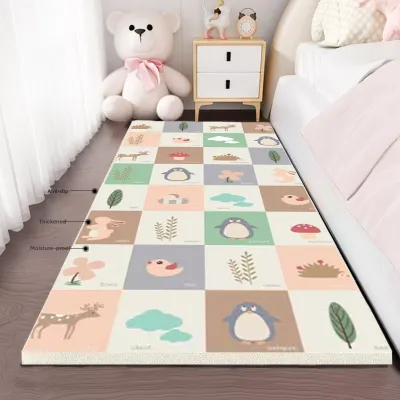
Prices are valid at publication and may change. Please refer to the product page for the latest price.
Portability Metrics The physical dimensions and weight of the mat are the most critical factors for travel. Look for brands that keep the total weight of their portable mats under 1.5 kilograms. The folded or rolled dimensions should be compact enough to fit within standard travel constraints. A high-quality travel mat should come with a dedicated, durable carry bag featuring ergonomic shoulder straps or secure handles, allowing you to carry it hands-free alongside your stroller and other baby gear.
Setup and Teardown Speed In transient environments like airport lounges, train stations, or temporary rest stops, you need a mat that can be deployed and packed away in seconds. If a mat requires complex assembly, inflating, or tedious folding patterns, it becomes a source of stress when managing a tired or fussy baby. Brands that design mats with intuitive accordion folds or quick-roll mechanisms allow you to establish a clean play area instantly and pack up just as rapidly when it is time to move.
Durability Under Stress Frequent folding, rolling, and packing put significant stress on a mat’s structure. Over time, cheap materials can crack along fold lines, seams can split, and outer protective layers can peel. When assessing a brand, examine the construction details. Look for reinforced hinges on foldable mats, heavy-duty edge bindings, and high-density foam cores that resist permanent creasing or flattening after being compressed in luggage.
Storage Footprint Consider where the mat will live during transit. A travel mat should easily slide into the undercarriage basket of a standard stroller, fit flat in the boot of a car, or meet the size limits for carry-on luggage if you plan to fly. Brands that offer ultra-slim profiles when folded or rolled allow you to maximize your packing space without sacrificing the cushioning your baby needs.
Comparing Portable Designs: Foldable vs. Roll-Up vs. Puzzle
Portable crawling mats generally fall into three design categories: foldable (accordion-style), roll-up, and interlocking puzzle tiles. Each design has distinct advantages and trade-offs depending on your travel style, mode of transit, and destination.

Foldable Mats (Accordion Style) Foldable mats are designed with pre-creased sections that fold back and forth like an accordion. This structure allows for incredibly fast setup and teardown, as the mat simply unfolds flat and folds back into a neat block. Because the creases are built into the design, these mats lie flat immediately without curling at the edges. They also provide a highly stable, uniform surface. However, their folded shape is rigid and boxy, which can make them bulkier to pack into standard suitcases or tight car spaces compared to more flexible designs.
Roll-Up Mats Roll-up mats are made from highly flexible materials that roll into a cylinder, often secured with straps or a carry sleeve. These mats are exceptionally compact and lightweight, making them easy to strap to the outside of a backpack or hang from a stroller handlebar. They offer a completely seamless surface with no creases to trap dirt. The primary limitation of roll-up mats is their tendency to curl at the edges when first unrolled, especially if they have been tightly packed for an extended period. They may require a few minutes or soft weights on the corners to lie completely flat.
Interlocking Puzzle Mats Puzzle mats consist of individual foam tiles that lock together like puzzle pieces. The main benefit of this design is customizable sizing; you can assemble only the number of tiles you need to fit a specific hotel room layout or odd-shaped space. If one tile becomes damaged or heavily soiled, you can replace or clean that single piece rather than the entire mat. However, puzzle mats are highly tedious to assemble and disassemble on the go. There is a high risk of losing individual tiles during transit, and the numerous interlocking seams can easily trap dust, liquids, and dirt, making them less hygienic for public spaces.
| Design Type | Setup Time | Packed Volume | Edge Stability | Cleaning Ease | Best Suited For |
|---|---|---|---|---|---|
| Foldable (Accordion) | Extremely fast (seconds) | Moderate (boxy block) | Excellent (lies flat instantly) | High (smooth surface, easy to wipe) | Hotel rooms, quick airport stopovers, and car travel |
| Roll-Up | Fast (requires unrolling) | Low (slender cylinder) | Moderate (edges may curl initially) | High (seamless surface, no crevices) | Stroller-bound day trips, outdoor parks, and light packing |
| Interlocking Puzzle | Slow (requires assembly) | Low to moderate (flat tiles) | High (once fully assembled) | Moderate (dirt can collect in seams) | Extended stays at a single destination or custom spaces |
Material and Safety Checks for Unknown Travel Surfaces
When traveling, you cannot control the cleanliness or safety of the floors your baby will play on. Hotel carpets may contain deep-seated dust, rental home floors might be treated with harsh cleaning chemicals, and outdoor surfaces present dampness and debris. Choosing the right material is essential for creating a safe, hygienic barrier.
Surface Materials For travel, prioritize wipe-clean surface materials over fabric-topped mats. Materials such as Thermoplastic Polyurethane (TPU) or high-quality Polyethylene (PE) coatings are ideal because they are completely waterproof and non-porous. If your baby spits up, spills milk, or drops food, you can easily sanitize the surface with a quick wipe. Fabric-topped mats, while soft, absorb liquids and dirt rapidly. They require machine washing and long drying times, which is highly impractical when you are moving between destinations or staying in accommodations without laundry facilities.
Base and Grip A crawling mat must remain stationary to keep your baby safe. Hotel rooms often feature polished hardwood, smooth tile, or slick stone floors. If a mat lacks a proper grip, it can slide when your baby attempts to push up, crawl, or stand, potentially leading to slips and falls. Look for brands that feature a textured, non-slip backing or high-friction patterns on the underside. This ensures the mat grips the floor securely, providing a stable foundation for your baby’s physical development.
Thickness and Cushioning When selecting a travel mat, you must balance impact absorption with packability. A mat that is too thin (under 0.5 centimeters) will not provide enough cushioning on hard tile or stone floors, leaving your baby vulnerable to bumps during inevitable tumbles. Conversely, a mat that is too thick (over 2 centimeters) is often too heavy and bulky to travel with. A thickness of approximately 1 to 1.5 centimeters is generally the optimal sweet spot for travel, offering sufficient shock absorption for developing joints while remaining easy to fold or roll.
Safety Verification Because safety standards and product formulations can vary, always physically inspect the product labels, manufacturer tags, and packaging of any crawling mat you purchase. Look for clear indications of the materials used and any age or weight recommendations. Never rely solely on online product descriptions, which may omit critical safety warnings or care instructions. Always supervise your baby during play, and if you notice any material degradation, such as peeling coatings or exposed foam, discontinue use immediately to prevent ingestion hazards.
How to Verify Brand Reliability and Safety Claims
The market is flooded with crawling mats claiming to be “non-toxic,” “eco-friendly,” and “completely safe.” As a parent, it is vital to know how to cut through marketing jargon and verify these claims independently to ensure your baby is not exposed to harmful chemicals or structural hazards.
Certifications and Labels Legitimate brands back their safety claims with recognized third-party certifications. When evaluating a brand, look for physical labels or official documentation indicating compliance with international safety standards. Common certifications include EN71 (European standard for toy safety), ASTM F963 (US standard for toy safety), or CPSIA (Consumer Product Safety Improvement Act). These standards test for the presence of heavy metals, phthalates, lead, and flame retardants. If a brand cannot provide proof of these certifications upon request, or if the physical product lacks safety labeling, it is best to consider alternative options.
Warranty and After-Sales Support Travel gear is subjected to much harsher conditions than items kept permanently at home. It is packed, unpacked, exposed to varying temperatures, and cleaned frequently. A reliable brand will offer a clear warranty and a robust return policy, demonstrating confidence in their product’s durability. Before purchasing, check the manufacturer’s website for their warranty terms and customer service contact information. A brand that provides responsive after-sales support is invaluable if you encounter a manufacturing defect or premature wear during your travels.
Analyzing User Feedback Customer reviews on online marketplaces and parenting forums can provide realistic insights into how a mat performs over time. When reading reviews, filter for specific travel-related keywords such as “durability,” “tearing,” “folding,” “weight,” or “odor.” Pay close attention to feedback from parents who have used the mat on multiple trips. Look for recurring complaints about seams splitting after a few weeks, the non-slip backing peeling off, or a persistent chemical smell that does not dissipate. A few isolated negative reviews are normal, but consistent patterns of structural failure are a clear warning sign.
Practical Packing and Maintenance Tips for Trips
Proper packing and maintenance are essential for extending the lifespan of your portable crawling mat and ensuring it remains a hygienic space for your baby throughout your journey.
Packing Strategies To maximize your luggage space, integrate your crawling mat strategically with your existing travel gear. If you are using a roll-up mat, utilize external compression straps or carabiners to secure the carry bag to the frame of your stroller or the side of your travel backpack. For foldable accordion-style mats, place them flat at the very bottom of your car’s boot or slide them vertically along the side of your suitcase to act as a protective buffer for other items. If space is extremely tight, a vacuum-storage bag or a tight compression sack can help minimize the volume of foam-based mats, though you should check the manufacturer’s guidelines to ensure prolonged compression will not permanently damage the foam structure.
On-the-Go Cleaning Maintaining hygiene while traveling requires a simple and efficient cleaning routine. After each use, especially in public spaces like airports or parks, wipe down the entire surface of the mat with baby-safe, alcohol-free sanitizing wipes or a clean cloth dampened with mild soap and water. Avoid using harsh chemical sprays, bleach, or abrasive scrubbing pads, as these can degrade the protective waterproof coating and damage the foam underneath. Allow the mat to air-dry completely before folding or rolling it back up, as trapping moisture inside a packed mat can lead to the growth of mold, mildew, and unpleasant odors.
Post-Trip Inspection Once you return home from your travels, take the time to perform a thorough inspection and deep clean of your crawling mat. Unroll or unfold the mat completely in a well-ventilated room. Check the seams, hinges, and edges for any signs of micro-tears, fraying, or separation. Inspect the non-slip backing to ensure it has not degraded or lost its grip. Clean the mat thoroughly according to the manufacturer’s care instructions, and ensure it is 100% dry before storing it in a cool, dry place away from direct sunlight, which can cause materials like PE and TPU to become brittle over time.
Frequently Asked Questions (FAQ)
Can I use a portable crawling mat outdoors on grass or sand?
Yes, many portable crawling mats can be used outdoors, but their suitability depends heavily on the material and the terrain. If you plan to use the mat on grass or sand, ensure it features a fully waterproof backing to prevent ground moisture or dampness from seeping through to your baby. Before laying the mat down, carefully inspect the ground and clear away any sharp objects, such as twigs, small stones, pine needles, or broken glass, which could easily puncture the foam or tear the outer protective layer. Always refer to the manufacturer’s guidelines, as some brands explicitly state whether their mats are rated for outdoor use or if they should be restricted to smooth, indoor surfaces to prevent premature wear.
How do I stop a roll-up mat from curling at the edges?
Edge curling is a common characteristic of roll-up mats, especially when they have been tightly rolled or stored for a long period. To safely flatten the edges without damaging the foam, try unrolling the mat in a warm room, as warmth helps the material become more pliable. You can place heavy, soft objects—such as large books, pillows, or folded blankets—on the curled corners for a few hours to encourage the mat to lie flat. Another effective method is to gently roll the mat in the opposite direction of the curl for a few seconds before laying it out. Never use excessive heat, such as a hair dryer or an iron, and avoid making sharp, forced creases, as these actions can permanently melt the foam, crack the protective outer coating, or void the manufacturer’s warranty.
Community discussion
Share your experience or ask a question. Comments are reviewed before publication.