
Protecting your little explorer from electrical hazards is a top priority when baby-proofing your home. In Singapore, where standard wall outlets are positioned at skirting-board level in many HDB flats and condominiums, these low-lying sockets present an immediate temptation for curious crawling babies and toddlers. Finding the best plug socket covers involves selecting options that fit the local Type G three-pin configuration, resist determined little fingers, and do not interfere with individual socket switches. The ideal solution depends on how frequently you use each outlet, whether the socket is hidden behind heavy furniture, and how easily you need to access the power source.
As babies grow, their desire to explore their surroundings increases exponentially. They naturally investigate objects at their eye level, which often includes electrical outlets. Because standard Singaporean wall sockets sit close to the floor, they are within easy reach of a crawling infant or a toddler learning to stand. Installing appropriate socket covers creates a reliable physical barrier, giving you peace of mind while your child explores their environment. However, these safety devices are meant to complement, not replace, active adult supervision and ongoing safety education.
Why Baby-Proofing Wall Sockets is Essential
The transition from a stationary infant to a highly mobile crawler or toddler happens rapidly. During this developmental stage, children learn by touching, grasping, and attempting to insert small objects into gaps and holes. This natural curiosity makes open electrical outlets a significant hazard in any household. Because babies lack an understanding of danger, an unprotected socket represents an open invitation for sensory exploration.
Products mentioned in this guide
Prices are valid at publication and may change. Please refer to the product page for the latest price.
In Singapore, residential electrical layouts in both older HDB estates and modern condominiums frequently place power points along the lower portion of walls, often just above the skirting boards. This low placement aligns perfectly with a baby’s eye level when they are sitting, crawling, or cruising along furniture. The slots of a standard Type G socket are large enough to attract the attention of a child holding a small toy, a hairpin, or a stray metallic object, making physical barriers an absolute necessity.
While modern home electrical systems are equipped with safety devices like Residual Current Devices (RCDs) designed to cut off power during a fault, these systems should be treated as secondary lines of defense. They do not prevent the initial contact or the potential shock before the breaker trips. Socket covers serve as the primary physical deterrent, preventing direct contact with live terminals in the first place.
It is crucial to remember that baby-proofing products are designed to buy parents valuable reaction time rather than provide an absolute guarantee of safety. A determined toddler can eventually learn how to bypass simple safety mechanisms through observation and repetition. Therefore, socket covers must always be paired with active supervision, keeping a watchful eye on your child’s play areas, and teaching them about electrical safety as they grow older.
Key Safety and Usability Features to Evaluate
When shopping for socket covers, it is easy to get overwhelmed by the variety of options available on online marketplaces. To make an informed decision, you must evaluate several critical safety and usability features. The first and most important consideration is choking hazard prevention. Many cheap, basic plug-in caps are small enough to fit entirely inside a child’s mouth. If a toddler manages to pry one of these caps loose, the safety device itself becomes a severe choking hazard. Look for covers that are either too large to be swallowed or feature a complex, dual-action release mechanism that requires adult strength and coordination to remove.

Material durability is another essential factor to assess. Babies often explore objects with their mouths, and a socket cover within reach may be subjected to biting, chewing, or pulling. Low-quality plastics can become brittle over time, especially in Singapore’s warm and humid climate. If a cover cracks or shatters, it can create sharp edges or small, detachable pieces that pose ingestion risks. Opt for covers made from high-quality, flame-retardant, and shatter-resistant plastics like ABS or heavy-duty polycarbonate.
Adult accessibility must be balanced with child security. If a socket cover is so difficult to remove that you need to use a tool every time you want to plug in a vacuum cleaner, you may find yourself leaving the socket uncovered out of frustration. The best designs allow an adult to remove or operate the cover with reasonable ease—perhaps using a specific twisting motion or a key-like tool—while remaining completely secure against a child’s pulling force.
Finally, you must consider switch interference. Unlike electrical outlets in some other countries, Singapore’s Type G sockets almost always feature individual on/off rocker switches. A poorly designed socket cover can press against these switches, accidentally turning an appliance on or off, or preventing the switch from sitting in its fully off position. Ensure that any cover you choose has sufficient clearance to accommodate these switches without compromising the safety seal or the operation of the outlet.
Types of Plug Socket Covers to Consider
Understanding the different designs of socket covers allows you to choose the right mechanism for each area of your home. No single type of cover is perfect for every situation; instead, a combination of different styles usually provides the best balance of safety and convenience. The right choice depends heavily on how often you need to access the outlet, where it is located, and whether it is obscured by furniture.
By categorizing your home’s outlets into high-use, low-use, and permanently blocked sockets, you can select the most appropriate cover type for each. This targeted approach ensures that your daily routine remains smooth while keeping your child safe from electrical hazards.
Sliding Socket Covers and Adhesive Plates
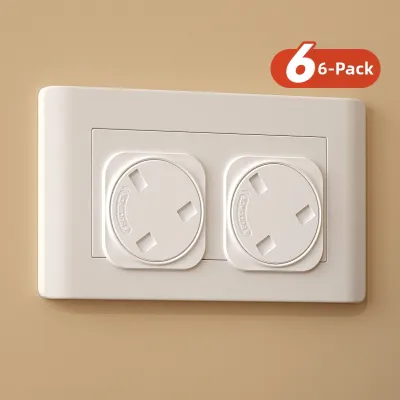
Adhesive full-plate covers and sliding socket covers offer a semi-permanent solution that is highly effective for frequently used outlets. These covers typically feature an adhesive backing that sticks directly over the existing faceplate. When you need to plug in an appliance, you slide or rotate the cover panel to align with the socket holes. Once you remove the plug, a built-in spring mechanism automatically slides the cover back into the closed position, ensuring the outlet is never left exposed by accident.
While adhesive plates are incredibly convenient, they do come with some limitations. The strength of the adhesive is critical; if the bond is weak, a toddler might be able to pull the entire plate off the wall. Conversely, high-strength adhesives can leave a stubborn residue or even damage painted walls, wallpaper, or plaster when you eventually remove them. It is wise to check the manufacturer’s instructions regarding surface compatibility before application.
For a more permanent and seamless look, some homeowners choose to replace their existing faceplates with built-in sliding socket covers. These integrated units do away with adhesives entirely, providing a clean aesthetic that matches modern home decor. However, because this involves working with active electrical wiring, you must hire a licensed electrical worker in Singapore to perform the installation safely and legally.
Traditional Plug-in Caps
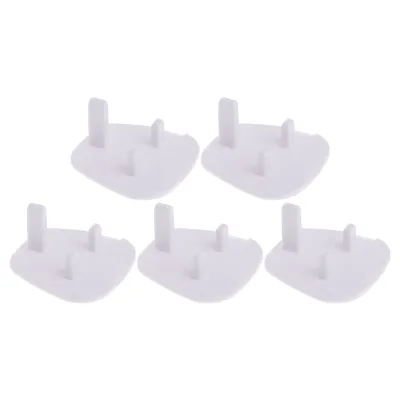
Traditional plug-in caps are individual plastic inserts that push directly into the three holes of a Type G socket. They are widely available, highly affordable, and simple to use. However, standard flat-faced caps can be notoriously difficult for adults to remove without using fingernails or a flat tool, which often leads to parents leaving them out after use. More importantly, if a child manages to pull a standard cap out, its small size makes it an immediate choking hazard.
To mitigate this risk, look for advanced plug-in caps that feature a recessed grip, a fold-out handle, or a dual-release mechanism. Some designs require you to insert a plastic “key” (often included in the pack) to unlock and pull the cap out, while others use a squeeze-and-pull design. These features make it much harder for a child to remove the cap while keeping it manageable for adults.
Because of the potential choking risk, traditional plug-in caps are best reserved for sockets that are permanently blocked by heavy, immovable furniture, such as wardrobes, large TV consoles, or heavy sideboards. In these locations, the furniture acts as the primary barrier, and the plug-in cap serves as an extra layer of protection in case a small toy falls behind the furniture and your child tries to reach for it.
Locking Enclosures and Full Box Covers
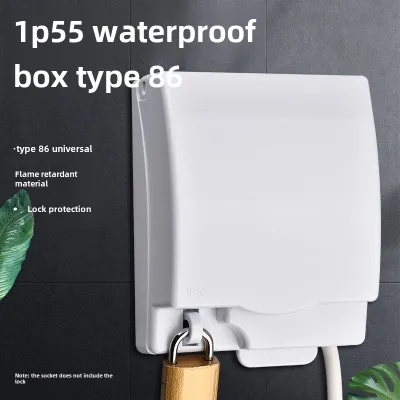
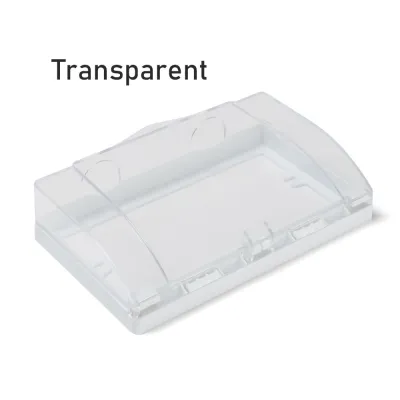
For outlets that must remain constantly in use—such as those powering air purifiers, fans, baby monitors, or essential medical equipment—locking enclosures or full box covers are the ideal choice. These devices enclose both the socket and the inserted plug in a protective plastic box. The box typically mounts over the faceplate and features a secure latch or lock that requires adult hand strength or a key to open, preventing babies from pulling out active plugs.
When selecting a full box cover, physical clearance is a major consideration. These enclosures are inherently bulky and protrude significantly from the wall. You must ensure there is enough space around the outlet, especially if it is located near a door frame, a corner, or behind a piece of furniture that you want to push close to the wall.
Additionally, ventilation is an important safety factor when using full box covers. Electrical plugs and adapters can generate heat during operation, particularly when powering high-wattage appliances. Look for box covers that feature ventilation slots or grilles to allow heat to dissipate safely, preventing the risk of overheating within the enclosed space.
Matching Covers to Singapore HDB and Condo Setups
To ensure the socket covers you purchase actually work in your home, you must consider the specific electrical standards and layouts common in Singapore. The most critical factor is compatibility with the standard 3-pin (Type G) socket. Many universal socket covers sold online are designed for US (Type A/B) or European (Type C/F) outlets. These will not fit Singaporean wall sockets. Always verify that the product description explicitly states compatibility with Type G or UK-style 3-pin sockets.
Multi-gang configurations are incredibly common in Singaporean homes, where you will often find double or triple socket faceplates side by side. Standard individual covers or bulky box enclosures can overlap, blocking adjacent sockets, switches, or built-in USB ports. If you have multi-gang outlets, look for slim-profile covers designed to sit flush side-by-side, or opt for larger double-socket box enclosures that cover the entire multi-gang unit at once.
Skirting boards and furniture clearance also play a significant role in product selection. In many HDB flats, sockets are installed directly above or even partially overlapping the wooden or tiled skirting boards. This low positioning means that bulky box covers or oversized adhesive plates may not have enough clearance at the bottom to sit flat against the wall. Measure the distance from the bottom of your socket faceplate to the floor or skirting board before buying to avoid compatibility issues.
Finally, pay close attention to how the cover interacts with switched sockets. In Singapore, almost all wall outlets have an individual rocker switch to control the power flow. Some socket covers are designed so tightly that they press down on these switches, turning them on unexpectedly. Ensure the cover you choose has a molded recess or sufficient internal clearance to allow the switches to remain in their desired position without interference.
Installation, Maintenance, and Safety Boundaries
Proper installation is key to ensuring your socket covers perform their job effectively. For adhesive-backed covers, surface preparation is critical. Dust, grease, and moisture can severely weaken the adhesive bond, allowing a child to pull the cover off easily. Before applying the adhesive, clean the socket faceplate thoroughly with a dry microfiber cloth or a small amount of isopropyl alcohol. Allow the surface to dry completely before firmly pressing the adhesive cover into place, and let the adhesive cure for the manufacturer’s recommended time (usually 24 hours) before subjecting it to use.
Regular maintenance is essential to keep your baby-proofing setup secure. Make it a habit to inspect all socket covers during your routine house cleaning. Check for visible cracks in the plastic, loose adhesive edges, or worn-out spring mechanisms on sliding covers. If a cover feels loose, shows signs of wear, or no longer snaps back into place automatically, replace it immediately to prevent it from becoming a hazard.
Knowing when to transition away from socket covers is just as important as knowing when to install them. As children grow, they develop the cognitive ability to understand verbal warnings and the actual dangers of electricity. Generally, by the time a child reaches three to four years of age, they can often figure out how to bypass simple socket covers. At this stage, relying solely on physical barriers can create a false sense of security. Focus on consistent safety education, explaining why outlets are dangerous and establishing strict rules about not touching electrical appliances without adult help.
Lastly, always recognize the boundaries of DIY baby-proofing. If you encounter any damaged wall sockets, loose wiring, or cracked faceplates during your baby-proofing process, do not attempt to cover them up with plastic caps. Exposed or damaged wiring is a severe fire and shock hazard that requires immediate professional attention. Always consult a licensed electrical worker in Singapore to repair or replace damaged electrical components to ensure your home remains safe for your entire family.
Frequently Asked Questions (FAQ)
Are traditional plug-in caps a choking hazard?
Yes, traditional flat-faced plug-in caps can become a choking hazard if a child manages to pry them out of the socket. Because these caps are small and lightweight, they easily fit into a baby’s mouth. To minimize this risk, avoid using cheap, basic flat caps on exposed, easily accessible outlets. Instead, choose advanced caps that require a specialized key or a dual-action squeeze mechanism to remove, or reserve standard plug-in caps exclusively for sockets that are completely hidden behind heavy, immovable furniture.
Do I need to cover sockets hidden behind heavy furniture?
While sockets hidden behind heavy furniture are generally out of a baby’s immediate reach, it is still highly recommended to cover them as a precautionary measure. Babies are remarkably persistent and can sometimes squeeze into tight gaps, or drop small toys behind furniture and attempt to reach for them. For these hidden outlets, low-profile plug-in caps are an excellent choice. They provide an extra layer of safety without preventing your heavy wardrobes, TV consoles, or sideboards from sitting flush against the wall.
Community discussion
Share your experience or ask a question. Comments are reviewed before publication.