
Caring for a newborn’s delicate features requires specialized tools designed specifically for infant anatomy. When it comes to maintaining ear hygiene, standard adult cotton buds pose significant risks to a baby’s tiny, developing ear structures. Choosing the right ear swabs pigeon offers can make a substantial difference in safety and comfort, allowing parents to gently clean the visible outer areas of the ear without causing accidental harm. By understanding the unique physical attributes of each variant, caregivers can confidently select the most appropriate tool for their child’s developmental stage.
Infant skin is exceptionally thin and highly sensitive, meaning that rough materials or improper cleaning techniques can easily cause irritation or micro-abrasions. Pigeon has developed a range of specialized baby cotton swabs featuring different tip shapes and sizes to address these specific needs. By matching the correct swab design to your baby’s age and earwax type, you can ensure a safe, gentle, and effective grooming routine that protects your little one’s hearing and skin health.
Why Specialized Tip Shapes Matter for Baby Ear Safety
Pediatricians and ear specialists maintain a strict consensus regarding infant ear care: the ear canal is a self-cleaning mechanism. The natural movement of the baby’s jaw during feeding, crying, and babbling gradually coaxes old earwax from the inner canal to the outer ear. Consequently, caregivers should never insert a cotton swab, finger, or any other object into a baby’s ear canal. Doing so disrupts this natural migration process and poses severe risks to the infant’s delicate auditory system.
Products mentioned in this guide
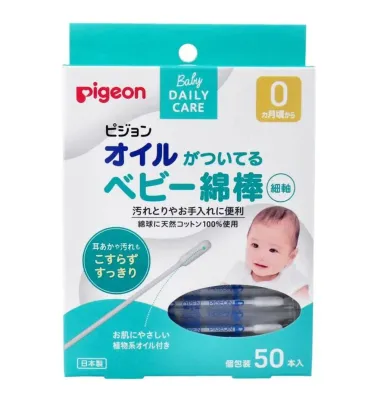
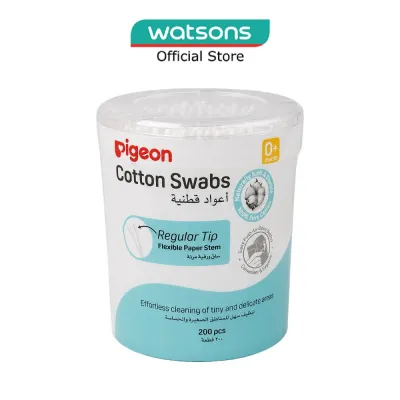
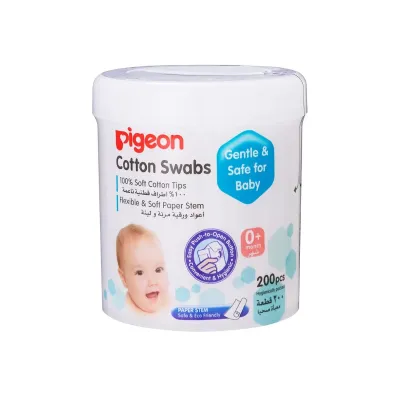
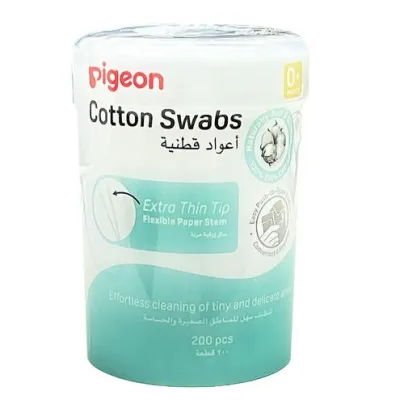
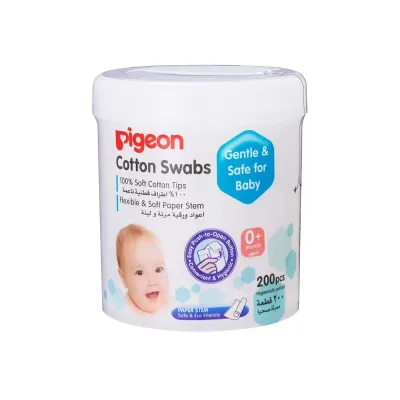
Prices are valid at publication and may change. Please refer to the product page for the latest price.
Using standard adult cotton swabs on infants is highly unsafe due to their physical dimensions and structure. Adult swabs feature thick, loosely wound cotton heads and long, flexible shafts that are difficult to control in a tiny ear. If inserted into an infant’s narrow ear canal, these oversized swabs act like a plunger, compacting the wax and pushing it deeper against the eardrum. This compaction can lead to painful blockages, temporary hearing muffling, infections, or even direct physical trauma to the delicate tympanic membrane.
To mitigate these risks, Pigeon’s design philosophy for baby grooming prioritizes safety, control, and physical limitation. Their specialized baby swabs are engineered with shorter, sturdier paper stems that minimize the risk of accidental deep insertion if the baby suddenly wiggles. The cotton tips are exceptionally compact, tightly wound to prevent stray fibers from shedding, and scaled down to fit the micro-dimensions of an infant’s outer ear folds. These safety-focused features ensure that cleaning is strictly limited to the visible outer ear areas, such as the pinna and concha.
Before incorporating any grooming tool into your baby’s routine, it is essential to verify the age recommendations, usage instructions, and safety warnings printed on the specific product packaging. Because product specifications and safety standards can vary, always defer to the manufacturer’s official documentation and consult your pediatrician if you have any doubts about your baby’s ear development or hygiene needs.
Pigeon Ear Swab Variants Explained: Spiral, Spoon, and Round
Pigeon offers several distinct ear swab designs, each engineered to address a specific mechanical task based on the physical properties of infant earwax and skin. Understanding how these shapes function allows parents to choose the right tool for routine maintenance, moisture absorption, or targeted wax removal.

Spiral Tip: Best for Routine Dry Wax Removal
The spiral tip variant features a series of parallel, recessed grooves running horizontally around the cotton head, creating a textured surface. This physical design is engineered to act as a micro-channel system. When the swab is gently rolled across the flat surfaces and crevices of the outer ear, the raised ridges dislodge loose debris while the grooves capture and lift the flakes away from the skin, preventing them from being smeared flat.
This variant is particularly well-suited for routine maintenance in older infants who have transitioned to solid foods, as their earwax often naturally becomes drier and more flaky. The spiral shape provides an efficient way to clear away dry flakes that collect in the outer ear crevices without requiring repetitive wiping, which can irritate sensitive skin. It offers a highly targeted cleaning action that keeps the outer ear clean and comfortable.
However, the spiral tip has physical limitations. It is not designed to handle wet, sticky, or oily earwax, which can quickly fill the grooves and smear across the skin rather than lifting away cleanly. Additionally, despite its specialized shape, the spiral tip must strictly be used on the visible outer parts of the ear and never introduced into the ear canal opening.
Spoon-Shaped Tip: Best for Lifting Stubborn Outer Wax
The spoon-shaped tip is a unique design where the cotton bud is compressed into a flat, slightly curved scoop structure. This shape mimics the traditional ear pick used in many Asian cultures but is wrapped in soft, medical-grade cotton to ensure it remains gentle on infant skin. It provides a physical edge that can slide under slightly hardened or stubborn wax deposits that cling to the flat surfaces of the outer ear.
This variant is ideal for lifting away individual pieces of dried wax that have settled in the deep folds of the outer concha or along the back of the earlobe. Instead of rubbing the skin to dislodge the wax, the flat scoop allows parents to gently get underneath the deposit and lift it off the skin in a single, clean motion. This minimizes friction and reduces the risk of skin chafing.
When using the spoon-shaped tip, parents must apply a gentle, outward-sweeping motion, moving from the inside of the outer ear flap toward the outer rim. Never apply downward pressure or attempt to scrape the skin, as infant skin is incredibly thin and susceptible to micro-tears. If a piece of wax does not lift easily, or if your baby shows any signs of resistance or discomfort, stop immediately and leave the area alone.
Round Tips (Thick and Thin): Best for Newborns and Multi-Use
Pigeon’s classic round-tip swabs are available in two distinct sizes: thin (often designated as ultra-thin) and thick. Both variants feature a symmetrical, highly absorbent cotton bulb. However, their physical dimensions make them suitable for entirely different stages of development and grooming tasks.
Thin round tips are engineered specifically for newborns from birth to approximately three months of age. The cotton head is exceptionally small, making it the perfect size for navigating the tiny, intricate folds of a newborn’s outer ear without applying pressure. In humid climates like Singapore, babies frequently accumulate sweat and post-bath moisture in the crevices behind and around the outer ear. The thin round tip is highly effective for gently dabbing away this moisture, preventing dampness-induced skin irritation.
Thick round tips are designed for older infants with larger outer ear structures. The larger cotton bulb provides superior absorbency, making it the ideal choice for drying the outer ear after baths or swimming sessions. While highly effective at absorbing liquid, round tips have a uniform surface that can easily push wax deeper if pushed directly into an opening. Caregivers must strictly adhere to the outer-ear-only rule and avoid placing the round tip near the entrance of the ear canal.
Selecting the Right Ear Swabs Pigeon Offers by Age and Earwax Type
Choosing the most effective variant of ear swabs pigeon manufactures requires evaluating your baby’s age, physical development, and genetic earwax consistency. Earwax characteristics are largely hereditary, with some infants producing dry, light-colored flakes, while others produce sticky, golden-brown, or wet wax. As your baby grows, the outer ear canal naturally widens, and the folds of the outer ear become more defined, altering which tip shape is most practical.
To help you make an informed decision, the following table outlines the primary applications, suitable developmental stages, and ideal earwax types for each Pigeon variant:
| Tip Variant | Best Suited For (Age/Stage) | Ideal Earwax Type | Primary Use Case |
|---|---|---|---|
| Thin Round Tip | Newborns (0–3 months) | Wet moisture or sweat | Drying post-bath outer ear folds and umbilical cord care |
| Thick Round Tip | Older infants (3+ months) | Wet moisture or bathwater | Absorbing excess water from the outer ear after bathing |
| Spiral Tip | Infants (6+ months) | Dry, flaky, or loose wax | Routine cleaning of loose flakes in the outer ear crevices |
| Spoon-Shaped Tip | Infants (6+ months) | Stubborn, slightly hard wax | Lifting stuck wax deposits from the outer ear concha |
While this framework serves as a reliable guide, individual baby anatomy and earwax patterns vary significantly. Always check the manufacturer’s age guidelines and safety instructions on the packaging before use. If you notice an unusual accumulation of wax or are unsure about your baby’s ear development, consult your pediatrician for personalized advice.
Safe Outer-Ear Cleaning Steps and Warning Signs
To maintain excellent ear hygiene while prioritizing your baby’s safety, follow a structured, low-risk cleaning routine. Implementing these careful steps ensures that you only clean the areas that require attention without risking damage to the delicate internal structures of the ear.
- Step 1: Proper Preparation
Always wash your hands thoroughly with soap and water before handling any baby grooming tools. Ensure your baby is in a calm, relaxed state; attempting to clean the ears of a crying or squirming baby increases the risk of sudden movements and accidental injury. A highly practical time to perform outer-ear cleaning is during or immediately after a warm bath, as the ambient steam and warm water naturally soften any wax deposits on the outer ear, making them easier to wipe away. Securely support your baby's head on a flat, stable surface, or have another caregiver assist in keeping the baby still. - Step 2: Gentle Execution
Gently hold the outer ear flap (pinna) with one hand to smooth out the skin folds. Using your chosen Pigeon swab, gently wipe only the visible outer crevices of the ear, moving from the center outward. Never insert the swab into the ear canal opening. A helpful safety guideline is the "pinky finger rule": if you cannot safely reach or see the area using your own clean pinky finger wrapped in a soft, damp washcloth, do not attempt to clean it with a cotton swab. - Step 3: Recognize Hard Boundaries
Earwax is a natural defense mechanism that protects the ear canal from dust, bacteria, and water. It does not need to be completely eradicated. If you observe wax inside the ear canal, leave it alone. Never use over-the-counter ear drops, olive oil, baby oil, or home remedies to soften infant earwax unless you have received explicit medical instructions and supervision from a pediatrician.
Parents must monitor their baby’s ears for signs of infection or irritation. Stop using cotton swabs immediately and consult a pediatrician or family doctor if you observe any of the following warning signs:
- Foul-smelling discharge or fluid draining from the ear canal
- Yellow, green, or bloody discharge
- Redness, swelling, or warmth around the outer ear or behind the earlobe
- The baby constantly pulling, rubbing, or scratching at their ears
- Signs of hearing discomfort, such as not responding to sudden sounds or localized voices
- Unexplained fussiness or crying during feeding, as the physical action of sucking can increase middle ear pressure and exacerbate pain
Frequently Asked Questions (FAQ)
Can I use Pigeon ear swabs to clean my newborn's belly button?
Thin round-tip Pigeon cotton swabs are highly suitable for cleaning the outer areas of a newborn’s healing umbilical cord stump. The ultra-thin cotton head allows for precise cleaning around the base of the cord without applying unnecessary pressure. However, always inspect the specific product packaging to verify that the swabs are labeled for multi-purpose or navel use. When performing cord care, follow the specific cleaning instructions provided by your discharge hospital or pediatrician, and ensure the area is kept completely dry afterward to promote healing.
How often should I clean my baby's ears with a swab?
There is no strict daily or weekly schedule for cleaning a baby’s ears. Ear cleaning should only be performed on an as-needed basis when you observe visible wax or moisture on the outer ear folds. Over-cleaning can strip the skin of its natural protective oils, cause irritation, and paradoxically stimulate the ear glands to produce even more wax. For most babies, gently wiping the outer ear with a damp washcloth during regular baths is sufficient, reserving specialized swabs for occasional precise cleaning.
What should I do if my baby has hard, impacted earwax?
If you suspect your baby has hard or impacted earwax deep inside the ear canal, do not attempt to remove it yourself with any swab variant, including the spoon-shaped tip. Inserting any object into the canal will likely push the blockage deeper, compounding the impaction and increasing the risk of eardrum injury. Leave the ear alone and schedule an appointment with your pediatrician or an ear, nose, and throat (ENT) specialist. They have specialized light sources, otoscopes, and safe micro-instruments to safely examine and clear the ear canal if medically necessary.
Community discussion
Share your experience or ask a question. Comments are reviewed before publication.