
Selecting the right Mushie bib depends entirely on your baby’s current developmental milestone and feeding method. While a soft bandana bib is ideal for managing drool and spit-up during the early teething months, transitioning to solid foods requires a more robust barrier. For early spoon-feeding and purees, a silicone catcher bib offers a waterproof shield with a built-in pocket to capture stray drops. Once your child enters the baby-led weaning stage or begins feeding themselves independently, a long-sleeve smock provides the comprehensive coverage necessary to protect their clothing from multi-directional food messes.
Choosing the right bib is not just about age; it is about matching the design, material, and coverage to the specific type of mess your baby makes. Using the wrong bib can lead to unnecessary laundry, skin irritation from trapped moisture, or restricted movement that disrupts the learning process of eating. Understanding how your baby’s physical development and feeding style interact with these different designs is the key to a stress-free mealtime. In Singapore, where retail prices for these quality feeding accessories typically range from S$15 to S$30, selecting the correct type ensures you get the best value and utility from your purchase.
Match the Bib to the Milestone: Drooling, Purees, and Self-Feeding
A baby’s relationship with food changes rapidly over their first two years, and their protective gear must evolve alongside their motor skills. In the first few months of life, a baby’s primary challenges are spit-up and the heavy drool associated with early teething. During this pre-solids phase, the goal is comfort, skin protection, and high absorbency rather than catching solid food particles. The baby is frequently lying down or reclining, meaning any bib used must be soft, non-restrictive, and highly breathable to prevent moisture from sitting against their delicate neck skin.
Products mentioned in this guide
Prices are valid at publication and may change. Please refer to the product page for the latest price.
Around the six-month mark, most infants begin their transition to solid foods, starting with smooth purees or mashed ingredients. At this stage, babies are typically seated upright in a high chair but still lack the coordination to feed themselves. Food is delivered via a spoon by a caregiver, resulting in drips, dribbles, and the occasional direct spit-out of unfamiliar textures. The ideal bib for this milestone must be completely waterproof to prevent wet purees from soaking through to the clothing, and it should feature a physical barrier to catch gravity-bound spills before they land in the baby’s lap.
As babies approach nine to twelve months, their desire for independence grows, often leading parents to adopt baby-led weaning or self-feeding practices. This milestone is characterized by fine motor skill development, such as the pincer grasp, and a high volume of sensory exploration. Food is smeared, dropped, thrown, and rubbed into hair and clothing. The mess is no longer localized to the front of the chest; it extends down the arms, onto the thighs, and across the high chair tray. To support this messy but crucial learning phase, parents require maximum physical coverage that shields the entire upper body without hindering the baby’s range of motion.
Evaluating these developmental shifts highlights why a single, one-size-fits-all bib strategy rarely succeeds. A heavy silicone bib is impractical for a three-month-old drooling infant, while a fabric bandana bib will quickly become saturated and stained during a self-feeding pasta session. By aligning the bib’s physical properties—such as absorbency, waterproof barriers, and structural coverage—with your baby’s current feeding milestone, you can minimize clean-up time and keep your baby comfortable.
Mushie Bandana Bibs: Best for Drooling and Early Teething
Mushie bandana bibs are specifically engineered to address the continuous moisture associated with the pre-solids and teething phases. Typically constructed with a dual-layer system, these bibs feature an organic cotton front layer designed to quickly absorb saliva and spit-up, paired with a soft polyester fleece backing. This combination ensures that wetness is pulled away from the baby’s skin and trapped within the core of the bib, preventing the dampness from transferring onto the baby’s chest and causing painful drool rashes.

The aesthetic and physical design of the bandana bib makes it highly suitable for daily, long-term wear outside of structured mealtimes. Its gathered fabric sits closely under the chin, creating an effective barrier that catches drool immediately as it leaves the mouth. The adjustable snap closures located at the back of the neck allow caregivers to customize the fit as the baby grows, ensuring the neck opening remains snug enough to catch moisture but loose enough to prevent chafing or restriction. Because these bibs look like a natural accessory, they can be worn comfortably throughout the day during floor play, stroller walks, and naps under close supervision.
Despite their excellent absorbency, bandana bibs have clear limitations when it comes to solid food introduction. Because they are made of woven fabric, they lack a waterproof laminate layer, meaning highly liquid purees or oils can eventually soak through if left unchanged. Furthermore, they do not feature a catch pocket, so any solid food that falls from the baby’s mouth will slide directly onto their lap or the high chair harness. Using a bandana bib during a solid feeding session often results in stained fabric that requires intensive laundering, making them a poor choice for anything beyond milk and drool.
Before putting a bandana bib on your baby, perform a few quick safety and comfort checks. Gently tug on the metal or plastic snaps to ensure they are securely fastened to the fabric and do not show signs of loosening, which could present a minor choking hazard. Slide two fingers easily between the bib’s neckline and your baby’s skin to verify that the fit is comfortable and does not restrict breathing or swallowing. Additionally, regularly inspect your baby’s neck area for any signs of redness or chafing, especially during warm afternoons in Singapore, as trapped sweat combined with fabric friction can irritate sensitive skin.
Mushie Silicone Catcher Bibs: Best for Starting Solids and Purees
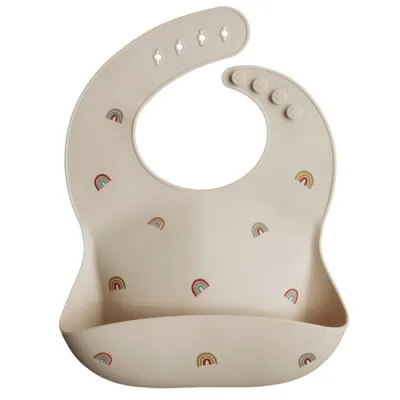
When your baby transitions to purees and early finger foods, the Mushie silicone catcher bib becomes an indispensable tool in your feeding toolkit. Made from food-grade silicone, these bibs are completely waterproof, stain-resistant, and hydrophobic, meaning liquids and oils cannot penetrate the surface. The standout feature of this design is the deep, molded front pocket that projects outward from the chest. This pocket uses the natural gravity of falling food to capture drips, run-off purees, and dropped finger foods, keeping them off your baby’s lap and the high chair tray.
The structural integrity of food-grade silicone allows the bib to maintain its shape during use while remaining flexible enough to conform comfortably to the baby’s chest. Unlike fabric alternatives, clean-up for a silicone bib requires minimal effort; it can be wiped clean with a damp cloth at the table or washed in the sink with warm soapy water immediately after a meal. The adjustable neck strap features a series of built-in buttons and reinforced buttonholes, allowing you to fine-tune the neck opening to sit flush against the collarbone, preventing food from slipping down the collar.
However, silicone catcher bibs do have specific limitations that caregivers should consider. For very small or younger infants who are just starting solids at six months, the weight and stiffness of a solid silicone bib can occasionally feel bulky or distracting, causing them to pull at the neck strap. Additionally, if the baby leans forward significantly against the edge of the high chair tray, the molded catch pocket can be compressed and folded inward, temporarily closing the pocket and allowing food to bypass the barrier.
To get the best performance out of a silicone catcher bib, ensure you adjust the neck strap so the bib hangs naturally and flat against the baby’s chest without pulling upward. Before the meal begins, inspect the catch pocket to confirm it is fully popped open and free of any folds. Always verify the product packaging or manufacturer’s documentation to confirm the material is free from harmful chemical additives such as BPA, PVC, and phthalates. Finally, make sure the neck fastener is adjusted to leave a comfortable gap, allowing the baby to swallow and turn their head without resistance.
Mushie Long-Sleeve Smocks: Best for Messy Eaters and Baby-Led Weaning
For the ultimate protection during baby-led weaning and self-feeding milestones, the Mushie long-sleeve smock offers unmatched physical coverage. Designed to resemble a lightweight jacket worn backward, the smock covers the baby’s entire torso, shoulders, and arms, ending in elasticated wrists that keep sleeves from dragging through food. This design is particularly effective for babies who love to explore food texturally, as it prevents purees, sauces, and yogurt from coating their arms and staining their clothing cuffs.
The material used in these smocks is typically a lightweight, water-resistant polyester or polyurethane laminate (PUL) that acts as a barrier against both wet and dry messes. Despite providing full coverage, the fabric is thin and flexible, ensuring that the baby’s arm movements are not restricted as they reach for their cup or spoon. Many smocks also feature a wide, shallow pocket at the waist to catch falling crumbs, offering a secondary line of defense for the lap area. This makes the smock an excellent multi-purpose garment that transitions smoothly from messy meal times to sensory play and finger-painting activities.
While highly protective, long-sleeve smocks do carry practical trade-offs. Putting a smock on an active, hungry baby can require more effort and patience than simply snapping on a bib, especially if the baby resists having their arms guided through sleeves. Additionally, because the material covers a large surface area of the body, it can trap body heat. In Singapore’s warm and humid tropical climate, a full-coverage synthetic smock can quickly become uncomfortably warm if worn in a room without active air conditioning or fan circulation.
To ensure your baby remains comfortable and safe, check that the neck closure—which often uses hook-and-loop fasteners or soft ties—is adjusted so that it does not rub against the sensitive skin under the chin or back of the neck. Verify that the elastic cuffs at the wrists are snug enough to block food but loose enough that they do not leave red compression marks on the baby’s skin. If you are dining in a warm environment, consider dressing your baby in just a diaper or a light cotton onesie underneath the smock to prevent overheating during their mealtime explorations.
Quick Comparison: Which Mushie Bib Fits Your Baby Right Now?
Choosing the right bib involves balancing protection, ease of cleaning, and your baby’s physical comfort. The table below outlines how each Mushie bib type performs across key operational categories to help you make an efficient decision based on your daily routine.
| Bib Type | Best Feeding Stage | Key Feature | Cleanup Effort | Climate Comfort |
|---|---|---|---|---|
| Bandana Bib | Teething, drooling, and milk feeding (0–6 months) | Absorbent organic cotton front with soft fleece backing | Medium (requires machine washing and air drying) | High (breathable cotton fabric, ideal for humid weather) |
| Silicone Catcher | Starting purees and spoon-feeding (6–12 months) | Deep, molded front pocket to catch falling food | Low (wipe clean or wash in sink with mild soap) | Medium (waterproof silicone does not breathe, but minimal body coverage) |
| Long-Sleeve Smock | Baby-led weaning and self-feeding (9+ months) | Full torso and arm coverage with elasticated wrists | Medium (wipeable outer layer, occasional machine washing) | Low to Medium (can trap heat; best used in air-conditioned spaces) |
As your baby transitions between developmental milestones, their feeding patterns will shift, often within the course of a single day. For instance, a nine-month-old may need a simple silicone bib for a quick morning puree, a long-sleeve smock for a messy self-fed pasta lunch, and a bandana bib for the rest of the day to manage teething drool. To minimize stress and keep laundry manageable, many parents find it highly practical to maintain a small, diverse collection of at least two different bib types on hand to match whatever meal or milestone arises.
Care and Maintenance Tips for Mushie Bibs
Proper care and maintenance are essential to keep your baby’s bibs hygienic, safe, and durable over months of daily use. For silicone catcher bibs, the cleaning process is exceptionally straightforward. After each meal, empty any trapped food from the pocket and wipe the surface down with a damp cloth or rinse it under running water. For greasy residues, use a small amount of mild, fragrance-free dish soap. While many silicone bibs are technically top-rack dishwasher safe, always verify the specific care instructions on your product’s packaging; frequent high-heat dishwasher cycles can occasionally degrade the flexibility of the silicone or fade printed designs over time.
Bandana bibs require regular laundering to prevent bacteria from growing in the damp cotton fibers. To preserve the softness of the organic cotton and prevent shrinkage, machine wash these bibs on a cold, gentle cycle with a mild, baby-safe detergent. Avoid using harsh chemical bleaches or fabric softeners, which can coat the fibers and reduce their natural absorbency. Given Singapore’s high relative humidity, fabric bibs can take longer to dry, creating an environment where mold or mildew can develop. Always hang bandana bibs in a well-ventilated area or dry them on a low-heat dryer setting, ensuring they are completely dry before storing them in a drawer.
Long-sleeve smocks should be cared for based on their specific material composition. For minor spills, a quick wipe with a damp cloth or sponge immediately after use is often sufficient to keep the outer water-resistant layer clean. When a deeper clean is necessary, hand wash or machine wash the smock on a cold cycle according to the manufacturer’s care label. Avoid high-heat drying or ironing, as extreme heat can damage the waterproof polyurethane coating or melt synthetic fibers. Hang the smock to air dry in a well-ventilated space, ensuring the sleeves are fully extended to allow airflow to reach the interior.
Regardless of the bib type you use, safety should always remain your top priority. Conduct regular physical inspections of each bib before fastening it around your baby’s neck. Check silicone bibs for any signs of tearing, particularly around the adjustable buttonholes, as small tears can expand and make the strap unstable. Examine fabric bandana bibs for loose threads, fraying edges, or weakening snap fasteners that could snap off and present a choking hazard. If you notice any structural damage, material degradation, or persistent mold spots that cannot be cleaned, discontinue use immediately and replace the bib to ensure your baby’s safety.
Frequently Asked Questions (FAQ)
Are Mushie silicone bibs safe for newborns?
Silicone bibs are generally not recommended or safe for newborns. Newborn infants lack the head and neck control required to support the weight of a structured, food-grade silicone bib comfortably. Additionally, because newborns are fed exclusively on breast milk or formula while reclining or semi-reclining, a stiff silicone bib with a molded pocket is physically impractical and can press uncomfortably against their chest or throat. Caregivers should strictly follow the manufacturer’s age and weight guidelines, which typically recommend silicone catcher bibs for infants aged six months and older who can sit upright independently. For newborns, soft, lightweight fabric bibs or simple burp cloths are the safest and most comfortable options for managing milk drips and spit-up.
How do I keep the silicone bib catch pocket open?
To ensure the molded pocket of your silicone bib stays open to catch falling food, start by adjusting the neck strap so the bib hangs naturally and sits flat against your baby’s chest. If the neck strap is fastened too tightly, it can pull the sides of the bib taut, causing the pocket to flatten and close. Next, ensure your baby is seated in an upright, ergonomically correct position in their high chair; if they are slouching forward, their abdomen can compress the pocket shut. Before the meal begins, you can also gently slide your fingers inside the pocket to manually flare it outward, restoring its molded shape. If the bib has been stored folded or rolled up in a diaper bag, let it sit flat for a few minutes before use so the silicone can regain its natural structure.
Can I use a bandana bib for baby-led weaning?
Using a bandana bib for baby-led weaning is highly discouraged because it does not provide adequate protection against the heavy, wet, and oily messes characteristic of self-feeding. Bandana bibs are designed for absorbing light liquids like drool and milk; they lack a waterproof barrier and do not feature a catch pocket. During baby-led weaning, babies actively handle food, resulting in large pieces of food dropping onto their laps and liquids soaking directly through fabric bibs onto their clothing. This not only leads to stubborn food stains but can also cause skin irritation if wet, acidic food sits against your baby’s chest. For baby-led weaning, it is highly recommended to transition to a silicone catcher bib or a full-coverage long-sleeve smock to keep your baby clean, dry, and comfortable.
Community discussion
Share your experience or ask a question. Comments are reviewed before publication.