
Finding the right kids ear cleaner depends entirely on your child’s developmental stage, their cooperation level, and the type of earwax they produce. While infants only require a gentle wipe of the outer ear with a damp cloth, older toddlers and school-aged children may benefit from specialized tools like soft silicone spirals, gentle suction devices, or visual camera cleaners. The safest approach is always the least invasive one, prioritizing physical safety guards and soft materials that protect the delicate ear canal.
Why Children's Ear Cleaning Requires Extra Care
Many parents feel an instinctive urge to clear out any visible earwax, but pediatric ear care requires a highly cautious approach. Earwax, scientifically known as cerumen, is not dirt. It is a natural, self-cleaning agent produced by the body to protect, lubricate, and clean the ear canal. It acts as a physical barrier, trapping dust, hair, and foreign particles while its slightly acidic composition helps inhibit bacterial growth. Under normal circumstances, old earwax naturally migrates from the inside of the ear canal to the outer ear opening, where it dries and falls out during regular bathing and jaw movements.
Using traditional cotton swabs or Q-tips inside a child’s ear canal poses significant health risks. Because a child’s ear canal is short, narrow, and highly sensitive, a cotton swab acts like a plunger, pushing the wax deeper and packing it tightly against the eardrum. This can lead to painful earwax impaction, temporary hearing loss, and a higher risk of infection. In worse cases, a sudden movement from a wiggly child can cause the swab to puncture the delicate tympanic membrane (eardrum), leading to severe pain and potential long-term hearing damage.
Products mentioned in this guide
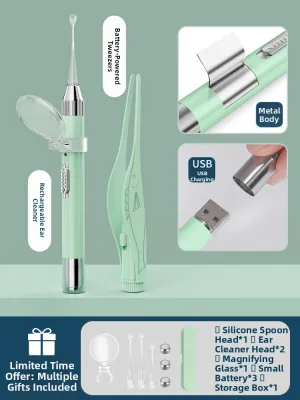
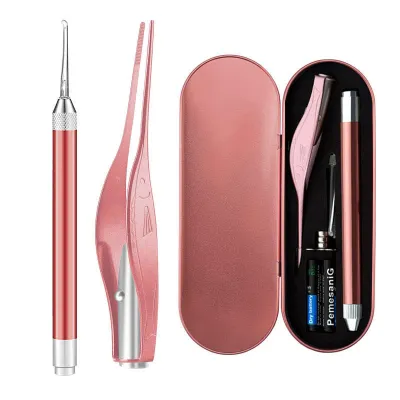


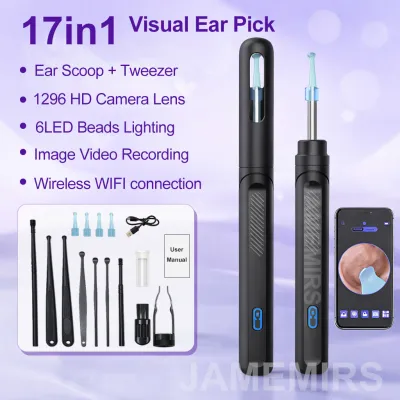
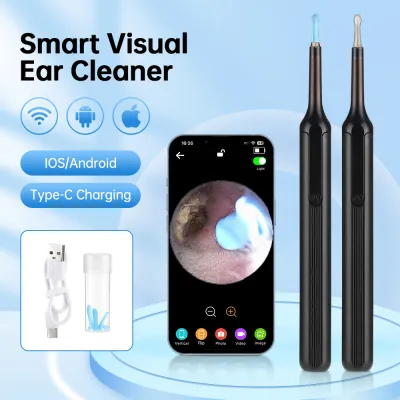
Prices are valid at publication and may change. Please refer to the product page for the latest price.
Cleaning should only be performed when there is a clear, observable need, such as visible wax accumulation on the outermost part of the ear shell, or when a child complains of discomfort or shows signs of muffled hearing. If the wax remains deep inside the canal, it should be left entirely alone. The absolute golden rule of pediatric ear care is to never insert any object, regardless of how soft or specialized it claims to be, deep into your child’s ear canal.
Comparing the Main Types of Kids Ear Cleaners
Modern baby care brands have developed several alternatives to traditional cotton swabs, each aiming to address the challenge of safe wax management. These tools generally fall into three distinct design categories: manual spiral or scoop cleaners, motorized suction devices, and high-tech visual camera cleaners. Understanding how these mechanisms function, along with their inherent limitations, is key to choosing a tool that minimizes the risk of injury while effectively managing buildup.

Manual silicone spiral cleaners generally sit in the budget-friendly range of S$5 to S$15, while motorized suction devices usually cost between S$15 to S$30. High-definition visual camera cleaners are a larger investment, typically ranging from S$30 to S$80 depending on the application features and tip accessories included.
Spiral and Scoop Cleaners
Manual spiral and scoop cleaners are designed to pull earwax outward rather than pushing it inward. These tools typically feature a handle with a detachable, threaded tip made of soft, flexible silicone. When inserted gently into the outer portion of the ear canal and rotated in the direction indicated by the manufacturer, the spiral grooves catch the wax and lift it out. Many of these tools are designed with built-in safety guards—widened collars or stoppers on the handle—that physically prevent the tip from being inserted too deeply.
While spiral cleaners are highly effective for soft or sticky wax, they have clear limitations. They are generally unsuitable for infants because even the smallest silicone tips can be too wide for an infant’s tiny ear canal. Additionally, if a child has dry, hard, or heavily impacted wax, a manual spiral tool may fail to grip the debris and could cause discomfort or minor skin abrasions if rotated with too much pressure.
Suction and Vacuum Cleaners
Motorized suction or vacuum cleaners use a gentle, low-powered motorized pump to draw loose wax and moisture out of the ear. These devices usually come with soft, elastic silicone tips designed to fit comfortably at the entrance of the ear canal. They are particularly popular for removing water and softened wax after swimming or bath time, helping to keep the ear dry and reducing the risk of swimmer’s ear.
In Singapore’s humid tropical climate, children spend a lot of time in swimming pools to cool off. This frequent water exposure can soften earwax or trap moisture in the canal, making a gentle suction device a highly practical tool for local families. However, the motorized nature of these devices introduces unique challenges, most notably the noise factor. The humming sound of a miniature vacuum engine right next to the eardrum can be loud and highly startling for babies and toddlers. Parents must often spend time desensitizing their child to the sound before attempting to use the device. Furthermore, while highly effective for liquid, wet, or flaky wax, these gentle vacuums lack the suction power required to dislodge stubborn, dry, or hardened wax blockages.
Visual and Camera Ear Cleaners
Visual and camera ear cleaners represent the high-tech end of the grooming market, pairing an ultra-thin probe with a tiny, high-definition camera and LED lights. These devices connect wirelessly to a smartphone or tablet app, displaying a real-time, magnified view of the ear canal. This allows parents to see exactly where the wax is located and guide the soft cleaning tip safely, avoiding blind scraping.
Despite their clear advantages in visibility, visual cleaners carry a steep learning curve and notable risks of user error. The image on the screen is often mirrored or subject to minor latency (delay), which can confuse the parent’s hand movements and lead to accidental scrapes. The high-definition view can also create a false sense of confidence, tempting parents to probe deeper than is safe. For these reasons, visual cleaners are strictly recommended only for older, cooperative children who can sit perfectly still and communicate immediately if they feel any discomfort.
How to Match the Ear Cleaner to Your Child's Age and Condition
A child’s developmental stage determines not only the physical size of their ear canal but also their ability to remain still during a grooming session. Matching the right tool to their age group is essential for preventing accidental injury.
Infants (0-12 months) For babies under one year old, the safest ear cleaning routine involves no internal tools whatsoever. An infant’s ear canal is incredibly short, and the eardrum sits very close to the surface. Parents should restrict cleaning entirely to the outer ear (the pinna) and the skin behind the ear. Use a clean, damp, warm washcloth or a soft cotton round to gently wipe away any wax that has naturally migrated to the outside. Never attempt to insert spirals, vacuums, or cameras into an infant’s ear, as their sudden, involuntary startle reflexes make the risk of eardrum damage exceptionally high.
Toddlers (1-3 years) Toddlers are notoriously wiggly, making ear cleaning a high-stakes task. If your toddler has visible, soft wax buildup that is causing discomfort, prioritize manual tools equipped with strict, non-adjustable depth guards and ultra-soft silicone tips. The cleaning process must be quick and non-invasive. Motorized suction devices can be useful if your toddler is comfortable with the noise, but manual spiral cleaners with a wide safety collar are often easier to control during sudden head movements. Avoid any tool that requires precise, slow manipulation, as toddlers rarely tolerate staying still for more than a few seconds.
School-Aged Kids (4+ years) As children reach preschool and school age, they develop the cognitive ability to follow instructions, understand the importance of staying still, and verbally express what they feel. This is the stage where visual camera cleaners and gentle manual spirals become viable options. Parents can explain the process to the child beforehand, perhaps showing them the camera view on a screen to demystify the experience. However, even with an older child, dynamic supervision is required, and the tool should never be handed over to the child for self-use.
Special Conditions If your child has tympanostomy tubes (ear tubes), a history of perforated eardrums, active ear infections, or skin conditions like eczema or psoriasis inside the ear canal, you must exercise extreme caution. In these scenarios, never use any home ear cleaning tools or over-the-counter ear drops without explicit clearance from your pediatrician or an ear, nose, and throat (ENT) specialist. The presence of ear tubes or a compromised eardrum means any foreign object or liquid introduced into the canal can directly enter the middle ear, causing severe pain, infection, or permanent damage.
Essential Safety Features to Verify Before Buying
When shopping for a kids ear cleaner on local online marketplaces or baby specialty stores, you should look past marketing claims and carefully evaluate the physical design of the product. Always cross-reference the packaging with these essential safety benchmarks:
- Depth Stoppers and Safety Guards: A reliable kids ear cleaner must feature a physical barrier—such as a wide plastic collar, disk, or a flared handle design—that physically prevents the tip from entering the ear canal beyond a safe depth (typically no more than 5 to 8 millimeters for young children). Adjustable guards are less ideal than fixed, molded guards, as adjustable parts can slip under pressure.
- Tip Material and Flexibility: The cleaning tips must be made of high-quality, medical-grade silicone or extremely flexible, soft elastomer. Avoid any tools that use hard plastic, metal, or rough wooden tips, as these can easily scratch the highly vascularized, delicate skin of the ear canal, leading to painful outer ear infections (otitis externa). Ensure the tips are securely attached to the handle so they cannot detach and become lodged inside the ear.
- Ergonomic, Non-Slip Grip: The handle of the tool should be ergonomically designed with a textured, rubberized, or non-slip grip. If your hands slip while holding the tool, or if the child bumps your arm, a secure grip helps you maintain control and quickly pull the tool away safely.
- Hygiene and Maintenance: Look for tools that feature detachable, easily washable tips or come with single-use disposable tips. If using reusable silicone tips, verify that they can be safely sanitized with warm, soapy water or isopropyl alcohol according to the manufacturer's care instructions. Bacterial buildup on a poorly cleaned ear tool can easily introduce harmful pathogens into your child's ear during the next use.
Always check the manufacturer’s packaging for explicit age ratings, weight limits, and usage instructions. Never assume a product is safe for a baby simply because it is marketed as a “baby grooming” accessory.
Safe Home Practices and When to See a Doctor
Even the safest tool can cause harm if used incorrectly. Before beginning, ensure the environment is calm and free of distractions. Position your child securely; for younger children, having them lie down with their head flat on your lap, or having a second adult gently hold their shoulders and head, is the safest way to prevent sudden movements. Visually inspect the ear under bright, direct light before inserting any tool to make sure you can see what you are doing.
During the cleaning process, use incredibly gentle, slow movements. Never force a tool into the canal if you meet resistance. If your child flinches, cries out, or expresses any discomfort, stop immediately.
Parents must recognize the limits of home care and know when to seek professional medical intervention. Watch for the following warning signs:
- Foul-smelling odor or yellow, green, or bloody fluid discharging from the ear.
- Persistent pulling, tugging, or rubbing of the ear (especially in non-verbal toddlers).
- Swelling, redness, or warmth around the outer ear or mastoid bone behind the ear.
- Complaints of ear pain, dizziness, ringing (tinnitus), or noticeable hearing loss.
- Dark, hard, or completely impacted wax that fills the entire canal and cannot be easily reached at the entrance.
If you observe any of these symptoms, do not attempt to clear the ear at home. In Singapore, you should consult your family pediatrician, visit a local polyclinic, or schedule an appointment with an ENT specialist. These professionals have specialized otoscopes, gentle micro-suction machines, and professional irrigation tools to safely diagnose and resolve ear issues without risking injury to your child’s hearing.
Frequently Asked Questions (FAQ)
Can I use an adult visual ear cleaner on my child?
No, you should not use adult visual ear cleaners on children. Adult devices are designed with wider probe diameters and longer tips tailored to adult ear anatomy, which can easily scrape or puncture a child’s much smaller and shorter ear canal. Additionally, adult camera tools may lack the physical depth guards and ultra-soft, flexible silicone tips required to protect a child’s delicate skin from accidental injury during sudden movements.
How often should I clean my child's ears?
Routine internal ear cleaning is rarely necessary because healthy ears are self-cleaning. For most children, simply wiping the outer ear with a damp washcloth during their regular bath time is more than enough to maintain excellent hygiene. Unless your child has a medical condition that causes excessive wax production—which should be managed under a pediatrician’s guidance—you should avoid using internal cleaning tools more than once every few weeks, and only when visible wax is present at the very opening of the ear canal.
Community discussion
Share your experience or ask a question. Comments are reviewed before publication.