
Managing a nursery in Singapore comes with unique environmental challenges, chief among them being the tropical climate. With average daily temperatures hovering around 31°C and relative humidity levels frequently exceeding 80%, the ambient conditions in local homes act as a natural incubator for microbial activity. When organic waste, such as a wet or soiled diaper, is discarded, bacteria immediately begin breaking down urea and other organic compounds. This process releases ammonia and volatile organic compounds (VOCs) at an accelerated rate compared to cooler, drier climates.
In a standard kitchen bin or a basic bathroom trash can, these gases quickly escape into the surrounding air every time the lid is opened. Furthermore, standard utility bins are typically constructed from single-layer, porous plastics that absorb odor molecules over time, rendering the container itself a source of lingering smells. A dedicated diaper bin is engineered specifically to address these issues. By utilizing specialized mechanical seals, airtight rubber gaskets, and multi-layered barrier films, these specialized disposal systems isolate waste from the nursery atmosphere, maintaining a hygienic and fresh indoor environment.
Modern Singapore apartments, such as high-rise HDB flats and condominiums, are often designed with compact layouts and closed-air circulation systems, particularly when air conditioning is running. In these confined spaces, a poorly sealed bin can compromise the air quality of the entire home within hours. Investing in an effective odor-blocking system is not merely a matter of convenience; it is a practical necessity for maintaining a pleasant, hygienic living space for your family.
Products mentioned in this guide
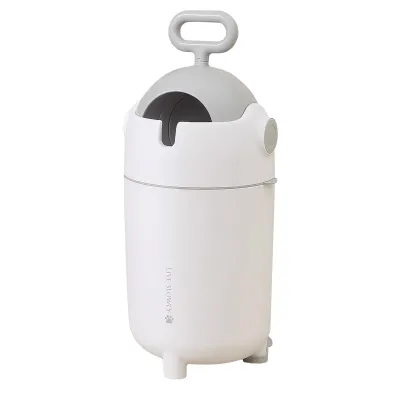
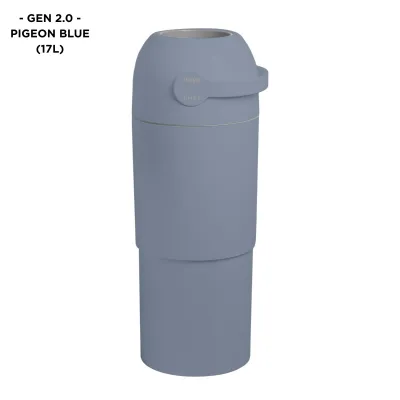
Prices are valid at publication and may change. Please refer to the product page for the latest price.
Key Features to Look for in an Odor-Blocking Diaper Bin
Selecting the right diaper disposal system requires an understanding of the mechanical and material features that prevent odor transmission. Parents must balance upfront costs, ongoing maintenance, and spatial constraints to find a model that fits their daily routine.
Sealing Mechanism and Gaskets
The primary line of defense against escaping odors is the physical seal of the bin. High-quality models employ heavy-duty silicone or rubber gaskets along the lid’s rim to create an airtight compression seal when closed. Additionally, look for double-lid or trap-door systems. These designs ensure that when you open the outer lid to drop a diaper in, an inner valve or spring-loaded trap door remains closed, preventing the escape of stale air from the main compartment.
Material Composition
Plastic is inherently porous at a microscopic level. Over months of exposure to organic waste, standard polypropylene bins can absorb odor molecules, making them difficult to deodorize even after thorough washing. Steel bins, while carrying a higher upfront cost, are completely non-porous. They do not absorb odors and are highly resistant to chemical degradation from cleaning agents, making them an excellent long-term investment for families planning to have multiple children.
Bag and Refill Systems
Diaper bins generally fall into two categories: those requiring proprietary refill cassettes and those compatible with standard household trash bags. Proprietary refills utilize continuous, multi-layer plastic tubing (often containing five to seven layers of barrier film) that is exceptionally effective at trapping odor molecules. However, these refills represent an ongoing financial commitment in Singapore dollars (SGD) and require you to monitor local stock levels. Bins that accept standard trash bags offer significant long-term savings and convenience, though they rely entirely on the bin’s physical seals to contain odors.
Capacity and Physical Footprint
Because floor space in Singapore nurseries is often limited, the bin’s physical footprint is a critical consideration. A tall, slim design maximizes vertical storage while occupying minimal floor space, fitting easily between a changing table and a wardrobe. You must also balance capacity against emptying frequency. A bin that holds 30 to 40 diapers reduces trips to the rubbish chute but means waste sits in the home longer, demanding superior sealing performance.
Ergonomics and Child Safety
When managing a diaper change, you will often have only one hand free while keeping the other safely on your baby. Bins with foot-pedal mechanisms or one-handed push-and-drop designs offer superior ergonomics. Furthermore, as babies grow into curious toddlers, safety locks become essential. Ensure the bin you select features a childproof latch to prevent inquisitive hands from accessing the soiled contents inside.
| Feature | Design Type | Primary Benefit | Best Suited For |
|---|---|---|---|
| Double-Lid Seal | Mechanical Air-Lock | Prevents dirty air from escaping during disposal | Open-concept nurseries and sensitive noses |
| Rubber Gaskets | Airtight Compression | Continuous seal when the bin is closed | Humid environments prone to rapid odor buildup |
| Steel Body | Non-Porous Construction | Does not absorb odors over years of use | Long-term durability and multi-child families |
| Foot Pedal | Hands-Free Lever | Hygienic, hands-free operation while holding baby | Busy caregivers prioritizing convenience |
| Proprietary Liners | Multi-Layer Barrier Film | Maximum odor and bacteria isolation | Parents seeking absolute odor containment |
Top Diaper Bin Picks for Effective Odor Sealing
To help you find the right match for your nursery, we have analyzed the top-performing diaper bins available through local specialty baby retailers, official brand stores, and major online marketplaces in Singapore.

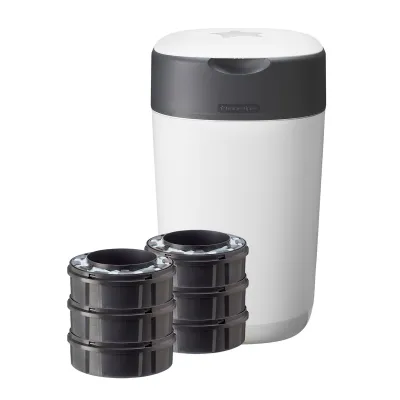
Tommee Tippee Twist & Click (Best Overall for Maximum Odor Containment)
The Tommee Tippee Twist & Click system is widely regarded for its advanced engineering, which individually wraps each diaper to seal away odors and germs. When you drop a diaper into the mechanism and turn the dial, the bin twists the liner, wrapping the soiled diaper in a multi-layer, anti-bacterial film. This action physically isolates each unit of waste, ensuring that no odor can escape even when the main lid is opened for the next disposal.
- Odor-Control Mechanism: Individually wraps each diaper in a greenfilm barrier that blocks odors and kills 99% of harmful germs on contact.
- Ideal User: Parents who prioritize absolute hygiene and want to guarantee zero odor leakage in a small nursery.
- Limitations: High ongoing cost for proprietary refill cassettes; requires manual turning of the dial for each diaper, which is not fully hands-free.
- Singapore Availability: Easily sourced at official brand stores, major local mother-and-baby specialty shops, and reputable e-commerce platforms.
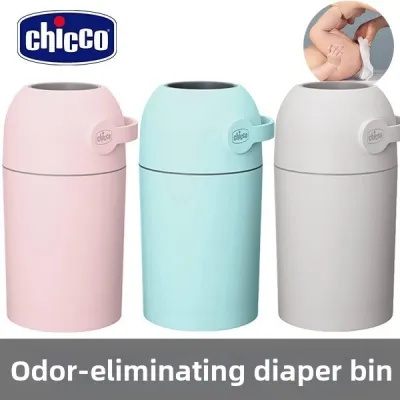
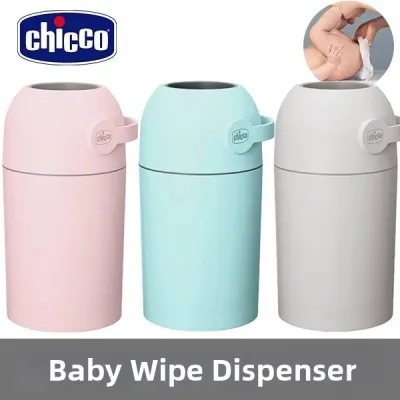
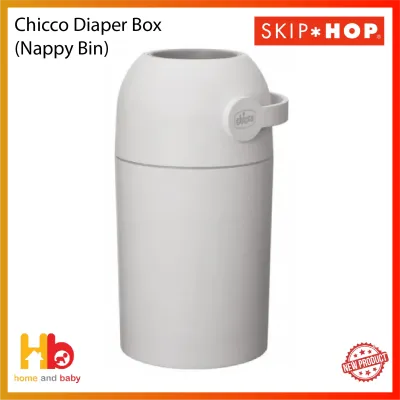
Chicco Odour-Off Diaper Bin (Best Budget-Friendly Option Using Regular Trash Bags)
The Chicco Odour-Off offers an innovative mechanical solution that completely eliminates the need for expensive proprietary refills. It features a patented drop-and-reverse handle system. You place the diaper into the top cup, flip the handle forward, and the internal cylinder rotates 180 degrees to drop the diaper into the bag below. This clever design ensures that the internal compartment is never directly exposed to the open room.
- Odor-Control Mechanism: A rotating mechanical cylinder paired with airtight rubber seals that prevent dirty air from escaping during the drop-in process.
- Ideal User: Cost-conscious families looking for a highly effective odor barrier without the recurring expense of specialized refills.
- Limitations: Constructed from plastic, which requires regular deep cleaning to prevent long-term odor absorption; smaller capacity compared to larger models.
- Singapore Availability: Widely stocked by major local baby retailers and authorized online distributors.
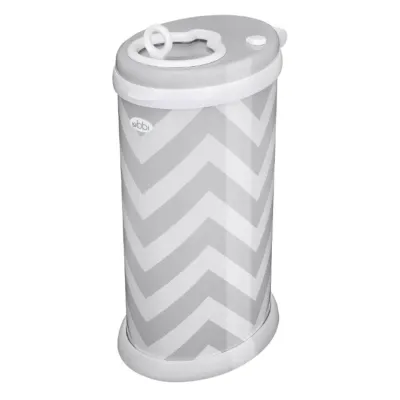
Ubbi Steel Diaper Pail (Best Compact Design for Small Nurseries)
For nurseries where space is at a premium, the Ubbi Steel Diaper Pail offers a sleek, space-saving footprint without compromising on odor control. Unlike most diaper bins made of plastic, the Ubbi is constructed from powder-coated steel. This material choice is highly effective at blocking odors because steel is completely non-porous, meaning odor molecules cannot penetrate or cling to the walls of the pail over time.
- Odor-Control Mechanism: Non-porous steel body combined with heavy-duty rubber gaskets and a sliding lid that minimizes air disruption when opened.
- Ideal User: Families living in compact HDB apartments who want a durable, space-saving bin that uses standard household trash bags.
- Limitations: Higher upfront purchase price; sliding lid must be opened manually; condensation can occasionally build up inside the steel body during extremely humid days.
- Singapore Availability: Available at premium baby boutiques and major online marketplaces across Singapore.
Korbell Diaper Disposal System (Best Hands-Free or Step-On Model)
The Korbell Diaper Disposal System is designed with caregiver convenience in mind, utilizing a robust foot pedal for completely hands-free operation. When you step on the pedal, the outer lid opens, and a spring-loaded trap door yields to let the diaper drop through before immediately snapping shut. This double-sealing mechanism ensures that odors remain trapped inside the bin while your hands remain free to supervise your baby.
- Odor-Control Mechanism: Foot-pedal activation paired with a spring-loaded double-trap door and lightly scented, continuous biodegradable liners.
- Ideal User: Caregivers who prioritize hands-free convenience, hygiene, and child safety during diaper changes.
- Limitations: Relies on proprietary continuous liners that must be purchased regularly; the light scent of the liners may not appeal to parents sensitive to fragrances.
- Singapore Availability: Readily available at local baby specialty stores and authorized online retailers.
Proprietary Refill Cassettes vs. Standard Trash Bags
When choosing a diaper bin, one of the most significant long-term decisions you will make is whether to opt for a system that uses proprietary refill cassettes or one that accommodates standard trash bags. Both systems have distinct operational and financial trade-offs that impact your daily routine and household budget.
Proprietary refill systems, such as continuous plastic liners or cassette cartridges, are engineered specifically for odor barrier performance. These liners are typically manufactured from multi-layered plastics, such as ethylene vinyl alcohol (EVOH) copolymers, which are highly impermeable to gases. This means that even if a soiled diaper sits in the bin for several days, the odor molecules cannot easily permeate through the plastic film. The continuous bag design also allows you to cut and tie the bag at any point, minimizing plastic waste when emptying. However, these cassettes can be costly, often ranging from S$10 to S$15 per cartridge in Singapore, which can add up to hundreds of dollars over your child’s diapering years. Parents must also ensure a reliable local supply chain to avoid running out of liners.
Conversely, bins that utilize standard trash bags offer unmatched convenience and cost savings. You can use any standard plastic bag, including biodegradable utility bags or grocery bags, which are highly accessible and inexpensive. This eliminates any recurring specialty costs and ensures you are never left without a liner. The trade-off lies in the odor barrier performance of the bag itself. Standard garbage bags are typically made of single-layer polyethylene, which is relatively porous to microscopic gas molecules. Consequently, these systems rely entirely on the physical seals and gaskets of the bin itself to contain smells. If the bin’s rubber seals degrade or if the lid is left slightly ajar, odors will escape much faster than they would from a proprietary barrier film.
Ultimately, parents must decide whether they prefer the guaranteed, high-performance odor containment of multi-layer proprietary films or the long-term financial savings and simplicity of standard trash bags. If you choose a standard bag system, look for a bin with a highly robust physical sealing mechanism, such as a steel body with heavy-duty silicone gaskets, to compensate for the simpler bag material.
Daily Maintenance Tips to Prevent Lingering Odors
Even the most advanced diaper bin requires regular maintenance to remain completely odor-free, especially under Singapore’s warm and humid conditions. Implementing a simple, non-invasive cleaning routine will extend the lifespan of your bin and ensure your nursery remains a fresh, pleasant space.
First, establish a regular deep-cleaning schedule. Every time you empty the bin completely, take a few minutes to wipe down both the interior and exterior surfaces. Use a soft cloth dampened with mild dish soap and warm water. Avoid harsh chemical solvents, bleach, or abrasive scrubbing pads, as these can degrade the rubber gaskets, scratch plastic surfaces, or strip the protective powder coating off steel bins. Always consult the manufacturer’s care instructions before applying any cleaning solutions to ensure you do not void the warranty.
Second, manage moisture levels inside the bin. High humidity accelerates the breakdown of organic matter, leading to rapid odor development. To combat this, ensure the interior of the bin is completely dry after cleaning before inserting a new liner. You can also place an odor-absorbing medium at the very bottom of the bin, underneath the bag. A small sachet of activated charcoal or a sprinkle of baking soda works exceptionally well to absorb both residual moisture and volatile organic compounds that may escape from the bag.
Finally, pay close attention to where you place the bin in your nursery. Keep the diaper bin out of direct sunlight, away from unshaded windows, balcony doors, or heat-emitting appliances. Direct sunlight heats up the bin, causing the air inside to expand and forcing odor-laden air past the rubber seals. High heat also accelerates the decomposition of waste and can cause plastic materials to degrade and warp over time, compromising the airtight seals. By keeping the bin in a cool, shaded corner with adequate ventilation, you can significantly reduce the rate of odor generation.
Frequently Asked Questions (FAQ)
How often should I empty a diaper bin in a humid climate?
In Singapore’s hot and humid climate, you should aim to empty your diaper bin every 2 to 3 days, even if it has not reached full capacity. Leaving soiled diapers in a warm, sealed environment for longer periods promotes rapid bacterial growth and mold formation, leading to severe ammonia buildup. Once your baby transitions to solid foods, the waste will produce significantly stronger odors, and you may find it necessary to empty the bin daily or every other day to maintain fresh air in the nursery.
Can I use scented trash bags in a diaper bin?
While scented trash bags are widely available, they are generally not recommended as a primary solution for diaper odor control. Scented bags merely mask odors temporarily with artificial fragrances, which can combine with diaper smells to create an unpleasant, cloying scent. Furthermore, strong artificial fragrances in a closed nursery can sometimes trigger respiratory or skin sensitivities in infants. It is far more effective to rely on a bin with a high-quality physical seal, regular emptying, and natural odor absorbers like activated charcoal.
Community discussion
Share your experience or ask a question. Comments are reviewed before publication.