
Selecting the right baby changing station is one of the most practical decisions you will make when preparing your nursery. In Singapore, where home layouts range from spacious landed properties to compact HDB apartments, the ideal choice depends heavily on your available space, budget, and long-term storage needs. Reputable global brands like Stokke and Leander offer premium, ergonomic designs that protect your back and grow with your child, while sustainable brands like Troll and Boori provide robust solid wood structures built for longevity. For parents seeking space-saving efficiency, accessible brands like IKEA offer highly functional, compact designs that fit seamlessly into tighter layouts. To narrow down your options, you must evaluate brands based on their safety certifications, material durability, and the reliability of their local after-sales support.
How to Evaluate Changing Station Brands for Safety and Durability
Before comparing specific brands, it is essential to establish a clear framework for evaluating safety, materials, and long-term durability. A baby changing station is a piece of furniture your child will use multiple times a day for the first two years of their life, making structural integrity and chemical safety non-negotiable.
Safety Certifications and Standards The most reliable indicator of a changing station’s safety is its compliance with recognized international safety standards. Look for brands that explicitly state compliance with the European standard EN 12221 or the American ASTM F2388 standard. These certifications guarantee that the furniture has undergone rigorous mechanical testing, including dynamic load tests to ensure the changing surface can support a child’s weight without sagging, and stability tests to prevent the unit from tipping over if a child leans on the outer edge. They also mandate minimum heights for the protective side barriers to prevent accidental falls. While Singapore does not have a single local standard exclusively for changing tables, Enterprise Singapore monitors consumer product safety, and choosing brands certified to European or American standards ensures your nursery meets global safety benchmarks.
Products mentioned in this guide
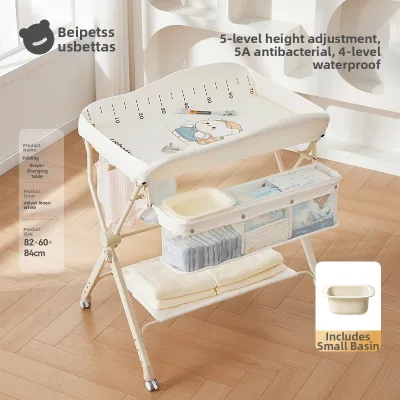
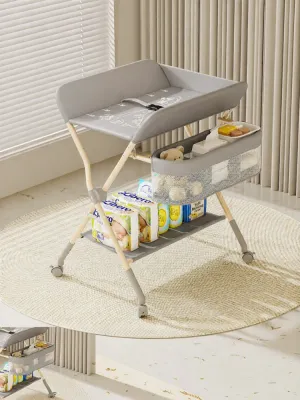
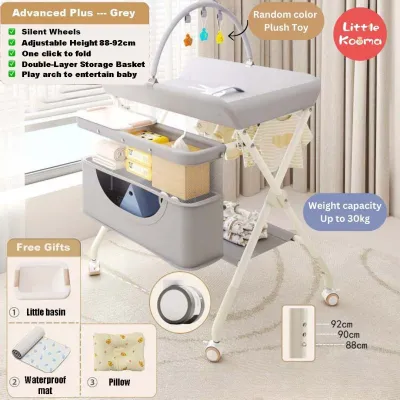
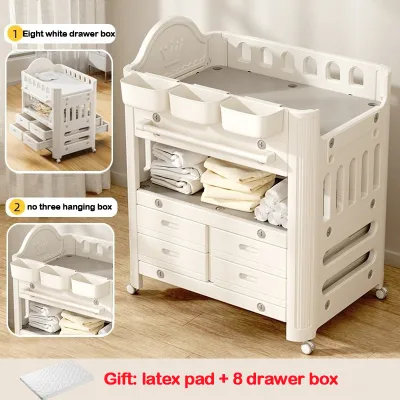
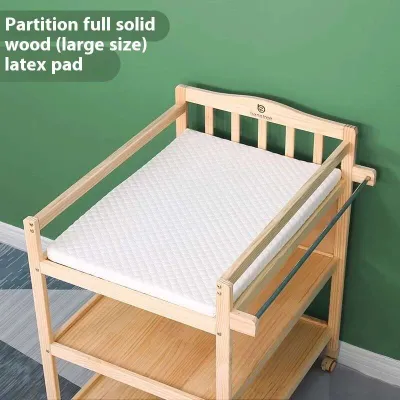
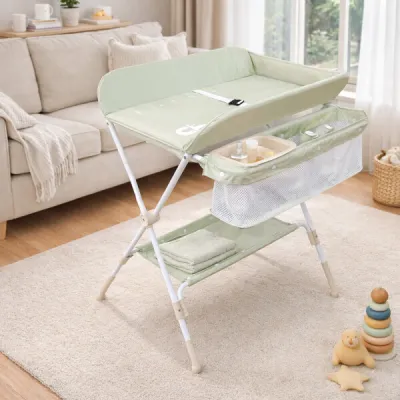
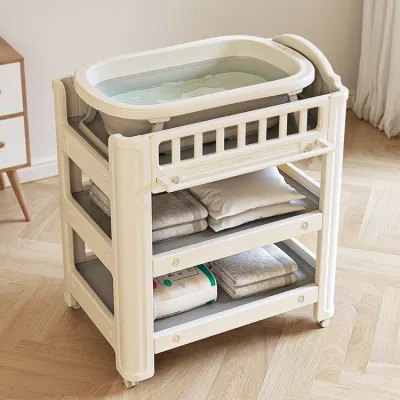
Prices are valid at publication and may change. Please refer to the product page for the latest price.
Material Quality and Finishes The physical construction of the changing station determines both its lifespan and its safety. Solid hardwoods, such as European beech, birch, and sustainably sourced rubberwood, are highly recommended for their density and resistance to warping in Singapore’s humid tropical climate. High-quality engineered wood, such as Medium Density Fiberboard (MDF), is also widely used and can be exceptionally stable, but you should verify that the brand complies with low-formaldehyde emission standards, such as CARB Phase 2 or European E1 specifications. Furthermore, ensure that all paints, lacquers, and varnishes are non-toxic, water-based, and free from heavy metals or volatile organic compounds (VOCs). This is particularly important during your baby’s teething phases, when they may chew on the accessible edges of the changing table.
Brand Reputation and After-Sales Support Investing in a well-regarded brand with an established presence in Singapore provides peace of mind and practical convenience. Official local distributors offer manufacturer-backed warranties, which typically cover structural defects for one to two years. They also ensure that you have access to official replacement parts, such as compatible safety straps, custom-fitted changing pads, or specific assembly hardware. If you buy from parallel importers or unverified online sellers, you may face significant difficulties if a part is missing or damaged upon delivery, as local distributors generally do not service products purchased outside their authorized network.
Top Baby Changing Station Brands to Consider in Singapore
Premium and Ergonomic Design Brands
Premium nursery brands focus on combining high-end Scandinavian or European aesthetics with advanced ergonomic features designed to protect the physical health of caregivers. Brands such as Stokke and Leander are leading examples in this category, offering changing stations that prioritize height adjustability and long-term versatility. Because diaper changes occur up to ten to twelve times a day during the newborn phase, having a table that can be adjusted to your specific height significantly reduces the spinal compression and lower back strain associated with constant bending.

Stokke is famous for its innovative, parent-facing changing designs, which allow you to stand at the foot of your baby rather than the side, promoting better eye contact and interaction during changes. Leander offers beautifully curved silhouettes, such as the Linea and Matty series, which blend seamlessly into modern home decors. These premium models are typically constructed from premium solid beechwood and finished with eco-friendly lacquers, ensuring they remain sturdy and beautiful for years.
A key advantage of these premium brands is their focus on convertibility. Once your child outgrows the diaper-wearing stage, many of these changing stations can be easily converted into stylish study desks, bookshelves, or play tables. While the initial financial investment is higher—often ranging from S$500 to well over S$1,000—the extended utility of the furniture over a decade or more provides excellent long-term value.
When considering a premium brand in Singapore, it is highly recommended to visit authorized physical showrooms or high-end baby boutiques. This allows you to test the height-adjustment mechanisms in person, feel the stability of the frame, and ensure the local distributor provides full assembly services and a valid local warranty.
Sustainable and Solid Wood Brands
For parents who value traditional craftsmanship, natural materials, and exceptional structural stability, solid wood brands are an outstanding choice. Brands like Troll Nursery and Boori are renowned for their commitment to sustainable manufacturing, utilizing solid timbers sourced from certified managed forests. These brands offer classic, robust furniture pieces that bring warmth to the nursery while ensuring maximum safety.
Troll Nursery, a Swedish brand, constructs its changing tables from dense, high-quality European birch wood. Their designs, such as the Troll Sun or Troll Lukas, feature clean lines, rounded corners, and incredibly sturdy frames that do not wobble, even under heavy use. Boori, an Australian brand, is equally famous for using sustainable Araucaria timber and applying its signature eco-friendly finishes, which are designed to minimize chemical emissions in the home.
Solid wood furniture is naturally heavy, which serves as an inherent safety feature. The substantial weight of a solid birch or pine changing table makes it highly resistant to accidental tipping, providing a secure platform as your baby grows more active and starts rolling. Additionally, high-quality solid wood is highly durable and can easily be repainted or refinished if you wish to pass the furniture down to future siblings.
Before purchasing a solid wood changing station in Singapore, you should verify delivery and assembly logistics with the retailer. Due to the weight and bulk of these solid timber pieces, many local retailers charge flat-rate delivery fees or optional assembly surcharges. It is also wise to check the manufacturer’s specified weight limits—usually around 11 to 15 kilograms—to ensure the table remains safe for your child’s entire diapering journey.
Accessible and Space-Saving Brands
In Singapore, where urban living often means managing limited square footage in HDB flats or condominiums, space-saving and budget-friendly changing stations are highly popular. Brands like IKEA offer incredibly practical, compact, and modular changing solutions that provide excellent functionality without dominating your nursery’s floor space.
IKEA’s range, including popular models like the Sniglar and Gulliver, focuses on minimalist designs made from solid pine or durable engineered wood. These models are designed with a compact footprint, typically measuring around 72 cm by 53 cm, which fits easily into tight corners or alongside a crib. They feature open shelving underneath, allowing you to stack storage baskets filled with diapers, wipes, and clothing within easy reach.
Other space-saving options include wall-mounted changing tables or foldable metal-framed changers. Wall-mounted models can be folded flat against the wall when not in use, making them ideal for ultra-compact rooms or shared spaces. Foldable changers, featuring lightweight steel frames and waterproof fabric shelves, can be easily moved from the nursery to the living room or folded away entirely when guests visit.
While these accessible brands are highly affordable—often priced under S$150—it is important to inspect their structural stability regularly. Because lightweight materials can shift over time, especially in Singapore’s humid climate, you should periodically check and tighten all screws and joints. Additionally, make sure to use lightweight, modular storage bins on the lower shelves to keep the center of gravity low, which enhances the overall stability of the unit.
Key Features to Compare Before You Buy
Storage Configurations
The storage layout of your changing station directly impacts the efficiency and safety of every diaper change. Open shelving is highly favored by many parents because it provides immediate, unobstructed access to diapers, wipes, rash creams, and change clothes. When you are holding a squirming baby with one hand, being able to grab a fresh diaper with the other hand without opening drawers is a major convenience. However, open shelves do expose your baby’s items to dust, which can accumulate quickly in urban Singaporean homes.
Closed drawers offer a cleaner, more organized aesthetic and protect clothing and diapers from dust and humidity. The trade-off is that drawers require an extra step to open, which can be challenging if your hands are full. Many parents find that a hybrid configuration—featuring a single open shelf directly below the changing surface for immediate diapering essentials and closed drawers underneath for bulk storage—offers the perfect balance of convenience and cleanliness.
Space and Layout Considerations
Before purchasing any changing station, carefully measure your nursery’s dimensions and map out the layout. You must account not only for the physical footprint of the changing table but also for the clearance space needed around it. Ensure there is at least 60 to 80 centimeters of open space in front of the table so you can stand comfortably, bend your knees, and move around without hitting other furniture or blocking door swings.
If floor space is at a premium, a dresser-top changer is an excellent alternative to a freestanding table. This setup consists of a removable wooden changing topper that is securely bolted to the top of a standard chest of drawers. This dual-purpose design saves valuable floor space by combining your baby’s clothing storage and changing area into a single footprint, making it an ideal choice for smaller bedrooms.
Longevity and Convertibility
To maximize the value of your investment, consider how the changing station can transition as your child grows. Standard, non-convertible changing tables have a relatively short lifespan of about two years, after which they often become redundant clutter. In contrast, convertible models offer exceptional long-term utility.
Many premium and mid-range brands design their changing stations to convert into standard household furniture once the diaper years are over. Some models allow you to remove the changing safety barriers to leave a clean, flat-topped chest of drawers. Others can be reconfigured into small writing desks, bookshelves, or toy storage bins. Choosing a brand that emphasizes convertibility ensures that your furniture remains useful throughout your child’s school years, justifying a higher upfront cost.
Pad Compatibility and Security
Changing pads are not universally sized, and using an ill-fitting pad can introduce serious safety hazards. A pad that is too small can slide around on the changing surface, while a pad that is too large will bunch up, creating an uneven and unstable surface for your baby. Before buying a changing station, check its internal dimensions and compare them with standard changing pad sizes available in Singapore.
Furthermore, safety features are critical for preventing falls during active changing sessions. Ensure the changing table has raised safety barriers on at least three, and preferably all four, sides. Many high-quality changing stations also feature integrated safety straps that buckle securely over your baby’s torso, as well as anchor straps that attach the changing pad directly to the wooden frame of the table to prevent any sliding.
Frequently Asked Questions (FAQ)
Do I need a dedicated baby changing station, or can I use a regular dresser?
While you can technically place a contoured changing pad on top of a standard dresser, a dedicated baby changing station offers significant safety and ergonomic benefits. Dedicated changing tables are engineered with safety barriers or raised wooden borders that prevent the changing pad—and your baby—from sliding off the edges. They are also built at an optimal height to prevent back strain. If you choose to use a regular dresser, you must ensure the surface is wide and deep enough to accommodate a changing pad safely, use a secure attachment kit to anchor the pad to the dresser, and always anchor the dresser securely to the wall to prevent tip-over accidents.
What is the standard height for a baby changing table to prevent back strain?
Most baby changing tables are designed with a height between 85 and 105 centimeters. The ideal height for your nursery depends on the stature of the primary caregivers. To find a comfortable height, stand next to the changing surface; it should align closely with your waist or hip level, allowing you to change your baby while keeping your elbows bent at roughly a 90-degree angle without having to bend your spine forward. If multiple caregivers of varying heights will be using the table, investing in an adjustable-height premium model is highly recommended to ensure everyone’s physical comfort.
How do I verify if a changing station brand is officially distributed in Singapore?
To verify if a brand is officially distributed in Singapore, visit the manufacturer’s official international website and navigate to their ‘Where to Buy’, ‘Store Locator’, or ‘Authorized Distributors’ page. This will list the official local retail partners, physical showrooms, and official online flagship stores operating in Singapore. Purchasing from these authorized channels guarantees that you receive a genuine product, a valid manufacturer’s warranty, and access to local customer service and replacement parts, which is often not the case when buying through unauthorized parallel importers on online marketplaces.
Community discussion
Share your experience or ask a question. Comments are reviewed before publication.