
Quick Answer: Is the Beaba Babycook Neo the Right Choice for Daily Prep?
Deciding on the right baby food maker depends heavily on your household’s material preferences, budget, and kitchen space. The Beaba Babycook Neo stands out as a premium choice primarily because of its high-quality, plastic-free food contact surfaces, featuring a thermal-shock-resistant glass blending bowl and a stainless steel steaming basket. For parents who prioritize material purity and want to avoid heating food in plastic, the Neo is an excellent investment.
However, this premium design comes with a higher price tag and a heavier footprint than many competitors. Traditional baby food makers often utilize lightweight, BPA-free plastics and frequently include additional features, such as integrated bottle sterilization or automated warming cycles, at a lower cost. If your goal is an all-in-one appliance that handles both bottle prep and food preparation on a budget, a multi-functional alternative may suit your kitchen better. If your focus is strictly on durable, high-performance steaming and blending with minimal plastic contact, the Beaba Babycook Neo remains the top contender.
Core Functions That Actually Matter for Daily Baby Food Prep
When evaluating any baby food maker, it is easy to get distracted by flashy digital screens, pre-programmed recipe settings, or multi-tier steaming accessories. In a busy kitchen, the daily utility of these machines comes down to how efficiently they perform three fundamental tasks: steaming, blending, and batch handling.
Products mentioned in this guide
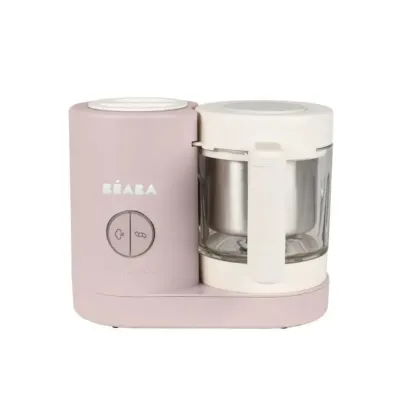
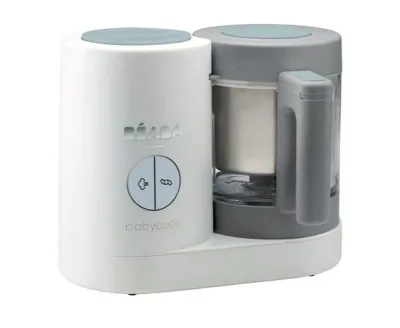
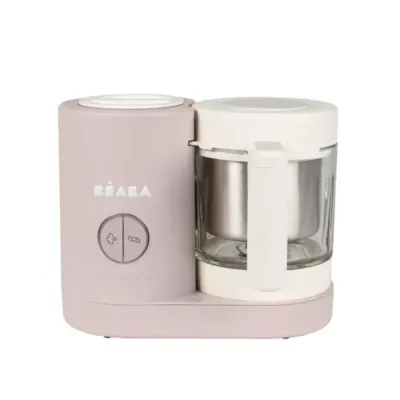
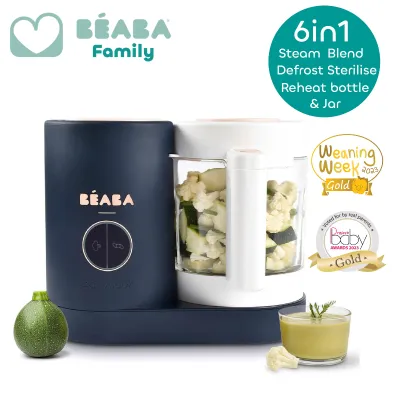
Prices are valid at publication and may change. Please refer to the product page for the latest price.

Steaming Quality and Nutrient Retention
Gentle steam cooking is widely recognized as one of the best methods for preparing baby food because it cooks ingredients thoroughly while preserving essential water-soluble vitamins and minerals. A quality baby food maker must provide even, consistent steam circulation throughout the cooking basket. Without proper steam distribution, dense foods like sweet potatoes or raw meats may remain undercooked in the center, while delicate vegetables on the outside turn to mush.
Adjustable steaming times are also critical. Different food groups require distinct cooking durations to reach safe internal temperatures without destroying their nutritional value. A system that allows you to control the steam cycle ensures that you can safely cook raw chicken breast or fish, while also gently softening spinach or berries without waterlogging them.
Blending Texture and Consistency Control
An infant’s feeding journey is a rapid developmental progression. At approximately six months of age, babies typically require ultra-smooth, completely liquidized purees to practice their swallowing coordination safely. Within just a few months, however, they must transition to thicker, textured mashes, and eventually to soft, chunky solids that encourage jaw movement and oral-motor skill development.
To support this transition, a baby food maker needs highly responsive blending controls. A simple on-off switch is rarely sufficient. Instead, a manual pulse function or variable speed settings allow you to control the exact blade rotations. This tactile feedback lets you stop blending the moment you achieve the desired texture, whether that is a silky-smooth pear puree or a chunky vegetable stew.
Capacity and Batch Preparation
Your cooking rhythm dictates the ideal capacity of your food maker. Parents who prefer to prepare fresh, single-portion meals every day can easily manage with a compact blending jar. However, many households find it more practical to prepare large batches of food over the weekend, freezing individual portions in silicone trays for the week ahead.
For batch cooking, look closely at both the steaming basket capacity and the blending bowl volume. A small bowl requires you to run multiple consecutive cooking cycles, which can be time-consuming. Furthermore, the water reservoir must be large enough to sustain a full 15-to-20-minute steaming cycle. If the tank is too small, you may have to pause mid-cycle to refill it, which disrupts the cooking process and increases the risk of steam burns.
Beaba Babycook Neo: Feature Breakdown and Real-World Usability
The Beaba Babycook Neo is engineered to address the core demands of daily meal preparation with a focus on premium materials and streamlined operation. Understanding how its specific design choices translate to daily kitchen tasks will help you determine if it fits your household routine.
Steaming and Blending Performance
The Neo utilizes a patented modulation steaming system designed to cook food quickly while preserving nutrients and flavor. The appliance functions by circulating steam through a stainless steel basket that sits suspended inside the glass blending jar. As the food steams, the condensation—which is rich in vitamins and minerals—collects at the bottom of the glass bowl. This design minimizes food transfer; once steaming is complete, you simply lift the stainless steel basket using the ergonomic handle and pour the cooked ingredients directly into the glass bowl to blend, adding as much of the reserved cooking liquid as you prefer.
The blending mechanism is powered by a high-performance stainless steel blade assembly positioned at the bottom of the glass jar. Operated by a single, responsive pulse button on the front of the machine, the blade allows for highly precise texture control. Holding the button down continuously yields a fine, uniform puree, while quick, intermittent presses produce a coarser, textured mash. The blade geometry is optimized to pull food downward, reducing the need to stop and scrape down the sides of the jar mid-blend.
Material Quality and Safety Considerations
Material safety is the primary reason many parents select the Beaba Babycook Neo. While standard baby food makers rely heavily on copolyester or other BPA-free plastics for their bowls and baskets, the Neo replaces these with a high-durability glass bowl manufactured to resist thermal shock and a robust stainless steel steaming basket. The internal water reservoir is also constructed from stainless steel, ensuring that water is heated and turned into steam without contacting plastic surfaces.
These premium materials offer several practical advantages over plastic counterparts:
- Chemical Safety: Eliminates concerns regarding potential chemical leaching when plastic is repeatedly exposed to high-temperature steam.
- Odor and Stain Resistance: Glass and stainless steel do not absorb strong food odors, such as fish or broccoli, and will not discolor when processing highly pigmented foods like carrots or beets.
- Durability and Hygiene: Smooth glass surfaces do not scratch easily. Micro-scratches in plastic bowls can harbor bacteria and food residue over time, whereas glass remains easy to sanitize thoroughly.
However, these materials also introduce trade-offs. The glass bowl is significantly heavier than plastic alternatives, requiring careful handling during washing to prevent chipping or cracking. Additionally, because glass conducts heat more efficiently than plastic, the exterior of the bowl becomes very hot during the steaming cycle, necessitating the use of the insulated handle at all times.
How the Beaba Babycook Neo Compares to Competing Baby Food Makers
To understand where the Beaba Babycook Neo sits in the wider market, it is helpful to contrast it with alternative product categories. Most competing options fall into two groups: multi-functional sterilizer-blenders or budget-friendly, plastic-based steam-and-blend appliances.
Comparison of Key Features
| Feature | Beaba Babycook Neo | Multi-Function Sterilizer-Blenders | Entry-Level Steam-and-Blend Models |
|---|---|---|---|
| Food Contact Materials | Glass bowl, stainless steel basket & tank | BPA-free plastic bowl & steaming accessories | BPA-free plastic bowl & basket |
| Primary Functions | Steam, blend, defrost, reheat | Steam, blend, warm bottles, sterilize, self-clean | Steam, blend |
| Texture Control | Manual pulse button | Digital speed presets or manual pulse | Single-speed blending switch |
| Cleaning & Descaling | Removable blade, wide-mouth steel tank | Complex valve systems, integrated water reservoirs | Fixed blades, narrow plastic water reservoirs |
| Price Bracket (S$) | Premium (High-end) | Mid-to-High | Budget-friendly (Entry-level) |
Navigating the Trade-Offs
The primary trade-off between the Beaba Babycook Neo and its competitors lies in the balance of material purity versus multi-functional utility. Many multi-functional models available in Singapore are designed to serve as comprehensive countertop stations. In addition to cooking food, they feature built-in steam sterilizers for baby bottles and pacifiers, as well as dedicated bottle-warming chambers. For parents living in compact apartments or HDB flats where kitchen counter space is limited, consolidating these appliances into a single unit is highly appealing.
However, these multi-functional machines almost exclusively use plastic steaming baskets and plastic blending jars to keep the appliance lightweight and affordable. If your priority is minimizing plastic exposure, the Neo’s dedicated focus on high-quality glass and steel steaming is unmatched, even though it lacks bottle sterilization capabilities.
Furthermore, cleaning complexity varies significantly. The Neo features a wide-mouth stainless steel water reservoir that is easy to inspect and wipe clean, alongside a completely removable blade assembly. Many multi-functional competitors feature narrow, enclosed plastic reservoirs that are difficult to dry fully, increasing the risk of mold growth in humid climates.
When shopping, parents should always verify current model specifications, local voltage compatibility, and warranty coverage on the manufacturer’s website or through authorized retailers in Singapore. Features, included accessories, and after-sales support can vary depending on the specific regional release.
Decision Framework: Which Baby Food Maker Should You Choose?
Selecting the right appliance requires matching your daily cooking habits, kitchen space, and budget to the strengths of each design. Use the following scenarios to guide your decision.
Choose the Beaba Babycook Neo if:
- You prioritize material purity: You want to ensure that your baby’s food is cooked, steamed, and blended entirely without contacting plastic surfaces.
- You want a durable, long-term appliance: You prefer glass and stainless steel components that resist staining, scratching, and odor retention over years of use.
- You value precise texture control: You want a highly responsive manual pulse function that allows you to easily transition from smooth purees to chunky mashes.
- You have a dedicated budget: You view a premium, single-purpose food prep station as a worthwhile investment for your child's weaning years.
Choose a competing multi-function maker if:
- Countertop space is limited: You live in a compact home and need a single machine that can sterilize bottles, warm milk, and prepare baby food.
- You are working within a strict budget: You prefer a cost-effective solution and are comfortable using high-grade, certified BPA-free plastics for food preparation.
- You prefer automated cycles: You want pre-programmed digital timers that turn off and automatically blend the food without requiring manual intervention.
Neither may fit if:
- You prefer cooking family-sized meals: If you already prepare large-batch meals for the entire household, a standard stovetop steamer basket combined with a family-sized food processor or a powerful immersion blender can easily handle baby food preparation, making a dedicated baby food maker redundant.
Verify first if:
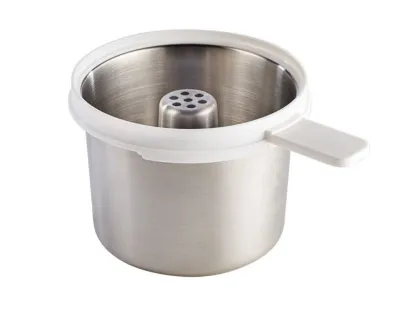
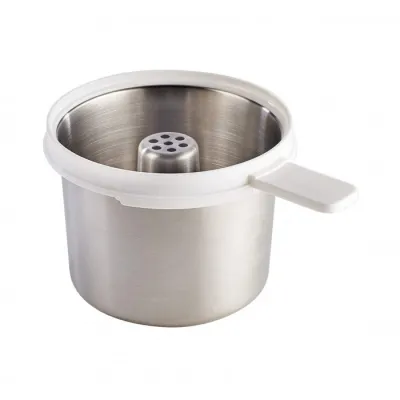
- You have specific dietary preparation needs: If you plan to cook grains, pasta, or rice regularly, verify if the model you are considering requires separate specialized accessories (such as Beaba's pasta/rice cooker insert) or if it can handle these foods out of the box.
- You need local support: Confirm that the appliance carries a valid local warranty and that authorized spare parts (like replacement blades or gaskets) are readily available in Singapore.
Essential Safety, Cleaning, and Maintenance Guidelines
To ensure your baby food maker remains hygienic and functions efficiently, establishing a consistent cleaning and maintenance routine is essential. Because these machines process food for developing immune systems, proper sanitation is paramount.
Regular Descaling of the Water Reservoir
Over time, heating water in the reservoir leads to mineral deposits, commonly known as limescale. In Singapore, municipal tap water is safe and clean, but it still contains dissolved minerals that precipitate out during the boiling process. Limescale buildup acts as an insulator, slowing down heating times, reducing steam efficiency, and potentially causing the heating element to overheat and shut down prematurely.
- Descaling Method: Refer to your user manual for manufacturer-approved descaling instructions. Typically, this involves pouring a 50:50 mixture of food-grade white vinegar and water into the cold reservoir. Allow the solution to sit cold overnight to dissolve the minerals.
- Rinsing: Empty the reservoir and run one or two steam cycles with plain, clean water to thoroughly flush out any remaining vinegar taste or odor before preparing food again. Never use chemical descaling agents or harsh bathroom cleaners inside the water tank.
Daily Cleaning Routines
Wash all removable parts—including the glass bowl, stainless steel steaming basket, lid, and rubber gaskets—immediately after every use. Allowing food residue to dry makes cleaning significantly more difficult and encourages bacterial growth.
- Blade Assembly: Carefully remove the blade assembly from the bottom of the bowl according to the manufacturer's instructions. Food particles and moisture frequently get trapped underneath the blade and around the silicone sealing ring. Wash these components with warm, soapy water using a soft brush.
- Drying: In humid climates, ensure all parts are completely dry before reassembling the machine. Trapped moisture inside closed compartments can lead to mold or mildew formation.
Safety Boundaries
Always prioritize safety when handling electrical kitchen appliances:
- Power Off: Unplug the device from the electrical outlet before cleaning, removing the blades, or assembling parts.
- Water Exposure: Never submerge the main motorized base unit or the power cord in water. To clean the base, wipe it down with a damp, soft cloth.
- Blade Care: Inspect the stainless steel blades regularly for signs of wear, micro-cracks, or dullness. Handle them with extreme caution, as they are exceptionally sharp.
- Manufacturer Instructions: Always consult your specific product manual to verify dishwasher safety limits, maximum filling capacities, and temperature restrictions for all components.
Frequently Asked Questions (FAQ)
Can I use a baby food maker to reheat or defrost frozen baby purees?
Yes, many dedicated steam-and-blend baby food makers, including the Beaba Babycook Neo, are designed to safely defrost and reheat pre-prepared baby food. To do this, place the frozen or cold puree into a heat-safe glass jar or food-grade silicone portion container. Place this container directly inside the steaming basket, fill the water reservoir to the level recommended by the manufacturer for reheating (typically a shorter cycle), and start the steam function.
The gentle steam will gradually heat the food without scorching it or drying it out. Once the cycle is complete, carefully remove the container, stir the puree thoroughly to eliminate any hot spots, and verify the internal temperature. Always ensure the food is heated evenly throughout, then allow it to cool to a safe, lukewarm temperature before serving it to your baby. Refer to your specific user manual to confirm which types of storage containers are safe to place inside the steaming chamber.
Community discussion
Share your experience or ask a question. Comments are reviewed before publication.