
Choosing the right safety gear for a developing infant requires balancing physical protection with physical comfort. As babies transition from sitting to crawling and eventually to walking, their coordination is constantly tested, often resulting in sudden slips and tumbles. A head protector baby product is a popular accessory designed to cushion these impacts, but selecting the wrong style can lead to unnecessary discomfort, restricted movement, or thermal stress.
The ideal choice between a backpack-style cushion and a full-coverage helmet depends entirely on your baby’s current mobility stage, their typical fall patterns, and the environment in which they play. While backpack cushions are lightweight and suit early sitters who tend to fall straight backward, helmet-style protectors offer comprehensive coverage for active toddlers exploring upright movement. However, it is vital to remember that no wearable safety device can ever replace active adult supervision and thorough home baby-proofing.
Understanding the Two Main Designs
To make an informed decision, you must first understand the structural differences and primary functions of the two leading designs on the market. Both styles aim to reduce the impact of minor bumps, but they distribute weight and cover the head in fundamentally different ways.
Products mentioned in this guide
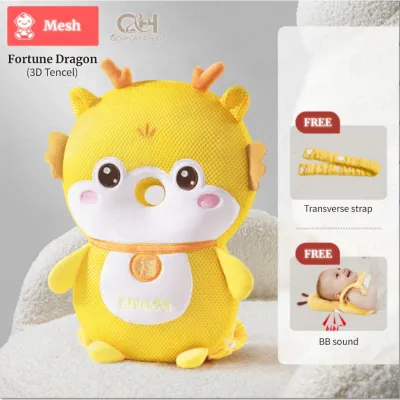
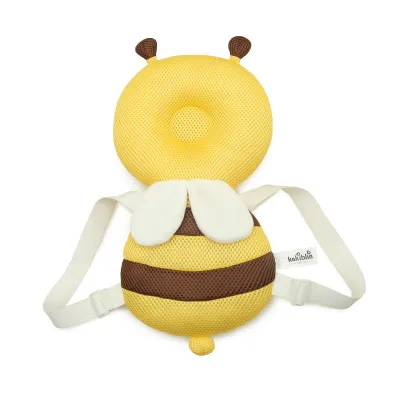
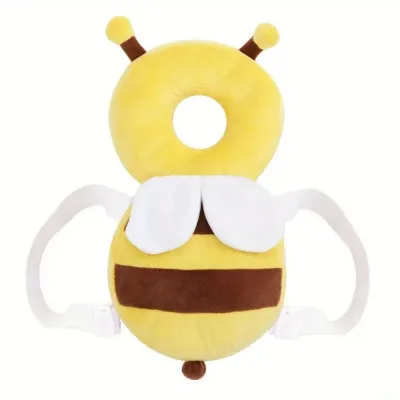
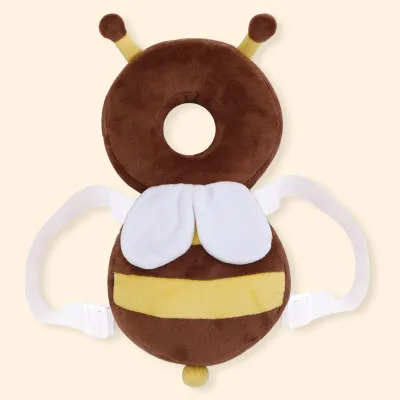
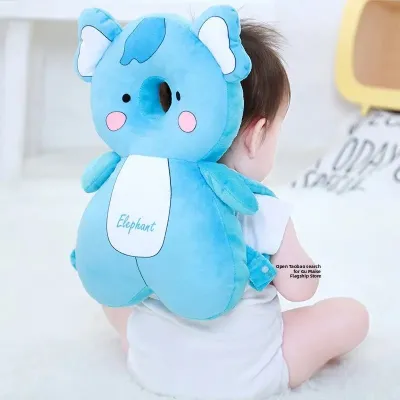
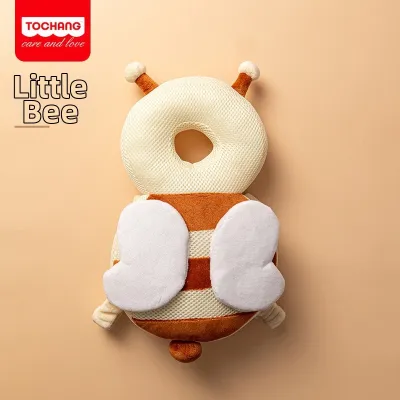
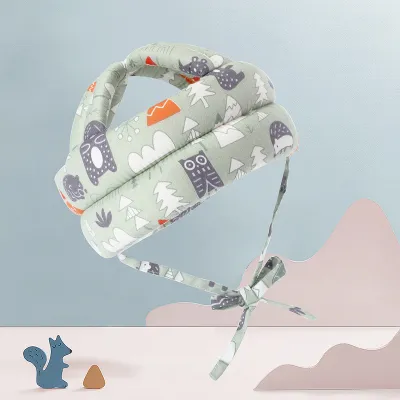
Prices are valid at publication and may change. Please refer to the product page for the latest price.
Backpack-Style Head Protectors (Cushions)
This design mimics a small, lightweight backpack worn over the baby’s shoulders. It features adjustable elastic straps that loop around the arms, often secured with a horizontal chest buckle to prevent the straps from slipping off. The protective element is a thick, plush cushion—frequently shaped like an animal, cartoon character, or a hollow donut—that rests directly against the back of the baby’s head and upper spine.
Because this style only covers the posterior plane, it leaves the top, sides, and front of the baby’s head completely exposed. This open-air design ensures that the baby’s natural heat-dissipation mechanisms are not blocked, making it a highly breathable option. It is primarily engineered to cushion backward falls, which are common when infants are learning to sit independently or transition to a crawling position.
Helmet-Style Head Protectors (Full Coverage)
Helmet-style protectors are soft, padded caps designed to wrap around the entire circumference of the baby’s skull. Typically constructed from high-density shock-absorbing foam encased in soft cotton or synthetic fabrics, these helmets protect the forehead, temples, crown, and the back of the head. They are secured in place with an adjustable chin strap, often using hook-and-loop fasteners or soft buckles.
This 360-degree coverage is designed to shield the head from multi-directional impacts, such as when a toddler trips forward, falls sideways, or bumps into low furniture. However, because the helmet covers a significant portion of the scalp, it is inherently bulkier, heavier, and traps more body heat than a simple backpack cushion. This design requires careful adjustment and monitoring to ensure it does not cause physical discomfort or restrict the baby’s field of vision.
Key Comparison Dimensions for Safety and Comfort
Evaluating these two designs requires looking beyond aesthetics. Parents must assess how each style performs across critical physical, environmental, and developmental dimensions to ensure the product supports, rather than hinders, the baby’s natural progression.

Protection Coverage and Impact Zones
The primary difference between these two products lies in their protective boundaries. A backpack-style head protector baby cushion offers targeted protection. It is highly effective at absorbing the shock of a direct backward fall onto a flat surface, protecting the delicate occipital region of the skull. However, it offers absolutely no protection if the baby falls forward onto their face or slips sideways against a hard boundary.
Conversely, a safety helmet provides multi-directional protection. When a toddler is learning to walk, their momentum is forward-facing, meaning they are far more likely to trip over toys or rug edges and fall face-first or sideways. A helmet cushions these varied impact zones, making it highly useful around sharp furniture corners or hard flooring.
Regardless of the style you choose, you must understand that these products are comfort aids and not medical devices. They are designed to minimize minor bruises and bumps from low-height household falls. They are not engineered, tested, or certified to prevent concussions, internal skull fractures, or severe traumatic brain injuries. If your baby experiences a high-velocity fall, shows signs of lethargy, vomits, or exhibits unusual behavior, you must seek immediate professional medical evaluation.
Breathability and Heat Retention in Tropical Climates
Thermal comfort is a critical consideration, particularly in warm and humid tropical climates like Singapore. Infants have an underdeveloped thermoregulatory system and rely heavily on their heads to dissipate excess body heat. Covering a baby’s head with a thick, insulating layer of foam can quickly lead to overheating, heavy sweating, and skin irritation.
- Backpack Cushions: These offer superior thermal performance. Because they leave the scalp entirely open to the air, they do not interfere with natural sweat evaporation. This makes them highly suitable for warm indoor spaces or homes without continuous air conditioning.
- Helmet-Style Protectors: These pose a significant risk of heat retention. The dense padding traps warm air close to the scalp, which can lead to rapid overheating, discomfort, and the development of heat rash (miliaria rubra) or eczema flare-ups.
If you choose a helmet-style protector, look for models featuring hollow crowns, multiple ventilation cutouts, and interior linings made of moisture-wicking mesh or organic cotton. Limit wear time to brief, supervised play sessions in air-conditioned rooms, and remove the helmet immediately if your baby’s skin appears flushed, warm to the touch, or damp with sweat.
Weight Distribution and Neck Strain Risks
A baby’s head is disproportionately large and heavy compared to the rest of their body, and their neck muscles are still developing. Introducing any external weight to their head or upper torso can alter their natural center of gravity and place undue strain on their spine.
Helmets, while lightweight by adult standards, add a top-heavy load to a baby’s head. This extra weight can cause rapid neck fatigue, making it difficult for the baby to maintain an upright head posture. In some cases, this physical imbalance can actually increase the frequency of falls as the baby struggles to coordinate their movements.
Backpack cushions are generally lighter on the head itself, but they add weight to the upper back. If the shoulder straps are pulled too tight, the cushion can pull the baby’s shoulders backward, altering their posture and making it harder for them to lean forward into a stable crawling position.
Before using either product, check the manufacturer’s weight specifications and cross-reference them with your baby’s age and physical development. Watch for signs of physical distress: if your baby constantly tilts their head forward, tries to pull the protector off, or seems unusually clumsy while wearing it, stop using the product immediately.
Matching the Protector to Your Baby's Developmental Stage
Rather than buying a head protector baby product based on popularity, parents should match the design to the specific motor milestones their baby is currently navigating. As a baby’s mobility evolves, so do the risks and physical demands of their environment.
Sitting, Rolling, and Crawling (Early Mobility)
During the early mobility phase, which typically occurs between 6 and 10 months of age, babies spend most of their time close to the floor. They are learning to sit independently, roll over, and push themselves up onto their hands and knees.
At this stage, falls are usually low-velocity and occur when the baby loses core balance and topples straight backward or slightly to the side from a sitting position. Because the fall distance is short and the movement is slow, a lightweight backpack-style cushion is often the most appropriate option. It provides targeted padding for the back of the head without adding unnecessary weight to the neck or blocking the baby’s peripheral vision, which is crucial for developing spatial awareness.
When fitting a backpack cushion on an early crawler, perform these essential safety checks:
- Strap Tension: Adjust the shoulder straps so the cushion sits flat against the back of the head. It should not sag downward or wobble side to side.
- Chest Buckle Alignment: If the product has a chest strap, ensure it is positioned across the mid-chest, well away from the throat, to prevent any risk of airway compression.
- Stomach Play Warning: Never allow your baby to wear a backpack cushion while lying on their stomach or trying to push up into a crawl. If they roll over, the physical bulk of the cushion can make it difficult for them to turn back, and the straps can shift, presenting a serious strangulation hazard.
Cruising, Standing, and Early Walking (Upright Mobility)
As babies enter the upright mobility stage, usually between 10 and 15 months, their physical environment becomes much more hazardous. They begin pulling themselves up on furniture, cruising along edges, and taking their first unassisted steps.
Falls from a standing position involve greater height and velocity. Toddlers at this stage frequently trip forward over objects, lose their balance sideways, or collide with hard vertical surfaces like TV consoles, coffee tables, and door frames. For these active, upright explorers, a helmet-style protector offers the 360-degree coverage necessary to cushion the forehead and temples.
However, using a helmet safely requires strict adherence to manufacturer guidelines and constant vigilance:
- Chin Strap Adjustment: The chin strap must be adjusted with precision. It must be snug enough to keep the helmet from sliding over the baby's eyes during a fall, yet loose enough to avoid restricting their breathing or swallowing. You should easily be able to slide one or two fingers between the strap and your baby's chin.
- Positional Asphyxiation Risk: Never allow your baby to wear a helmet while sleeping, napping, or resting. If a baby falls asleep while wearing a helmet—especially in a car seat, stroller, or bouncer—the added bulk behind the head can force their chin down onto their chest, potentially blocking their airway and causing positional asphyxiation. Always remove the helmet the moment active play session ends.
Safety Boundaries and Pre-Purchase Verification
Before purchasing any head protector baby accessory from an online marketplace or local retailer, parents must look past marketing claims and conduct a rigorous safety inspection of the product’s design, materials, and construction.
When evaluating a product, use the following verification checklist:
- Strap and Fastener Integrity: Inspect all plastic buckles, snaps, and hook-and-loop fasteners. Ensure they are securely stitched to the body of the protector and cannot be easily pulled off or swallowed by a child.
- Material Composition: Choose hypoallergenic, non-toxic, and breathable fabrics. Avoid products with strong chemical odors, which may indicate the presence of harmful dyes or flame retardants. Look for easily washable materials, as these products will frequently absorb sweat and drool.
- Choking Hazards: Ensure there are no small, detachable decorative elements—such as plastic eyes, buttons, or loose felt pieces—that a baby could chew off and choke on.
- Safety Certifications: If a manufacturer claims their product meets specific safety standards (such as EN71 for toy safety or ASTM physical standards), verify these claims independently. Be skeptical of vague "pediatrician-approved" labels that lack documented evidence.
Most importantly, remember that wearable head protectors are secondary comfort aids, not primary safety solutions. The most effective way to protect your baby from serious injury is to create a safe, physical environment and maintain constant, close supervision.
Ensure your home is thoroughly baby-proofed by installing high-density foam corner guards on all sharp furniture edges, securing heavy bookshelves and televisions to the wall with anti-tip straps, and covering hard tiled or wooden floors with thick, shock-absorbing EVA foam play mats. These environmental modifications provide a reliable safety net for all children in the home without placing any physical load on an individual baby’s body.
Final Decision Framework: Choose Based on Mobility
To finalize your choice, evaluate your baby’s current developmental stage, physical environment, and tolerance for wearable gear using this practical decision matrix:
- Choose a Backpack-Style Protector if: Your baby is primarily sitting, rolling, or crawling; their falls are almost exclusively backward from a low height; and you live in a warm, non-air-conditioned environment where preventing overheating and skin irritation is a top priority.
- Choose a Helmet-Style Protector if: Your baby is actively standing, cruising, or taking unassisted steps; they are prone to falling forward or sideways; your home features hard tiled floors or sharp-edged furniture that cannot be easily padded; and your baby tolerates headwear without showing signs of neck fatigue or emotional distress.
- Choose Neither (Rely on Environment) if: Your baby shows clear signs of neck strain, resists wearing the product, or experiences rapid overheating and sweat rashes. If your home is already thoroughly baby-proofed with high-quality play mats and you are able to maintain constant, hands-on supervision during active play, your baby does not need to wear an external head protector.
Community discussion
Share your experience or ask a question. Comments are reviewed before publication.