
Quick Answer: Choosing the Right Head Protector
When choosing between a backpack-style and a helmet-style baby head protector, the decision depends on your baby’s current motor skills and typical fall patterns. Backpack-style protectors are designed primarily for younger babies in the sitting or crawling stage (approximately 6 to 10 months) who tend to lose balance and tip straight backward onto their backs. These protectors feature a cushioned ring that sits behind the head, protecting the occipital region from rear impacts while leaving the face and sides of the head completely free.
In contrast, helmet-style protectors offer 360-degree coverage, making them more suitable for older babies and early toddlers (approximately 10 to 15 months) who are cruising, standing, and taking their first steps. Because early walkers are moving upright, they are highly prone to multi-directional falls, including tripping forward onto their foreheads or falling sideways against furniture edges. However, it is vital to remember that neither style is a safety guarantee; they are supplementary cushions and must never replace active caregiver supervision or proper home childproofing.
Backpack vs Helmet Designs: How They Differ
To make an informed choice, it is essential to understand the structural differences, materials, and protective zones of both designs. A backpack-style protector resembles a small plush toy or cushion worn on the baby’s back, secured by elastic shoulder straps. The primary protective element is a thick, padded ring or solid cushion that aligns with the back of the baby’s head and upper shoulders. This design leaves the forehead, temples, cheeks, and chin completely exposed. The materials used are typically lightweight polyester plush or 3D breathable mesh, designed to offer a soft landing zone when a baby falls backward from a low, seated position.
Products mentioned in this guide
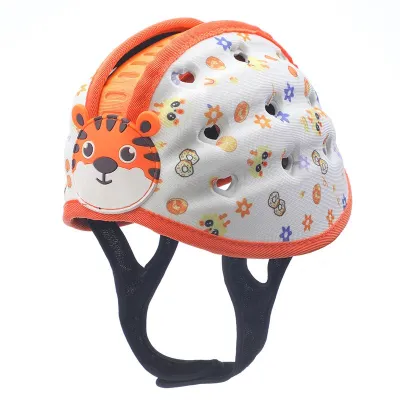
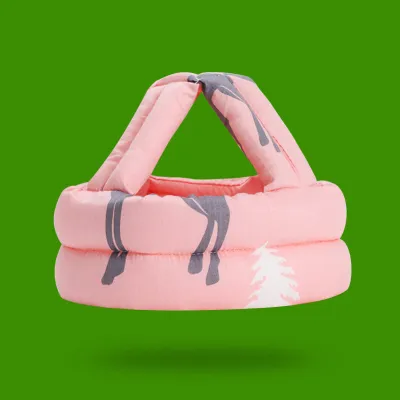
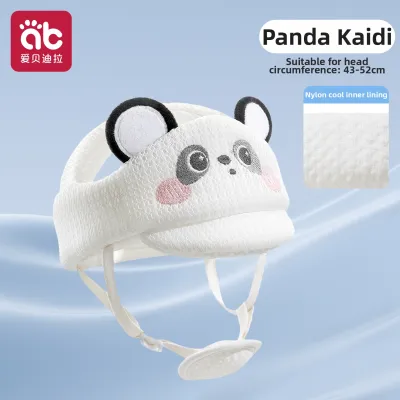
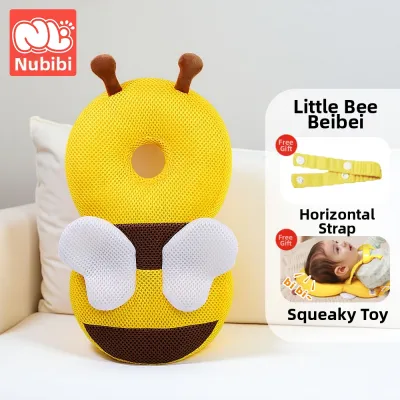
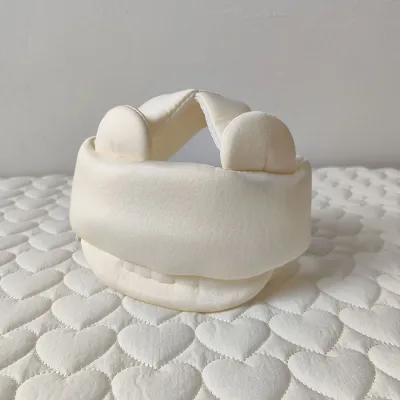
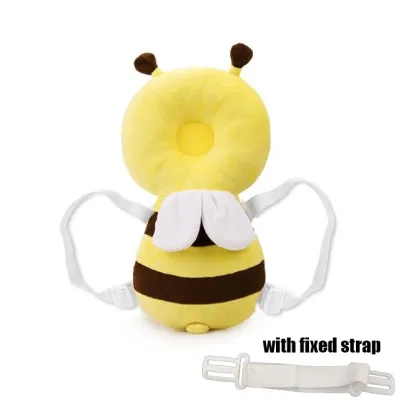
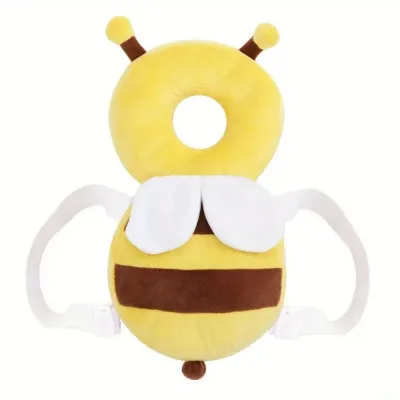
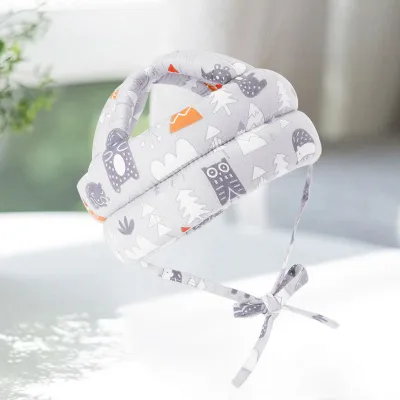
Prices are valid at publication and may change. Please refer to the product page for the latest price.

A helmet-style protector, on the other hand, is a soft, wrap-around cushion cap that covers the entire crown of the head. It is secured under the chin with a soft strap, often utilizing hook-and-loop fasteners or a quick-release buckle. This design provides comprehensive coverage, protecting the forehead, temples, sides, and back of the head from impact. These helmets are usually constructed from high-density impact-resistant foam encased in a soft cotton shell. Because they wrap completely around the head, they are designed to mitigate low-velocity bumps against hard vertical surfaces, such as walls, door frames, and furniture corners, which are common obstacles for a baby learning to navigate upright.
Comparing Protection, Comfort, and Mobility
Protection Coverage and Impact Zones
The fundamental difference between these two styles lies in their coverage zones and how they manage impact forces. The backpack-style protector focuses exclusively on the back of the head, which is the most common impact point when a baby loses balance while sitting. While this targeted protection is highly effective for backward tip-overs, it leaves a significant vulnerability. Once a baby transitions to standing and cruising, they are just as likely to fall forward or sideways. In these scenarios, a backpack-style protector offers zero protection for the forehead, nose, or temples, which can easily come into contact with hard flooring or sharp furniture edges.
Helmet-style protectors address this gap by providing multi-directional coverage. By wrapping around the head, they cushion the forehead and temples, which are highly vulnerable to bumps when a baby trips over a toy or loses traction on a slippery floor. However, even a soft helmet does not provide absolute protection; it cannot safeguard the lower face, jaw, or teeth from impact. When evaluating either product, parents should look past marketing claims and examine the physical specifications. Check the manufacturer’s label for the thickness and density of the cushioning material to ensure it is thick enough to absorb minor impacts without bottoming out.
Breathability, Weight, and Comfort in a Tropical Climate
In a hot and humid tropical climate like Singapore, thermal comfort is a critical factor in a baby’s compliance and overall safety. Helmet-style protectors, by design, cover a large portion of the scalp, which is one of the primary areas where a baby’s body releases heat. Wearing a full-coverage soft helmet in non-air-conditioned environments can quickly lead to heat retention, causing excessive sweating, discomfort, and skin issues such as heat rash (miliaria). If a baby becomes overheated, they are highly likely to become fussy and attempt to pull the helmet off, defeating its protective purpose.
Backpack-style protectors offer a distinct advantage in terms of airflow, as they leave the head and scalp completely open to the air. However, they present their own comfort challenges. A poorly designed or excessively heavy backpack pad can shift the baby’s center of gravity backward. This weight can pull on the shoulder straps, causing neck strain or forcing the baby to arch their back to maintain balance. To mitigate these issues, parents should opt for ultra-lightweight models made with 3D mesh linings that promote maximum ventilation. Regardless of the style chosen, it is essential to monitor the baby’s skin for dampness or flushing and limit wear time during hot afternoons.
Mobility and Activity Restriction
A baby’s natural motor development relies heavily on their ability to move freely, sense their environment, and adjust their balance. Bulky helmet-style protectors can sometimes interfere with this process. Because a soft helmet adds physical volume and weight to the baby’s head, it can alter their center of gravity, making them feel top-heavy. This alteration can actually increase the frequency of falls, as the baby’s brain is still learning to calibrate balance based on their natural body proportions. Additionally, some wide-brimmed or thick helmets can restrict lateral head movement or slightly block peripheral vision, making it harder for the baby to spot obstacles.
Backpack-style protectors are generally less restrictive to head rotation and visual fields because they do not attach directly to the skull. However, they can still impede mobility if the shoulder straps are too tight, restricting arm movement or pinching the delicate skin around the armpits. If a baby is constantly fighting against the straps or showing signs of restricted movement, the protector is likely ill-fitting. Parents must observe their baby closely while they wear any protective gear; if the product visibly hinders natural movement, causes the baby to stumble more often, or induces distress, it should be discontinued immediately in favor of a safer, unhindered environment.
Matching the Protector to Your Baby's Developmental Stage
Sitting, Crawling, and Pulling Up (Approx. 6–10 Months)
During the developmental window of 6 to 10 months, babies are mastering the art of sitting independently and beginning to crawl. At this stage, their core muscles are still developing, and they frequently lose balance, tipping backward from a low, seated position. Because the distance to the floor is minimal and the movement is relatively slow, the impact force is low, but the back of the head remains a sensitive area. For this specific developmental phase, a lightweight backpack-style protector is often the most practical choice.
The primary benefit of the backpack design here is that it cushions the exact zone of vulnerability—the back of the skull—without enclosing the baby’s head in warm fabric. Since crawling babies spend much of their time looking down or forward, a helmet is unnecessary and can cause unnecessary head-heaviness and neck fatigue. The backpack style allows the baby to explore the floor comfortably, maintaining full visual and auditory contact with their surroundings. However, parents must ensure that this gear is only used on flat, clean, and childproofed indoor surfaces. It should never be used as an excuse to leave a baby unattended, as they can still roll or slip into positions that require immediate caregiver intervention.
Cruising and Early Walking (Approx. 10–15 Months)
As babies transition to cruising—using furniture to support themselves while shuffling sideways—and taking their first tentative steps, their movement patterns become much more dynamic and unpredictable. At 10 to 15 months, falls are no longer limited to simple backward tip-overs. Babies frequently lose their grip on a table edge, slip on smooth tile or laminate floors common in Singapore homes, or trip over low obstacles, leading to forward or sideways falls. In these situations, the forehead, temples, and sides of the head are at a much higher risk of hitting hard surfaces or sharp corners.
For this active transition phase, a helmet-style protector or a hybrid wrap-around cushion is far more appropriate than a backpack style. The 360-degree coverage ensures that if a baby trips forward into a coffee table or falls sideways against a wall, the impact to the frontal and temporal bones is cushioned. However, using a helmet in this stage requires heightened vigilance from parents. The added insulation can quickly cause overheating, especially during active play. Parents should limit helmet use to short, supervised sessions when the baby is practicing walking in areas with unavoidable hard edges, and ensure the helmet is adjusted so it does not slip down and block the baby’s line of sight.
Active Toddling and Running (15+ Months)
By the time a toddler reaches 15 months and beyond, their coordination, strength, and speed increase significantly. They are no longer just cruising; they are walking confidently, running, climbing, and exploring vertical spaces. With this increased speed and height comes a substantial increase in the kinetic energy of any potential fall. It is crucial for parents to understand that soft foam or fabric head protectors are not designed, tested, or capable of absorbing the high-impact forces generated by an active, running toddler.
At this advanced stage, continuing to use a wearable head protector can actually introduce new safety hazards. A bulky helmet or backpack can catch on furniture, door handles, or playground equipment, posing a serious snagging or strangulation risk. Furthermore, older toddlers are highly likely to reject these products, pulling them off repeatedly and experiencing frustration that distracts them from learning natural balance and falling safety. Therefore, parents should transition away from wearable protectors entirely at this stage. The focus must shift completely to environmental childproofing, such as securing heavy furniture to walls, applying soft corner guards to sharp edges, utilizing thick play mats in high-activity zones, and guiding the toddler on how to navigate steps and obstacles safely.
Crucial Safety Boundaries and Limitations
While baby head protectors can provide peace of mind for minor bumps, parents must understand their strict safety boundaries and limitations to prevent dangerous misuse.
Medical Limitations First and foremost, soft baby head protectors are novelty comfort items and are not certified safety helmets. Unlike certified helmets designed for cycling, skating, or equestrian activities, these soft cushions are not subject to rigorous impact-testing standards. They cannot prevent concussions, skull fractures, internal bleeding, or severe traumatic brain injuries resulting from high-impact falls, such as falling from a bed, changing table, stairs, or high chair. If a baby experiences a significant fall, especially from a height, or exhibits symptoms such as vomiting, lethargy, unequal pupil sizes, or unusual crying, seek immediate professional medical evaluation.
Suffocation and Strangulation Risks Under no circumstances should a baby be allowed to sleep while wearing a head protector, whether it is a backpack or a helmet style. Additionally, these products must never be used while the baby is in a car seat, stroller, high chair, or infant carrier. The bulky padding can force the baby’s head forward into a chin-to-chest position, which can restrict their airway and lead to positional asphyxiation. Furthermore, the adjustable chin straps, elastic shoulder bands, and decorative elements pose severe strangulation and suffocation hazards if they shift, catch on an object, or wrap around the baby’s neck.
The Danger of a False Sense of Security One of the greatest risks associated with baby head protectors is the false sense of security they can give to caregivers. Relying on a wearable cushion can lead to a dangerous lapse in active supervision, under the assumption that the baby is fully protected from injury. In reality, these products only cushion a fraction of potential impact zones and do nothing to prevent injuries to the face, limbs, or torso. They are a minor, supplementary aid, not a substitute for a watchful eye. Caregivers must remain within arm’s reach and maintain direct supervision at all times, ensuring the play environment is as safe and hazard-free as possible.
Pre-Purchase Checklist: Verifying Fit and Safety Features
Before purchasing a baby head protector, parents should run through a comprehensive checklist to ensure the product is safe, fits correctly, and does not introduce new hazards to their child.
- Accurate Sizing and Adjustable Fit: For helmet-style protectors, measure your baby's head circumference using a flexible tape measure before ordering. The helmet must fit snugly without being tight; a loose helmet can slip down over the eyes or ears, blocking vision and hearing, while an overly tight fit can restrict blood circulation and cause discomfort.
- Secure and Safe Strap Mechanisms: Examine the straps carefully. For backpack styles, the shoulder straps should be soft, wide, and fully adjustable to prevent digging into the baby's armpits. For helmet styles, the chin strap should feature a secure but easily releasable mechanism, ideally a breakaway safety clasp, to prevent choking if the helmet catches on an obstacle.
- Non-Toxic, Breathable Materials: Because the protector will be in direct contact with your baby's skin and sweat, verify that all materials are non-toxic, hypoallergenic, and free from harmful chemicals such as BPA, phthalates, and flame retardants. Look for breathable fabrics, such as 3D mesh linings and 100% cotton covers, which can be easily removed and machine-washed to maintain hygiene.
- Unobstructed Vision and Hearing: Put the protector on your baby in a calm environment and check their sensory access. Ensure that the design does not cover the ears completely or project forward enough to block their peripheral vision. Full visual and auditory awareness is critical for your baby's spatial orientation, balance, and natural motor development.
Community discussion
Share your experience or ask a question. Comments are reviewed before publication.