
When choosing a baby walker, safety must be your absolute priority. While these devices can keep an infant entertained, they also introduce significant mobility that a developing child is not yet equipped to manage. To protect your baby, you must look for specific safety features such as a wide, tip-resistant base, automatic stair-fall braking mechanisms, secure and deep seating, and verified compliance with international safety standards like EN 1273 or ASTM F977.
Evaluating a baby walker requires looking beyond aesthetic appeal, toy attachments, or price. A safe model must physically restrict hazardous movements while supporting your child’s current developmental stage. In Singapore, where home layouts often feature hard tiled floors, sliding door tracks, and step-downs into kitchens or bathrooms, selecting a walker with robust physical safety features is essential.
Quick Checklist: Non-Negotiable Baby Walker Safety Features
Before making any purchase, parents should run through a strict checklist of non-negotiable features. If a model lacks even one of these components, it should be eliminated from your consideration. These features work in tandem to prevent the most common accidents associated with mobile infants.
Products mentioned in this guide
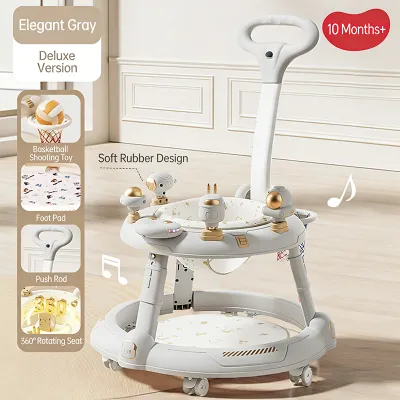
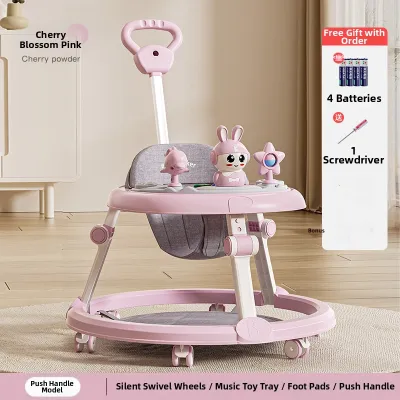
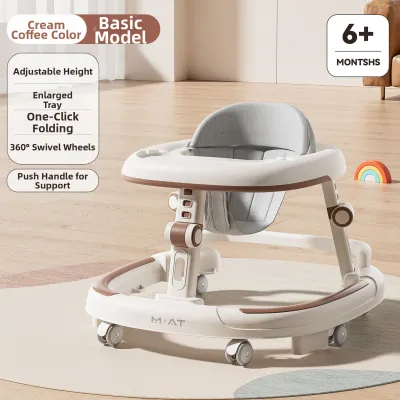
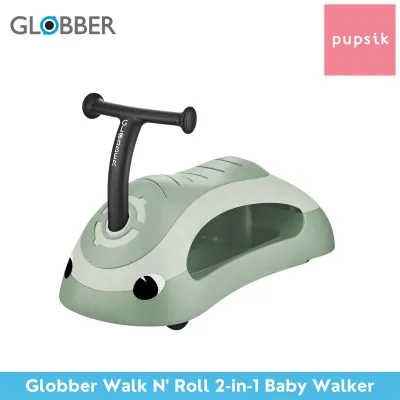
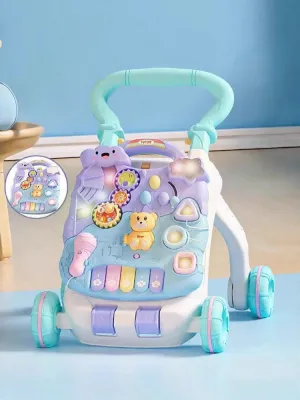
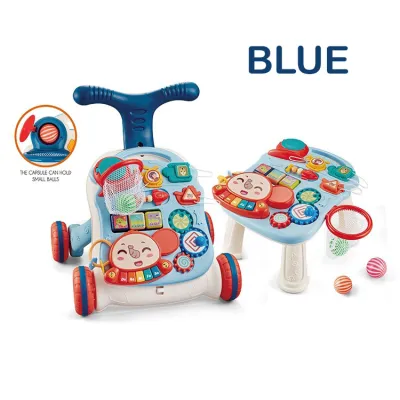


Prices are valid at publication and may change. Please refer to the product page for the latest price.
- Wide and Weighted Base: This is the foundation of the walker's stability. The base must be significantly wider than the upper tray to prevent the walker from tipping over when your baby leans sideways or bumps into furniture.
- Stair-Fall Prevention Grips: These are friction strips or rubber pads located on the underside of the base. They are designed to grab the floor and halt the walker instantly if a wheel loses contact with the ground, such as at a step or threshold.
- Adjustable Height Settings: A safe walker must adjust to your baby's height. This ensures their feet rest correctly on the floor, preventing them from leaning at dangerous angles or climbing out of the seat.
- Secure, Deep Seat with Harness: The fabric seat must support the baby's lower torso securely. A deep seat design with high back support prevents the baby from slipping through the leg openings or tipping forward.
Every one of these features must be fully integrated into the walker’s design. Relying on a model that lacks proper braking pads or has a narrow frame increases the risk of tipping and falls, making these specifications absolute dealbreakers for safety-conscious parents.
Structural Stability and Entrapment Prevention
A baby walker must be structurally sound to withstand the daily forces exerted by an active infant. Tip-overs and entrapment are two of the most common physical hazards associated with these devices. Understanding the engineering behind a stable frame helps you assess whether a model is safe for your home.

Wide and Weighted Base
The physical footprint of the baby walker determines its tipping threshold. A safe walker features an extra-wide base that extends well beyond the radius of the baby’s reach. This wider frame creates a physical barrier, keeping your baby’s hands away from walls, electrical outlets, and dangerous objects on tables. Additionally, a low center of gravity—achieved by weighting the lower frame—prevents the walker from tipping over when your baby transitions from smooth surfaces to low-pile rugs or encounters door thresholds. In Singapore homes, where sliding glass doors to balconies often have raised tracks, a wide and stable base is vital to prevent sudden tipping when crossing these barriers.
Seat Depth and Harness
The seat of a traditional sit-in walker must be engineered to keep the infant securely inside. Look for a seat with a deep crotch strap and a high, rigid backrest that supports the baby’s spine. This design prevents the baby from slipping downward through the leg openings, which can lead to entrapment or suffocation. Some models incorporate a three-point safety harness to keep the baby centered and upright. Ensure the seat fabric is durable, double-stitched, and securely attached to the frame with heavy-duty plastic or metal clips that cannot easily snap or detach under the baby’s weight.
Smooth Edges and Enclosed Moving Parts
Infants naturally explore their surroundings with their hands, making finger entrapment a serious risk. Carefully inspect the entire frame for exposed folding mechanisms, hinges, or springs that could pinch tiny fingers. Safe models feature fully enclosed folding joints and wheel wells that shield moving parts from your baby’s reach. Additionally, run your hand along the plastic edges of the tray and frame to ensure there are no sharp burrs, rough seams, or small detachable toy parts that could pose a choking hazard.
Testing Stability
To verify structural stability, it is highly recommended to physically test the walker in a retail store before buying. Apply downward pressure on different sides of the tray to see if the wheels lift or if the frame flexes excessively. If you are purchasing online, carefully study the manufacturer’s structural diagrams and read detailed user reviews focusing on stability. Look for feedback regarding whether the walker tips when babies lean forward to grab toys or push against walls.
Braking Systems and Stair-Fall Protection
The speed and mobility a baby gains in a walker can quickly lead to dangerous situations, particularly near drops or steps. Modern safety regulations require specific mechanical braking systems to mitigate these risks.
Stair-Fall Prevention
Stair-fall prevention mechanisms are among the most critical safety innovations for sit-in walkers. These systems typically consist of multiple rubber friction pads or grip strips mounted on the underside of the walker’s base frame. If the walker rolls over an edge—such as a step-down into a kitchen, a bathroom, or a flight of stairs—these pads instantly contact the floor surface. The high friction stops the walker’s forward momentum immediately, preventing it from tumbling over the edge. While these pads are highly effective, they are a secondary safety backup. They must never be viewed as a replacement for physical barriers like securely installed safety gates.
Speed Restrictors and Wheel Locks
Active infants can travel surprisingly fast in a wheeled walker, making speed control essential. Look for models equipped with rear-wheel speed restrictors or adjustable friction wheels. These allow you to increase rolling resistance, slowing down the walker’s maximum speed as your baby builds leg strength. Additionally, integrated wheel locks are highly valuable. By locking the wheels, you can temporarily convert the walker into a stationary activity center, allowing your baby to play safely in one spot while you supervise nearby.
Verification Steps
Before letting your baby use the walker, perform a physical test of the braking pads on a flat, clean surface. Push the walker forward and lift the front wheels slightly to ensure the friction pads make immediate contact with the floor and stop the movement. Check the product manual to verify the manufacturer’s specific instructions regarding brake maintenance. Over time, dust, hair, and floor grime can accumulate on the rubber pads, reducing their effectiveness. Regularly wiping these pads clean ensures they remain ready to engage when needed.
How to Verify Safety Standards and Certification Labels
With numerous baby products available online, parents must learn how to distinguish compliant, thoroughly tested walkers from substandard models. Relying solely on product descriptions or marketing claims is not enough to guarantee your baby’s safety.
Look for Physical Certification Labels
Legitimate safety compliance is always backed by official certification. When inspecting a baby walker, look for physical certification labels printed directly on the product frame, sewn into the seat fabric, or clearly marked on the packaging. These labels indicate that the walker has undergone rigorous mechanical and structural testing by independent laboratories to meet strict safety standards.
Recognized Safety Standards
You should verify that the baby walker complies with recognized international safety standards. The most common standards for baby walkers include:
- EN 1273: The European standard specifying safety requirements and test methods for baby walkers.
- ASTM F977: The American Society for Testing and Materials standard for infant walkers, which includes stringent requirements for stair-fall prevention and structural stability.
Always verify these claims by checking the official manufacturer’s website or contacting their customer service directly. Do not rely solely on third-party seller descriptions, which may copy and paste safety claims without actual verification.
Avoid Unverified Marketplace Listings
It is a common misconception that any product listed on a major e-commerce platform or online marketplace is inherently safe. Many platforms host third-party sellers who import unbranded or uncertified baby walkers that do not meet local safety regulations. To ensure you are purchasing a genuine, compliant product, always buy from official brand stores, reputable department stores, or authorized physical retailers in Singapore. This also ensures you have access to legitimate customer support and product warranties.
Check Manufacturing Dates
Safety standards and engineering designs evolve over time to address newly identified hazards. When evaluating a walker, check the product label for the manufacturing date. Avoid using older, secondhand walkers that may comply only with outdated safety standards or have worn-out friction pads and weakened plastic frames. A recent manufacturing date indicates the product was built to satisfy current, more stringent safety protocols.
Usage Limits, Supervision, and When to Retire the Walker
Even the most advanced safety features cannot protect a baby if the walker is used incorrectly. Establishing strict usage rules and knowing when to discontinue use are vital parts of keeping your baby safe.
Weight and Height Limits
Every baby walker is engineered to support a specific weight and height range. These limits are determined through rigorous testing and must be strictly followed. Never guess whether a walker is suitable based on your baby’s age alone, as infants develop and grow at highly variable rates. Check the manufacturer’s documentation to find the exact weight capacity (often around 11 to 15 kg) and maximum height limit. If your baby’s feet rest flat on the floor even at the highest adjustment setting, or if their chest sits above the tray level, they have outgrown the walker.
Constant Adult Supervision
A baby walker should never be used as a “babysitter.” No mechanical safety feature, braking pad, or sturdy frame can replace direct, continuous adult supervision. An infant in a walker can cover ground rapidly, reaching hazards that were previously out of their grasp. You must remain in the same room with your eyes on your baby at all times. Ensure the environment is completely clear of hazards. This means blocking access to stairs, balconies, kitchens, bathrooms, and pools. Keep the walker far away from electrical cords, tablecloths that can be pulled down, hot liquids, and space heaters.
Time Limits
To prevent physical fatigue and avoid potential developmental delays, keep your baby’s walker sessions short. Pediatricians generally recommend limiting walker use to no more than 15 to 20 minutes per session, and only once or twice a day. Extended periods in a sit-in walker can strain developing muscles and joints. If you have questions about how a walker fits into your baby’s daily routine, consult your pediatrician for personalized developmental guidance.
When to Stop Using
Knowing when to permanently retire the walker is crucial for preventing injuries. You must stop using the walker immediately if your baby exhibits any of the following signs:
- They exceed the manufacturer's specified weight or height limits.
- They can stand flat-footed in the walker even at its highest setting.
- They attempt to climb out of the seat, which poses a severe fall risk.
- They begin to take steps and walk independently, as the walker is no longer necessary and can actually hinder their natural gait development.
Frequently Asked Questions (FAQ)
Are baby walkers safe for my baby's hip and leg development?
The general pediatric consensus indicates that traditional sit-in baby walkers can negatively impact motor development and place undue stress on a baby’s developing hip joints. When suspended in a sit-in walker, infants often walk on their tiptoes. This can lead to tight calf muscles and alter their natural walking mechanics. Additionally, because the walker supports their body weight, it deprives them of the opportunity to build the core and leg strength needed for natural crawling, standing, and walking. To support healthy physical development, it is highly recommended to limit daily usage time and prioritize floor play. If you have concerns about your child’s physical milestones, consult a pediatrician or a child physiotherapist for personalized guidance.
What is a safer alternative to a traditional sit-in baby walker?
A widely recommended alternative to the sit-in model is a push walker, also known as a walk-behind activity toy. Unlike sit-in walkers, push walkers require the baby to actively stand and support their own body weight, which encourages natural walking mechanics, balance, and core strength. When shopping for a push walker, look for specific safety features such as adjustable wheel resistance to prevent the toy from rolling away too quickly, and a highly stable, weighted base that prevents the walker from tipping backward when the baby pulls themselves up. These devices offer a much safer developmental profile while still providing engaging activities for your growing child.
Community discussion
Share your experience or ask a question. Comments are reviewed before publication.