
When choosing a baby walker, safety must be your absolute priority. While these devices offer a temporary spot for your child to play, they require careful scrutiny before purchase. To protect your infant, you must look for specific design elements: an extra-wide wheelbase that prevents tipping, integrated friction strips or automatic braking mechanisms, adjustable height settings to keep feet properly positioned, and robust folding locks. Furthermore, verifying official safety certifications and ensuring constant, active adult supervision are non-negotiable steps. This guide details how to evaluate these features to make an informed, safety-first decision for your home.
Quick Safety Checklist for Baby Walkers
Before diving into the mechanical details, having a rapid reference checklist helps streamline your shopping process, whether you are browsing a local boutique or evaluating options online. A safe baby walker must meet several baseline structural and regulatory criteria before it even enters your home.
- Wide Base: The physical footprint must be significantly wider than the top frame to ensure the walker remains stable when your child leans over the edge.
- Friction Pads: Look underneath the chassis for friction pads or automatic braking strips designed to grab the floor and halt momentum near edges.
- Safety Certifications: Locate the physical safety certification label printed directly on the product frame or the packaging box.
- Active Supervision: Remember that no mechanical safety feature can ever replace the active, undivided attention of an adult. Walkers allow infants to move at surprisingly high speeds, meaning a caregiver must remain within arm's reach at all times.
Essential Design and Structural Features
Evaluating the physical build of a baby walker requires a close inspection of its engineering. A sturdy frame and well-designed mechanical parts are your primary defense against common physical accidents, such as tipping, rolling down unexpected slopes, or finger entrapment.
Products mentioned in this guide
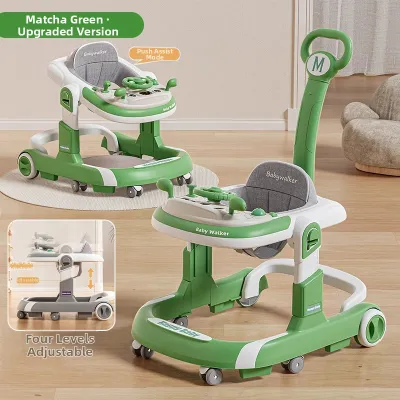
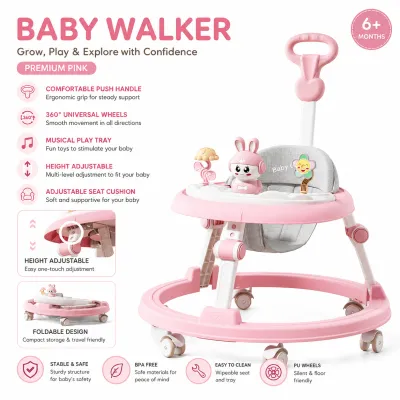

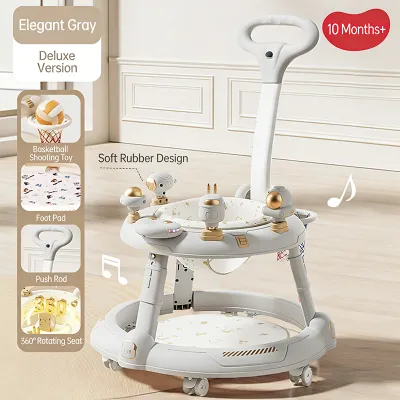
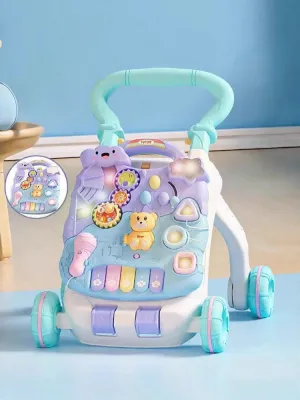
![[FREE GIFT] Lucky Baby Jamboree 5 In 1 Multi-Functional Baby Walker](https://img.lazcdn.com/g/p/d109dc267b06b191789c4e105f6e8947.jpg_400x400q80.jpg_.webp)
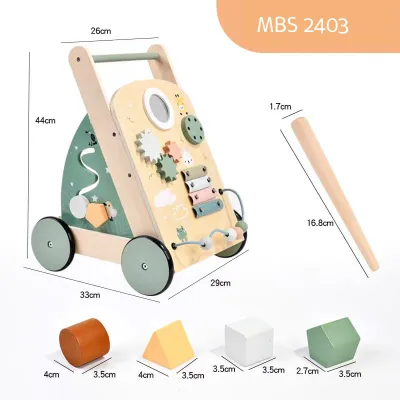
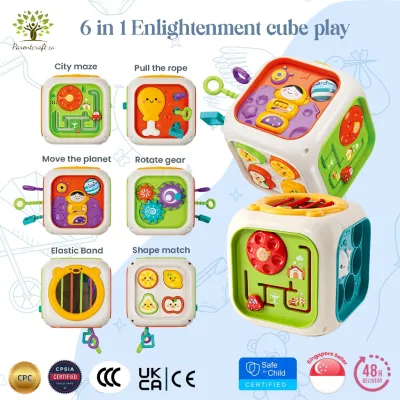
Prices are valid at publication and may change. Please refer to the product page for the latest price.

Wide Wheelbase The overall stability of a baby walker depends heavily on its center of gravity and the width of its base. A high-quality walker features a wide, flared wheelbase that extends well beyond the perimeter of the upper tray and seat. This design ensures that even if your baby leans completely to one side or reaches forward to grab an object, the center of mass remains securely within the wheel footprint. When testing a model in a showroom, try gently pushing the top frame sideways; a safe walker should resist tipping and slide smoothly across the floor instead of tilting.
Braking and Locking Mechanisms Because babies can quickly build up momentum on wheeled devices, effective braking mechanisms are vital. Look for models equipped with built-in friction pads or rubberized grips on the underside of the frame. These pads are engineered to catch on the floor if the wheels slide off an edge, such as a small step or a door threshold, effectively stopping the walker’s forward motion. Additionally, check if the wheels themselves feature individual manual locks, which can be useful when you want to keep the walker stationary for a brief period during play.
Height Adjustability A baby’s physical development and posture are closely tied to how they interact with a walker. Look for a model that offers multiple height adjustment levels. When your baby is seated, their feet must be able to rest flat on the floor, allowing them to push off naturally with their whole foot. If the walker is too high, the baby will be forced to walk on their tiptoes, which can strain their developing calf muscles and increase the risk of tipping. Conversely, if the walker is too low, their knees will bend excessively, leading to poor posture and potential joint strain. Always check the manufacturer’s documentation to verify the recommended height ranges and adjust the seat as your baby grows.
Folding and Latching Security Many modern baby walkers are designed to fold flat for easy storage under furniture or in closets, which is highly practical for space-conscious homes. However, this folding mechanism introduces a potential hazard if it is not properly secured. Ensure the walker features a dual-locking system or a heavy-duty safety pin that prevents the frame from collapsing while your baby is inside. The latching mechanism should require a deliberate, multi-step action by an adult to unlock, ensuring that normal vibrations or the baby’s movements cannot accidentally trigger a collapse. Inspect the joints to ensure there are no small gaps where tiny fingers could become pinched or trapped during setup or use.
Verifying Safety Certifications and Product Recalls
With numerous baby products available across various retail channels, ensuring that a walker has undergone rigorous independent testing is crucial. Uncertified products may use substandard plastics, weak joints, or toxic finishes that pose severe risks to your infant. Whether you are budgeting S$50 or S$150 for a walker, safety should never be compromised for a lower price tag.
When shopping, look for recognized safety certification marks printed clearly on the product’s packaging or permanently affixed to the frame. In many regions, standards such as ASTM F977 in the United States or EN 1273 in Europe indicate that the walker has passed specific mechanical, structural, and stability tests. In Singapore, consumer products are regulated under local safety guidelines, and parents should look for compliance marks or verification from the Consumer Product Safety Office. If a product lacks these markings, or if the seller cannot provide documentation of compliance, it is safest to leave it on the shelf.
Before making a purchase, or if you are considering a pre-loved model, it is essential to check for active product recalls. Manufacturers and consumer safety agencies regularly issue recall notices for design flaws, choking hazards, or structural failures discovered after a product has entered the market. You can search official government safety portals or the manufacturer’s dedicated recall page using the exact model number and manufacturing date found on the walker’s white tracking label.
Be particularly cautious when browsing online marketplaces or purchasing second-hand items. Unbranded walkers sold directly by third-party sellers on global ecommerce platforms often bypass local safety inspections and may not comply with modern safety standards. Second-hand walkers may also have hidden wear and tear, missing friction pads, or weakened locking pins that are not immediately visible. Investing in a certified, brand-new walker from a reputable retailer ensures you receive a product built to current safety specifications.
Environmental Hazards and Usage Red Flags
Even the most technologically advanced safety features on a baby walker can be compromised if the home environment is not properly prepared. A walker turns a typically slow-moving infant into a highly mobile explorer, exposing them to hazards that would otherwise be out of reach.
Stairs and Drop-offs Stairs represent the single greatest hazard associated with baby walkers. While many modern walkers feature friction strips designed to stop the device at a ledge, these mechanical systems are not foolproof and can fail on certain surfaces or at high speeds. You must install secure, hardware-mounted safety gates at the top and bottom of all stairwells. Never rely solely on the walker’s built-in brakes to prevent a fall down a flight of stairs.
Flooring and Thresholds The type of flooring in your home plays a major role in walker safety. Walkers are designed to roll smoothly on flat, hard surfaces like tiles, vinyl, or hardwood. Thick carpets, heavy rugs, and raised door thresholds (common in traditional home layouts) can cause the wheels to catch suddenly. If a baby is moving quickly and a wheel hits an obstruction like a rug edge, the momentum can cause the entire walker to tip over. Ensure the play area is completely level and free of loose rugs or transition strips.
Hazard Proximity Because a walker elevates your baby and allows them to move rapidly, objects that were once safe are suddenly within reach. Keep the walker far away from kitchen areas, ovens, and hot appliances. Ensure that electrical cords, tablecloths, window blind cords, and household chemicals are stored high above the baby’s reaching height. Additionally, keep the walker away from open water sources, such as bathrooms, swimming pools, or large decorative water features, as a baby can roll into these areas in a matter of seconds.
Weight and Size Limits Every baby walker is engineered to support a specific weight and height range. Exceeding these limits compromises the structural integrity of the frame and alters the center of gravity, making the walker highly unstable. Always locate the manufacturer’s specifications on the product label. Once your baby reaches either the maximum weight limit or the maximum height limit—or if their chest rises above the top edge of the seat frame—you must immediately discontinue use of the walker.
Safe Supervision and Knowing When to Stop
Using a baby walker safely requires a commitment to strict operational rules and an understanding of your child’s developmental timeline. A walker is not a babysitter; it is an active play device that demands your full attention.
First and foremost, active adult supervision is mandatory every single second your baby is in the walker. This means an adult must be in the same room, with an unobstructed view, actively watching the baby. Avoid distractions such as mobile phones, television, or household chores that take your eyes off your child.
Second, limit the amount of time your baby spends in the walker. Pediatric experts generally recommend short sessions—no more than 15 to 20 minutes at a time—to prevent physical fatigue and to ensure your baby has plenty of opportunities for natural floor play, such as tummy time, crawling, and pulling up to stand, which are critical for healthy motor development.
Finally, you must know when it is time to retire the walker permanently. As soon as your baby can stand or walk independently, or if they show signs of attempting to climb out of the walker’s seat, the device is no longer safe. At this stage, their physical strength and curiosity exceed the protective design of the walker, and continuing to use it increases the risk of falls and injuries.
Frequently Asked Questions (FAQ)
Are baby walkers banned or restricted in any countries?
Yes, traditional seated baby walkers are subject to strict regulations and even outright bans in certain parts of the world. For example, Canada banned the sale, import, and advertisement of baby walkers in 2004 due to the high volume of injuries associated with their use. In other regions, pediatric associations strongly discourage their use, prompting manufacturers to meet incredibly strict safety standards to remain on the market. Before purchasing a walker, you should check the current consumer safety advisories and local regulations in your specific country to ensure compliance and safety.
What are safer alternatives to traditional seated baby walkers?
If you are concerned about the safety risks of traditional wheeled walkers, there are excellent alternatives that support your baby’s development. Push walkers, also known as walk-behind toys, are a popular choice. These devices require your baby to stand on their own feet, bear their own weight, and actively balance as they push the toy forward, which helps build core strength and coordination. Another option is a stationary activity center or exersaucer. These provide a secure seat and plenty of sensory toys for entertainment, but they lack wheels, keeping your baby safely in one spot while they play.
Community discussion
Share your experience or ask a question. Comments are reviewed before publication.