
Many parents in Singapore look for multi-functional baby gear to save space in their homes and keep their little ones entertained. The baby walker rocker is one such popular hybrid device, designed to transition from a wheeled walker to a stationary rocking chair or bouncer. While the promise of a single product that can entertain, rock, and help your baby learn to walk sounds incredibly convenient, pediatricians and child development experts raise significant concerns about their safety and impact on motor skills.
To answer the core question directly: baby walker rockers are generally not recommended for your baby’s physical development. Although they offer a convenient place to temporarily secure your child, major pediatric associations worldwide advise against using wheeled walkers of any kind. These combination devices merge the physical hazards of traditional wheeled walkers with the developmental risks of stationary rockers. They do not teach your baby how to walk, and evidence suggests they can actually delay key motor milestones.
This article provides general educational information based on pediatric guidelines. Because every child develops at their own pace, always consult a pediatrician, family doctor, or a qualified pediatric physiotherapist in Singapore for personalized guidance regarding your baby’s motor milestones and physical safety.
Products mentioned in this guide
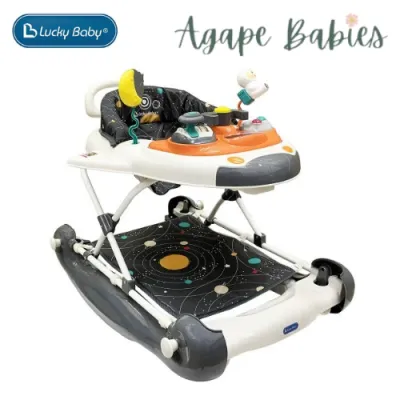
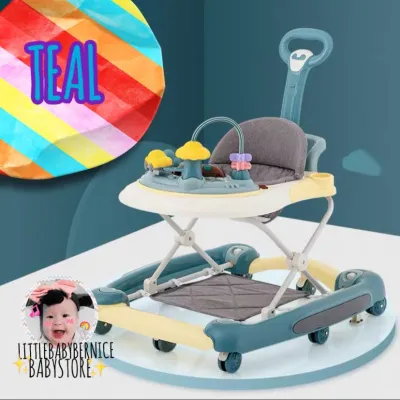

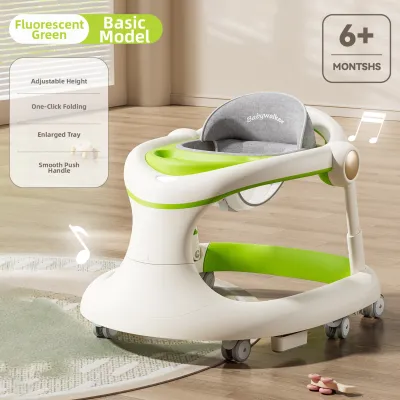

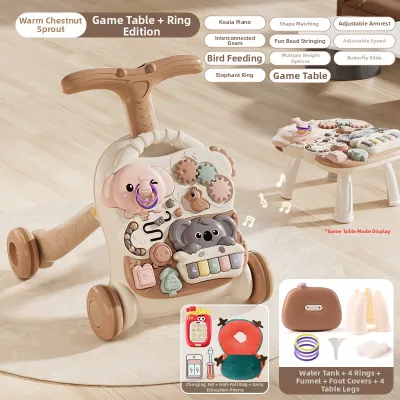


Prices are valid at publication and may change. Please refer to the product page for the latest price.
How the Walker Function Impacts Motor Skills and Milestones
When a baby is placed in the wheeled walker mode of a walker rocker, they are suspended in a fabric seat that supports their weight. While it may look like they are practicing walking as they scoot across the floor, the biomechanics of this movement are completely different from natural, independent walking.
Delayed Independent Walking Learning to walk is a complex neurological and physical process. A baby must learn to bear their own weight, find their center of gravity, balance their torso, and coordinate their leg movements. They also need to experience falling safely and pulling themselves back up. In a walker rocker, the device does all the balancing and weight-bearing work for them. Because the baby does not have to balance their own body weight or stabilize their hips, they miss out on the essential muscle activation and balance practice required to walk independently.
Abnormal Walking Patterns When babies use a wheeled walker, they typically push off the floor using only their toes. This repetitive toe-walking motion can tighten the Achilles tendons and overdevelop the calf muscles. At the same time, the larger, more critical muscles used for independent walking—such as the quadriceps, hamstrings, and glutes—remain under-stimulated. This muscle imbalance can lead to persistent toe-walking habits even when the child is out of the device, requiring physical therapy to correct later on. Additionally, because the frame of the walker prevents babies from seeing their own feet, they miss out on crucial visual feedback that helps them map their movements and understand spatial relationships.
Missed Floor Milestones Every hour your baby spends suspended in a walker rocker is an hour they are not spending on the floor. Floor play is the absolute foundation of healthy infant motor development. Activities like rolling over, crawling on hands and knees, and pulling up to stand build the core, neck, shoulder, and back strength that babies need to support their own bodies. Crawling, in particular, is a vital bilateral movement that coordinates both sides of the brain and strengthens the shoulder girdle. Skipping or shortening these floor-based milestones can lead to weaker core stability and delayed coordination.
Posture and Breathing Risks of the Rocker Function
When converted into its stationary rocker or bouncer mode, the device still presents physical development and safety risks that parents must carefully evaluate.

Positional Asphyxiation The most critical safety hazard associated with the rocker function is the risk of positional asphyxiation. Infant rockers are designed with an angled, semi-reclined seat. If a baby falls asleep in this position, their relatively heavy head can easily drop forward, pressing their chin down toward their chest. Because a young infant’s airway is highly flexible and narrow, this chin-to-chest position can kink the trachea, cutting off their oxygen supply. This silent suffocation can happen quickly and without warning. It is vital to remember that these devices are not safe sleep environments; if your baby falls asleep in a rocker, they must be moved to a flat, firm sleep surface immediately.
Neck Strain and Head Shape Spending prolonged periods in a semi-reclined, seated position places continuous, localized pressure on the back of a baby’s soft skull. This can lead to positional plagiocephaly, commonly known as flat head syndrome. Additionally, because the baby’s movement is restricted by the seat and harness, they are less likely to turn their head from side to side. This lack of movement can cause the neck muscles on one side to tighten and shorten, a condition known as torticollis, which can require ongoing physical therapy to resolve.
Container Baby Syndrome Pediatric experts use the term “Container Baby Syndrome” to describe the range of physical, cognitive, and developmental delays that occur when an infant spends too much time confined in baby gear. This includes car seats, strollers, bouncers, and walker rockers. When a baby’s natural, spontaneous movements are restricted, they cannot explore their environment, practice reaching, or build muscle strength through free play. Minimizing the time your baby spends in any seated container is essential for their overall physical health.
Immediate Physical Hazards in the Home Environment
Beyond the long-term developmental impacts, baby walker rockers present immediate, acute safety hazards in a typical household environment.
Falls and Tipping Wheeled walkers allow babies to move at surprisingly high speeds—sometimes over one meter per second. This rapid mobility makes it incredibly difficult for a caregiver to react in time if a hazard arises. In a Singapore home, floor surfaces can change quickly. Transitioning from smooth tiles to a thick play mat, hitting a sliding door track leading to a balcony, or catching the wheels on a small room threshold can cause the device to tip over instantly. For homes with stairs, split-level living rooms, or steps leading to wet kitchen or bathroom areas, the risk of a catastrophic fall is extremely high and can result in severe head injuries or fractures.
Access to New Hazards A walker rocker elevates your baby and gives them access to heights they would not normally reach. They can suddenly reach the edges of dining tables, kitchen countertops, and low shelves. This puts them at immediate risk of pulling down hot beverages (like coffee, tea, or soup), grabbing electrical cords attached to heavy appliances like rice cookers or kettles, reaching sharp utensils, or accessing toxic household cleaners and medications that were previously safely out of reach.
Entrapment and Pinching Multi-functional baby gear requires moving parts, hinges, and folding mechanisms to transition between walker and rocker modes. These joints and folding frames pose a serious risk of trapping or pinching your baby’s delicate fingers, toes, or skin. If the locking mechanisms are not fully engaged, or if the device is worn out from frequent transitions, the frame can collapse under the baby’s weight, leading to entrapment or crushing injuries.
Harm Reduction: Safety Rules If You Use a Walker Rocker
If you already own a baby walker rocker or choose to use one despite the developmental risks, you must establish strict safety boundaries to minimize the potential for injury.
Strict Time Limits Limit your baby’s time in the device to no more than 10 to 15 minutes per session, and restrict usage to once or twice a day. This prevents muscle fatigue, reduces the risk of developing abnormal walking habits, and minimizes the impact of container confinement. Always check the product label and user manual to verify the manufacturer’s maximum daily usage guidelines and weight or height restrictions.
Constant Active Supervision Never use a walker rocker as a substitute for childcare or as a safe place to leave your baby while you attend to other tasks. Active supervision means keeping your baby within arm’s reach and maintaining direct, uninterrupted line of sight at all times. You must be close enough to intervene instantly if the device tips, gets stuck, or if your baby attempts to climb out.
Environment Preparation Before placing your baby in the device, thoroughly prepare the environment. Block off all stairways, split levels, kitchen entrances, and balconies with secure, high-quality safety gates. Remove all loose rugs, floor mats, electrical cords, and toys from the floor that could obstruct the wheels. Ensure all hot liquids, sharp objects, and chemical substances are stored securely in high cabinets or locked away.
When to Stop Use You must discontinue using the walker rocker immediately if your baby can sit up or stand independently, shows signs of trying to climb out of the seat, or reaches the maximum weight or height limits specified by the manufacturer. Additionally, if you notice your baby showing signs of physical discomfort, persistent toe-walking, or unusual leg posturing during or after use, stop using the device and consult a qualified healthcare professional.
Safer Alternatives That Actually Promote Physical Development
You do not need to rely on a walker rocker to keep your baby entertained or to help them develop their motor skills. Several safer, evidence-aligned alternatives support healthy physical development.
Stationary Activity Centers If you need a safe place to put your baby down while you complete quick household tasks, a stationary activity center is a much safer alternative. These devices offer a similar upright, seated play experience with interactive toys and music, but they do not have wheels. This completely eliminates the risk of your baby rolling into dangerous areas or falling down steps. However, like walker rockers, they should still be used in moderation to prevent container-related developmental delays.
Push Toys For babies who are already pulling themselves up to stand and cruising along furniture, a sturdy, weighted push-walker (where the baby stands behind the toy and pushes it forward) is an excellent choice. Unlike a sit-in walker, a push toy requires your baby to bear their own weight, engage their core muscles, and practice natural balance and posture. This directly supports their transition to independent walking without altering their gait.
Unrestricted Floor Time The absolute best, safest, and most effective environment for promoting physical development is unrestricted floor time on a clean, flat surface. Setting up a dedicated play space with a firm foam play mat allows your baby to practice tummy time, roll over, crawl, and pull up to stand naturally. This free movement builds the exact muscle groups and coordination needed for healthy physical development and independent walking, all at no cost and with zero developmental risks.
Frequently Asked Questions (FAQ)
At what age can a baby start using a walker rocker?
If you choose to use a walker rocker, you must check the manufacturer’s documentation for specific minimum age, weight, and developmental milestones, such as the ability to sit upright unassisted and hold their head up steadily. However, major pediatric associations worldwide strongly advise against using wheeled walkers at any age due to the significant safety and developmental risks involved.
Can a baby walker rocker cause bow legs?
Using a walker rocker does not typically cause structural bow legs, which is a condition often related to bone development or other underlying medical factors. However, it can lead to muscle imbalances, tight calf muscles, and persistent toe-walking habits. If you notice any unusual gait, asymmetrical leg development, or have concerns about your baby’s physical development, always consult a qualified pediatrician or pediatric physiotherapist for a professional assessment.
Community discussion
Share your experience or ask a question. Comments are reviewed before publication.