
Securing your home’s electrical outlets is one of the most critical steps in establishing comprehensive baby electrical safety. As infants transition from quiet observers to active crawlers, low-lying wall sockets present an almost magnetic attraction. Their curious fingers and natural instinct to explore small openings make exposed electrical contacts a significant household hazard.
To mitigate these risks, parents can choose from three primary protective solutions: plug-in caps, sliding covers, and box enclosures. Each option offers distinct advantages in terms of security, ease of use, and installation. Selecting the ideal protector requires matching the specific device to your home’s socket configuration and your child’s current developmental stage, ensuring safety without causing unnecessary daily frustration.
Assessing Your Needs: Socket Types and Developmental Stages
Before purchasing any protective covers, you must evaluate the physical characteristics of your home’s electrical fittings. In Singapore, households standardly use Type G (BS 1363) three-pin rectangular sockets. These outlets are unique because they feature individual rocker switches and a built-in internal shutter safety system, where the longer top earth pin must be inserted first to open the live and neutral shutters. When selecting baby-proofing accessories, you must verify that the products are explicitly designed for Type G outlets. Generic international covers designed for US or European round-pin sockets will not fit and can damage the internal mechanisms of your wall plates.
Products mentioned in this guide
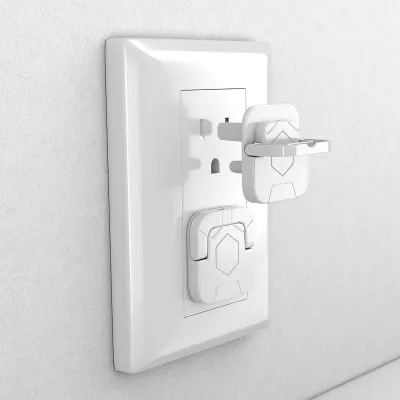
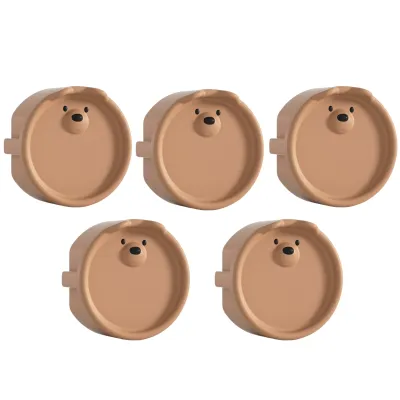
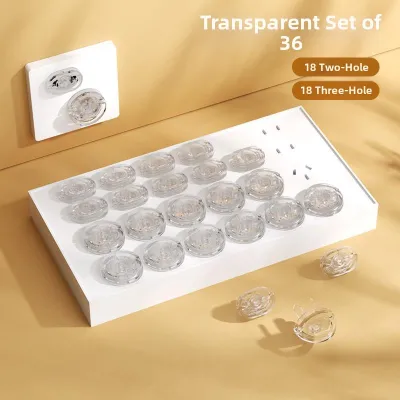
![[Local Seller!] Baby Safety Electrical UK 3pin Power Outlets Socket Cover Plug Caps Japan Brand KM1037 - 5pcs](https://img.lazcdn.com/g/p/ea9601dbec0eaea46fd1122e080ef0b2.jpg_400x400q80.jpg_.webp)

Prices are valid at publication and may change. Please refer to the product page for the latest price.
Your child’s physical abilities and milestones dictate the level of protection required at any given time. During the newborn phase (zero to six months), direct electrical hazards are minimal due to the infant’s lack of mobility. This period is the optimal time for parents to audit the home, identify low-lying outlets, and plan a safety strategy before the onset of rapid physical development.
Once babies reach the crawling and pulling-up stages (six to twelve months), the risk profile escalates dramatically. Sockets located along baseboards or low on walls sit directly at eye level for a crawling child. At this stage, infants possess a strong desire to poke small objects, toys, or their own fingers into any available opening. They require robust, flush-fitting physical barriers that completely block access to the socket apertures.
As children grow into toddlers (twelve to thirty-six months and beyond), their fine motor skills, grip strength, and cognitive abilities improve. Toddlers learn rapidly through mimicry; they observe parents plugging in phone chargers or appliances and will attempt to replicate these actions. Simple plug-in caps that once baffled an infant can easily be pried loose by a persistent toddler. This stage demands more complex, self-closing mechanisms or securely locked enclosures that require adult hand strength and coordination to bypass.
Comparing Outlet Protection Types: Caps, Sliding Covers, and Boxes
To build an effective home safety plan, you must understand how the three main types of outlet protectors function, along with their respective trade-offs in security, convenience, and aesthetics.

Plug-In Caps
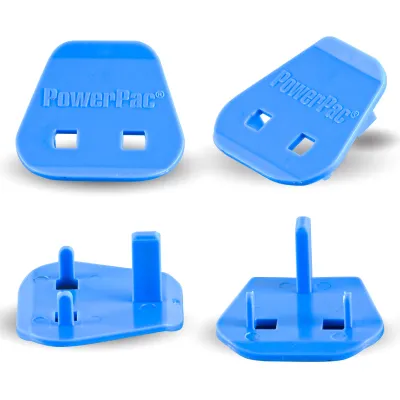
Plug-In caps are simple plastic inserts featuring dummy prongs that press directly into the socket holes, physically blocking access. For Type G sockets, these caps must have a three-prong design to ensure they sit securely and do not accidentally trigger or bypass the internal shutter safety mechanism.
These caps are highly budget-friendly, widely available, and require absolutely zero installation effort beyond pushing them into place. They are highly effective at completely sealing off unused sockets, preventing dust accumulation and keeping curious fingers away from the internal contacts.
However, plug-in caps carry notable drawbacks. If a toddler manages to pry a loose cap out of the wall, the cap itself immediately becomes a severe choking hazard. Furthermore, they can be incredibly difficult for adults to remove without a specialized extraction tool or a flat tool like a coin. This difficulty often leads to parents leaving the caps lying on the floor or nearby tables when using the outlet, creating an immediate hazard for children. They also render the socket entirely unusable until the cap is fully removed and stored.
- Best for: Sockets that are completely hidden behind heavy, semi-permanent furniture like wardrobes, heavy bookshelves, or large TV consoles, as well as outlets that are rarely or never used.
Sliding Socket Covers
Sliding socket covers are replacement faceplates or specialized attachments featuring integrated, spring-loaded sliding panels. To use the outlet, you place the plug prongs against the cover, slide the panel to align with the socket holes, and push the plug in. When you unplug the appliance, the spring-loaded panel automatically snaps back into the closed position, instantly sealing the live contacts.
This design completely eliminates the choking hazards associated with loose, removable caps. Because the protective mechanism is permanently attached to the wall, there are no loose parts to lose or leave lying around. Sliding covers allow full, convenient use of the socket for daily tasks while maintaining a clean, integrated, and visually unobtrusive appearance that does not draw a child’s attention.
On the downside, sliding covers require basic DIY installation, which involves unscrewing the existing faceplate. Because Type G sockets in Singapore often feature individual on/off switches and varied faceplate contours, finding a sliding cover that aligns perfectly with your specific multi-gang switch layout can require careful measuring and sourcing.
- Best for: High-traffic, frequently used sockets in living areas, kitchens, and hallways, especially in homes with active toddlers who have mastered the dexterity to remove basic plug-in caps.
Box Enclosures
Box enclosures are protective plastic shields that fit over both the outlet and any active plugs. The box mounts securely over the existing faceplate, enclosing the plugged-in adapters and routing the cords safely downward through a narrow slot at the bottom. The cover locks shut using a double-press or squeeze-release mechanism that requires adult hand span and strength to open.
This option provides the unique benefit of securing both the socket and the active plug simultaneously. It prevents toddlers from pulling plugs out of the wall, which protects sensitive electronics and eliminates the risk of children touching live plug prongs during partial insertion. It also stops children from pulling on cords, which could otherwise bring heavy appliances crashing down from countertops.
However, box enclosures are bulky, visually prominent, and stick out several centimeters from the wall. This makes them unsuitable for tight spaces behind furniture and can detract from a room’s aesthetic design.
- Best for: Outlets with permanently connected appliances, such as refrigerators, Wi-Fi routers, television setups, baby monitors, or air purifiers, where cords must remain plugged in continuously.
Room-by-Room Selection Strategy
Deploying the right protection in the right area ensures safety where it is needed most without creating unnecessary obstacles in your daily routine.
In the living room and nursery, prioritize sliding socket covers for visible, low-level outlets. These areas are where your child will spend the majority of their unsupervised floor play, making a clean, tamper-resistant solution essential. For entertainment centers, baby monitors, or nightlights, use box enclosures. This keeps active power cords completely out of sight and out of reach, preventing toddlers from pulling on cables or unplugging critical monitoring devices.
In the kitchen and bathrooms, water exposure and high-power appliances introduce unique safety challenges. The safest practice is to keep high-risk appliances, such as bottle sterilizers, kettles, and hair dryers, completely unplugged and stored away in high cabinets when not in use. For the remaining exposed wall sockets, use sliding covers to prevent accidental contact. If you are considering protective covers near sinks or water sources, always check the Ingress Protection (IP) ratings of the enclosures to ensure they offer adequate splash resistance, and strictly follow the manufacturer’s safety guidelines.
For sockets located behind heavy furniture, plug-in caps are generally sufficient. However, do not rely on the furniture itself as a barrier. Toddlers are remarkably persistent and can easily squeeze into narrow gaps behind sofas, or shift lightweight bedside tables and sideboards, exposing unprotected outlets. Ensure every low-lying socket is physically protected, even if it appears blocked.
Safe Installation and Ongoing Maintenance
To ensure your baby-proofing measures remain effective and do not introduce new hazards, you must follow correct installation and maintenance protocols.
When installing sliding covers or integrated box enclosures that require faceplate adjustment, safety must be your top priority. Always turn off the main electrical supply at your home’s distribution board (breaker box) before loosening any screws on a wall plate. Use a reliable voltage tester to verify that the outlet is completely dead before proceeding. If the replacement cover does not fit flush, if the screw holes do not align perfectly, or if you feel unsure about handling the electrical fittings, stop immediately and hire a licensed electrical worker to complete the installation safely.
Establish a monthly maintenance routine to inspect all protective devices throughout your home. Check plug-in caps for physical degradation, hairline cracks, or loose prongs that could break off inside the socket contacts. Test sliding covers to ensure the internal spring-loaded panels snap back into place instantly and are not gummed up by dust, lint, or household paint. For box enclosures, confirm that the locking latches click shut securely and inspect the enclosed power cords to ensure they are not pinched, bent at sharp angles, or showing signs of wear.
Never use protective covers to mask underlying electrical problems. If any wall outlet feels warm to the touch, shows discoloration or scorch marks, emits a buzzing or crackling sound, or has a loose physical fit, stop using it immediately. Turn off the breaker to that specific circuit and consult a professional electrician to diagnose and repair the issue. Baby-proofing accessories are designed to prevent external tampering; they cannot protect against faulty internal wiring or overloaded circuits.
Frequently Asked Questions (FAQ)
Are plug-in caps a choking hazard?
Yes, plug-in caps can pose a severe choking hazard. If an older toddler develops the grip strength and finger dexterity to pull a cap out of the wall, its small size and rigid plastic construction can easily block a child’s airway if placed in the mouth. To minimize this risk, only use plug-in caps in completely inaccessible areas behind heavy, unmovable furniture, and transition to sliding covers or box enclosures for all open, accessible outlets as soon as your baby begins to crawl.
Do I need to replace my wall plates to use sliding covers?
Yes, most high-quality sliding socket covers require you to remove the existing outer wall plate to install the integrated sliding unit. Before attempting this, you must turn off the main power supply at your home’s distribution board. Always verify that the sliding cover you purchase is fully compatible with the standard dimensions, screw placements, and individual switch layouts of Type G (BS 1363) sockets commonly used in Singapore.
Can I use standard outlet covers on power strips?
No, standard wall outlet covers are not compatible with power strips or extension cords due to differences in socket spacing, depth, and orientation. To secure power strips, you should place the entire strip inside a specialized cable management box designed for baby-proofing. These boxes fully enclose the power strip and the connected plugs, allowing the cords to exit through narrow, secure slots that keep them completely out of a toddler’s reach.
Community discussion
Share your experience or ask a question. Comments are reviewed before publication.