
The Short Answer: Are Baby Mirrors Safe for Rear-Facing Seats?
Baby mirrors are a highly popular accessory among parents, offering a quick way to monitor an infant resting in a rear-facing car seat. However, from a strict safety engineering perspective, baby mirrors are aftermarket accessories that are not originally crash-tested with your specific car seat model. This means their safety cannot be universally guaranteed, and they are generally not recommended by car seat safety technicians.
Whether a baby mirror is safe to use in your vehicle depends heavily on its material composition, the security of its installation, and its compliance with both your car seat and vehicle manufacturer guidelines. Parents must carefully weigh the psychological comfort of visual monitoring against the physical and behavioral risks that these devices can introduce to the vehicle cabin.
Understanding the Physical and Behavioral Risks
To make an informed decision, it is crucial to understand the physical and behavioral hazards associated with baby mirrors. The primary physical concern is the risk of the mirror becoming a projectile during a sudden braking event or a collision. In a crash, any unsecured object in the cabin is subjected to extreme gravitational forces, effectively multiplying its weight. A mirror constructed with a rigid plastic frame or glass components can detach and strike your baby or other passengers with significant force. Even lightweight mirrors can become dangerous if their mounting mechanisms fail under the stress of an impact.
Products mentioned in this guide
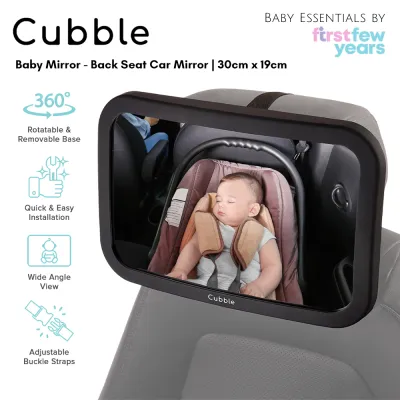
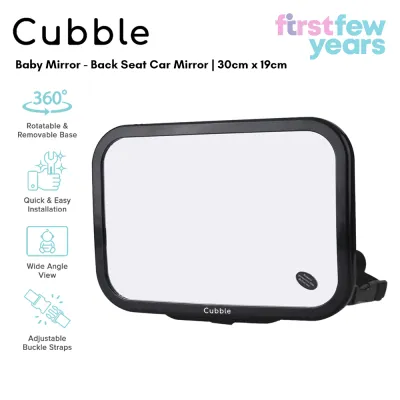

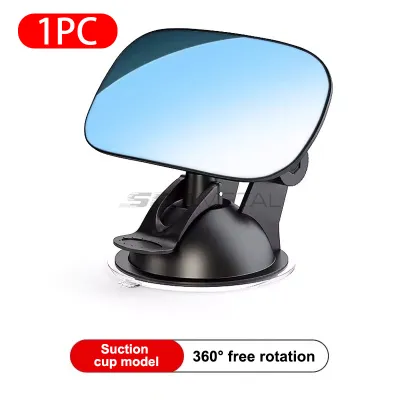
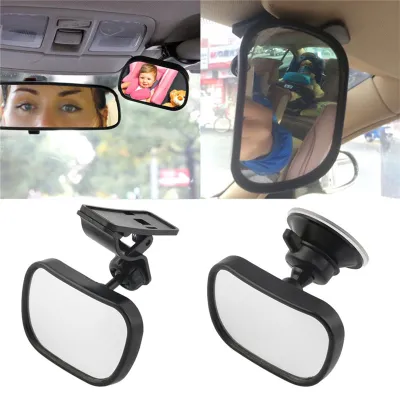
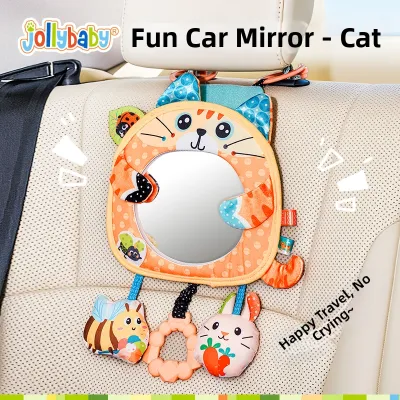
Prices are valid at publication and may change. Please refer to the product page for the latest price.

Another major concern is driver distraction. Safe driving requires continuous attention to the road, especially in Singapore’s dense traffic and fast-moving expressways. Checking a baby mirror, even for a split second, diverts your eyes and cognitive focus away from the traffic ahead. If a parent notices the baby sleeping awkwardly or spitting up in the mirror, the natural impulse is to look longer or attempt to adjust the mirror while driving, which dramatically increases the risk of an accident.
Furthermore, baby mirrors can interfere with the mechanical safety features of your vehicle and car seat. Many mirrors attach to the rear seat headrest using straps. If these straps are bulky, they can prevent the headrest from locking into its correct position or interfere with active head restraint systems designed to protect adult passengers from whiplash. Additionally, if the mirror assembly presses against the top of the car seat shell, it can alter the seat’s angle or restrict its natural movement during a collision, potentially compromising the seat’s energy-absorbing capabilities.
How to Select and Install a Lower-Risk Baby Mirror
If you decide that using a baby mirror is necessary for your peace of mind, you must take active steps to select a lower-risk model and install it with absolute precision. Not all mirrors are designed equally, and choosing the right materials can significantly reduce potential hazards.
First, prioritize mirrors made from shatterproof acrylic rather than real glass. The frame should be constructed from soft, impact-absorbing materials or lightweight fabric rather than hard, sharp-edged plastics. When holding the mirror, it should feel remarkably light; a lower mass reduces the kinetic energy the mirror carries if it ever detaches during a collision.
Second, examine the mounting system. Avoid mirrors that rely solely on a single elastic band or a simple clip-on mechanism. Instead, look for a dual-strap system that wraps both horizontally and vertically around the rear headrest. These straps should feature heavy-duty tensioning buckles that allow you to pull the straps incredibly tight. Once installed, test the security by firmly shaking the mirror frame. There should be no noticeable movement or sliding. If the headrest in your vehicle is fixed or integrated into the seat back without adjustable posts, many standard strap-on mirrors cannot be safely secured and should not be used.
Third, position the mirror to facilitate a quick, passive glance rather than an active search. Adjust the mirror angle so that you can see your baby’s face clearly through your existing rearview mirror without having to move your head or adjust your driving posture. If you find yourself straining, leaning, or shifting in your seat to get a clear view, the mirror is poorly positioned and poses an immediate distraction risk.
Checking Safety Guidelines and Warranties in Singapore
Navigating safety guidelines and manufacturer policies is a critical step for parents in Singapore. While the Land Transport Authority (LTA) does not have a specific regulation banning the use of baby mirrors, general vehicle safety standards strictly prohibit any modifications or accessories that obstruct the driver’s view or pose a physical hazard to vehicle occupants. A loose or poorly secured mirror that falls or shifts during travel could be considered a safety hazard under general road safety guidelines.
It is equally important to review the documentation provided by your car seat manufacturer. Car seats sold in Singapore must meet stringent international safety standards, such as the European Union’s ECE R44/04 or UN R129 (i-Size) standards. These seats are crash-tested under precise laboratory conditions using only the components included in the box. Introducing an aftermarket accessory like a baby mirror can void the manufacturer’s warranty. Many prominent car seat brands explicitly state in their user manuals that the use of third-party accessories not manufactured or approved by them will void all warranties and may compromise the safety certification of the seat.
Before installing a mirror, read both your car seat manual and your vehicle owner’s manual. Look for sections detailing “aftermarket accessories” or “unapproved modifications.” If either manual advises against attaching items to the headrests or near the car seat, you should respect these guidelines to ensure your child’s safety systems function exactly as engineered.
When to Stop Using the Baby Mirror
A baby mirror should never be viewed as a permanent fixture in your vehicle. Parents must establish clear criteria for when to discontinue its use to maintain a safe driving environment.
You must remove the mirror immediately if you observe any signs of physical degradation. Singapore’s tropical climate, characterized by high humidity and intense sunlight, can accelerate the aging of plastics and fabrics. If your car is frequently parked outdoors, the constant heat exposure can cause the mounting straps to become brittle, the buckles to crack, or the reflective surface to cloud and distort. Regularly inspect the tension of the straps and the integrity of the plastic components, and discard the mirror at the first sign of wear.
Additionally, the mirror should be retired when your child transitions out of their rear-facing car seat. Once the child is old enough and heavy enough to ride in a forward-facing seat—in accordance with the car seat manufacturer’s specifications—the mirror serves no purpose. At this stage, you can monitor your child directly or through your standard rearview mirror.
Finally, pay attention to your own driving behavior. If you find that the mirror causes you anxiety, prompts you to take your eyes off the road frequently, or requires constant manual readjustment while driving, it is a liability. Your primary responsibility is to operate the vehicle safely; if the mirror compromises your focus, it must be removed immediately.
Frequently Asked Questions (FAQ)
Can I use a suction cup mirror on the car window instead?
Suction cup mirrors designed to attach to the rear or side windows are generally not recommended for use with rear-facing car seats. The suction mechanism relies on a vacuum seal that is highly susceptible to failure due to temperature fluctuations, high humidity, and the constant vibrations of daily driving. In Singapore’s warm climate, the adhesive properties of suction cups can degrade rapidly. If the suction cup fails, the mirror becomes a free-falling object inside the cabin. Because these mirrors are positioned directly on the glass, a detachment often results in the mirror falling directly into the rear-facing car seat, posing an immediate physical risk to your infant.
Do baby mirrors affect the car's side airbags?
Yes, bulky or improperly placed accessories can potentially interfere with the deployment of side curtain airbags. These airbags typically deploy from the roof lining or the vehicle pillars to protect passengers during a side impact. If a baby mirror is oversized or has straps that extend near the deployment zones, it could obstruct the airbag or be thrown violently into the cabin when the airbag inflates. To prevent this, ensure the mirror remains strictly within the boundaries of the headrest and consult your vehicle’s manual to identify the exact deployment paths of all rear cabin airbags.
Community discussion
Share your experience or ask a question. Comments are reviewed before publication.