
If you are searching for a baby mini bathtub in Singapore with Health Sciences Authority (HSA) certification, you will not find one. The HSA does not regulate, approve, or certify baby bathtubs. This is because the agency’s regulatory scope is strictly defined to cover therapeutic products, medical devices, cosmetics, health supplements, and tobacco products.
Instead, baby bathtubs are classified as general consumer goods. In Singapore, these products fall under the oversight of the Consumer Product Safety Office (CPSO), which is managed by Enterprise Singapore. The CPSO ensures that general consumer products sold in the market do not pose inherent safety hazards to users, though they do not issue individual product certifications for non-electrical nursery items.
To ensure your infant’s safety, you must look beyond government certification marks. Evaluating material composition, structural integrity, and international safety standards is the most reliable way to choose a secure mini bathtub for your child.
Products mentioned in this guide
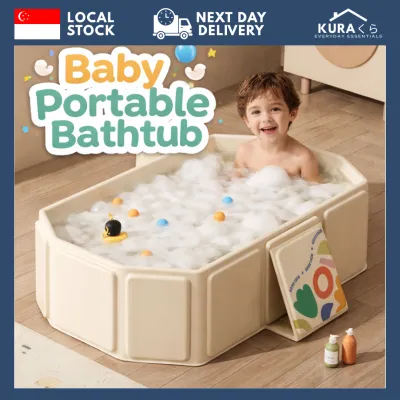
Prices are valid at publication and may change. Please refer to the product page for the latest price.
Does HSA Certify Baby Bathtubs in Singapore?
The Health Sciences Authority (HSA) is responsible for safeguarding public health by securing the safety, efficacy, and quality of health-related products. Their mandate covers products that are ingested, applied to the body for medical purposes, or used as clinical equipment. Because a baby mini bathtub is a physical utility accessory rather than a medical device or therapeutic agent, it completely bypasses HSA jurisdiction.
In Singapore, the safety of general consumer goods is managed under the Consumer Product Safety Programme (CPSG) by Enterprise Singapore. The CPSO monitors the market for unsafe goods and investigates consumer safety complaints. However, unlike controlled electrical appliances or gas accessories, baby bathtubs do not require a mandatory safety registration mark to be legally sold in retail stores or online marketplaces.
This regulatory framework means the responsibility of verifying safety ultimately rests with the parent. Since there is no official Singapore government seal for baby tubs, you must evaluate the manufacturer’s transparency regarding material testing and design standards. Reputable brands voluntarily submit their products to third-party testing laboratories to prove they are safe for infants.
When shopping for a mini bathtub, you should look for compliance with recognized international standards rather than searching for local regulatory stamps. These standards verify that the product has undergone physical and chemical testing to ensure it can withstand daily use without posing risks to a developing baby.
Essential Safety Standards and Features to Look For
Material Safety and Chemical Certifications
When hot water is poured into a plastic or foam bathtub, the heat can accelerate the leaching of volatile chemicals if the materials are of low quality. Because babies have highly sensitive skin and frequently splash or swallow bathwater, verifying the chemical safety of the tub is a critical first step.

Always verify that the product packaging or official manufacturer specifications explicitly state the tub is free from Bisphenol A (BPA), phthalates, polyvinyl chloride (PVC), and heavy metals like lead. BPA and phthalates are chemical plasticizers that have been linked to endocrine disruption, and they should be entirely absent from any product that contacts your baby’s skin.
Reputable manufacturers design their baby bathtubs to meet strict international toy and childcare safety standards. Look for products that reference European Standard EN 71 (which regulates chemical migration limits) or American Standard ASTM F963. Another highly relevant standard is ASTM F2670, which specifically outlines safety specifications for infant bath tubs.
As a practical check, avoid purchasing any baby bathtub that emits a strong, pungent chemical or plastic odor out of the box. This lingering smell often indicates off-gassing from low-grade materials, which could irritate your baby’s respiratory system or skin. If in doubt, contact the brand directly to request their material safety data sheets.
Structural Design and Slip Resistance
Physical accidents, such as slips, tips, and structural collapses, represent the most immediate hazards during baby bath time. A wet infant is exceptionally slippery, meaning the tub itself must provide reliable mechanical support to keep the baby’s head safely above water.
Examine the base of the mini bathtub for robust non-slip features. High-quality tubs are equipped with rubberized feet or textured silicone grips on the bottom to prevent the tub from sliding across slick bathroom floor tiles, vanity countertops, or kitchen sinks. This is especially important in Singapore’s typical wet-dry bathroom layouts where surfaces are frequently damp.
For newborns who cannot yet support their own heads, ergonomic support is vital. Look for bathtubs that feature built-in recliners, contoured crotch supports, or adjustable mesh slings that cradle the infant securely. These features prevent the baby from sliding downward into the water and reduce physical strain on the caregiver.
If you are considering a space-saving foldable model, inspect the locking mechanisms and hinges carefully. The joints must lock firmly into place to ensure the tub cannot accidentally collapse under the weight of the water and the shifting movement of your baby. Ensure all edges are rounded and smooth, with no sharp plastic seams that could scratch delicate skin.
Recommended Baby Mini Bathtubs with Verified Safety Features
To help you navigate the options available in Singapore, we have compiled a list of popular mini bathtubs known for their material safety and structural reliability. These models are widely available through official brand stores, major physical maternity retailers, and authorized online merchants.
Stokke Flexi Bath (Foldable and Travel-Friendly)
The Stokke Flexi Bath is widely recognized for its space-saving design and durable construction, making it a popular choice for modern apartments. It is constructed from high-quality polypropylene (PP) and thermoplastic elastomeric (TPE), which are completely free from BPA, phthalates, and PVC.
This tub features a unique folding mechanism that allows it to fold completely flat for storage. It includes a non-slip base to keep the tub stable on wet surfaces and a heat-sensitive drain plug that changes color to provide a visual cue when the water temperature increases. However, parents should always perform a manual skin test to verify the temperature, as plug colors can vary based on environmental factors.
For newborns, this tub should be paired with the optional Stokke Flexi Bath Newborn Support insert. This ergonomic accessory clips securely onto the edge of the tub, providing a stable, angled cradle that keeps your infant’s head elevated while allowing their body to stay warm in the water.
One limitation to verify is the overall footprint of the tub when fully unfolded. While it is highly compact when folded, it is relatively long and wide when open. You should measure your bathroom floor, shower cubicle, or deep sink area beforehand to ensure it fits comfortably during use.
Puj Tub (Soft and Space-Saving)
The Puj Tub is an innovative, ultra-compact option designed specifically for newborns and very small bathrooms. It is crafted from a soft, closed-cell foam that is non-slip, PVC-free, and BPA-free. This material does not absorb moisture, making it highly resistant to mold and mildew.
This tub is designed to fold and conform to standard bathroom sinks, allowing you to bathe your baby while standing upright. This setup eliminates the physical strain of bending over a low tub and protects the baby from bumping against hard plastic surfaces. It utilizes integrated magnets to hold its shape during use and can be unfolded completely flat to hang from a wall hook or store in a drawer.
Because of its unique design, the Puj Tub has a limited lifespan. It is strictly intended for newborns and smaller infants, typically up to around six months of age or a weight limit of approximately 7.9 kilograms. Once your baby begins to sit up or outgrows the physical dimensions of your sink, you must transition them to a larger tub.
Additionally, you must verify your sink dimensions before purchasing. The Puj Tub is highly compatible with standard pedestal and countertop sinks, but it may not fit properly in extremely shallow, narrow, or uniquely shaped designer vessel sinks.
Skip Hop Moby (Ergonomic with Smart Sling)
The Skip Hop Moby tub is a versatile, rigid mini bathtub designed to adapt to your baby’s developmental stages. It is constructed from durable, high-quality plastics that are free from BPA and phthalates, and it features a textured, non-slip interior surface to prevent sliding.
The standout safety feature of this model is its adjustable “Smart Sling” mesh insert, which locks into three distinct positions. The first stage provides a full-body cradle for newborns. The second stage adjusts to support older infants who are learning to sit up, providing a cushioned seat pad. The third stage allows you to remove the sling entirely, offering a spacious tub for toddlers.
To assist with storage and drying, the tub is equipped with a built-in swivel hook that allows you to hang it from a shower rod, towel bar, or wall hook. This feature helps keep the tub off wet bathroom floors, facilitating faster drying and reducing clutter.
However, because this is a rigid plastic tub, it does not fold flat. It requires a dedicated storage space in your bathroom, which may feel restrictive if your home has a very compact bathroom layout. Ensure you have adequate wall hanging space or floor space to accommodate its fixed dimensions.
Choosing the Right Mini Bathtub for Compact Singapore Homes
Housing in Singapore often features compact bathrooms, particularly in newer HDB flats and executive condominiums. When space is limited, selecting a mini bathtub that can be easily stored without creating physical hazards in the bathroom is essential for maintaining an organized home.
Evaluate how the tub will be stored when not in use. Foldable models can be tucked into narrow gaps next to vanity units or hung flat on heavy-duty adhesive wall hooks. Soft foam models can hang flat behind doors, while rigid tubs with integrated hooks require sufficient vertical hanging space in the shower area.
Consider the developmental lifespan of the tub. Purchasing a model that grows with your child through adjustable inserts or slings can save money and reduce the need to buy multiple bulky items over time. Always prioritize models that allow you to remove supports as your baby gains physical stability.
| Mini Bathtub Model | Material Safety | Folded Dimensions (Approx.) | Unfolded Dimensions (Approx.) | Weight / Age Capacity | Key Safety Feature |
|---|---|---|---|---|---|
| Stokke Flexi Bath | BPA, Phthalate, and PVC-free PP & TPE | 63 x 24 x 10 cm | 66 x 24 x 30 cm | Newborn to approx. 4 years (up to 15 kg) | Non-slip base, heat-sensitive drain plug, optional ergonomic newborn insert |
| Puj Tub | BPA and PVC-free closed-cell foam | 66 x 60 x 2.5 cm (Flat) | Conforms to sink shape | 0 to 6 months (up to approx. 7.9 kg) | Soft cushioned foam, magnetic flat storage, fits standard bathroom sinks |
| Skip Hop Moby | BPA and Phthalate-free plastic | Does not fold flat | 70 x 48 x 29 cm | 0 to 12+ months (up to approx. 11.3 kg) | 3-stage adjustable mesh Smart Sling, non-slip interior, integrated swivel hook |
Safe Bathing Practices and Tub Maintenance
Because mini bathtubs hold a relatively small volume of water, the water temperature can fluctuate rapidly. Hot water can create dangerous hot spots, while cool drafts can lower the temperature quickly. Always perform a manual “touch test” using the sensitive skin on the inside of your wrist or elbow before placing your baby in the water, or use a calibrated digital bath thermometer to verify the temperature is safe.
Singapore’s high humidity levels make bathrooms highly susceptible to mold and mildew growth. After every use, thoroughly rinse the mini bathtub with clean water to remove soap residue and skin oils. Wipe down the surfaces with a clean, dry cloth, and store the tub in a well-ventilated area to air-dry completely. Always consult the manufacturer’s care guidelines, and avoid using harsh abrasive cleaners that could degrade the plastic or foam materials.
The most critical safety rule is to never leave your baby unattended in a mini bathtub, even for a single second. Infants can drown quickly in as little as 2.5 centimeters of water. Built-in support slings, non-slip bases, and shallow water levels do not replace active adult supervision. If you must leave the bathroom for any reason, wrap your baby in a towel and take them with you.
Always inspect your mini bathtub before each use. If you notice any cracks in the plastic, tears in the supportive mesh sling, or damaged locking joints, discontinue use immediately. Contact the manufacturer or a qualified professional to inquire about replacement parts or to verify if the tub is still safe to use.
Frequently Asked Questions (FAQ)
Do baby bathtubs need the Singapore Safety Mark?
No, baby bathtubs do not require or carry the Singapore Safety Mark. The Safety Mark is a mandatory regulatory label managed by the Consumer Product Safety Office (CPSO) specifically for Controlled Goods. Controlled Goods are primarily electrical, electronic, and gas appliances that carry specific fire or electrical hazards. Because baby bathtubs are non-electrical, general plastic or foam consumer products, they do not fall under this classification.
When should I transition from a mini bathtub to a regular one?
You should transition your baby out of a mini bathtub when they reach any of the following developmental milestones: they can sit up completely unassisted, they begin trying to pull themselves up to a standing position using the tub’s edges, or they exceed the manufacturer’s specified weight or height limits. For most babies, this transition naturally occurs between 6 to 12 months of age. Always prioritize the manufacturer’s safety guidelines over general age recommendations.
Community discussion
Share your experience or ask a question. Comments are reviewed before publication.