
Administering medicine to an infant or toddler can be a challenging task. There is no single “best” baby medicine feeder that works for every situation. Selecting the right tool depends on your baby’s age, the medicine’s consistency, and their temperament. For newborns and tiny volumes, a gentle dropper is often best. For older infants and toddlers requiring exact liquid dosages, a medicine syringe provides unmatched precision. Spoons and cups suit older children who can swallow thicker suspensions, while pacifier-style feeders offer a soothing option for resistant babies. Before administering any medication, check the label and consult a pediatrician, GP, or pharmacist at a local clinic or pharmacy to verify the correct dosage, method, and compatibility.
How to Match the Feeder to Your Baby's Age and Medicine Consistency
To choose the most effective and safe baby medicine feeder, you must match the tool to your baby’s developmental stage and the medicine’s physical form.
Newborns (0 to 3 months) possess a strong extrusion reflex and lack head control, meaning they require slow, gentle delivery via droppers to prevent choking. As infants grow (3 to 6 months), they develop better head control, but remain highly sensitive to bitter tastes and can easily gag if fluid is delivered too quickly or aimed directly at the back of the throat. By 6 months and older, babies typically sit upright, eat solid foods, and have the oral motor coordination required to swallow thicker substances from a spoon or cup.
Products mentioned in this guide
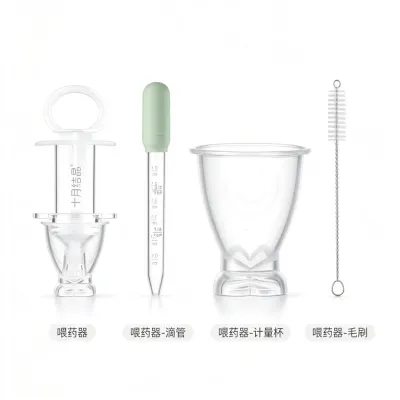
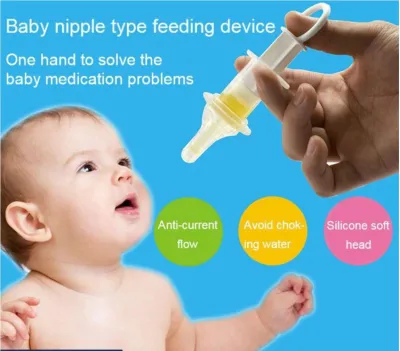
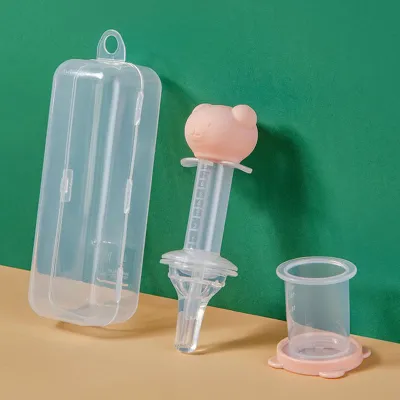
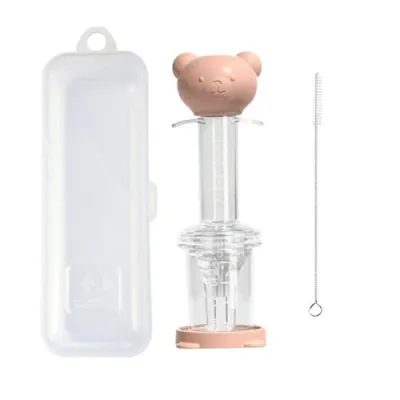
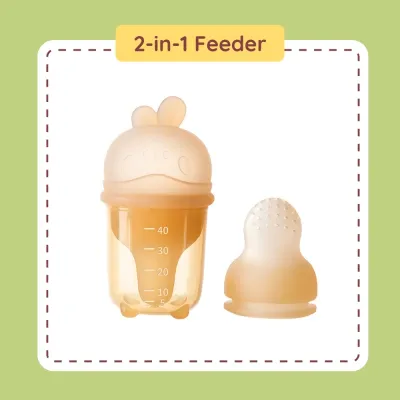
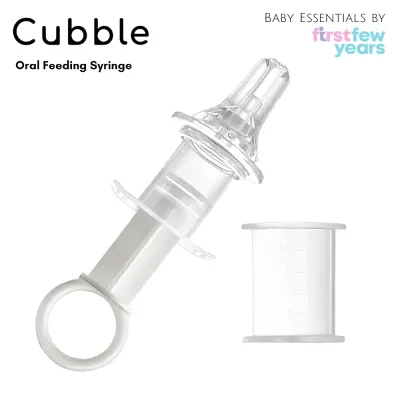
Prices are valid at publication and may change. Please refer to the product page for the latest price.
The medicine’s viscosity also dictates your choice. Thin, watery liquids, such as standard paracetamol drops, flow freely and work well with droppers, syringes, or pacifier-style feeders. Conversely, thicker, viscous suspensions, such as certain antibiotics or dense vitamin syrups, can clog the narrow channels of droppers and pacifier reservoirs. These thicker medications require a syringe with a wider tip or a dedicated medicine spoon or cup.
Finally, your baby’s temperament plays a major role. A cooperative baby may easily accept a medicine spoon, whereas a highly resistant baby who cries or spits out fluid will require an active delivery method like a syringe, or a passive, soothing method like a pacifier feeder that leverages their natural sucking instinct.
Syringe Feeders: Precision for Liquid Doses and Active Babies
Syringe feeders are widely considered the gold standard for administering liquid medications due to their superior volumetric accuracy and control.

- Best For: Infants and toddlers requiring highly precise dosages of liquid medications, such as fever reducers, antihistamines, or liquid antibiotics.
- Pros: High volumetric accuracy with clear graduated milliliter markings; allows caregivers to bypass taste buds by targeting the inner cheek; gives precise control over flow rate.
- Cons: Risk of gagging if inserted too deeply; requires the baby to be somewhat cooperative; not suitable for highly viscous pastes or gels.
The primary advantage of a syringe is the level of control it offers. By placing the tip inside the baby’s mouth and aiming it toward the inner cheek, you bypass the majority of taste buds on the tongue, reducing bitterness and the risk of gagging. Furthermore, you can control the flow rate, dispensing the fluid in tiny, manageable increments that match your baby’s natural swallowing pace.
However, syringe feeders have limitations. Pushing the plunger too quickly can overwhelm the baby’s airway, leading to choking or spitting. Additionally, some babies find the plastic barrel intimidating and may turn their heads away. Syringes are also poorly suited for highly viscous pastes, gels, or medicines containing crushed solids, which can clog the tip.
When using a syringe feeder, always hold the baby in an upright or semi-upright position; never administer medicine while they lie flat. Gently insert the tip into the side of the mouth, pointing it toward the inner cheek. Depress the plunger slowly, releasing no more than 0.25 to 0.5 ml at a time, allowing the baby to swallow completely before administering more. Always verify that the printed measurement markings on the syringe barrel are sharp, clear, and have not faded from washing.
Dropper Feeders: Gentle Delivery for Newborns and Small Volumes
Dropper feeders, which typically consist of a small plastic or glass pipette attached to a squeezable rubber bulb, are designed for the gentlest possible delivery of small liquid volumes.
- Best For: Newborns, young infants (under 3 months), and very small liquid volumes, such as daily vitamin D drops, iron drops, or highly concentrated infant paracetamol.
- Pros: Unobtrusive and gentle; easy to administer drop-by-drop; minimizes the risk of triggering the extrusion reflex; less intimidating than a syringe.
- Cons: Limited volume capacity (usually 1 ml to 2 ml maximum); less precise for larger doses if the bulb is squeezed inconsistently; completely ineffective for thick suspensions.
The main benefit of a dropper is its ability to deliver medication drop-by-drop. This slow rate minimizes the risk of overwhelming the baby’s natural swallowing reflex and prevents choking, keeping the baby calm during administration.
Despite these benefits, droppers have distinct drawbacks. They are generally less precise than syringes for larger volumes, as the suction created by the rubber bulb can vary, making it difficult to draw up an exact measurement consistently. If a baby is actively fussing, turning their head, or swatting with their hands, a dropper can easily spill. Furthermore, droppers are entirely ineffective for thick suspensions, syrups, or emulsions, which cannot be drawn up easily or may clog the narrow opening of the pipette.
To use a dropper safely, hold it at a slight angle and place the tip just inside the baby’s lips or against the inner cheek. Squeeze the bulb very gently to release the medicine slowly. If you are considering mixing the drops with a small amount of breastmilk or formula to mask the taste, you must check the medicine’s label and consult a healthcare professional first, as some medications can interact with milk or may not be fully absorbed if the baby does not finish the mixture.
Spoon and Medicine Cup Feeders: Transitioning Older Babies
As babies grow and develop better oral motor skills, they can transition to spoon and medicine cup feeders, which closely resemble normal feeding tools.
- Best For: Older infants (typically 6 months and older) who possess strong head and neck control, can sit upright independently, and have already begun eating solid foods, as well as toddlers taking thicker suspensions.
- Pros: Mimics normal feeding routines, making it feel less like a medical intervention; non-invasive; ideal for larger volumes (5 ml or more) and thicker, viscous liquid medicines.
- Cons: High risk of spilling if the baby refuses to open their mouth; lower precision for micro-dosing; requires active swallowing and cooperation.
Using a medicine spoon—especially hollow-handle spoons—mimics the natural eating process, reducing anxiety for both the child and the parent. Hollow-handle spoons allow you to measure the dose directly into the handle, keeping the liquid contained until the spoon is tilted, which helps prevent spills. Medicine cups are also highly non-invasive, allowing older toddlers to take control of their own medicine time by drinking directly from the cup under close supervision.
However, these tools require a high level of cooperation. If a baby refuses to open their mouth, turns away, or swats at the spoon, the medicine can easily spill, making it nearly impossible to know how much of the dose was actually consumed. Spoons and cups are also highly imprecise for micro-dosing or very small volumes, where a fraction of a milliliter left behind on the plastic surface represents a significant portion of the prescribed dose.
When administering medicine with a spoon or cup, always ensure the child is seated completely upright, either in a high chair or securely on your lap. If using a hollow-handle spoon, measure the dose using the graduated markings on the handle, then gently place the tip of the spoon on the child’s lower lip. Tilt the handle slowly to allow the medicine to flow into their mouth at a pace they can comfortably swallow.
Pacifier-Style Feeders: A Soothing Option for Resistant Babies
For parents dealing with babies who strongly reject syringes, droppers, and spoons, a pacifier-style medicine feeder can be a highly effective alternative.
- Best For: Infants who are highly resistant to medicine administration, frequently gagging, crying, or spitting out liquid, and thin, low-viscosity liquid medicines.
- Pros: Leverages the baby's natural, self-soothing sucking reflex; bypasses the taste buds by directing fluid to the side of the tongue; significantly reduces stress and crying.
- Cons: Harder to guarantee that the baby has consumed the entire dose; difficult to clean thoroughly due to small channels; not suitable for thick, sticky syrups.
The primary benefit of a pacifier-style feeder is that it leverages the baby’s natural, self-soothing sucking reflex. The feeder typically features a soft silicone nipple connected to a small, built-in medicine reservoir or a port where a syringe can be attached. As the baby sucks, the medicine is drawn out slowly and directed toward the side of the tongue and inner cheek. This design bypasses the bitter-sensitive taste buds on the center of the tongue and prevents the fluid from spraying directly down the throat, significantly reducing the likelihood of gagging, coughing, or spitting.
However, pacifier-style feeders have notable disadvantages. It can be difficult to guarantee that the baby has consumed the entire dose, as a small amount of liquid often remains trapped inside the nipple or the reservoir channels. They are also highly challenging to clean and sanitize thoroughly, as the small valves, tubes, and crevices can trap moisture and medicine residue, creating an environment ripe for mold and bacterial growth. Additionally, they are completely unsuitable for thick, sticky syrups or suspensions, which cannot flow through the tiny holes in the nipple.
When using a pacifier feeder, always check the reservoir carefully after use to ensure no medicine is left behind. Ensure the pacifier nipple shape and size are appropriate for your baby’s age and developmental stage. After each use, disassemble the feeder completely and follow the manufacturer’s cleaning instructions meticulously to prevent hidden mold.
At-a-Glance Comparison: Choosing the Right Feeder for Your Needs
To help you quickly evaluate your options, the table below compares the four primary types of baby medicine feeders based on key developmental and practical criteria.
| Feeder Type | Ideal Age Range | Best Medicine Consistency | Precision Level | Ease of Cleaning | Key Limitation |
|---|---|---|---|---|---|
| Syringe Feeder | 1 month to 3+ years | Thin liquids, light suspensions | Excellent (Very High) | Moderate (Requires disassembly) | Can cause gagging if pushed too deep |
| Dropper Feeder | Newborn to 6 months | Thin liquids, micro-doses | Moderate to High | Easy | Ineffective for thick syrups or suspensions |
| Spoon / Cup | 6 months to 3+ years | Thick suspensions, large volumes | Moderate | Very Easy | High risk of spilling if baby resists |
| Pacifier Feeder | 1 month to 12 months | Thin liquids only | Moderate | Difficult (Many small parts) | Medicine can remain trapped in reservoir |
How to Choose the Right Feeder for Your Scenario:
- Choose a Syringe Feeder if you need to administer an exact dose of a liquid medication (such as a liquid fever reducer or prescribed antibiotic) to an infant or toddler, and you need precise control over the flow rate to prevent choking.
- Choose a Dropper Feeder if you are caring for a newborn or very young infant who requires a tiny, highly concentrated dose (such as daily vitamin D drops) and you want a gentle, non-threatening delivery method.
- Choose a Spoon or Medicine Cup if your baby is older than 6 months, can sit upright, is comfortable with spoon-feeding, and needs to take a larger volume or a thick, viscous suspension.
- Choose a Pacifier Feeder if your baby is highly resistant to taking medicine, consistently spits out liquid, and already uses a standard pacifier for self-soothing.
Safe Administration and Cleaning Practices for Medicine Feeders
Regardless of the type of baby medicine feeder you choose, adhering to strict safety, hygiene, and maintenance practices is vital to protect your baby’s health and ensure accurate dosing.
First, always hold your baby in an upright or semi-upright position during administration. Giving liquid medicine to a baby who is lying flat increases the risk of aspiration, where the fluid enters the lungs instead of the stomach, which can cause choking or serious respiratory issues.
Never mix medicine into a full bottle of formula, breastmilk, or food. If your baby does not finish the entire portion, they will only receive a partial dose, making it impossible to determine how much active ingredient they actually consumed. If you must mix medicine with a small amount of liquid, consult your pharmacist first to ensure compatibility, and use only a tiny, easily consumed volume (such as one teaspoon of expressed milk).
Additionally, never refer to medicine as “candy” or “sweets” to coax a toddler. While this might seem like an easy way to gain cooperation, it can lead to dangerous situations where the child attempts to seek out and consume the medicine independently.
Proper hygiene and thorough cleaning are critical to prevent the growth of harmful bacteria and mold. In Singapore’s warm and humid climate, damp medical devices can quickly become breeding grounds for microbes if not dried correctly. Immediately after each use, disassemble the feeder completely and wash every component thoroughly in warm, soapy water. Use a small, dedicated nipple brush or a syringe cleaning brush to scrub inside the barrel, plunger tip, dropper pipette, and pacifier channels.
Rinse all parts thoroughly with clean water to remove soap residue. Allow all components to air dry completely on a clean, elevated drying rack in a well-ventilated area. Before using steam sterilizers, UV sterilizers, or boiling water, always consult the manufacturer’s care instructions for both the medicine feeder and the treated item. Some plastics can warp or degrade when exposed to high heat, permanently distorting printed measurement markings and compromising dosing accuracy.
Finally, inspect your medicine feeders regularly. Replace them immediately if you notice physical wear, cracks, cloudiness in the plastic, persistent odors, mold, or if the printed measurement markings begin to fade or rub off.
Frequently Asked Questions (FAQ)
Can I use a regular kitchen spoon to give my baby medicine?
No, you should never use a regular kitchen spoon to administer medicine to a baby or child. Kitchen spoons are not standardized measuring instruments; their volumes vary dramatically depending on the design, depth, and manufacturer. Using a household spoon can easily lead to dangerous under-dosing or over-dosing. Furthermore, kitchen spoons lack spill-resistant edges, graduated markings, and shapes designed for a baby’s small mouth. Always use the syringe, dropper, cup, or spoon that came with the medication, or purchase a dedicated, calibrated baby medicine feeder.
How do I get my baby to take medicine if they spit it all out?
If your baby consistently spits out medicine, try using a medicine syringe and aiming the tip toward the inside of their cheek rather than the center of their tongue. This bypasses the taste buds and makes it much harder for them to push the liquid out. Administer the dose in very small increments, allowing them to swallow completely between pushes. Alternatively, a pacifier-style feeder can leverage their natural sucking reflex to deliver the medicine smoothly. If these methods fail and your baby continues to spit out or vomit essential medication, stop administration and consult a pediatrician, GP, or pharmacist immediately. They can offer advice on alternative medicine formulations, safe flavoring options, or alternative delivery methods.
Community discussion
Share your experience or ask a question. Comments are reviewed before publication.