
Grooming a young child’s hair is a delicate process that changes dramatically as your baby grows. During the first few months, a newborn’s scalp is incredibly soft, with open fontanelles and fine, sparse hair requiring the gentlest touch. As infants transition into active toddlers, their hair becomes denser, their scalp matures, and their willingness to sit still decreases. Choosing the right baby hair trimmer requires understanding these developmental shifts and matching them to specific product features.
For newborns, the primary goal is to protect their highly sensitive skin and avoid startling them. This stage demands ultra-quiet motors, low-vibration designs, and specialized safety blades that prevent direct contact with the scalp. Because newborn hair is so fine, high-powered motors are unnecessary, and the focus remains entirely on comfort and safety.
As your child grows into a toddler, the grooming challenge shifts from skin sensitivity to cooperation and hair density. Toddlers have thicker, coarser hair that can easily snag in low-powered trimmers, causing painful pulls. They are also highly mobile and easily distracted, meaning parents need tools that work quickly, clean up easily, and offer features like waterproof casings for bath-time trims or built-in vacuums to catch itchy hair clippings.
Products mentioned in this guide
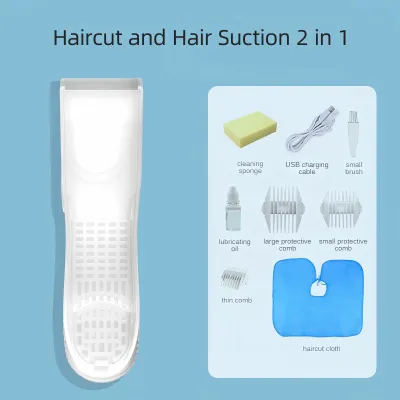
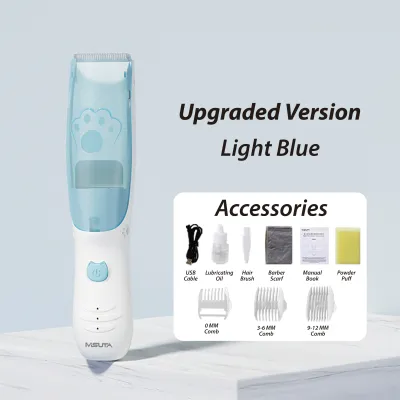
![[SG Seller] MISUTA 2 IN 1 Waterproof Automatic Electric Rechargeable Baby Children Quiet Ceramic Hair Trimmer / Ceramic Haircut Clipper With Hair Suction](https://img.lazcdn.com/g/p/b35aaa3da96af1d56e661314f292fc0a.jpg_400x400q80.jpg_.webp)
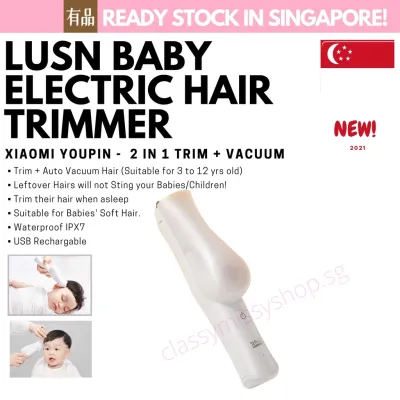
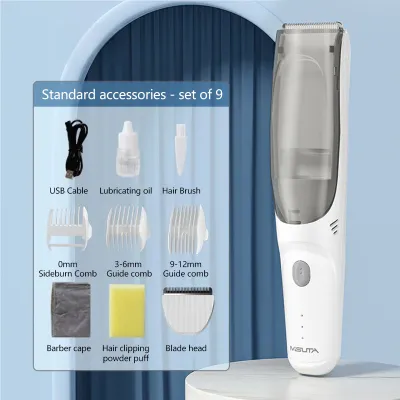
![[FREE GIFT] Lucky Baby 2 In 1 Waterproof Electric Rechargeable Ceramic Blade Baby Children Haircut Trimmer Clipper](https://img.lazcdn.com/g/p/9a3310aa1d27745e0b05f4891888e9df.jpg_400x400q80.jpg_.webp)
Prices are valid at publication and may change. Please refer to the product page for the latest price.
By evaluating these distinct developmental needs, you can select a grooming tool that ensures a stress-free experience for both you and your child. Whether you opt for a highly specialized newborn trimmer or a versatile, adjustable model designed to grow with your child, understanding the technical specifications will help you make an informed decision.
Essential Safety and Comfort Features for Newborns
When selecting a hair trimmer for a newborn, safety is the absolute priority. A newborn’s skin is significantly thinner and more delicate than an adult’s, making it highly susceptible to scratches, nicks, and irritation. The first feature to evaluate is the blade design and material. Look for trimmers equipped with ceramic blades that feature rounded tips, often referred to as R-shaped or rounded-corner blades. Ceramic is an excellent material for baby trimmers because it conducts less heat than traditional stainless steel, reducing the risk of thermal discomfort against your baby’s skin. The rounded tips ensure that even if the trimmer is held at an angle or if the baby makes a sudden movement, the sharp cutting edges do not make direct contact with the scalp.
Noise and vibration levels are equally critical when grooming a newborn. Infants have highly sensitive hearing and can easily become startled or frightened by loud, high-pitched noises. When shopping, look for the manufacturer’s official decibel (dB) rating rather than relying on vague marketing terms like “ultra-quiet.” A suitable newborn trimmer should ideally operate at a noise level below 50 decibels, which is comparable to a quiet conversation or a gentle hum. Low vibration is also essential; excessive shaking can make the device difficult for you to control and can feel intensely uncomfortable or ticklish against a newborn’s sensitive head, leading to fussiness.
Motor power in newborn trimmers should be optimized for fine, sparse hair. You do not need a high-velocity motor to cut through newborn hair; instead, you need a motor that delivers consistent, smooth power. A motor that is too weak or inconsistent can cause the blades to snag or pull on the fine hair shafts, causing pain and distress. Look for a motor that maintains a steady speed even when the battery is running low, ensuring a seamless cut from start to finish.
Finally, consider the ergonomics of the trimmer. As a caregiver, you will likely be holding a fragile, moving infant in one arm while attempting to trim their hair with the other. The trimmer must be lightweight, compact, and designed with a non-slip grip. An ergonomic shape allows you to maintain precise control and maneuver the device smoothly around the contours of your baby’s head without straining your wrist or losing your grip.
Practical Upgrades for Active and Growing Toddlers
As your baby transitions into a toddler, their grooming needs change dramatically. Toddler hair is thicker, denser, and coarser, requiring a more robust motor to achieve a clean cut. A trimmer designed solely for newborns may stall or pull when faced with a toddler’s full head of hair. To handle this, look for trimmers with adjustable speed settings or more powerful motors. A multi-speed motor allows you to use a lower, quieter speed around sensitive areas like the ears and a higher speed to quickly cut through thicker patches of hair on top of the head.

One of the most practical upgrades for a toddler trimmer is a high waterproof rating, typically measured by the Ingress Protection (IP) standard. An IPX7 rating is highly desirable, as it indicates the device can be safely submerged in water up to one meter deep for up to thirty minutes. This level of water resistance allows you to perform trims during bath time, which is an excellent strategy for keeping a toddler distracted and relaxed. It also makes cleanup incredibly simple, as you can rinse the entire device directly under the tap to remove stubborn hair clippings.
Another excellent feature for active toddlers is an integrated hair-vacuum or suction mechanism. Anyone who has trimmed a toddler’s hair knows that the tiny, itchy clippings falling onto their neck and shoulders are often the main source of tantrums. A vacuum trimmer features a built-in fan that sucks loose hair clippings into an internal collection chamber as you cut. While this feature adds a small amount of weight and noise to the device, the benefit of a mess-free, itch-free trim is often well worth the trade-off for parents of sensitive toddlers.
To keep an active toddler still, some modern trimmers also incorporate subtle distraction features. This can include soft, built-in LED lights that illuminate the cutting area while capturing the child’s interest, or colorful, kid-friendly designs. However, the most effective distraction is often a fast, efficient trim. A trimmer with sharp, high-quality blades and a powerful motor will allow you to complete the haircut in a fraction of the time, minimizing the window of opportunity for your toddler to become restless or uncooperative.
Feature Matrix: Matching Trimmer Specs to Your Child's Stage
To help you decide which features are most relevant to your current situation, it is helpful to compare the technical specifications side-by-side. The following matrix outlines the key differences in trimmer requirements for newborns versus toddlers:
| Feature | Newborn Specification | Toddler Specification |
|---|---|---|
| Blade Material | Ceramic with rounded R-shape tips | Ceramic or stainless steel with safety guards |
| Motor Noise Level | Under 50 dB (whisper quiet) | Under 55-60 dB (moderate hum acceptable) |
| Motor Power & Speed | Single low speed, optimized for fine hair | Multi-speed or high-torque for thick hair |
| Waterproof Rating | IPX5 (splash-proof) is sufficient | IPX7 (fully waterproof for bath-time use) |
| Cleanup Mechanism | Manual brushing of blades | Integrated vacuum suction chamber |
| Power Source | Rechargeable battery or corded | Cordless rechargeable (for maximum mobility) |
When deciding whether to purchase a single “grow-with-me” trimmer or two specialized tools, consider your long-term grooming plans. A versatile, multi-speed trimmer with adjustable guide combs and a high waterproof rating can often serve your child from infancy through the toddler years. However, you must accept certain trade-offs. For example, a trimmer equipped with a built-in vacuum suction mechanism will naturally be heavier and slightly louder than a minimalist newborn trimmer. If your priority is absolute silence and lightweight maneuverability for the first year, starting with a dedicated newborn trimmer and upgrading later is a highly practical approach.
On the other hand, if you prefer a single investment, look for a modular trimmer system. These systems often feature interchangeable blade heads or highly adjustable guide combs that allow you to customize the cutting height and safety level as your child’s hair density changes. Whichever path you choose, ensure the device allows you to easily detach the blades for thorough cleaning and sanitization between uses.
How to Verify Manufacturer Claims Before You Buy
With so many baby grooming products on the market, it can be challenging to separate genuine safety features from marketing hype. To ensure you are purchasing a high-quality, safe tool, you must know how to verify manufacturer claims. Start by examining the blade specifications. Some brands claim to use ceramic blades, but they may actually use metal blades with a thin, painted coating that can wear off over time. To verify this, check the product manual or detailed specification sheets. Genuine ceramic blades are solid white or black, feel smooth to the touch, and are clearly identified in the technical specifications as solid zirconium dioxide or ceramic.
Next, look closely at the decibel (dB) ratings. Many products are marketed as “silent” or “whisper quiet” without providing any concrete data. To find the objective noise level, look for a specific decibel rating on the product packaging, user manual, or official brand website. A rating of 40 to 50 dB is excellent for newborns, while anything above 60 dB may be too loud for a sensitive infant. If the manufacturer does not list a specific decibel rating, it is best to proceed with caution or look for a brand that provides transparent technical data.
Waterproof claims should also be verified using official Ingress Protection (IP) ratings. A product labeled simply as “waterproof” may only be splash-resistant. Look for an explicit IPX rating: IPX5 means the device can withstand low-pressure water sprays, while IPX7 means it can be fully submerged in water. If you plan to use the trimmer in the bath or rinse it under running water, ensure it has a certified IPX7 rating. Additionally, check for battery safety certifications, such as CE, FCC, or local safety marks, to ensure the rechargeable lithium-ion battery has been tested for safety and stability.
Finally, consider the long-term usability of the trimmer by checking the availability of replacement parts. Over time, ceramic blades can become dull or chipped if dropped, and guide combs can easily be misplaced. Before purchasing, visit the manufacturer’s official website or authorized retailers to confirm that replacement blades, blade guards, and charging cables are readily available for purchase. A high-quality trimmer is only useful if you can maintain it properly, and the ability to easily source replacement parts is a strong indicator of a reputable brand.
Frequently Asked Questions (FAQ)
Can I use a regular adult hair clipper on my baby?
Using a regular adult hair clipper on a baby is not recommended due to several safety and comfort risks. Adult clippers are designed to cut through thick, coarse adult hair, meaning they feature much more powerful motors that generate significant heat, loud noise, and intense vibrations. These factors can easily terrify a young child, making future haircuts highly stressful. Furthermore, adult clippers typically feature sharp, closely spaced metal blades without the rounded safety tips found on baby-specific models. A baby’s scalp is incredibly soft and pliable, and the lack of specialized safety guards on adult clippers greatly increases the risk of accidental nicks, cuts, and skin irritation.
At what age should I switch from a newborn trimmer to a toddler one?
Rather than relying on a strict age limit, you should look for physical and behavioral indicators to decide when to upgrade your child’s trimmer. Physically, if you notice your child’s hair is becoming denser, coarser, or starting to curl, a low-powered newborn trimmer may begin to struggle, leading to hair pulling. Behaviorally, if your child has transitioned from lying still to actively moving, crawling, or resisting haircuts, you will benefit from upgrading to a trimmer with faster cutting speeds, a waterproof design for bath-time distractions, or a built-in vacuum to eliminate itchy clippings. For most children, this transition occurs between twelve and eighteen months of age.
Are hair-vacuum trimmers safe for a baby's sensitive skin?
Yes, hair-vacuum trimmers are entirely safe for a baby’s sensitive skin, provided they are used correctly with the appropriate safety guards attached. The suction mechanism in these devices is designed to capture loose, lightweight hair clippings as they are cut, rather than pulling on the hair follicles or the scalp itself. The suction force is gentle and does not cause discomfort or skin irritation. To ensure optimal safety and performance, always make sure the blade guard is securely locked in place before use, and empty the hair collection chamber regularly during the trim to prevent the vacuum from clogging or overheating.
Community discussion
Share your experience or ask a question. Comments are reviewed before publication.