
When preparing a nursery in Singapore, selecting a safe baby crib is one of the most critical decisions you will make. Because infants spend up to 16 hours a day sleeping, their sleep environment must be entirely free from structural hazards, toxic materials, and entrapment risks. To ensure your child’s safety, a baby crib should comply with recognized international safety standards such as the European standard (EN 716) or the American standard (ASTM F1169), which are widely accepted by local safety regulators.
In Singapore, consumer product safety is overseen by the Consumer Product Safety Office (CPSO), which ensures that general consumer goods sold locally meet safety requirements. However, because many cribs are imported, parents must take an active role in verifying safety certifications directly on product labels and packaging. Relying on brand reputation or aesthetic appeal is not enough; a systematic verification of physical dimensions, structural integrity, and certification marks is essential to protect your baby.
Understanding Safety Certifications and Regulatory Requirements
Safety standards for baby cribs are designed to eliminate known hazards, such as head entrapment, fall risks, and chemical exposure. While Singapore does not have a singular, isolated national standard specifically for crib manufacturing, the CPSO recognizes major international standards. When shopping for a crib, you should look for explicit compliance with either the European Standard EN 716 or the American Standard ASTM F1169.
Products mentioned in this guide
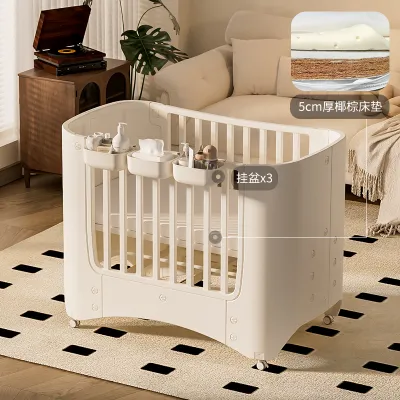
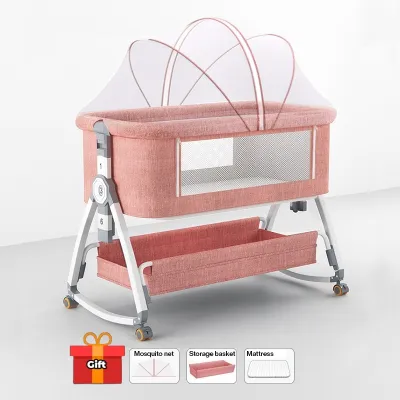
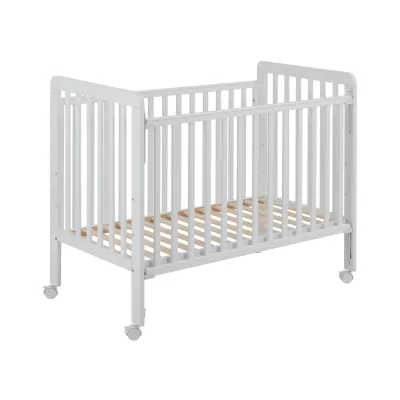
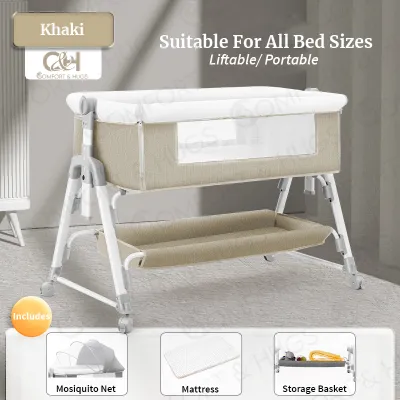



Prices are valid at publication and may change. Please refer to the product page for the latest price.
The European Standard EN 716 specifies safety requirements and test methods for children’s cots for domestic use with an internal length between 900 mm and 1400 mm. This standard rigorously tests the strength of the slats, the distance between them, and the height of the cot sides to prevent falls. If a crib is certified under EN 716, it indicates the design has undergone mechanical strength tests to withstand the active movements of a growing child.
The American Standard ASTM F1169 is another highly respected benchmark, establishing stringent safety specifications for full-size baby cribs. This standard includes strict testing for structural durability, component strength, and the security of hardware. Notably, ASTM standards led to the complete ban of traditional drop-side crib designs due to safety hazards associated with malfunctioning hardware. Verifying this certification helps ensure that the crib’s design minimizes mechanical failure risks.
To verify these certifications, locate the physical label permanently attached to the crib frame or printed in the user manual. Do not rely on vague marketing phrases like “tested to international standards” or “safety approved” without a specific standard code listed. Legitimate manufacturers will clearly print the exact standard number (e.g., “Complies with EN 716-1:2017”) on the product packaging, the instruction booklet, and often on a sticker affixed to the mattress support board.
Furthermore, parents should check the chemical safety of the finishes used on the crib. Because babies often chew on crib rails during teething, the paint, varnish, or lacquer must be certified non-toxic and lead-free. Look for certifications indicating compliance with EN 71-3 (the European standard for migration of certain elements in toys and children’s products) or equivalent standards that restrict heavy metals and volatile organic compounds (VOCs).
Key Physical Safety Features to Inspect Before Buying
Beyond checking certification labels, conducting a hands-on physical inspection of the crib is a vital step in ensuring safety. Whether you are viewing a model in a local Singapore showroom or unboxing a newly purchased unit at home, you should systematically measure and evaluate several critical dimensions.

Slat spacing is one of the most critical physical features to inspect. The gap between the vertical slats of the crib must be narrow enough to prevent your baby’s head, limbs, or body from slipping through and becoming trapped. The standard safe distance between slats is no more than 60 mm (approximately 2.36 inches). A practical way to test this is by attempting to pass a standard soda can through the slats; if the can fits through the gap, the slats are too far apart, and the crib is unsafe.
The fit of the crib mattress is equally crucial for preventing suffocation and entrapment. There should be no significant gaps between the edge of the mattress and the inner walls of the crib. To test this, insert the mattress into the crib and check the perimeter. If you can easily fit more than two fingers between the mattress and the crib frame, the mattress is too small for the crib. This gap poses a severe risk where a baby’s head or limbs could slide in and become trapped.
Structural stability must be verified by gently shaking the assembled crib. A safe crib should feel solid and rigid, with no noticeable wobbling, swaying, or rattling. Check that all corner posts are practically flush with the end panels. Corner posts that extend more than 1.5 mm above the end panels can snag a baby’s clothing, creating a dangerous strangulation hazard.
Examine the crib’s surfaces for any sharp edges, rough wood, splinters, or peeling finishes. In Singapore’s warm and highly humid climate, wooden furniture can expand, contract, or warp if not properly sealed, which may cause wood to split or finishes to flake. Ensure all wooden surfaces are perfectly smooth to the touch, and verify that all metal hardware, such as screws, bolts, and brackets, are recessed or capped so they cannot scratch your baby.
Finally, avoid cribs with decorative cutouts in the headboard or footboard. While these designs may look appealing, they present entrapment hazards where a baby’s head or limbs could become wedged. A safe crib prioritizes clean, simple lines and solid or closely slatted panels without intricate decorative openings.
Safe Usage and Maintenance Practices to Prevent Accidents
Owning a certified safe crib is only half the battle; maintaining its structural integrity and using it correctly over time is essential for ongoing safety. Because a crib undergoes daily wear and tear as your baby grows and becomes more active, establishing a routine maintenance schedule is highly recommended.
Perform a monthly inspection of all hardware. Check for loose screws, bolts, and brackets, and tighten them gently using manual hand tools. Avoid using power drills, as excessive torque can easily strip the wood or crack the frame, compromising the crib’s structural strength. If you notice any worn-out, stripped, or missing hardware, contact the manufacturer immediately for original replacement parts rather than using generic hardware from a local store.
When assembling the crib, strictly follow the manufacturer’s step-by-step instruction manual. Ensure every single screw and dowel is placed exactly where specified. Never improvise the assembly or leave out parts, even if the structure seems stable without them. If the instructions are unclear or if you suspect parts are missing, stop assembly immediately and consult the manufacturer’s customer support.
The sleep environment inside the crib must remain minimalist to prevent suffocation. The only items that belong in a baby’s crib are a firm, flat mattress and a tightly fitted sheet. Do not place pillows, thick blankets, quilts, sheepskins, stuffed toys, or bumper pads inside the crib. While bumper pads were traditionally used to prevent bumps, modern safety guidelines strongly advise against them as they pose a significant suffocation and strangulation risk, and older babies can use them as steps to climb out of the crib.
As your baby develops, you must adjust the crib settings to match their physical milestones. Most cribs feature adjustable mattress base heights. Set the mattress to the highest level for newborns to make lifting them easier. However, you must lower the mattress base to the lowest setting as soon as your baby shows signs of sitting up, rolling over, or pulling themselves up to a standing position.
Stop using the crib entirely once your child reaches the manufacturer’s height or weight limits, or when they are able to climb out of the crib independently. Typically, when the height of the side rail is less than three-quarters of your child’s height, it is time to transition them to a toddler bed or a floor mattress to prevent dangerous fall injuries.
What to Do If a Crib Fails Safety Checks or Shows Damage
If at any point during your routine inspections you discover that your baby’s crib has failed a safety check, shows structural damage, or has broken components, you must take immediate action to protect your child.
First, immediately stop using the crib. Do not attempt to “make do” or temporarily secure a broken rail or loose joint. Place your baby in a safe alternative sleeping environment, such as a compliant playpen, travel cot, or bassinet that meets current safety standards, while you resolve the issue.
Do not attempt complex DIY repairs on critical structural components. Gluing cracked wood slats, using non-standard brackets, or drilling new holes to fix a loose joint can severely compromise the structural integrity of the crib and will void the manufacturer’s warranty. If a structural component is damaged, contact the manufacturer or authorized local distributor to inquire about official replacement parts or warranty claims.
If the manufacturer cannot supply the exact replacement parts, or if the crib frame itself is cracked or warped beyond simple part replacement, the crib must be decommissioned and replaced. When disposing of an unsafe crib, dismantle it completely or deface it so that someone else does not salvage and use an unsafe product. Your child’s safety is paramount, and investing in a fully compliant, undamaged replacement crib is the only reliable course of action when a crib’s structural safety is compromised.
Frequently Asked Questions (FAQ)
Are second-hand baby cribs safe to use?
Second-hand baby cribs can be safe, but they require extreme caution and a thorough safety audit. You should only use a pre-loved crib if you can verify its complete history, confirm it has never been recalled, and obtain the original manufacturer’s instruction manual. Ensure that all original hardware is present, the structural joints are perfectly stable, and the slat spacing meets the 60 mm safety limit. Avoid older cribs that may have been manufactured before modern safety standards were implemented, or those showing signs of wear, deep scratches, or peeling paint that could contain lead.
How often should I check my baby crib for safety issues?
It is highly recommended to perform a quick visual safety check daily and a comprehensive physical inspection at least once a month. Daily checks should ensure that the mattress remains snugly in place and no hazardous items have fallen into the crib. Monthly inspections should involve checking all screws and bolts for tightness, examining the wooden frame for any splinters or cracks, and ensuring that the mattress support hooks remain securely locked. Additionally, perform a thorough inspection every time you adjust the mattress height or move the crib to a new position in the room.

Community discussion
Share your experience or ask a question. Comments are reviewed before publication.