
Selecting a baby crib is one of the most critical decisions you will make when preparing your nursery. To protect your infant, you must prioritize structural safety and verified manufacturing standards above aesthetics or price. Because infants spend a significant portion of their first year sleeping unsupervised, understanding how to verify a crib’s safety credentials and physical build quality is essential for preventing accidents, entrapment, and sleep-related hazards.
While navigating safety certifications can feel overwhelming, focusing on verified international standards and conducting systematic physical checks will help you make an informed choice. This guide outlines how nursery furniture is regulated, which global safety marks to look for, and how to inspect and set up a crib to ensure a secure sleep environment for your baby.
How Baby Cribs Are Regulated for Safety in Singapore
When shopping for nursery furniture in Singapore, it is important to understand that baby cribs are not subject to a single, mandatory national safety certification mark. Unlike household electrical appliances or specific controlled goods that must display the local SAFETY Mark, baby cribs fall under broader consumer protection laws. Specifically, they are governed by the Consumer Protection (Consumer Goods Safety Requirements) Regulations (CGSR), which are overseen by Enterprise Singapore. Under these regulations, general consumer goods sold locally must comply with established international safety standards.
Products mentioned in this guide
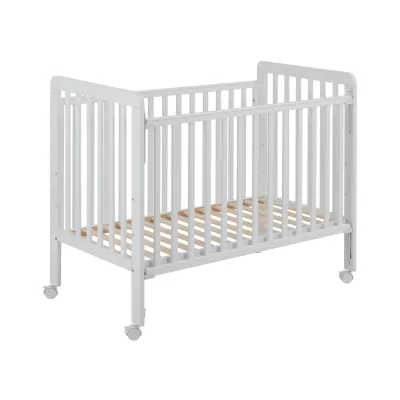
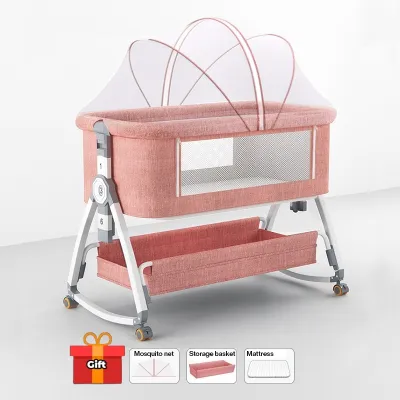
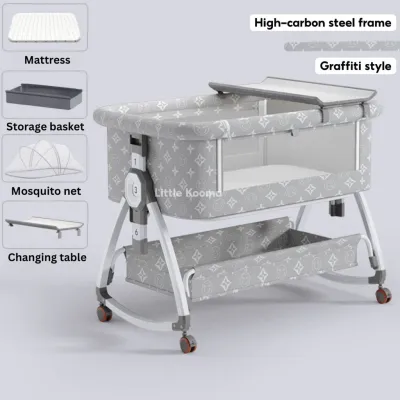
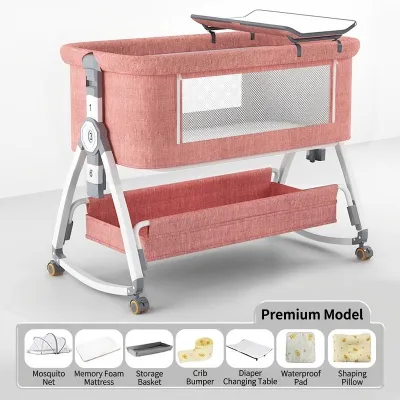
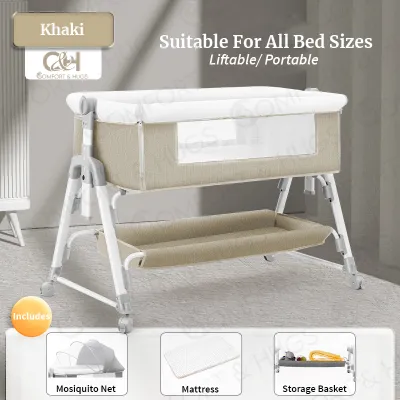
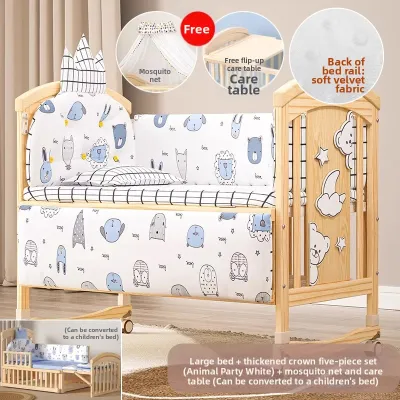

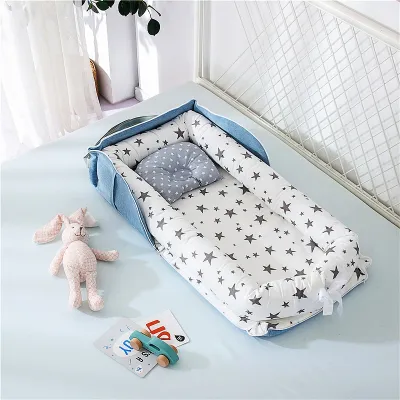
Prices are valid at publication and may change. Please refer to the product page for the latest price.
Because there is no dedicated local safety label for cribs, the responsibility of verifying safety falls largely on you, the parent. You must actively check that the manufacturer has complied with recognized global safety benchmarks rather than assuming a product is safe simply because it is sold in a local store. Certified cribs available in Singapore span broad price bands, ranging from budget-friendly options around S$150 to premium convertible models exceeding S$1,000, meaning safety compliance is accessible across various budgets.
To minimize risks, always purchase nursery furniture from reputable local retailers, official brand stores, or established nursery specialists in Singapore. These businesses typically vet their inventory to ensure compliance with international safety laws. Conversely, purchasing from unverified third-party sellers on general online marketplaces or discount ecommerce platforms carries a high risk, as these products may bypass standard safety evaluations and lack verifiable compliance documentation.
Recognized International Safety Standards to Check on Labels
To ensure a baby crib is structurally sound and chemically safe, you should look for specific, recognized international safety standards on the product’s physical labels, packaging, or user manuals. Marketing claims such as “safety tested” or “pediatrician recommended” are generic terms that carry no legal weight. Instead, look for explicit compliance codes originating from respected international regulatory bodies.

- European Standards (EN 716): Look for codes like EN 716-1 and EN 716-2. This standard governs safety requirements and testing methods for children's cots and folding cots designed for domestic use.
- United States Standards (ASTM F1169 / 16 CFR 1219): Look for compliance with ASTM F1169 (Standard Consumer Safety Specification for Full-Size Baby Cribs) or federal regulations under 16 CFR Part 1219 or Part 1220.
- Australian/New Zealand Standards (AS/NZS 2172): Look for AS/NZS 2172, which specifies safety, construction, and design requirements for household cots.
Before making a purchase, ask the retailer for proof of compliance, such as a copy of the manufacturer’s Declaration of Conformity or test reports from independent third-party laboratories like SGS, TÜV SÜD, or Intertek. You can also cross-reference the model number on the manufacturer’s official website to ensure the certification applies to that specific design. If a retailer cannot provide documentation verifying compliance with at least one of these major international standards, treat the crib as a high-risk purchase and choose a different model.
Critical Physical Safety Features to Inspect Before Buying
Even when a crib carries an international safety certification, you should perform a hands-on physical inspection. This is especially important if you are purchasing a display model, assembling the crib yourself, or verifying an assembled unit in a showroom. Focus on several critical physical features to ensure the structure is safe for your infant.
Slat Spacing
Verify that the spacing between the crib slats is narrow enough to prevent your baby’s head, limbs, or torso from becoming trapped. According to international safety standards, the gap between slats must not exceed 6 centimeters (approximately 2.36 inches). You can verify this by checking the manufacturer’s product specifications. A common practical check is to see if a standard soft drink can passes through the slats; if it does, the spacing is too wide and poses an entrapment risk.
Mattress Fit
A snug mattress fit is essential to prevent your baby from slipping into a gap and suffocating. Perform a physical check by placing the mattress inside the crib and attempting to slide your fingers between the mattress edge and the crib frame. If you can fit more than two fingers (approximately 3 centimeters) into the gap, the mattress is too small for the crib. Always use a mattress that matches the exact dimensions specified in the crib’s instruction manual.
Hardware and Stability
Gently shake the assembled crib to assess its overall stability. It should feel solid and free of wobble. Inspect all joint connections, brackets, screws, and bolts to ensure they are complete, tightly secured, and flush with the wood or metal surface. Loose or protruding hardware can snag your baby’s clothing or cause the crib to collapse. Additionally, verify that any locking mechanisms on adjustable mattress platforms or folding joints are completely secure and cannot be accidentally disengaged by a child from inside the crib.
Surface and Finish
Run your hands along all wooden and metal surfaces, paying close attention to the top rails, corners, and edges. The surfaces must be smooth and entirely free of splinters, rough spots, sharp edges, or exposed staples. Ensure that all paints, varnishes, and finishes are explicitly labeled by the manufacturer as non-toxic, lead-free, and safe for teething infants. If the crib includes plastic teething guards along the top rails, ensure they are firmly attached, crack-free, and cannot be pried loose.
Common Crib Hazards and Red Flags to Avoid
Certain design features and purchasing practices introduce significant hazards into the nursery. By identifying these red flags early, you can avoid dangerous configurations that put your baby at risk.
Avoid purchasing or using cribs with movable drop-side rails. Drop-side cribs feature a side panel that slides down to make accessing the baby easier, but mechanical failures, warped wood, or loose hardware can cause the drop-side to detach partially. This creates a dangerous V-shaped gap where an infant can slide in, become trapped, and suffocate. Because of these severe risks, drop-side cribs have been banned in several international jurisdictions and are widely considered unsafe.
While inheriting a vintage crib or purchasing a cheap second-hand model may seem practical, these items often pose hidden dangers. Older cribs may have been manufactured before modern safety standards were established, resulting in wider slat spacing, lead-based paint finishes, or unstable structures. Furthermore, second-hand cribs may have suffered material fatigue, missing assembly hardware, or undocumented structural damage. It is also difficult to verify if an older or second-hand crib has been subject to an active safety recall. If you must use a second-hand crib, ensure you obtain the original manufacturer’s manual, verify that all original hardware is present, and check international recall databases.
Never modify the physical structure of a crib, drill new holes, or use non-original hardware to secure the frame. Avoid adding aftermarket accessories that are not explicitly tested and approved by the original crib manufacturer, such as custom-made mattress extenders, decorative canopy attachments, or non-standard mattress bases. Unauthorized modifications can alter the weight distribution, compromise structural integrity, and void the manufacturer’s warranty, creating unpredictable hazards for your child.
Setting Up a Safe Sleep Environment in the Crib
A safe crib is only effective if the environment inside it is configured correctly. To protect your baby from Sudden Infant Death Syndrome (SIDS), suffocation, and physical injury, you must maintain a minimalist and secure sleep space.
Your baby should sleep on a firm, flat mattress covered only by a tightly fitted sheet that does not bunch or pull loose. Avoid using soft mattresses, memory foam toppers, or waterbeds, as these surfaces can conform to your baby’s face and block their airway. Keep the crib completely empty. Do not place pillows, loose blankets, quilts, duvets, sheepskins, stuffed toys, or sleep positioners inside the sleep area. If you are concerned about your baby staying warm in an air-conditioned room in Singapore’s tropical climate, use a lightweight, properly fitted infant sleep sack instead of loose bedding.
Additionally, avoid using traditional padded crib bumpers or mesh liners. Although they are often marketed as protective gear to prevent bumps or limb entrapment, bumpers pose a proven suffocation and strangulation hazard. As infants grow, they can also use bumpers as a step to climb over the crib rail, leading to dangerous falls.
Position the crib away from windows, glass doors, and direct sunlight. Ensure it is placed far out of reach of window blind cords, curtain pull-strings, baby monitor cables, and electrical wires, which present severe strangulation hazards. Avoid hanging heavy pictures, mirrors, shelves, or wall decorations directly above or next to the crib, as these items could fall and cause injury.
As your baby grows and reaches new developmental milestones, you must adjust the crib setup accordingly. Lower the mattress platform to its lowest setting before your baby can sit up, pull themselves up, or stand, preventing them from falling out. Check the manufacturer’s manual for specific developmental milestones and height/weight limits. Stop using the crib immediately if the structure becomes compromised or if your child exceeds the safety limits.
Frequently Asked Questions (FAQ)
Do I need to register my baby crib in Singapore?
There is no mandatory government registry for baby cribs or nursery furniture in Singapore. However, it is highly recommended to register your purchase directly with the manufacturer or local distributor using the registration card included in the packaging or via their official website. This ensures you are directly notified in the event of a product safety recall, quality alert, or safety-related design update.
Is it safe to use a handmade or custom-built wooden crib?
Using a handmade or custom-built wooden crib is generally not recommended unless the artisan can provide official, verifiable documentation of compliance with recognized international safety standards (such as EN 716 or ASTM F1169). Custom furniture rarely undergoes the rigorous mechanical stress testing, structural stability checks, and chemical analysis for non-toxic finishes that mass-produced, certified cribs must pass. To minimize risks of structural failure or chemical exposure, opt for a certified, commercially manufactured crib.
When should I transition my baby out of the crib?
The transition out of a baby crib should be based on your child’s physical development and the manufacturer’s specific guidelines. As a general rule, transition your child to a toddler bed or floor mattress when they reach the manufacturer’s specified height or weight limits, or as soon as they demonstrate the ability to climb out of the crib (typically when the height of the side rail is less than three-quarters of the child’s height). Refer to your specific product manual to verify these developmental thresholds.
Community discussion
Share your experience or ask a question. Comments are reviewed before publication.