
When preparing a nursery in Singapore, selecting a safe baby cradle is one of the most critical decisions you will make. To ensure your newborn’s sleeping environment is secure, a cradle must meet rigorous safety standards that address structural stability, material safety, and suffocation prevention. While online marketplaces and local boutique shops offer a wide array of aesthetically pleasing designs, you should never rely on marketing claims alone. Instead, you must systematically verify recognized safety certifications, physical dimensions, and structural integrity before placing your baby in any sleeping device. This guide outlines the essential certifications, physical checks, and safe sleep practices you need to follow to protect your infant.
Identifying Safety Certifications and Compliance Labels
In Singapore, consumer goods are overseen by the Consumer Product Safety Office (CPSO), an agency under Enterprise Singapore. While baby cradles may not always require a mandatory local safety mark like high-risk electrical appliances, they are subject to strict general product safety requirements. This means any cradle sold locally must be safe for its intended use. However, because many parents purchase nursery furniture from international sellers or online marketplaces, you must take personal responsibility for verifying that the product complies with recognized international safety standards.
When inspecting a cradle, look for physical tags, stamped markings on the frame, or explicit declarations in the user manual that reference one of the following major international standards:
Products mentioned in this guide
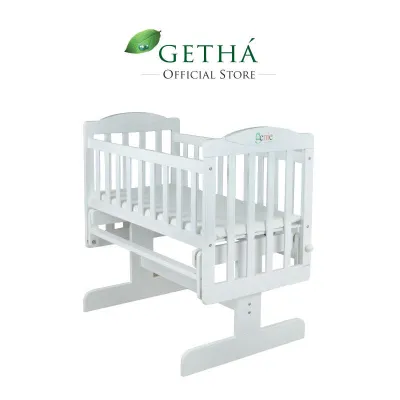
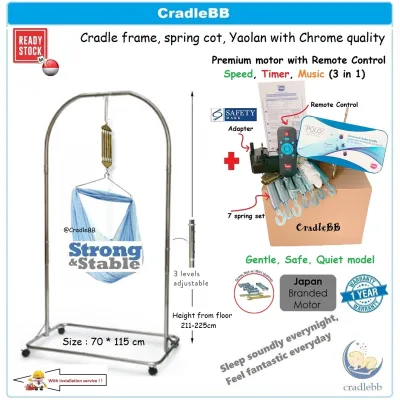
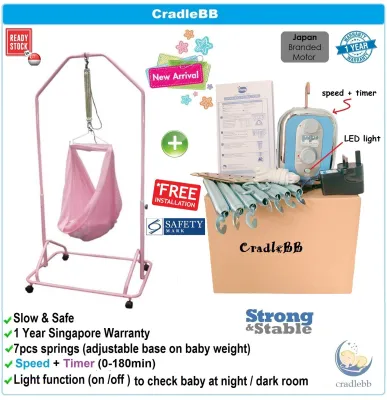
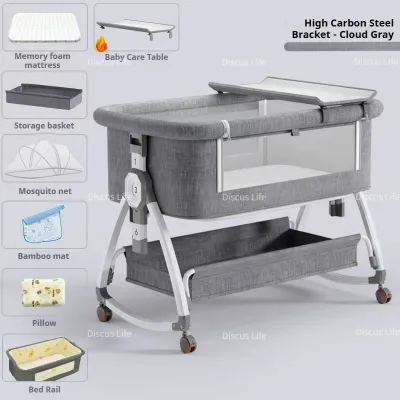
Prices are valid at publication and may change. Please refer to the product page for the latest price.
- EN 1130: This is the European standard specifically dedicated to cribs and cradles. It regulates structural safety, chemical limits for paints and finishes, and physical hazards such as sharp edges or entrapment points.
- ASTM F2194: Established by the American Society for Testing and Materials, this standard governs bassinets and cradles, ensuring they pass rigorous stability, load-bearing, and side-height tests.
- AS/NZS 8811.1: This Australian and New Zealand standard focuses specifically on the firmness of the sleep surface, which is crucial for preventing suffocation.
You should be highly skeptical of vague marketing terms such as “ergonomic,” “pediatrician-approved,” “natural,” or “certified safe” if they are not accompanied by a specific standard number. Reputable manufacturers will proudly display their compliance with EN, ASTM, or AS/NZS standards on the product packaging and the physical label attached to the cradle. If a retailer or online seller cannot provide official documentation or certificate copies proving these tests were passed, you should select a different product to ensure your peace of mind.
Essential Structural and Design Safety Checks
Even a certified cradle must be physically inspected upon assembly and regularly checked during use. Manufacturing defects, shipping damage, or incorrect home assembly can compromise an otherwise safe design.

Slat Spacing and Mattress Fit
If the cradle features slatted sides, the spacing between the individual slats must be narrow enough to prevent your baby’s head, limbs, or torso from becoming trapped. You should physically measure these gaps using a ruler or tape measure. The distance between slats must not exceed 60 millimetres (6 cm). If the gaps are wider than this, there is a severe risk of head entrapment, which can lead to serious injury or strangulation.
The fit of the mattress inside the cradle is another critical safety dimension. A mattress that is too small for the frame leaves dangerous gaps along the perimeter. If a baby rolls or shifts, they can become wedged in these gaps, posing a severe suffocation hazard. To verify a proper fit, perform the “two-finger test.” Place the mattress inside the cradle and attempt to slide your index and middle fingers between the edge of the mattress and the inner side wall of the cradle. If you can easily fit more than two fingers (approximately 3 cm) into this gap, the mattress is too small. The mattress must fit snugly against all four sides of the cradle with no noticeable movement. Additionally, the mattress must be exceptionally firm; when you press down on it, it should spring back immediately without retaining any indentation.
Locking Mechanisms and Base Stability
Cradles that offer rocking, gliding, or folding features require extra mechanical scrutiny. While a gentle rocking motion can help soothe a fussy newborn, it poses a safety risk if left unregulated. For rocking or swinging cradles, verify that the locking pin, latch, or brake mechanism is robust and fully functional. You must be able to lock the cradle securely in a stationary, level position. When your baby is sleeping unsupervised, the rocking mechanism must always be locked. If a baby shifts their weight to one side of an unlocked swinging cradle, the cradle can tilt, trapping the infant against the side wall and restricting their breathing.
For folding, portable, or travel cradles, pay close attention to the frame’s locking joints. These joints must lock into place with a distinct, audible click and should require a deliberate, multi-step physical action to release. This design ensures that the cradle cannot collapse unexpectedly if a sibling, pet, or caregiver accidentally bumps into it, or if the baby moves vigorously inside.
Finally, evaluate the overall physical stability of the cradle. The base should be wide and have a low center of gravity to prevent any risk of tipping over. Run your hands carefully along all wooden, plastic, or metal surfaces. Check for sharp edges, rough wooden splinters, exposed staples, or protruding hardware like screws and bolts. In Singapore’s humid climate, wooden components can warp over time, and metal fasteners can loosen or rust. Regularly inspect and tighten all hardware to maintain structural integrity.
Safe Sleep Practices and Risk Reduction in the Nursery
A safe cradle is only effective when paired with safe sleep practices. Creating a secure sleeping environment involves managing both the contents of the cradle and its physical placement within your home.
Always place your baby on their back to sleep for every sleep period, including daytime naps and overnight rest. The sleeping surface must remain completely flat. Do not use inclined sleepers, wedges, or elevated mattresses, as an incline can cause your baby’s head to slump forward, potentially blocking their airway. If your baby has a medical condition such as reflux, do not elevate the mattress unless explicitly instructed to do so by a qualified pediatrician.
Keep the interior of the cradle entirely bare. You must never place pillows, quilts, thick blankets, sheepskins, stuffed toys, or decorative bumper pads inside the cradle. While bumper pads are often marketed as a way to prevent babies from bumping their heads against the sides, they pose a high risk of suffocation, strangulation, and entrapment. They also block essential airflow, which can contribute to overheating.
Singapore’s tropical climate presents unique challenges for nursery safety. Overheating is a recognized risk factor for sudden infant sleep accidents. To keep your baby comfortable and safe, position the cradle away from direct sunlight, air conditioning units blowing cold air directly, and open windows. In Singapore’s high-rise apartments and HDB flats, window blind cords, curtain strings, and electrical cords present severe strangulation hazards. Ensure the cradle is placed far out of reach of any dangling cords or wall decorations that could fall.
Instead of using loose blankets, which can easily ride up over your baby’s face and cause suffocation, dress your baby in a single layer of lightweight, breathable cotton clothing. Alternatively, you can use a lightweight, well-fitting infant sleep sack designed for warm climates. Keep the nursery well-ventilated. You can use a ceiling fan on a low setting to promote gentle air circulation, or run an air conditioner set to a comfortable, stable temperature, typically between 22 and 24 degrees Celsius. Regularly clean the room to prevent dust accumulation, which is common in humid environments.
When to Stop Using the Cradle: Weight and Developmental Limits
It is vital to recognize that a cradle is a temporary sleeping solution designed exclusively for the first few months of an infant’s life. It is not a permanent replacement for a full-sized crib.
You must consult your cradle’s manufacturer manual to identify the exact weight, height, and age limits specified for your model. These limits are hard safety boundaries established through rigorous engineering tests. Exceeding them can cause the cradle’s frame to buckle, sag, or tip over under the increased load.
However, developmental milestones are often the most critical factor in determining when to stop using a cradle. You must transition your baby out of the cradle and into a standard, full-sized baby crib immediately if they reach any of the following developmental stages:
- Rolling over: If your baby can roll from their back to their front or vice versa, they can easily press themselves against the fabric or slatted sides of a narrow cradle, posing a suffocation risk.
- Pushing up: When your baby begins to push up on their hands and knees, they raise their center of gravity significantly.
- Sitting up or pulling up: If your baby attempts to sit up or pull themselves up using the sides of the cradle, they are at an extreme risk of falling over the top rail.
Because cradles are typically smaller, lighter, and shallower than standard cribs, an active baby who can shift their weight or change positions can easily cause the entire structure to tip over. Do not wait for your baby to reach the maximum weight limit if they have already achieved any of these physical milestones. Transitioning them to a secure crib with deep, fixed sides is the safest course of action.
Frequently Asked Questions (FAQ)
Is it safe to use a second-hand or inherited baby cradle?
Using a second-hand or inherited cradle requires extreme caution. Before accepting or purchasing a pre-loved model, you must perform a meticulous physical inspection. Check for structural wear, loose joints, missing hardware, or peeling paint. Older wooden cradles manufactured decades ago may contain lead-based paint, which is highly toxic if ingested or inhaled by a teething infant.
You must locate the manufacturer’s label on the frame to find the model number and brand name. Use this information to search official consumer safety portals and global recall databases to ensure the product has not been recalled for safety defects. Never use a second-hand cradle if the original assembly manual is missing, as incorrect home assembly is a leading cause of structural failure. Additionally, avoid drop-side cradles or cribs, as these designs are widely banned internationally due to severe entrapment risks. If you cannot verify the cradle’s history, safety compliance, or structural integrity, it is far safer to purchase a new, certified model.
Are motorized or rocking cradles safe for unsupervised overnight sleep?
Most motorized, gliding, or rocking cradles are designed primarily for temporary, supervised soothing rather than unsupervised overnight sleep. You must read your product’s documentation carefully to check for explicit manufacturer warnings regarding sleep duration and supervision requirements.
Continuous rocking or an inclined design can cause a sleeping baby’s head to tilt forward, potentially restricting their airway. For overnight sleep, you should always turn off any motorized motion and ensure the cradle is locked securely in a flat, stationary position. If the product is not explicitly certified by the manufacturer for overnight, unsupervised sleep on a flat, firm surface, do not use it for this purpose. If your baby falls asleep in a swing or an active rocker, gently transfer them to a safe, flat, stationary sleeping surface as soon as possible.

Community discussion
Share your experience or ask a question. Comments are reviewed before publication.