
When shopping for a baby cot in Singapore, ensuring your child’s sleep environment is structurally sound and chemically safe is paramount. Because Singapore does not have a single, exclusive national safety standard dedicated solely to baby cots, the local market relies heavily on recognized international standards. Parents should look for specific, verified certifications: the European Standard (EN 716), the United States Standard (ASTM F1169), or the Australian/New Zealand Standard (AS/NZS 2172). These certifications guarantee that the cot has undergone rigorous mechanical, structural, and chemical testing to prevent accidents, entrapment, and chemical exposure.
In Singapore, certified baby cots are available across various price bands, typically ranging from budget-friendly options around S$150 to premium convertible models exceeding S$1,200. Regardless of the price point, safety certifications should remain your primary filter. While these certifications significantly reduce risks, they do not eliminate the need for active caregiver supervision and correct assembly. Understanding what these standards mean and how to verify them is the first step toward creating a secure nursery.
Understanding Baby Cot Safety Regulations in Singapore
In Singapore, the Consumer Product Safety Office (CPSO), which is safeguarded under Enterprise Singapore, is the key regulatory authority monitoring consumer goods. The CPSO administers the Consumer Protection (Consumer Goods Safety Requirements) Regulations (CGSR) to ensure that general consumer products sold locally meet safety guidelines. Rather than drafting distinct local laws for every single product category, the CPSO recognizes established international standards as benchmarks for compliance.
Products mentioned in this guide
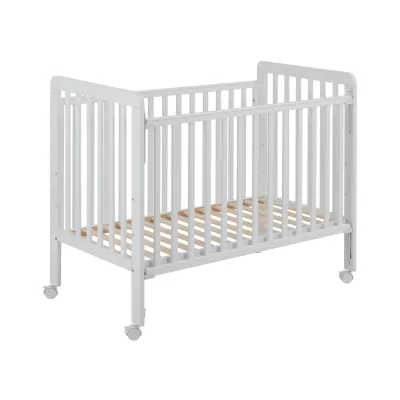
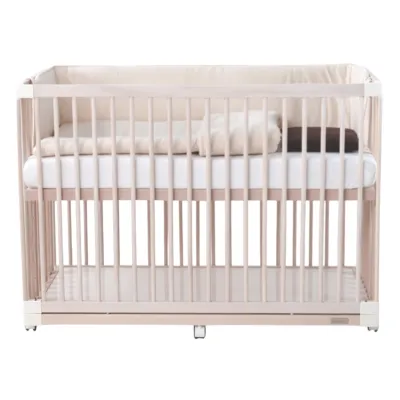
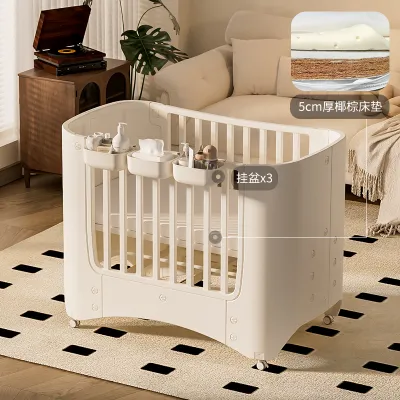
![[SG SELLER] COCOBABY Multifunctional Double-deck Rollaway Play Bed Playards Playpen Portable Baby Cribs Travel Folding Newborn Infant Kids Sleep Bed Installation free with Diaper changing table/Toy rack](https://img.lazcdn.com/g/p/bf8e2e27adf9d0291fb23354d52a0d4a.jpg_400x400q80.jpg_.webp)
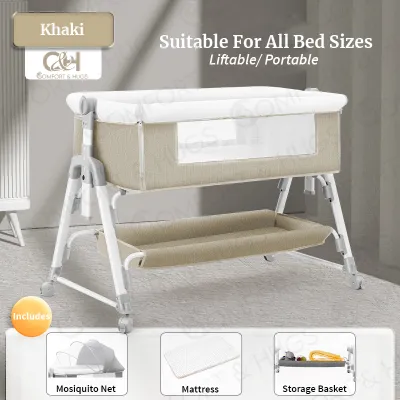
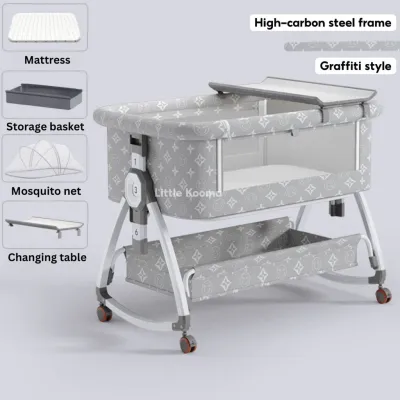

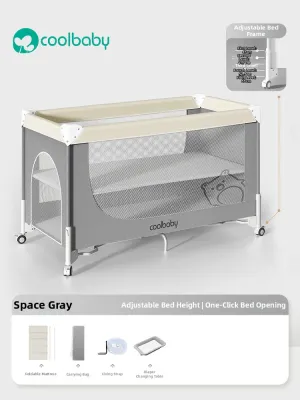
Prices are valid at publication and may change. Please refer to the product page for the latest price.
The CPSO monitors the market, issues safety alerts, and manages product recalls when unsafe items are identified. However, the CGSR operates primarily as a post-market surveillance framework. This means that while unsafe products can be removed from shelves or online marketplaces after a hazard is reported, the initial responsibility of ensuring a cot is safe lies with the manufacturer, the importer, and ultimately, the parent’s verification.
Reputable brands and authorized distributors in Singapore proactively seek and display international certifications to demonstrate that their cots are safe. These certifications show that the cot’s design, materials, and manufacturing processes have been independently audited. Relying solely on the fact that a product is listed for sale on a local website or in a retail store is not a guarantee of safety.
Compliance with general consumer safety laws does not replace the need for rigorous, product-specific testing certifications. To protect your baby, you must look beyond general safety claims and verify that the specific model you are considering complies with dedicated international standards.
Key International Safety Certifications to Look For
When comparing baby cot brands, you will frequently encounter three major international safety standards. Each standard has its own testing protocols, but all are designed to address critical physical and chemical hazards.

European Standard (EN 716)
The European Standard is one of the most common certifications found in Singapore due to the popularity of European nursery brands. Specifically, you should look for “EN 716-1” (which outlines safety requirements) and “EN 716-2” (which details the test methods). This standard covers domestic cots and folding cots. It mandates critical safety parameters, such as a minimum internal height to prevent climbing out, strict limits on the distance between slats to prevent head entrapment, and mechanical tests to ensure the mattress base can withstand repeated impacts and heavy loads without collapsing.
US Standard (ASTM F1169)
Developed by the American Society for Testing and Materials, ASTM F1169 is the standard specification for full-size baby cribs. This is a highly rigorous standard that was substantially updated to completely ban traditional drop-side cribs due to historical safety hazards. It enforces strict requirements on wood strength, slat integrity, hardware durability, and the prevention of toxic finishes. A cot certified under ASTM F1169 has undergone intense testing, including cycle testing of latching mechanisms and side-impact tests to ensure the slats do not break or detach under pressure.
Australian/New Zealand Standard (AS/NZS 2172)
This standard is highly regarded for its stringent safety criteria and is common among brands imported from the Oceania region. It places immense focus on the precise fit of the mattress to prevent gaps where a baby’s head or limbs could become trapped. It also enforces strict rules regarding the height of the cot sides, the strength of the base, and the absence of any footholds that could allow an active toddler to climb out. Furthermore, AS/NZS 2172 mandates rigorous testing for toxic heavy metals in paints, varnishes, and plastics, protecting infants who may chew on the cot rails.
To locate these safety marks, inspect the product’s original packaging, the manufacturer’s instruction manual, or the permanent safety labels printed on the underside of the cot base. Be cautious of broad, unverified marketing phrases such as “safety tested” or “meets international guidelines.” These phrases hold no legal weight unless they are accompanied by the specific standard number and the name of the accredited testing laboratory that performed the evaluation.
How to Verify Certifications and Avoid Misleading Claims
To ensure you are purchasing a genuinely certified baby cot, do not hesitate to ask the retailer or manufacturer for a copy of the official test report or Declaration of Conformity. A reputable brand will readily provide these documents or have them accessible on their official website. The test report should be issued by an independent, internationally accredited testing laboratory (such as SGS, TÜV SÜD, Intertek, or Bureau Veritas) and should match the specific model name and batch number of the cot you are considering.
Beware of “greenwashing” and vague marketing terminology. Terms like “organic,” “eco-friendly,” “natural wood,” and “non-toxic” are frequently used to appeal to health-conscious parents. While these qualities are desirable, they do not guarantee mechanical safety. A cot made of organic wood can still have dangerous slat spacing or weak joints. Always separate material claims from structural safety certifications.
Before making a purchase, check the CPSO website for local safety alerts and recalls in Singapore. Additionally, cross-reference international databases such as the United States Consumer Product Safety Commission (CPSC) recall list or the European Union’s Safety Gate. If a specific brand or model has been flagged or recalled overseas, it should be avoided, even if it is still available through parallel importers or third-party sellers.
Exercise extreme caution when purchasing baby cots from unauthorized third-party sellers on online marketplaces or e-commerce platforms. These listings often feature unbranded cots imported directly from overseas factories that have bypassed safety checks. Certification documents on these platforms may be non-existent, forged, or belong to an entirely different product. Stick to authorized distributors, official brand stores, or established local retailers who can guarantee product authenticity and safety compliance.
Essential Physical Safety Checks Beyond Certifications
While certifications provide a vital baseline of safety, they do not guarantee safe assembly or ongoing structural integrity. Parents must perform practical, physical checks during assembly and throughout the cot’s lifespan to maintain a safe sleep environment.
- Slat Spacing: The distance between the slats of the baby cot must be carefully measured. To prevent a baby's head, limbs, or body from slipping through and becoming trapped, the gap between slats must be between 50 mm and 60 mm (approximately 2 to 2.36 inches). A simple, practical test is to try passing a standard soda can through the slats; if the can fits through easily, the slats are too far apart, posing a severe safety hazard.
- Mattress Fit: The mattress must fit snugly within the cot frame. Perform the "two-finger test" by sliding your index and middle fingers between the edge of the mattress and the cot frame. If you can fit more than two fingers into the gap, the mattress is too small. This gap creates a dangerous void where an infant can roll over, become trapped, and suffocate. Always buy a mattress that matches the exact dimensions specified by the cot manufacturer.
- Hardware and Finish: Run your hands along the entire cot to inspect the physical build. Check for any protruding screws, bolts, or brackets that could catch on a baby's clothing or cause scratches. Ensure all fittings are tight and flush with the wood. Inspect the finish for any rough edges, splinters, or peeling paint and varnish, which can pose choking hazards or expose the child to raw materials.
- Drop-Side Mechanisms: While once popular for ease of access, drop-side cots (where one side slides down) are now widely discouraged by safety experts. The moving hardware on drop-side cots can warp, break, or detach over time, creating a dangerous gap between the drop-side and the mattress where a baby can become wedged and suffocate. It is highly recommended to choose a fixed-side cot instead.
Always assemble the cot precisely according to the manufacturer’s instruction manual. Never substitute missing hardware with generic screws from a hardware store; instead, contact the manufacturer for official replacement parts. Ensure that you adjust the mattress base height as your baby grows. The highest level is only for newborns who cannot sit up; as soon as your child shows signs of rolling over, sitting, or pulling themselves up, the base must be lowered to its lowest position to prevent falls.
Before using any cot, check the applied product’s label and the treated item’s manufacturer instructions. If instructions conflict, the item is unidentified, or the use is not covered, stop and consult the manufacturer or a qualified professional.
Risks of Second-Hand and Non-Certified Baby Cots
While accepting a hand-me-down cot or buying a second-hand vintage model can be budget-friendly, it introduces significant safety risks. Over years of use, storage, and reassembly, a cot’s structural joints can weaken, plastic components can become brittle, and critical hardware can go missing. Even minor structural fatigue can cause a cot to collapse under a baby’s weight.
Older cots, especially those manufactured before modern safety standards were enforced, may feature hazardous designs. They might have decorative cutouts in the headboard that can trap a baby’s head, or they may be coated in older paints containing lead or other toxic chemicals. Because infants frequently chew on cot rails when teething, exposure to these older finishes presents a severe health risk.
Establish clear stop-use conditions for any second-hand cot. You must immediately stop using or reject a cot if it wobbles when gently shaken, has missing or substituted hardware, shows signs of wood splintering or cracking, or lacks its original instruction manual and safety labels. If you cannot verify the brand, model, and safety certifications of a pre-owned cot, it is safer to invest in a new, certified model.
Always check the original manufacturer’s documentation regarding the cot’s intended lifespan, maximum weight limits, and developmental stage limits. For example, many manufacturers specify a maximum height limit (such as 89 cm) or weight limit (such as 15 kg to 20 kg) beyond which the cot is no longer safe. If the cot has exceeded its recommended lifespan or shows signs of wear, it should be safely discarded rather than passed on to another family.
Frequently Asked Questions (FAQ)
Is it safe to use a baby cot without a visible certification label?
Using a baby cot without a visible certification label is highly discouraged. Without a label or verifiable documentation from the manufacturer, there is no guarantee that the cot meets basic safety standards for slat spacing, structural strength, or chemical safety. If the label is missing, contact the manufacturer directly with the model number to request proof of compliance. If they cannot provide it, opt for a certified alternative to ensure your child’s safety.
Do convertible baby cots need different certifications as they change?
Yes, convertible baby cots must meet safety standards for each stage of their configuration. In its initial state, the product must comply with infant cot standards (such as EN 716 or ASTM F1169). When converted into a toddler bed or daybed, the conversion kit and final structure must meet specific toddler bed safety standards (such as BS 8509 or ASTM F1821). Always check the manufacturer’s manual for specific weight, age, and height limits for each configuration stage, and only use approved conversion kits.
How often should I check the safety of an assembled baby cot?
You should conduct a thorough visual and physical safety inspection of your assembled baby cot at least once a month. As your baby grows, wiggles, and begins to pull themselves up, the constant movement can loosen screws and joints. Check that all bolts remain tight, inspect the wood for any new splinters or cracks, and ensure the mattress still fits snugly without gaps. Immediately stop using the cot and consult the manufacturer if you notice any structural instability, loose parts, or damaged components.

Community discussion
Share your experience or ask a question. Comments are reviewed before publication.